Borgo Fornari Castle: A Defensive Fortress and Noble Residence in Italy


Site at a Glance
- Rating
- 4.3
- Popularity
- Very Low
- Country
- Italy
- Primary era
- Medieval
- External website
- Open
- Eras represented
- Medieval
- Civilizations
- Genoese, Holy Roman Empire
- Site type
- Military
- Remains
- Castle
On this page9 sections
History
Borgo Fornari Castle is a twelfth-century defensive building and noble residence in Italy, built between 1121 and 1182 on an elevation above Borgo Fornari. Its position allowed it to protect the settlement and control communication routes through the Scrivia Valley toward Voltaggio, then a Genoese fief.
Foundation and Genoese lordship
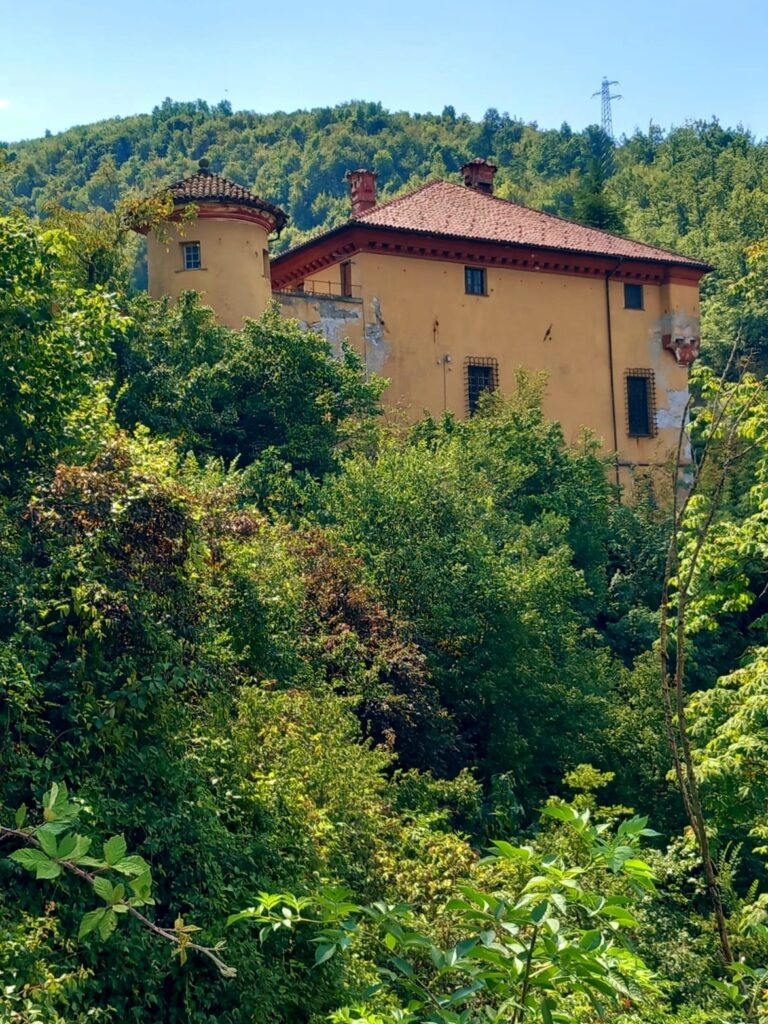
The castle’s construction is attributed to the Fornari family of Genoa. The settlement’s name is said to derive from this family, which was associated with the contemporary parish church dedicated to Saint Mary of the Assumption. The fortress combined residential and strategic purposes, overlooking the important route below.
Ownership later passed to the Genoese noble Spinola family, who lived at the castle. The fortress soon became a focus of rivalry between the Spinola and Doria families, two prominent Genoese houses competing for political and territorial influence in Liguria.
Conflict and political transfers
In the fifteenth century, the castle was drawn into conflict between the Spinola family and the Republic of Genoa. Filippo Maria Visconti, Duke of Milan from 1412 to 1447 and an ally of the Spinola, took possession of the fortress. Under the peace agreements of May 1419, he transferred it to Pope Martin V, who led the Catholic Church from 1417 to 1431.
The castle also received several European monarchs. Louis XII of France reportedly stayed there in 1506, followed by Charles V of Habsburg, Francis I of France in 1525, Philip II of Spain, and Maximilian II of Habsburg in 1551.
Decline and conservation
The castle retained its strategic function until the eighteenth century. It was later acquired by the Municipality of Ronco Scrivia, which funded further conservation restoration in 2005. The property is now municipally owned and forms part of the Imperial Fiefs area, territories in Italy held under the nominal authority of the Holy Roman Empire.
Remains
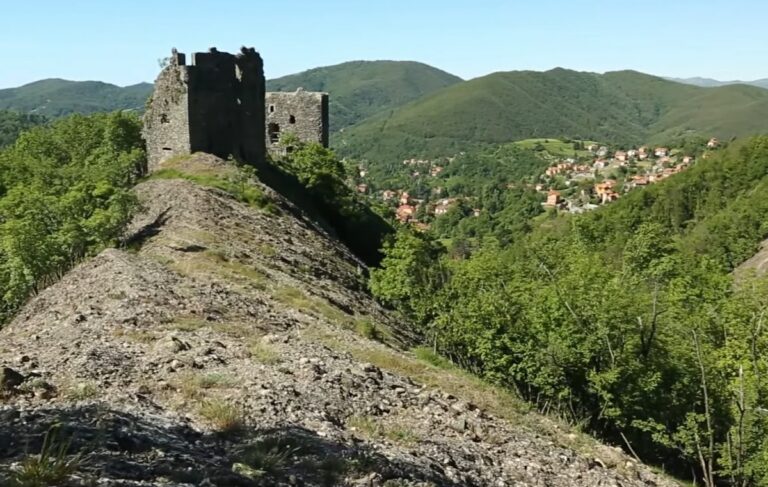
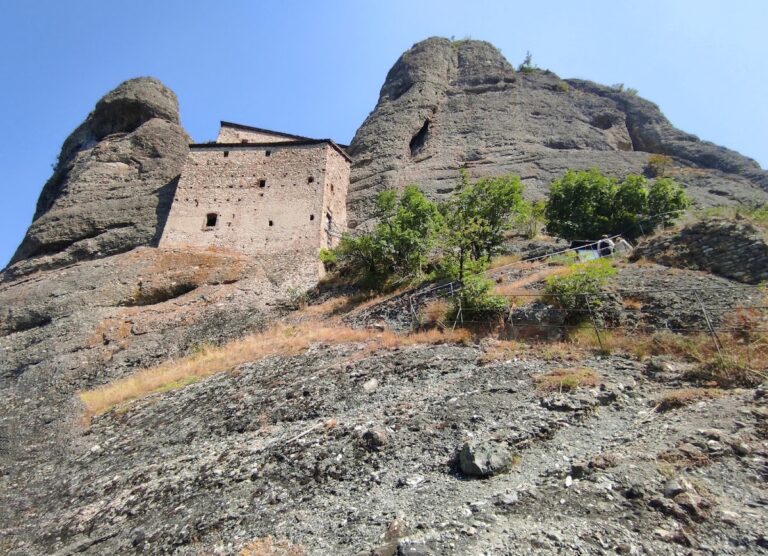
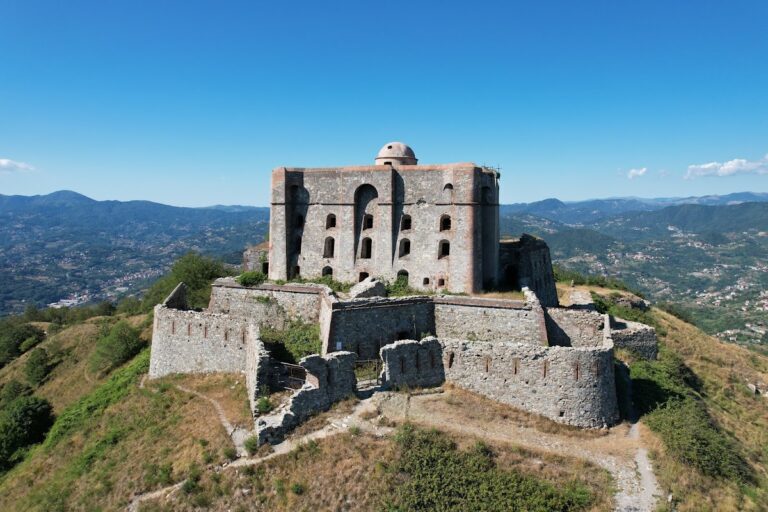
The remains stand on an elevation above Borgo Fornari along the lane called Rian-na. The surviving fabric consists of restored portions of the fortress together with ruins of defensive walls and towers. Different materials were used in different areas, with brick in the upper part and stone in the lower part.
Defensive walls and towers
Semicircular tower
A well-preserved semicircular tower of exposed brick survives within the castle. Historians consider it the oldest surviving construction in the complex, giving the tower a particularly important place in the material history of the fortress.
Western wall
A wall remains on the western side of the castle. It is described as the only surviving example of its masonry in the Scrivia River valley.
Lower garrison section
Another substantially intact section lies on the lower side of the castle. Its form and position are thought to indicate that it was intended for the castle garrison.
Nearby sites