Borġ in-Nadur: A Megalithic Temple and Bronze Age Village in Malta
Site at a Glance
- Rating
- 3.9
- Popularity
- Medium
- Country
- Malta
- Primary era
- Stone Age
- Eras represented
- Stone Age, Bronze Age
- Civilizations
- Maltese Temple Culture
- Site type
- Religious
- Remains
- Temple
On this page9 sections
History
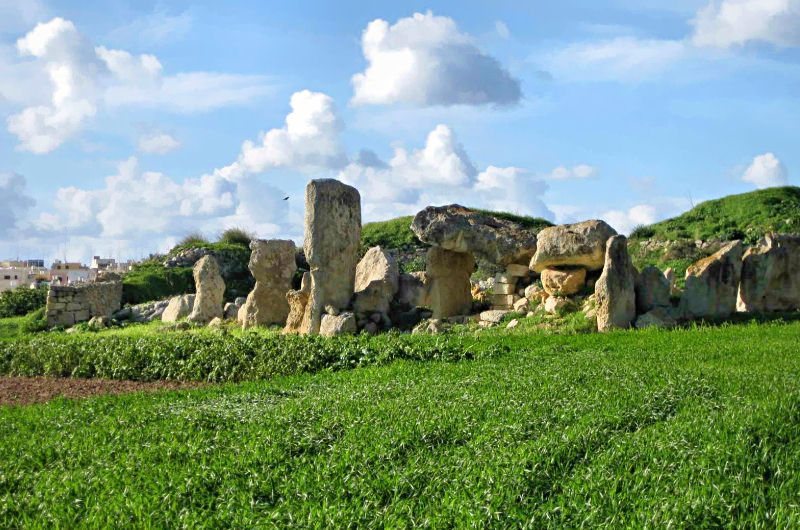
Borġ in-Nadur is a prehistoric temple and settlement site near Birżebbuġa, Malta. Its megalithic temple, built with large stones, dates to around 2500 BC, during the Tarxien phase, the final stage of Malta’s Late Neolithic prehistory.
Temple and Bronze Age settlement
After the temple was abandoned, a Bronze Age community settled in and around it. The former temple spaces were adapted as dwellings, and huts were built nearby. Mycenaean pottery, from a Bronze Age culture centered on mainland Greece, points to direct or indirect contact between Malta and the Aegean world.
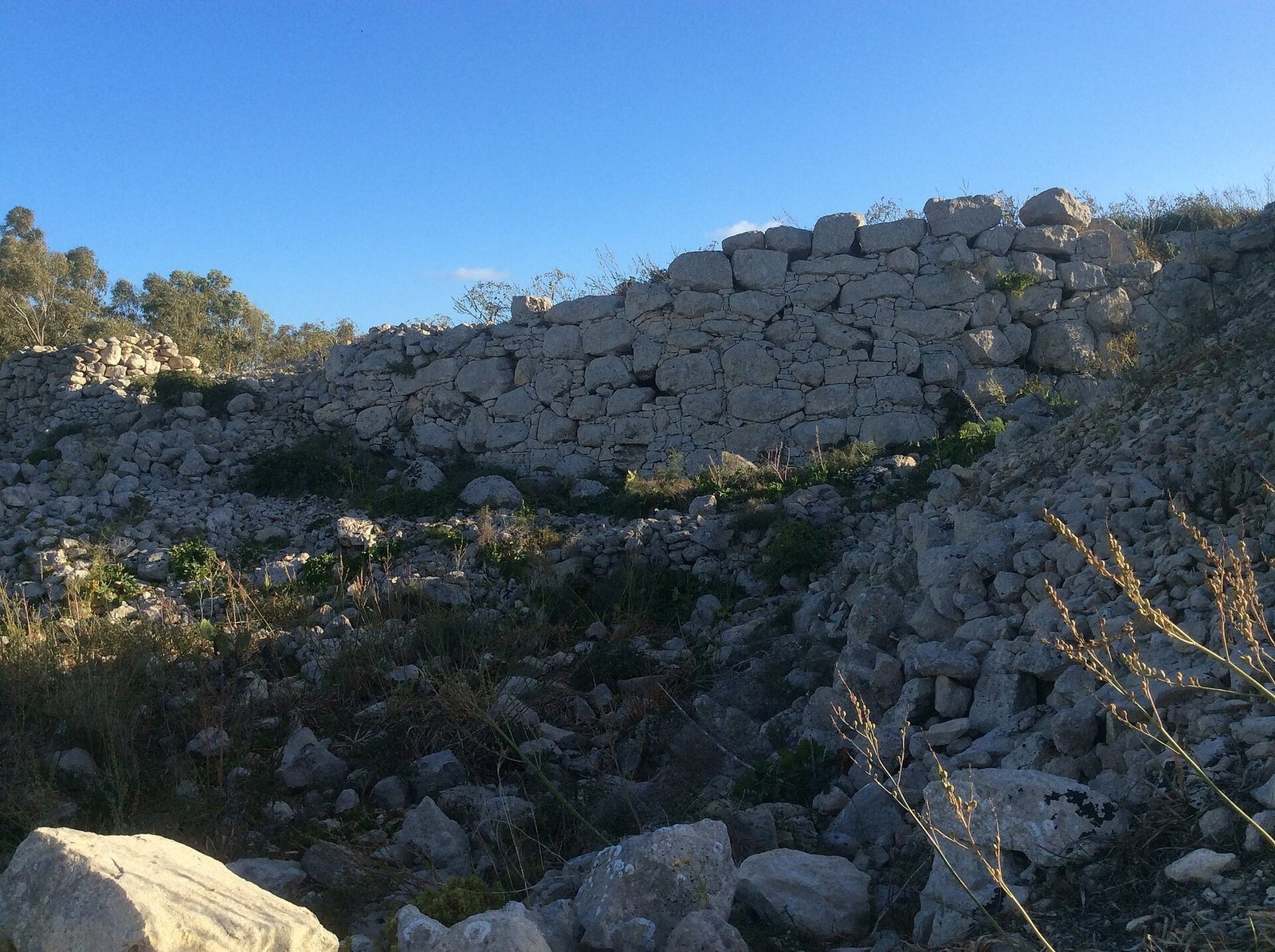
The villagers fortified the settlement to restrict access. The fortification faced inland, an arrangement interpreted as evidence that the community was more concerned about attacks from land than from the sea. The site is believed to have been abandoned around 500 BC, when Malta came under Phoenician control. The Phoenicians were an ancient people of the eastern Mediterranean.
Rediscovery and changing interpretations
In the 16th century, French cleric John Quintin identified the scattered stones and ruined structures as a sanctuary of Hercules, a hero and deity of Greek and Roman tradition. The first excavations took place in the 18th century, when Maltese priest and archaeologist Annetto Caruana dug trenches in the temple complex and uncovered the Bronze Age fortification.
In the 19th and 20th centuries, the temple was instead interpreted as Punic and dedicated to Melqart, a Phoenician deity. Excavators found the first hut foundations in the surrounding fields in 1881. They reburied the foundations after studying them, while leaving the fortification exposed and adding stones where original blocks had been lost.
Later excavation and modern history
Excavation of the fortification left a mound of removed earth in place, later known as Borġ in-Nadur Hill. On 31 May 1920, road construction destroyed 32 prehistoric storage pits, or silos; road widening later destroyed another 41. Margaret Murray investigated the main temple area between 1922 and 1927. Further work on the Bronze Age village took place in 1959, after which hut foundations were reburied.
Heritage Malta is responsible for preserving the site. From 2006, local resident Angelik Caruana claimed to have visions of the Virgin Mary, the mother of Jesus in Christian belief, at Borġ in-Nadur Hill. In 2016, the Church concluded that the claimed apparitions were not divine.
Remains
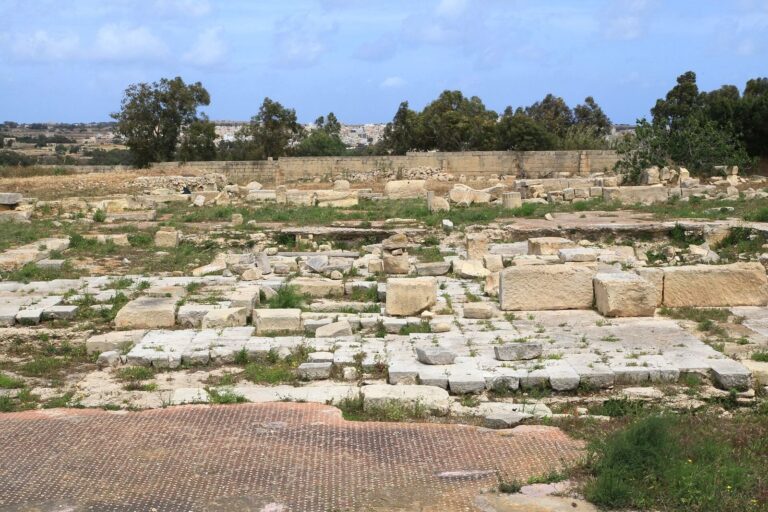
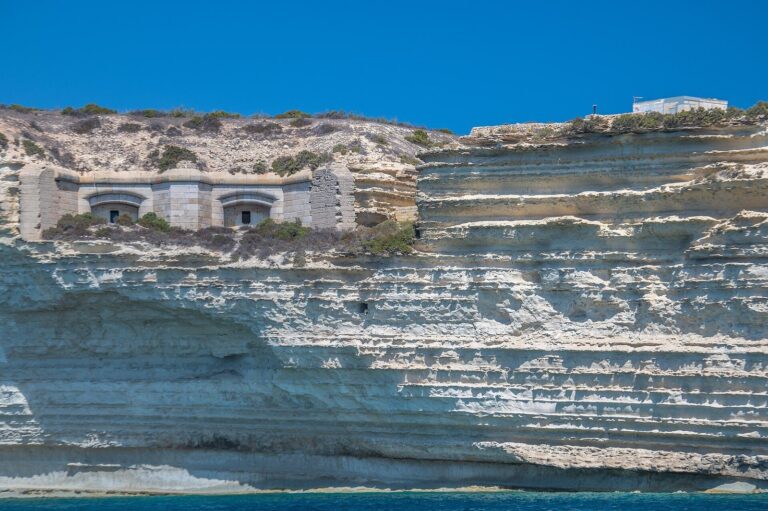
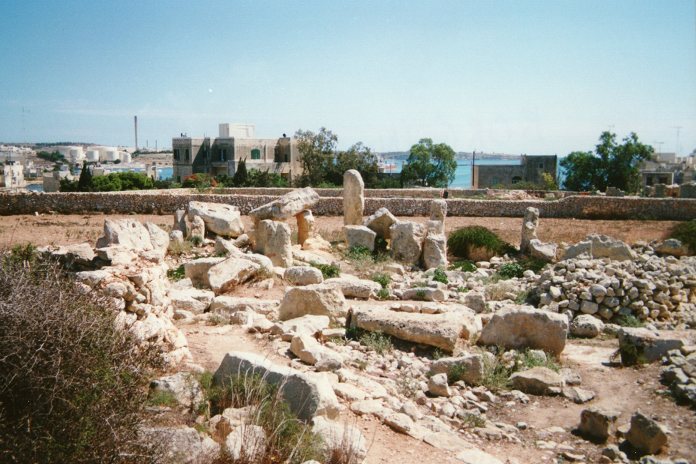
The site lies in open fields overlooking St George’s Bay and includes the temple, village remains and a fortification built from limestone. Its preservation is poor, and little of it is visible above ground.
Temple and burial ground
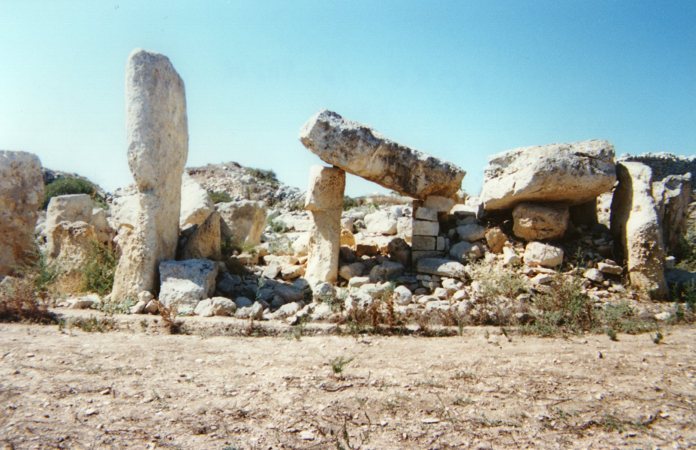
The temple has a four-apse plan, with four recessed spaces, and a low wall made of large stones. Two upright stones mark the entrance. Near it is a large covered niche whose capstone is broken into three pieces. A small cemetery lies about 9 metres from the main temple.
Bronze Age village
Foundations of huts lie around the temple. They were reburied after excavation. Pottery fragments were found across a broad area surrounding the temple.
Fortification
The settlement’s fortification is a D-shaped structure measuring 4.5 metres. It was left exposed after excavation and remains standing, with replacement stones inserted where original stones were missing. It is believed to be Malta’s oldest surviving fortification and the best preserved of the island’s six identified Bronze Age fortified settlements.
Surrounding features
Cart ruts and silos in the area are believed to date to the Bronze Age, and some silos remain visible around St George’s Bay. Borġ in-Nadur Hill is the mound of earth removed during excavation of the fortification. A cross marking the claimed Marian apparitions was erected on the hill.