Bonneval Abbey: A Cistercian Monastery in France
Site at a Glance
- Rating
- 4.5
- Popularity
- Medium
- Country
- France
- Primary era
- Medieval
- Eras represented
- Medieval, Early Modern, Modern
- Civilizations
- French
- Site type
- Religious
- Remains
- Fortified Monastery
On this page10 sections
History
Foundation and landholding
Bonneval Abbey is a Cistercian monastery near Espalion in France, founded in 1147. The Cistercians are a monastic order that follows the Rule of Saint Benedict, a guide to communal life attributed to the sixth-century monk Benedict of Nursia. Bonneval began as a daughter house, a new monastery established by an existing one. At the initiative of Guillaume de Calmont d’Olt, bishop of Cahors, lands at Pussac and Barrugues were made available to Pierre II, bishop of Rodez. Pierre sought a founding community from Mazan Abbey in Ardèche.
Seven monks came from Mazan, led by Adhémar, formerly its prior, who became Bonneval’s first abbot. Also known as Quadrat, he was later honored as a blessed in the Cistercian commemorative calendar on February 22. Donations and new members soon expanded the monastery’s resources. Bonneval became one of the leading religious houses in Rouergue and a wealthy landholder.
The abbey’s agricultural estates, known as granges, included Pussac, Masse, La Roquette, Biac, Fraissinet, Bonnecharre, Bonauberc, Anduze, Galinières (also called Peyrols), Monbès, Séveyrac, and La Vayssière. Lay brothers, non-ordained members of the community who commonly undertook agricultural and manual work, helped manage these farms, some of them distant from the abbey. Roughly 450 religious were associated with the granges in the twelfth century; by the thirteenth century, the network comprised twelve.
Bonneval received the Fraissinet grange in 1177, together with dependencies at Combret, Pierrefiche, Lieuriac, Rouire, and Malefosse. A dispute over claims by the prior of Saint-Flour was settled in 1293, but the lord of Pierrefort later asserted rights there. In the seventeenth century, monks at Fraissinet refused to send part of their produce to Bonneval.
War and ecclesiastical politics
The Black Death, the plague pandemic that devastated populations in the mid-fourteenth century, affected the monastery. During the Hundred Years’ War, the prolonged conflict between the English and French crowns, the 1360 Treaty of Brétigny transferred Rouergue to English control. Bonneval was looted despite its fortifications. Edward, the Black Prince, a leading English commander, later issued letters protecting the abbey. The conflict also prompted fortification of several granges. Abbot Rigald had defenses built at Biac in 1366 and Galinières in 1371; Abbot Pierre Rigal later raised a tower at Masse.
Abbot Dieudonné III, also known as Dorde Lauret, sought powerful protectors through formal acts acknowledging their authority. In 1391 he did so for Bernard, Count of Armagnac and Rodez, and received letters of protection three years later. He acknowledged Charles VI in 1399 and Guy II, Baron of Sévérac, in 1403 in connection with Bonneval’s property at Buseins. Agreements made in 1393 and 1395 divided revenues between the community and the abbot, a marked shift from the earlier community’s spiritual life.
Abbot Gérald, who led Bonneval from 1407 to 1419, received permission from Benedict XIII to use ceremonial insignia associated with bishops. His successor Jean Robert’s election was also confirmed by Benedict XIII. In 1420, Jean Robert and Pierre d’Augnac, abbot of Bonnecombe, were condemned at Toulouse for supporting Peter of Luna, the antipope Benedict XIII. The Western Schism was a division in the Western Church over rival papal claimants. Jean Robert later submitted to Martin V, the pope generally recognized after the schism, and attended the Council of Basel. The council sent him as a commissioner to Alfonso, king of Aragon.
Commendatory government and reform
In 1473, Guy de Castelnau-Bretenoux became Bonneval’s first commendatory abbot. Under the commendatory system, an abbot held the office and its revenues without governing the community as a regular monastic abbot. This arrangement weakened Bonneval’s finances, recruitment, and monastic discipline, although regular observance was restored for a time. During the seventeenth century, the abbey also served as a regional training house for Cistercian novices.
Géraud de Noygues restored regular observance with the king’s consent and approval of the Holy See. After entering the novitiate at Cîteaux in 1628, he became a regular abbot, then soon resigned in favor of the prior, Étienne Carrié, who led the abbey from 1629 to 1661. Commendatory rule returned permanently in 1679. Wars of Religion and unrest in the early seventeenth century, associated with the incorporation of the County of Rodez into the French kingdom, brought further difficulties.
Despite these disruptions, Bonneval retained a reputation for disciplined religious life. A late-eighteenth-century commission reviewing French religious communities praised the abbey among five Cistercian houses. The monks continued the daily offices, followed the order’s rule and customs, and gave alms. Much of the abbey’s income came from rents, dues owed to local lords, and tithes paid by people in the surrounding area.
Revolution and revival
By the Revolution, the community had declined to thirteen monks. They were expelled in 1791, and the abbey and its property were divided and sold as national property. The buildings were then used as a source of stone.
At the request of Cardinal Bourret, bishop of Rodez, a small community of Cistercian nuns from Maubec re-established the abbey in 1875, with help from monks of Aiguebelle. The nuns belonged to the Cistercian Order of the Strict Observance, whose women’s communities are known as Trappistines. Maubec was the refounding house, while Acey is identified as Bonneval’s current mother abbey. Father Emmanuel Bernex of Aiguebelle assisted the nuns, including by sharing chocolate-making recipes, and the community has made chocolate since 1878.
In 1881, Bernex arranged for a turbine on the Boralde Flaujaguèse, creating the region’s first electric installation. In 1902 the nuns founded a daughter monastery at Saint-Romuald in Canada. It became autonomous in 1924 and moved in 2002 to Saint-Benoît-Labre, Quebec. Bonneval remains home to a community of Trappistine nuns.
Remains
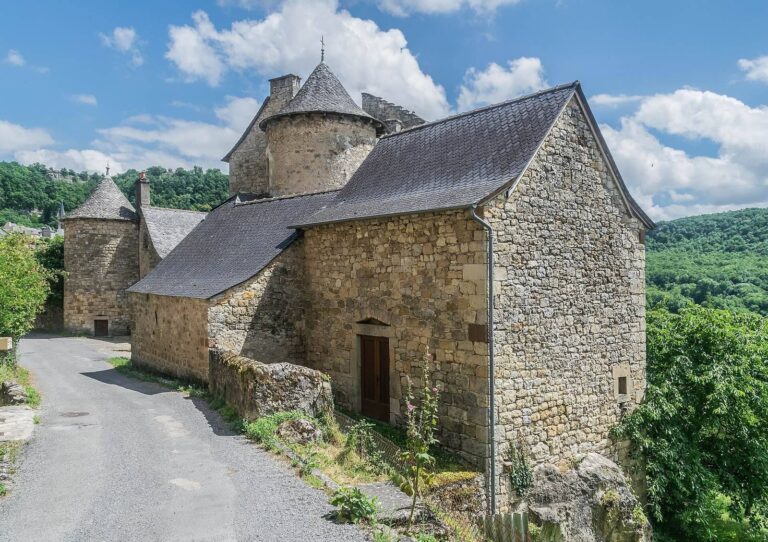
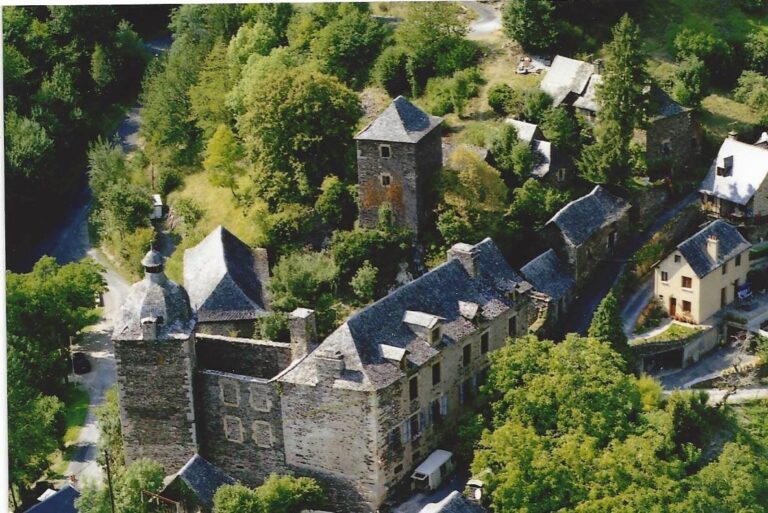
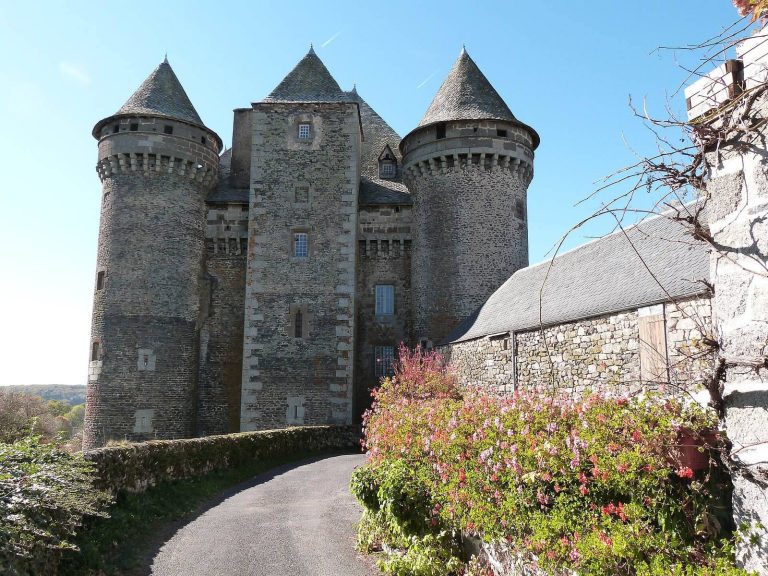
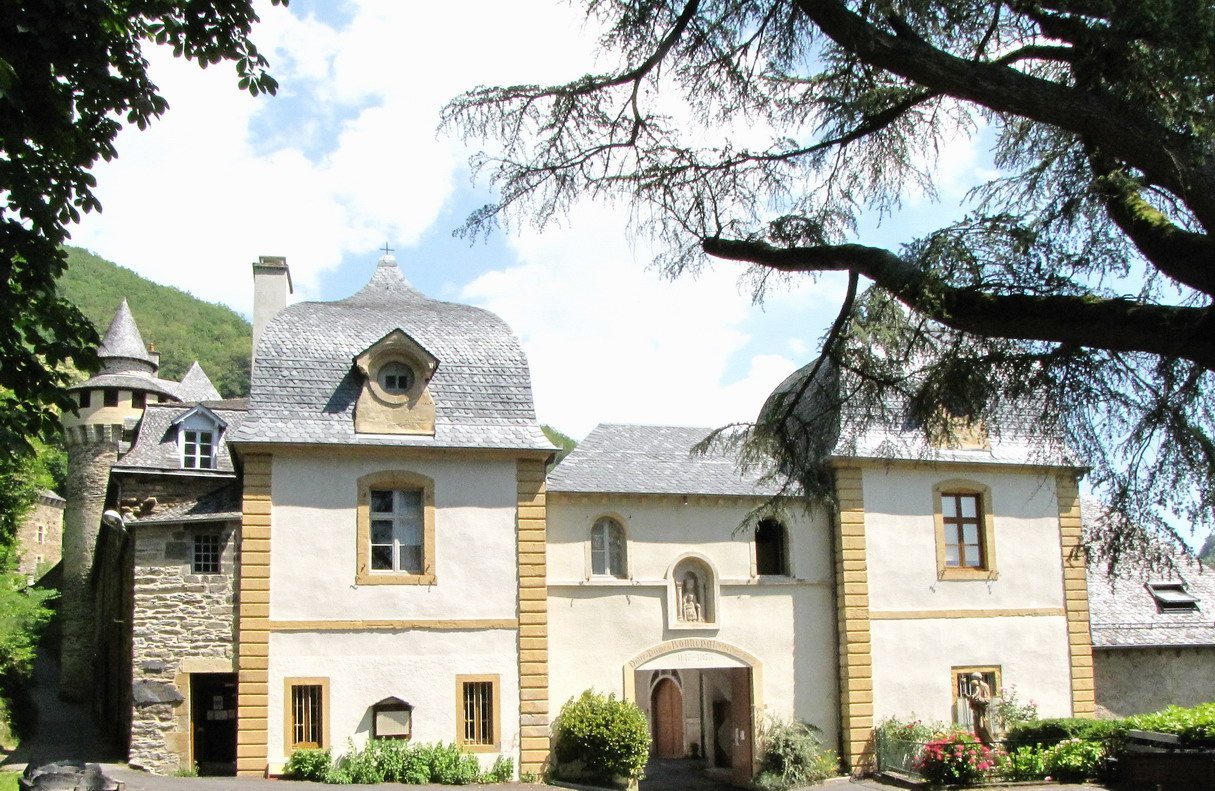
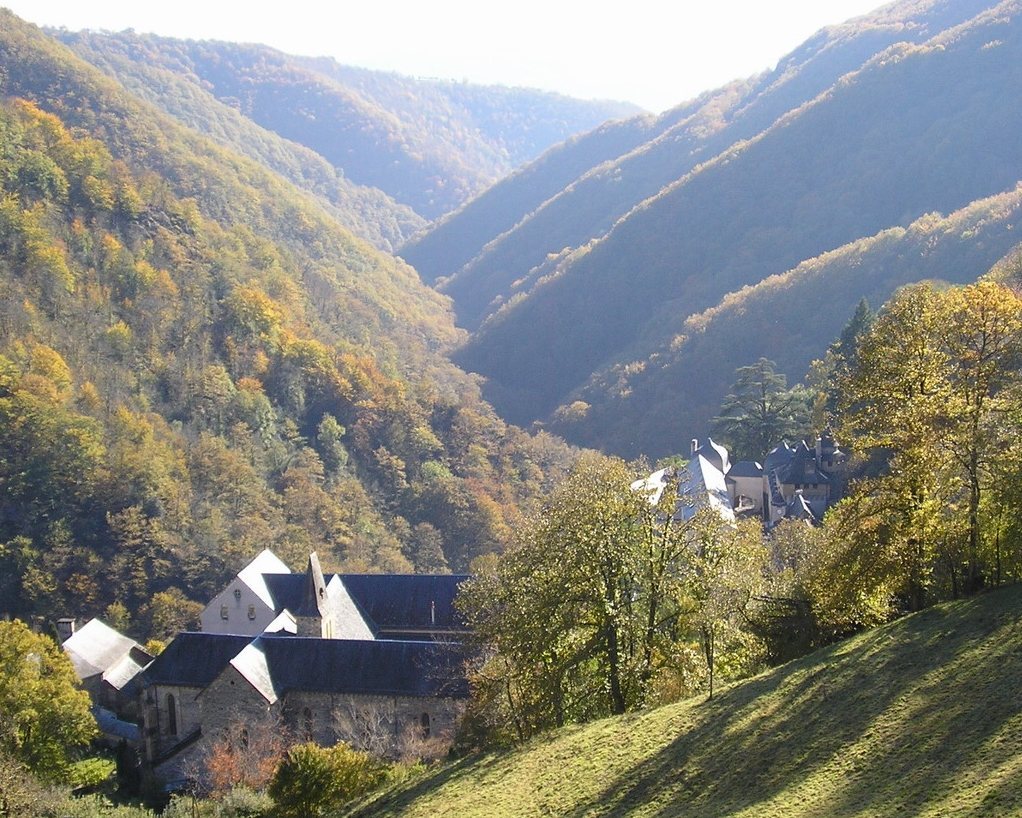
The abbey stands in a valley among wooded hills. Its surviving layout includes a partly preserved church, rooms around the former cloister, an enclosure with towers, and buildings from later periods.
Church and cloister buildings
The church was restored from the ruins of a fifteenth-century building, and substantial later fabric survives alongside part of its fifteenth-century Gothic choir. The choir is the area where the monastic community gathers for prayer. The original cloister has been destroyed, but the bases of the buildings around it remain. The sacristy, cellars, a former infirmary, and other rooms around the cloister also survive. The entrance pavilions incorporate a twelfth-century statue of the Virgin and Child.
Enclosure and building fabric
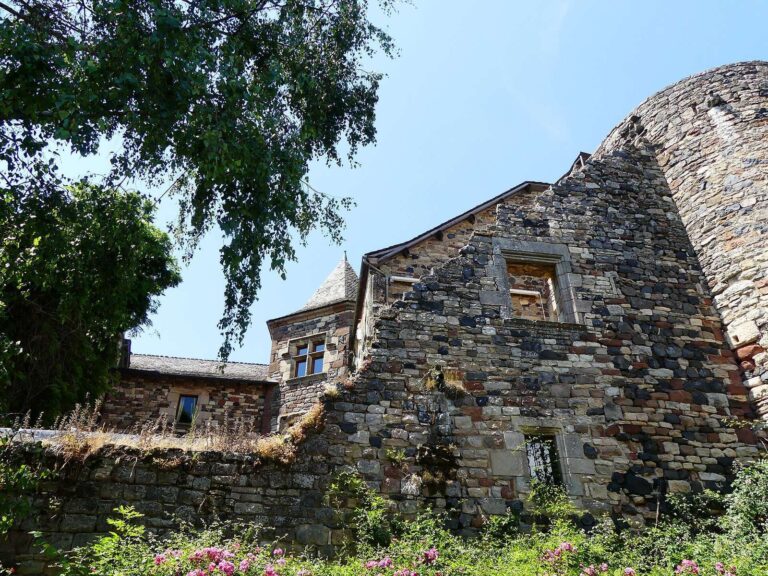
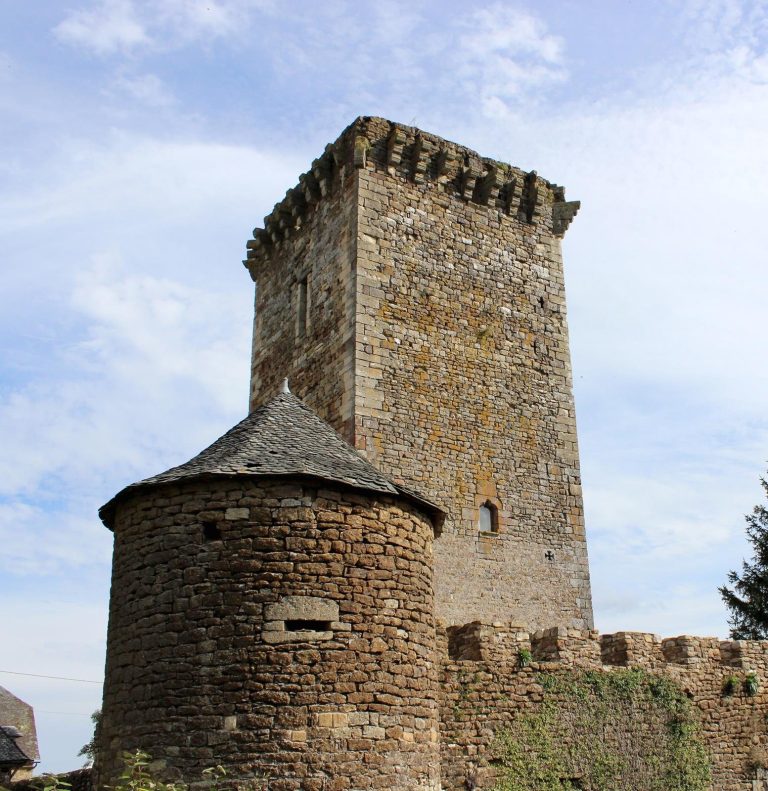
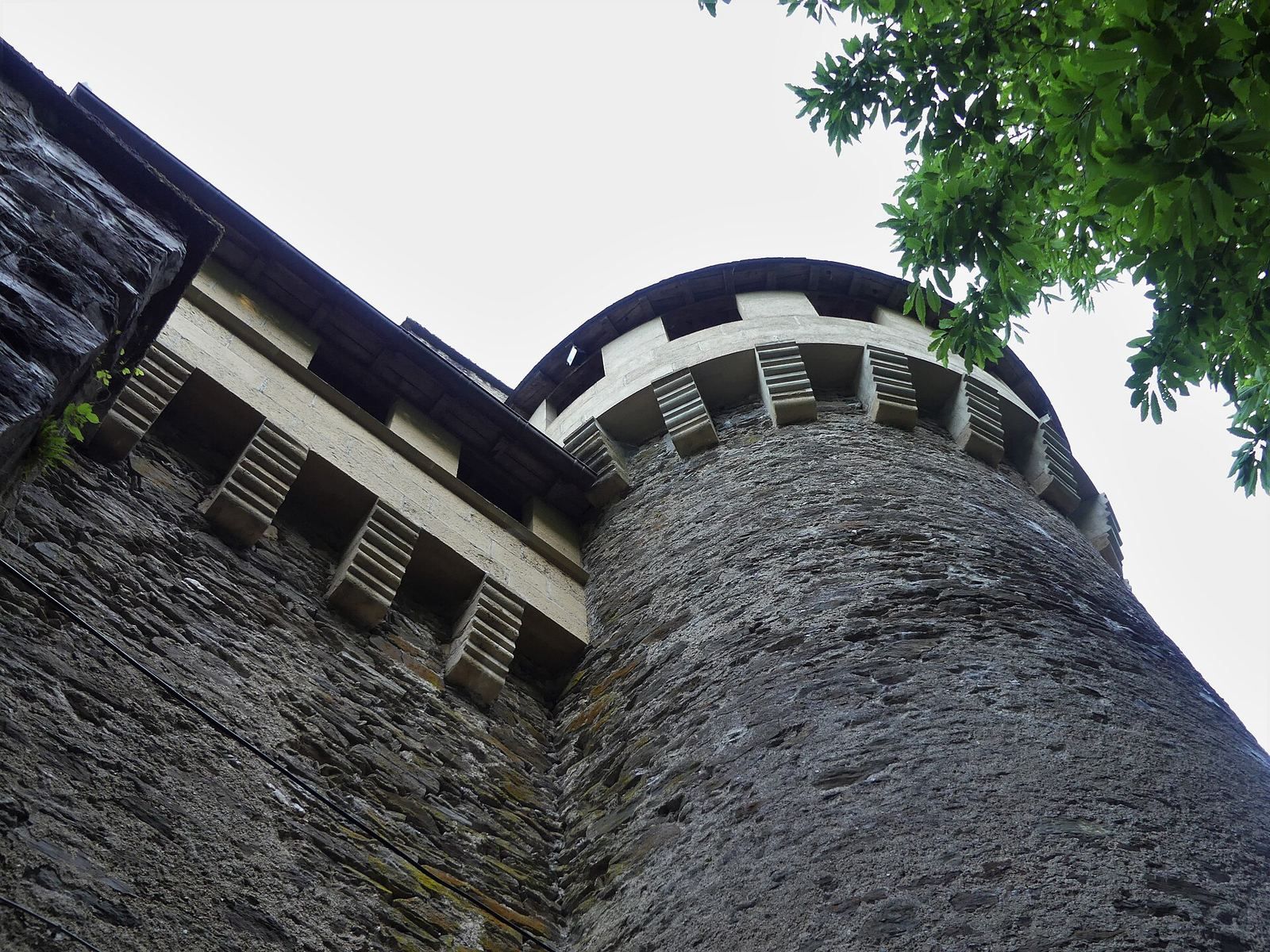
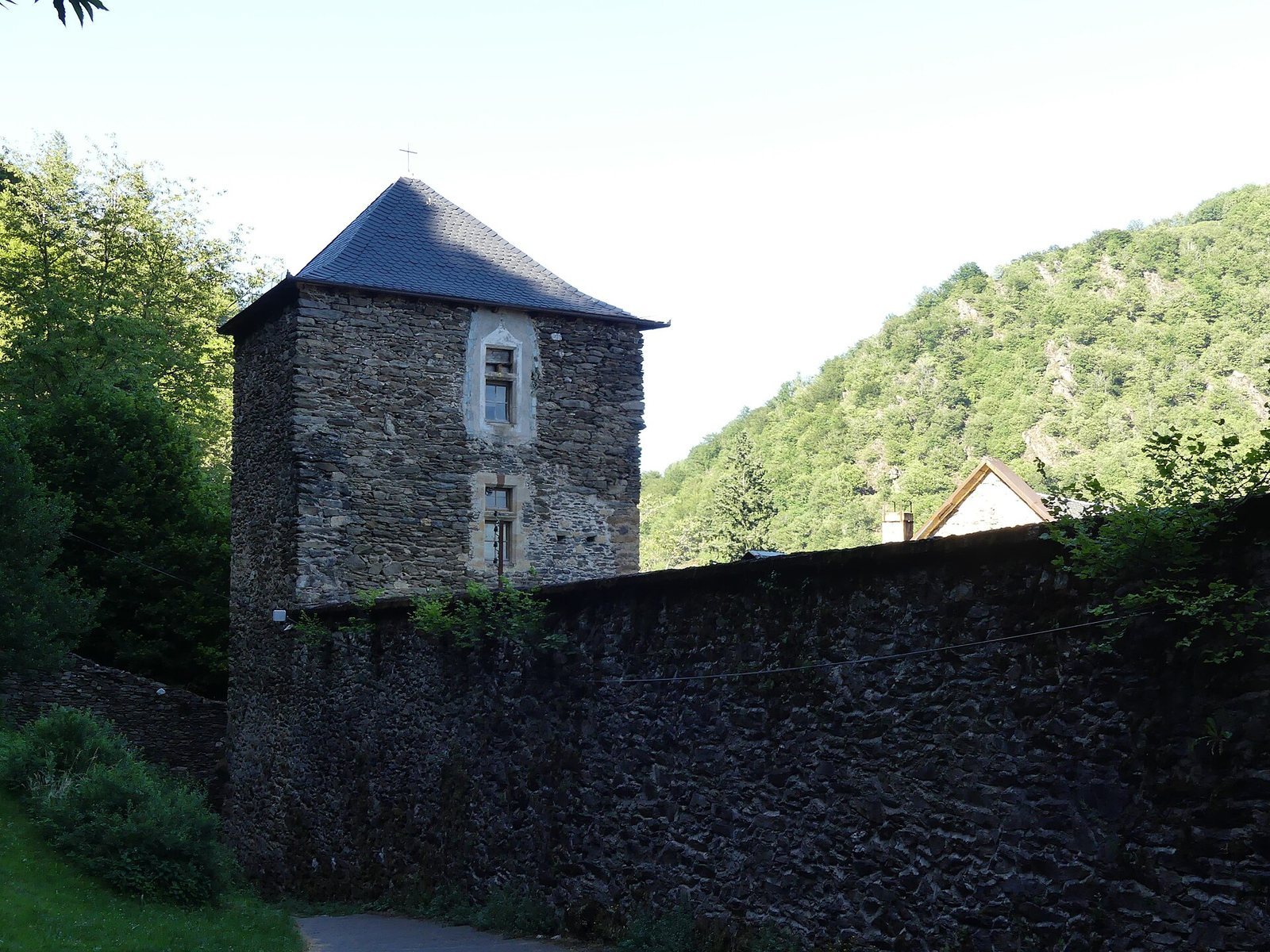
The abbey’s enclosing walls and towers date from the fourteenth to the sixteenth centuries. Its keep is later than the enclosure walls. Older building fabric is made of schist, a layered metamorphic rock, which was less attractive to stone removers than the eighteenth-century material. Much of the eighteenth-century façade was taken away, while other buildings at the abbey date from the eighteenth and nineteenth centuries.
Water infrastructure
The surviving water-supply and drainage system belongs to the abbey’s early fabric. Its hydroelectric works are associated with the Boralde Flaujaguèse; a dam and modern turbines belonging to the abbey continue to operate.
Fraissinet grange
At the associated Fraissinet grange, a chapel and an old bridge survive.