Bogenšperk Castle: A Renaissance Castle in Slovenia


Site at a Glance
- Rating
- 4.7
- Popularity
- Medium
- Country
- Slovenia
- Primary era
- Early Modern
- External website
- Open
- Eras represented
- Early Modern
- Civilizations
- Habsburg, Holy Roman Empire
- Site type
- Military
- Remains
- Castle
On this page7 sections
History
Bogenšperk Castle is a sixteenth-century Renaissance castle in Slovenia, near Dvor southeast of Litija, in the Municipality of Šmartno pri Litiji. Its history is closely associated with Johann Weikhard von Valvasor, a seventeenth-century Carniolan scholar, scientist, natural historian, and author known for his study of the historical duchy of Carniola.
Origins and the Wagen Family
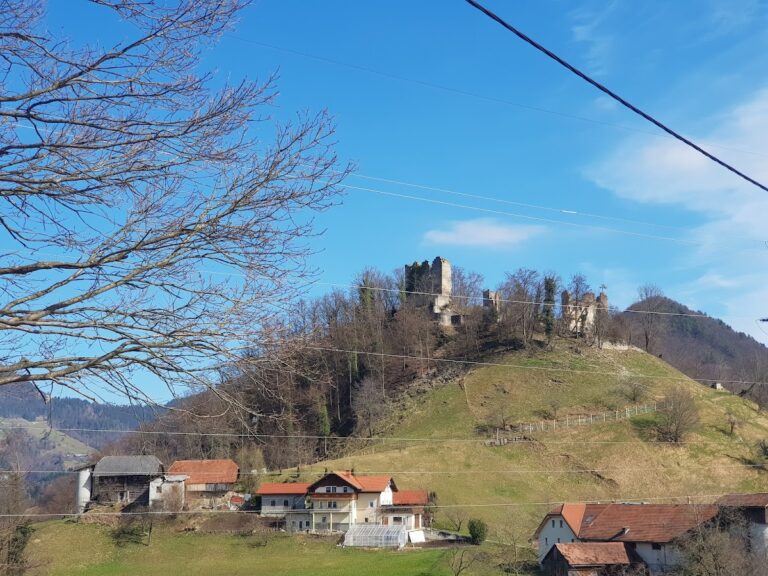
The castle probably originated as a replacement for nearby Lihtenberk Castle, a Wagen family property that was already in poor condition when a major earthquake severely damaged it in 1511. Bogenšperk was recorded as Wagen property in 1533, and its name came from the noble family. Lihtenberk served as the predecessor structure that Bogenšperk replaced.
After Jurij Wagen, the last member of the family, died in 1630, the castle passed through several owners. Johann Weikhard von Valvasor acquired it in 1672 after returning from abroad and made it his home and workplace until 1692.
Valvasor at Bogenšperk
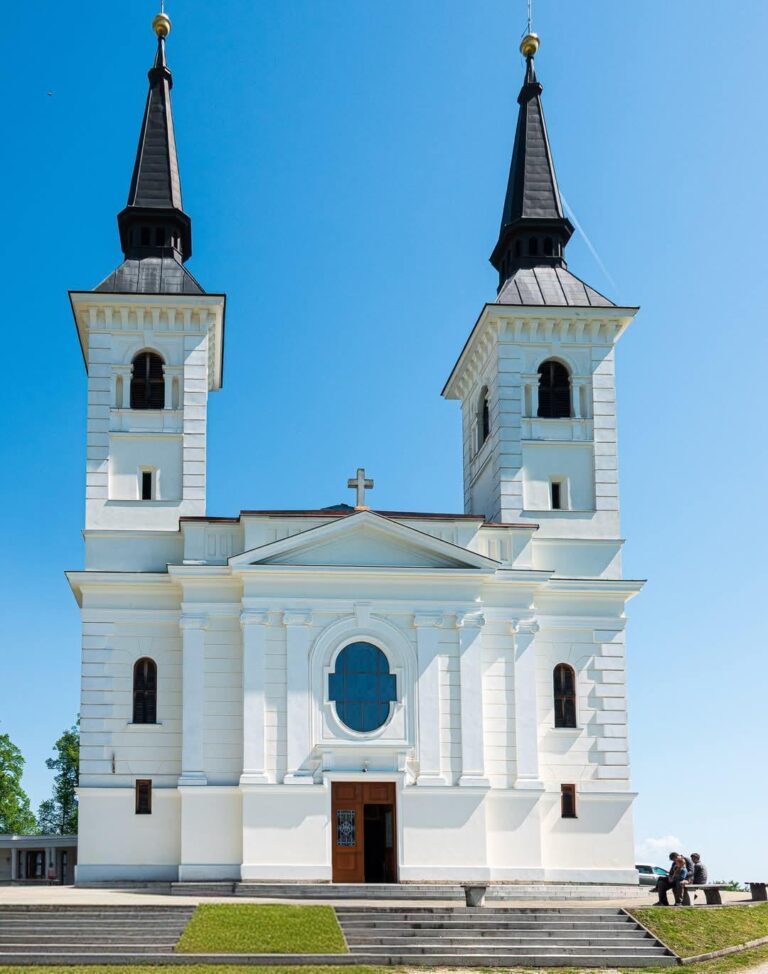
Valvasor undertook an extensive renovation of the castle and turned it into a centre for his scholarly and publishing activities. He established a graphic studio, copper-engraving workshop, library, printing press, and collection of curiosities. He also deepened the existing well and built a chapel dedicated to the Virgin Mary.
The expense of producing his book The Glory of the Duchy of Carniola left Valvasor heavily indebted. He first sold his valuable library and then disposed of his estates in 1692. His family moved to Krško, while Bogenšperk again passed among several owners.
War, Reuse, and Restoration
The noble Windischgrätz family owned Bogenšperk from 1853 until the Second World War. In September 1943, during the capitulation of Italy, they abandoned the castle and removed their valuables. The interior furnishings were later destroyed or looted, although the building itself survived the war intact.
After the war, the castle was converted into a military hospital. Jesuits, members of the Society of Jesus, later occupied it and carried out preventive maintenance that helped keep the building from collapsing. They left in 1964. An Investment Bureau in Trbovlje then considered converting Bogenšperk into a hotel, but the proposal was not carried out.
The castle was repaired in 1970, and systematic reconstruction began in 1972 under the initial leadership of art historian Milan Železnik. The Municipality of Litija now cares for the site. The restored castle contains a museum and the Davorin Hostnik Russian-Slovenian Centre, and it is recognized as a nationally important cultural monument of Slovenia.
Remains
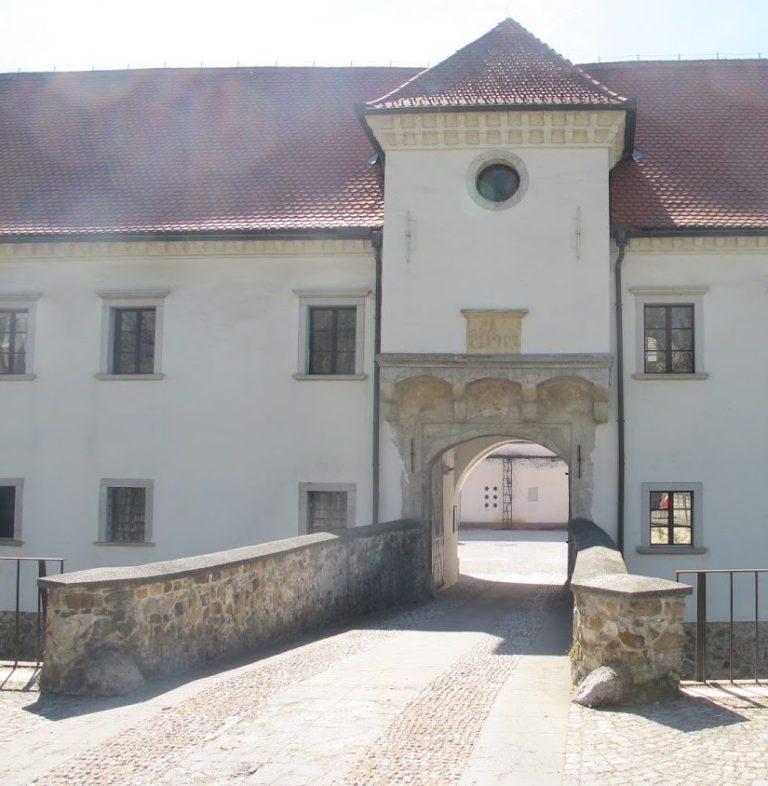
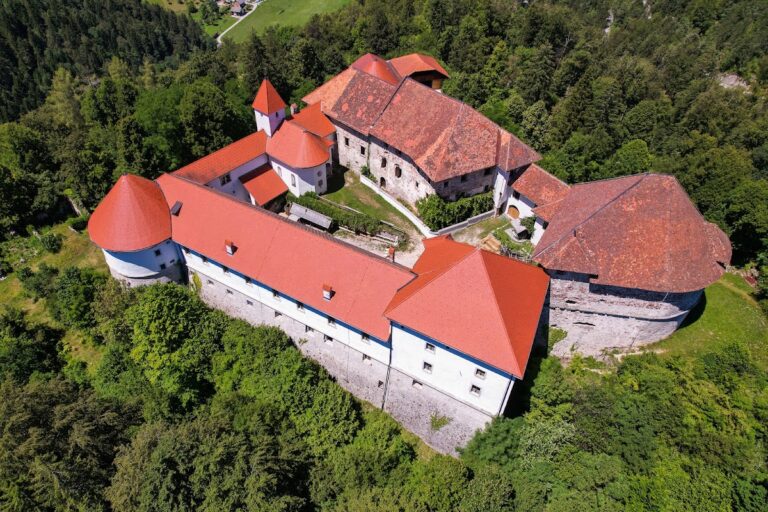
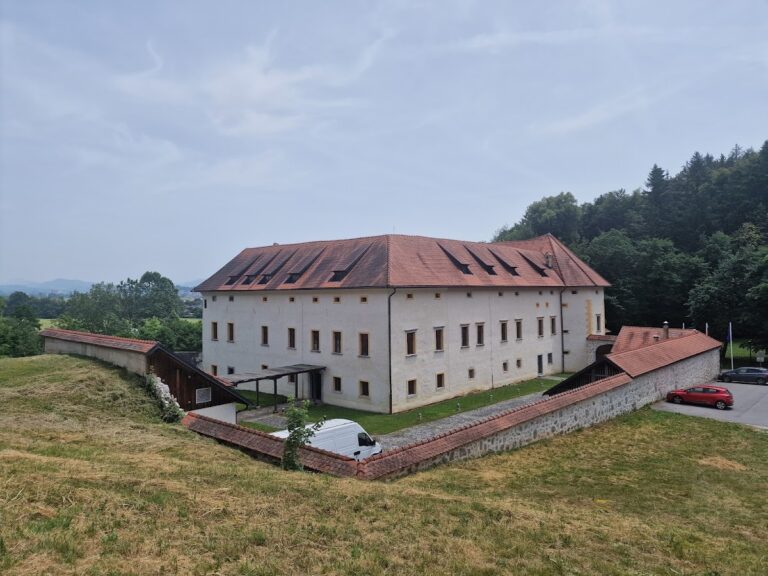
Bogenšperk stands on a low hill at an elevation of 412 metres, directly on bedrock. The three-story Renaissance building consists of four tracts from different periods joined to four corner towers. Together they enclose an arcaded inner courtyard whose present arrangement was established during Valvasor’s period.
Towers, Courtyard, and Facades
The southwest and northeast corner towers are round, while the other two have square bases. The north tower is the oldest part of the castle and originally stood as a separate fortification. A wooden bridge was later added to connect it with the southeast tower. That tower began as a defensive structure and was considerably higher than the rest of the castle. A lightning-caused fire in 1759 severely damaged it, and it was never restored to its original height.
The north facade carries a 1558 coat of arms of the Wagen family together with the coat of arms of Lihtenberk Castle. An image of the Virgin Mary in the style of Francesco Robba appears on the west facade, while the south facade bears the coat of arms of the Gallo family. A deep well cut directly into the bedrock survives within the castle, and its depth was increased during Valvasor’s ownership.
Restored Interiors and Collections
The restored interiors include a reconstruction of Valvasor’s study and a small printing press, along with rooms presenting the history of the castle and Valvasor’s work. Other spaces contain surveying and mapping material, a hunting collection, and a geological collection assembled by Blaž Zarnik, including a geological survey of the Municipality of Šmartno pri Litiji.
The museum also includes collections devoted to traditional folk costume, superstition and witchcraft, and death and the transience of life. A chapel has been reconstructed among the museum interiors. The first floor contains a wedding hall and a restaurant, while the surrounding grounds form a park.
Nearby sites