Blankenhain Castle: A Water Castle and Agricultural Museum in Germany


Site at a Glance
- Rating
- 4.6
- Popularity
- Medium
- Country
- Germany
- Primary era
- Early Modern
- External website
- Open
- Eras represented
- Medieval, Early Modern, Modern
- Civilizations
- Electorate of Saxony, Holy Roman Empire
- Site type
- Domestic
- Remains
- Castle
On this page7 sections
History
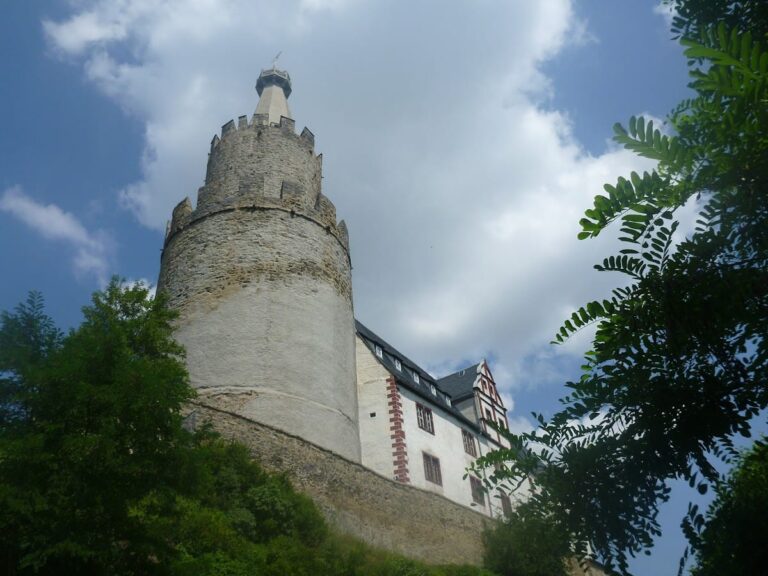
Blankenhain Castle is a historic water castle in Crimmitschau, Germany, whose origins probably reach back to the twelfth century. A water castle is a fortified residence protected wholly or partly by water, such as a moat or marshy ground. The castle later became the centre of a manorial estate, a landed property combining a lord’s residence with agricultural buildings and farmland, and is now part of the German Agricultural Museum Schloss Blankenhain.
Medieval origins and noble ownership
Archaeological investigations point to activity at the site from the twelfth century. The earliest surviving written reference dates from 1423, when Blankenhain was described as a water castle developed from an earlier defensive installation. The estate remained in the hands of landed noble families until 1774, including Lieutenant General Carl Gottlob von Neitschütz. Its ownership then passed to bourgeois families and prosperous manufacturers, reflecting a change in the social background of those who controlled the estate.
In 1785, Carl Gottlob Scheuereck, who owned a lace-manufacturing business in Annaberg-Buchholz, commissioned a Byzantine-style mausoleum in Blankenhain cemetery. It served as a hereditary burial place and became part of the estate’s wider historical landscape.
Industrial owners and twentieth-century change
The heirs sold Blankenhain in 1861 to Gustav Münch-Ferber, a manufacturer from Hof. Under his management the estate prospered until the First World War. Münch-Ferber ordered renovations and modernized its equipment. Friedrich Wilhelm Zacher, a manufacturer from Leubnitz, purchased the estate in 1924 and lived there from 1925 until 1945.
The castle was nationalized in 1945. After the Second World War, Soviet occupation authorities ordered its demolition, but local residents prevented the order from being carried out. The former water-castle site was registered as an archaeological monument on 7 December 1970.
Creation of the agricultural museum
Blankenhain Castle opened as an agricultural museum in 1981. The institution expanded over the following decades, and the castle was restored in 2005. A new exhibition opened on 7 and 8 October 2006 under the name German Agricultural Museum Schloss Blankenhain. Since then, the complex has brought together a castle museum, an open-air museum, a technology museum, and a folklore museum. An open-air museum presents historic buildings, landscapes, technologies, or practices across an outdoor site rather than in one enclosed building.
The museum presents the history of agriculture in Germany through approximately 100 themed exhibitions, including permanent exhibitions covering about 1890 to 1990. Its institutional links include partnership with the German Agricultural Museum Hohenheim, founded in Stuttgart in 1977, and cooperation with the Austrian Agricultural Museum Schloss Leiben since 2019.
Remains
Castle buildings and historic estate layout
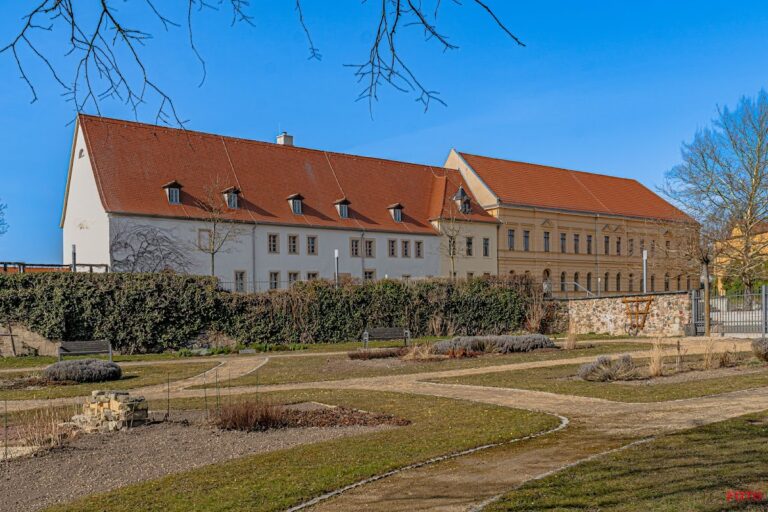
The castle stands in northern Blankenhain in the floodplain of the Koberbach. The museum complex covers 11 hectares and contains 80 exhibition buildings and other built installations. The present castle developed from the earlier water-castle site, which remains archaeologically identified as a castle site. A fire destroyed half of the castle in 1661, and the damaged complex was rebuilt by 1699 or 1700.
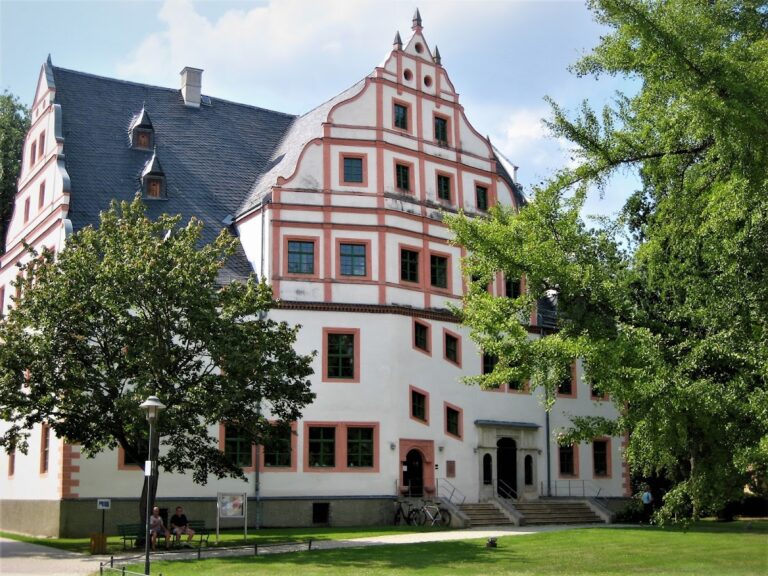
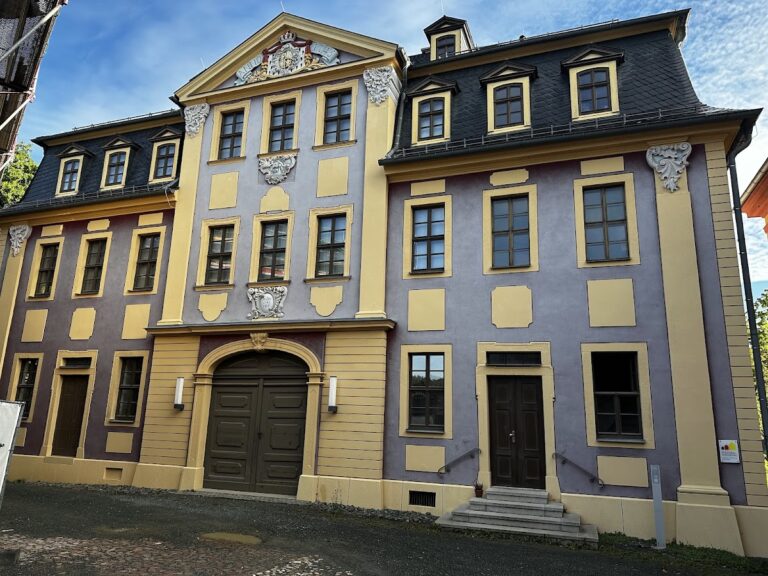
The main building has a Baroque appearance. Baroque architecture is an early-modern European style known for imposing forms and elaborate decoration. Its surviving Mansard roof and Baroque turret caps date from 1765. A Mansard roof has two slopes on each side, with the lower slope steeper than the upper one, creating additional usable space beneath it.
A forecourt building was added beside the castle in 1699 as a farm and service building. It was altered repeatedly during the eighteenth and nineteenth centuries. In 1949, the building was reorganized into two farms for new farmers, preserving evidence of the estate’s changing agricultural use.
Park, agricultural landscapes, and museum features
The grounds include a castle park and a pond area in front of the castle. Display areas contain historical crops, meadows, and pastures, extending the museum’s presentation of agriculture into the surrounding landscape.
Other sections of the complex include a parish farm with its parish house, a mausoleum with a crypt, a barn displaying historical hearses, a post mill, a village school, and a mortuary. The grounds also contain the graves of former owners of the manorial estate. Together, these buildings and landscape areas connect the castle with the agricultural, institutional, and burial features associated with the former estate.