Necropolis of Carenque: A Prehistoric Collective Burial Site in Portugal
Site at a Glance
- Popularity
- Medium
- Country
- Portugal
- Primary era
- Stone Age
- Eras represented
- Stone Age
- Civilizations
- Unclassified
- Site type
- Burial
- Remains
- Necropolis
On this page13 sections
History
The Necropolis of Carenque, also known as the Artificial Caves of Tojal de Vila Chã, is a prehistoric collective burial site at Carenque in Amadora, Portugal. Its tombs were built and first used around 3000 BCE, near the end of the fourth millennium BCE, and burials continued into the Chalcolithic, or Copper Age, until about 2000 BCE. This period followed the Neolithic, an era associated with settled farming, and saw copper used alongside stone tools.
Use and burial practices
The burials belonged to a Mediterranean funerary tradition connected with a late phase of megalithism, a prehistoric tradition of building monuments with large stones. By the time the earliest burials took place, local communities depended on farming and herding rather than hunting and gathering.
Later burials disturbed the earlier arrangement of bones and grave goods, making their original placement difficult to establish. It is uncertain whether the dead came from a single village or from a group with exclusive access to the necropolis. The burial customs are also poorly understood. In the earliest burials, bodies may have been placed in a crouched, fetal position against the chamber walls, with offerings around them.
Discovery and recognition
Archaeologist Manuel Heleno discovered and excavated the site in 1932. He was then acting director of what is now Portugal’s National Museum of Archaeology. The necropolis became a National Monument in 1936, a classification to which Heleno’s position and role in its discovery contributed.
Remains
Setting and shared plan
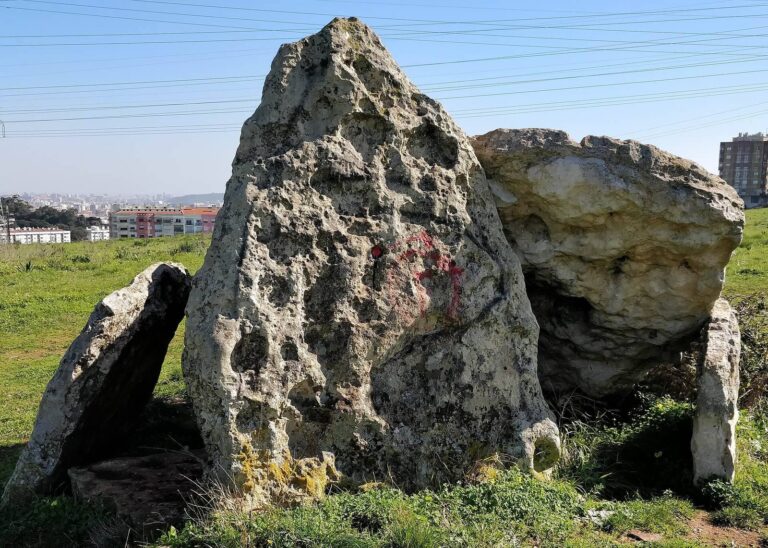
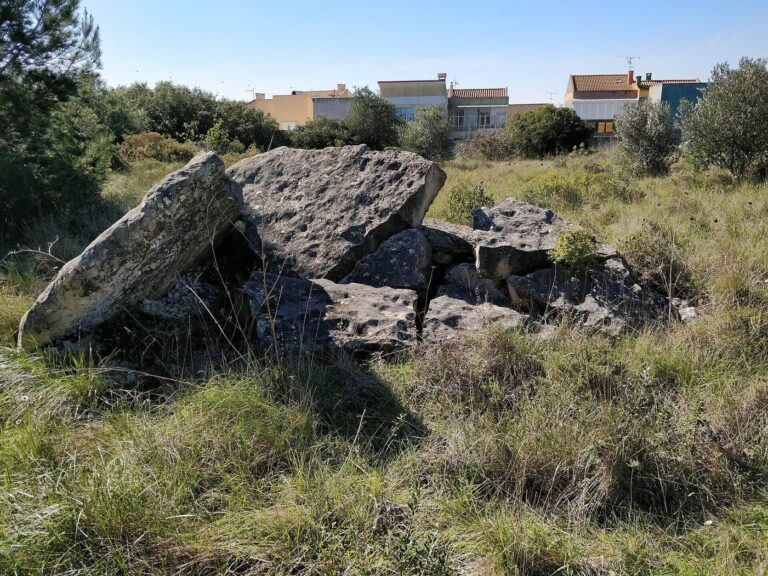
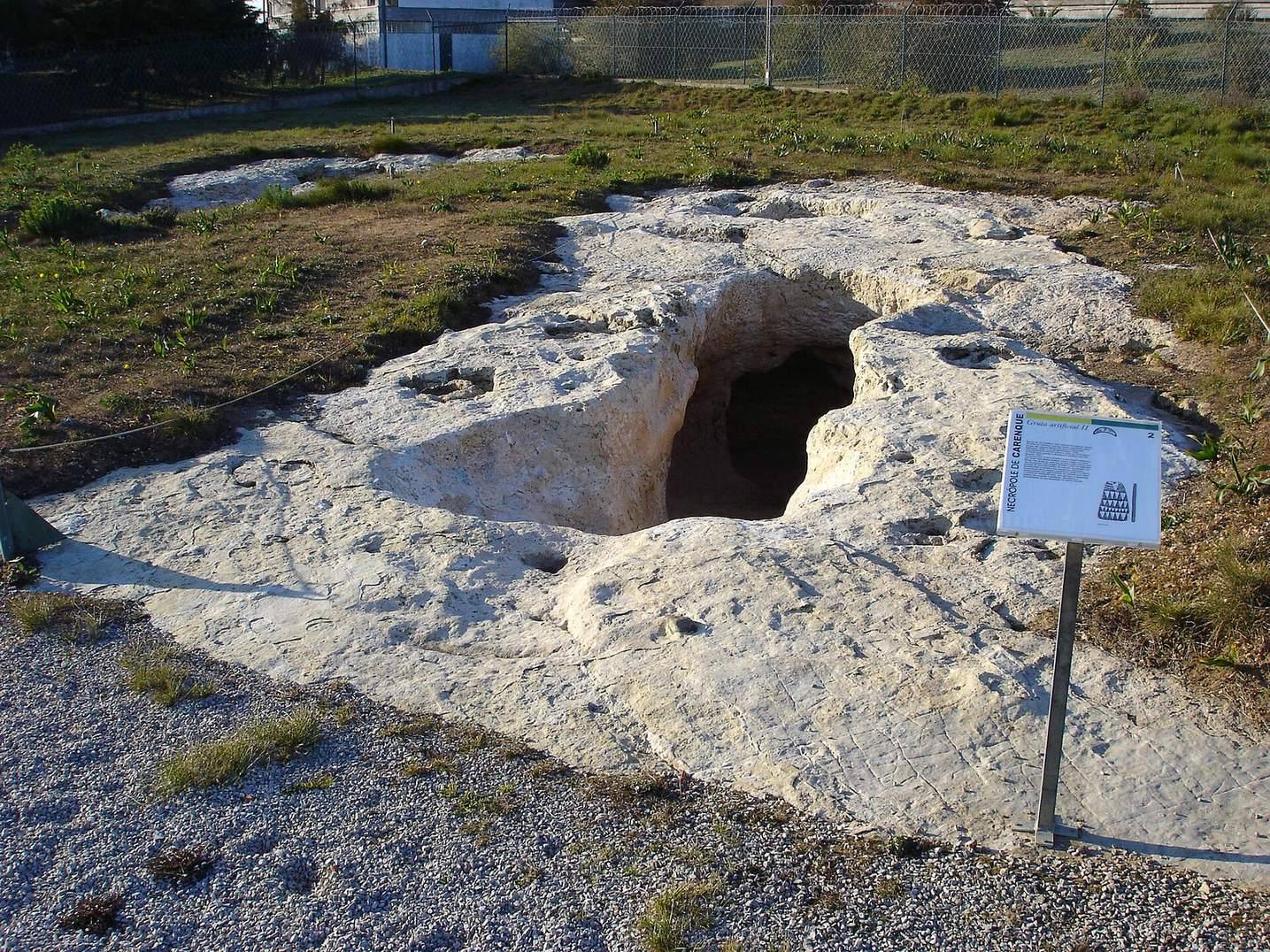
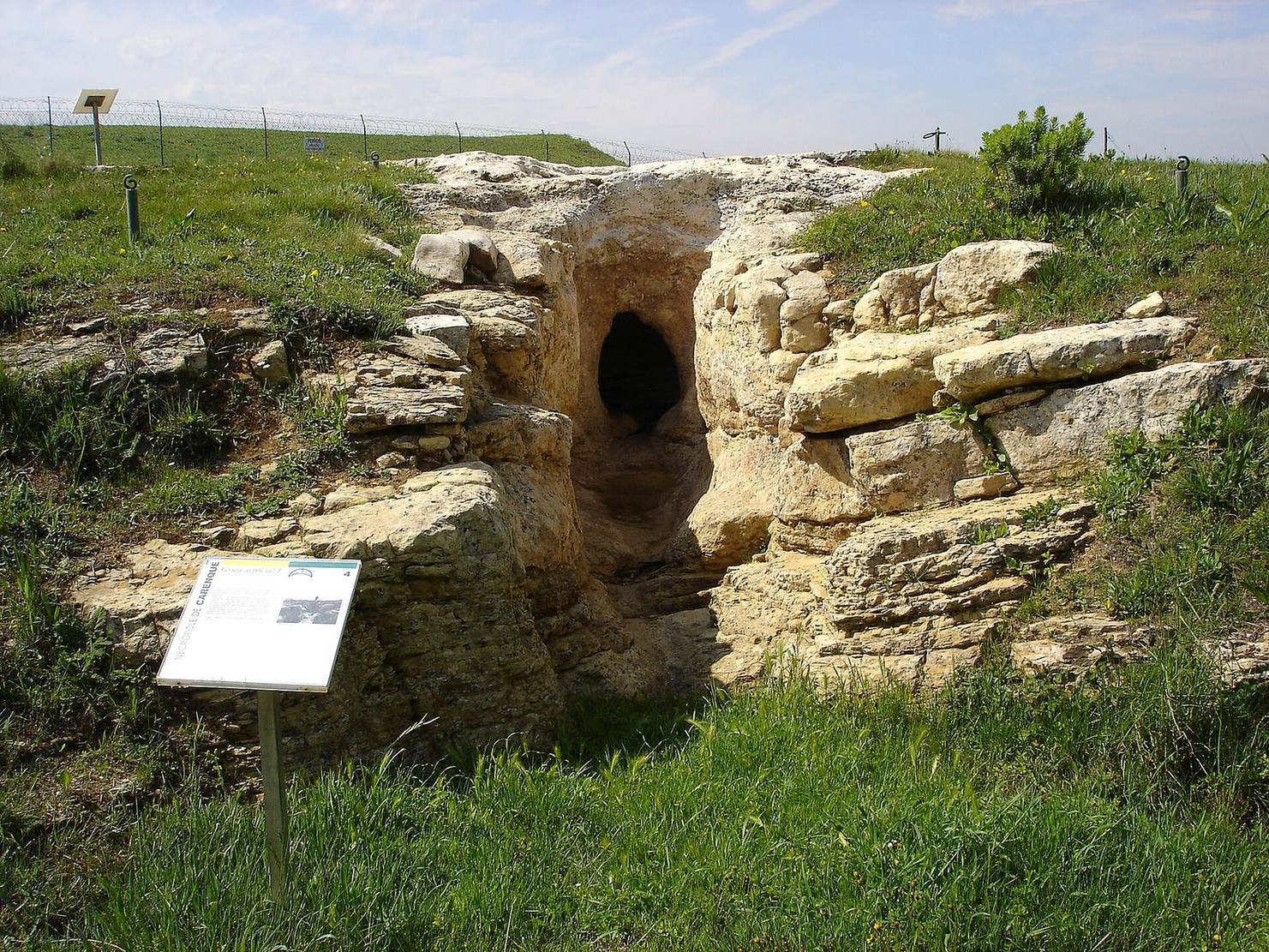
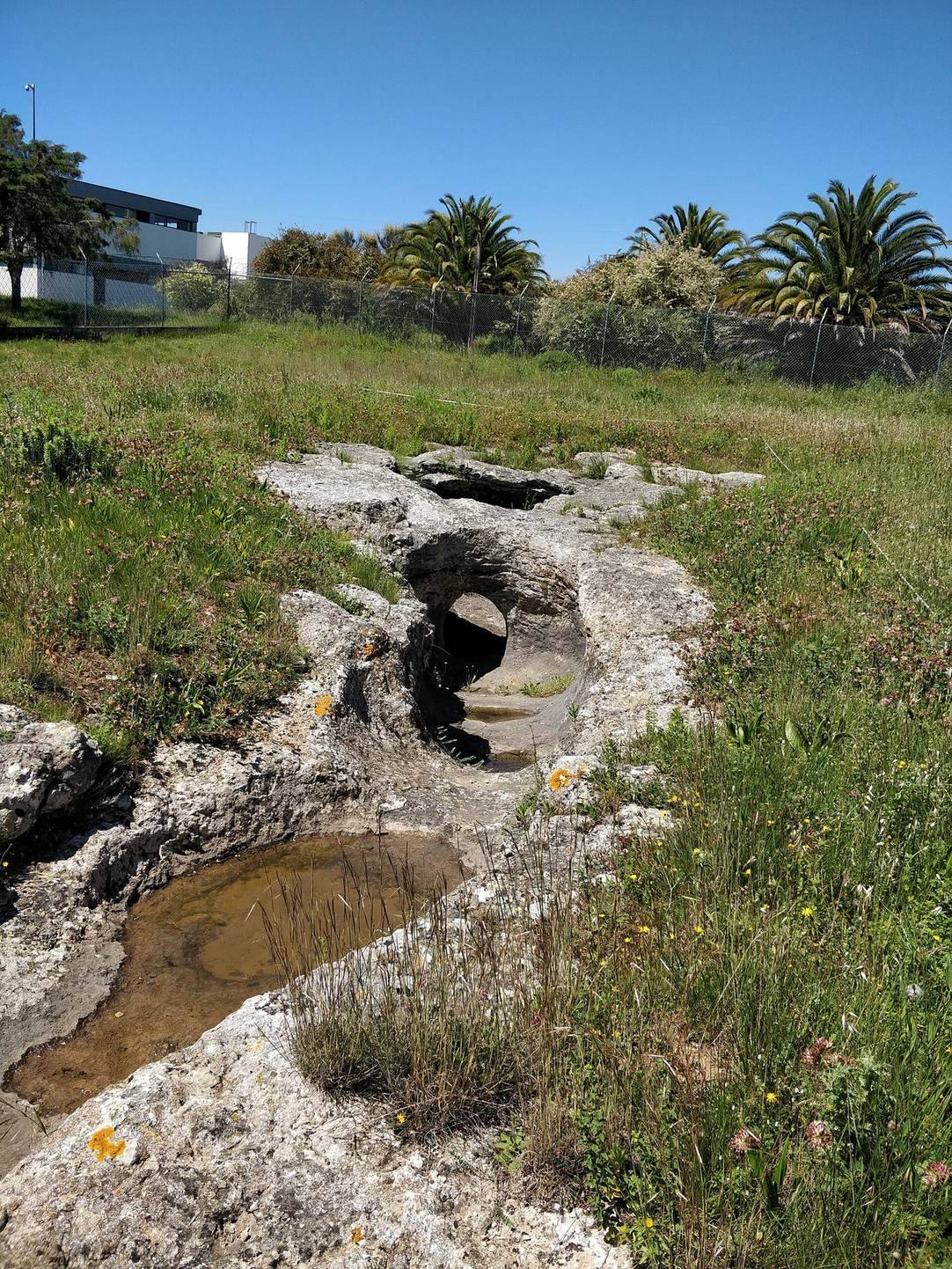
The tombs lie among limestone outcrops at Tojal de Vila Chã. Three well-preserved chambers are cut into the rock. Each has a corridor that leads through a small, rounded doorway into a burial chamber. An opening in the chamber roof admitted light, and limestone slabs covered the corridors and roof openings. The similar arrangement of all three tombs indicates that their builders followed a shared plan.
Individual tombs
Cave 1
The easternmost tomb has a circular chamber about 4.5 metres across. Its skylight is 1.30 metres high, while the chamber entrance is 0.83 metres high. A narrow corridor, about 5 metres long, leads to the chamber; it was probably covered with limestone slabs. The entrance faces approximately northeast.
Cave 2
This tomb has a circular chamber about 4.5 metres in diameter and 1.75 metres high. Its corridor is 5.5 metres long, and the skylight measures 1.60 metres across. The entrance faces approximately southeast.
Cave 3
The smallest of the three tombs has a chamber just under 4 metres in diameter. Erosion has made its skylight appear larger than those in the other two chambers. Its entrance faces approximately southeast.
Fourth cave
Heleno’s 1932 field notes also mention a fourth cave, which was already almost entirely destroyed.
Burial finds
Bones and pottery
Excavations recovered human bones and ceramics, including pottery associated with the Beaker culture, named for its characteristic bell-shaped vessels. The skeletal remains are considered representative of people who lived in southern Estremadura, the historical region in western Portugal, during this period.
Stone, metal, and other objects
Finds also include stone and metal objects such as arrowheads and daggers. Offerings included limestone idols, among them smooth or decorated cylinders and objects shaped as tools. Other recovered items include adzes, bone pins, beads, slate plaques, and crescent-shaped limestone ornaments. The plaques and crescents have holes for suspension. Most of the excavated artifacts and human remains are held at the National Museum of Archaeology in Lisbon.