Bieberstein Palace in Hesse: Fulda’s Baroque Residence and School
Site at a Glance
- Popularity
- High
- Country
- Germany
- Primary era
- Early Modern
- Eras represented
- Medieval, Early Modern, Modern
- Civilizations
- German, Holy Roman Empire
- Site type
- Religious
- Remains
- Palace
On this page11 sections
History
Bieberstein Palace is a Baroque complex at Langenbieber, in the municipality of Hofbieber, Germany. Commissioned in the early 18th century as a representative residence for Fulda’s prince-abbots, it later became a rural boarding school. Its history reaches back to a medieval castle associated with Fulda Abbey, a monastery led by an abbot.
The castle and Fulda’s administration
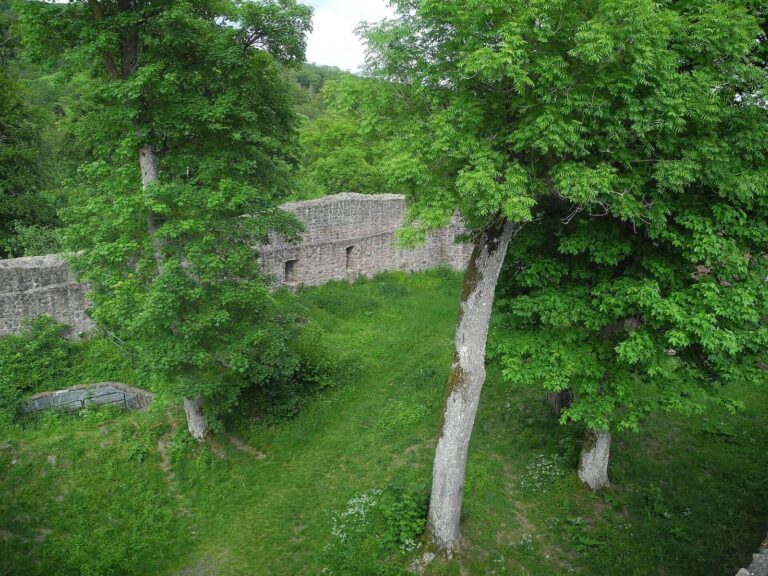
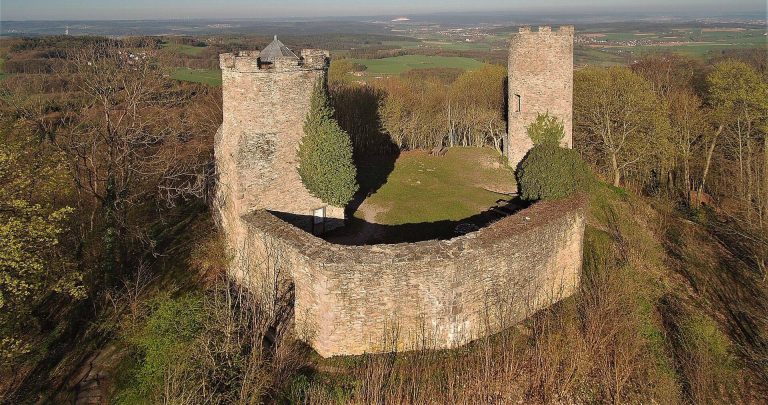
The area around Hofbieber belonged to Fulda Abbey from the ninth century. During Abbot Markward’s tenure, from 1150 to 1165, a castle project went ahead, apparently intended to stop the Church’s enemies from establishing a base there. The origins of the fortress are uncertain. Markward may have begun a new castle, or he may have taken control of an existing one, possibly held by the Bieberstein knightly family.
A family of Bieberstein knights appears in records from at least the late twelfth to the mid-thirteenth century. Before the middle of the thirteenth century, the castle had fallen into disrepair and was partly ruined. The family seems to have become impoverished and died out, after which Fulda Abbey acquired the castle and its lands. The abbey may not have gained full possession until the thirteenth century. Around 1250, Abbot Heinrich IV restored the castle and added a defensive ditch as part of a campaign against robber knights.
From the thirteenth century, Bieberstein probably served as the centre of a Fulda administrative district, later elevated to a higher level. Its cent court was a territorial court with authority over a defined district. The court itself met in Hofbieber, and its official lived there until the late seventeenth century, when he moved to Bieberstein. A register from 1510 lists twenty villages in the district. Some other settlements associated with it had become deserted by the fourteenth century, perhaps amid plague and famine.
Fulda’s rule and the prince-abbots
From the fourteenth century, Fulda’s costly conflicts repeatedly caused financial strain. The abbey pledged or sold property, including Bieberstein, but retained rights to buy it back and regained possession more than once. From 1486 until 1802, the castle belonged personally to Fulda’s prince-abbots, who combined their religious office with the authority of territorial rulers. From 1576 to 1602, Balthasar von Dernbach, temporarily removed from office as prince-abbot, was assigned the castle as his residence. Other prince-abbots also used it as an alternative residence.
Disputes from the sixteenth through the eighteenth centuries centred on Schackau, Kleinsassen, Eckweisbach, Langenberg, Horbach, Dornbach, Rupsroth, and half of Dietges. These places belonged to the Eberstein family but remained within Fulda’s jurisdiction. Their inhabitants had to attend the cent court in Hofbieber and help maintain the castle, obligations that repeatedly brought the family into conflict with the abbey.
The castle could protect people in the Bieber Valley from passing armies and during wartime, though this was probably uncommon outside the Thirty Years’ War, the major European conflict of 1618 to 1648. In return, residents faced labour duties and payments. These obligations ended in 1808, when Napoleon abolished serfdom. In 1672, Prince-Abbot Cardinal von Baden ordered repairs, probably to address war damage.
The Baroque residence
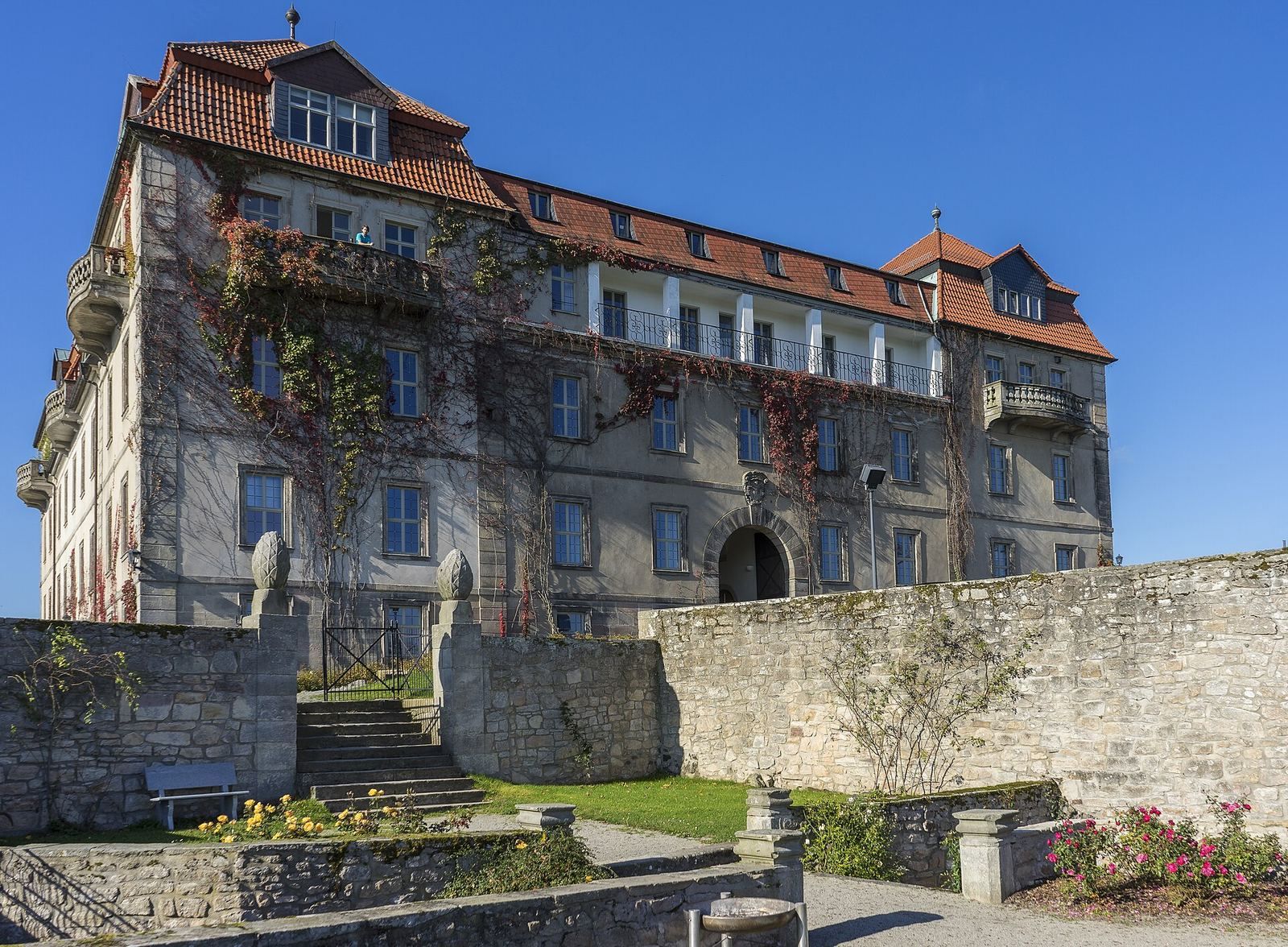
Seeking a more imposing residence for formal representation, Prince-Abbot Adalbert von Schleifras commissioned a Baroque palace design in 1709. Construction began in 1710 and was completed in 1723, after Adalbert’s death in 1714. The prince-abbots subsequently used the palace as a summer residence and held festivities there.
Changing rule and ownership
Secularization, the transfer of church property and authority to secular control, ended the prince-abbots’ rule in 1802 and 1803. The palace passed to the House of Orange-Nassau between 1802 and 1806, then came under French military administration until 1810. That year it was assigned to the Grand Duchy of Frankfurt, and in 1813 it passed into Austrian possession. Under the 1814–1815 Congress of Vienna settlement, which reorganized European territories after the Napoleonic Wars, it went to Prussia. Prussia exchanged it with Electoral Hesse for territories in the Rhineland. The palace remained in Electoral Hesse until Prussia annexed the electorate in 1866.
Foresters lived in the palace for a time, but its upkeep was costly. In 1852, Electoral Hesse considered converting it into a prison and prepared plans, though the project did not proceed. Designs for its use as a prisoner-of-war camp after the Franco-Prussian War of 1870 to 1871 also came to nothing. A private buyer acquired the palace in 1872. A railway company owned it from 1887 to 1901; from 1901, rooms were leased, and a restaurant opened in the building.
School, chapel, and later use
Protestant services began in the palace chapel in 1891. After extensive renovation, the chapel was named the Johann Sebastian Bach Chapel in 1952 and continued to serve the Evangelical congregation of Bieberstein-Dipperz. In 1904, educator Hermann Lietz bought the palace and established a rural boarding school shaped by his educational reform ideas. He faced opposition to the project, particularly from the Catholic Church in Fulda. The palace remains the site of the upper school of the Hermann-Lietz-Schulen, also known as Lietz Internat Schloss Bieberstein.
A major fire damaged the palace in 1908, and another fire on 29 November 1966 affected parts of the attic. Repairs followed. The palace passed through both world wars without significant damage; near the end of the Second World War, it was temporarily used as a hospital.
Remains
Setting and water supply
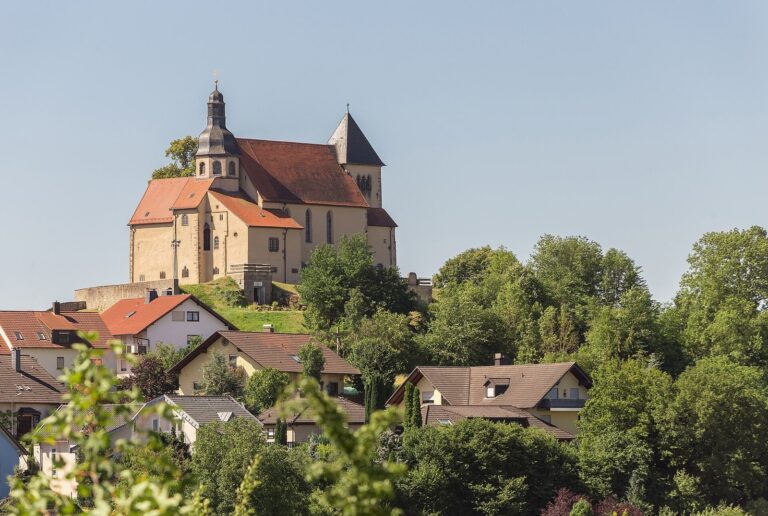
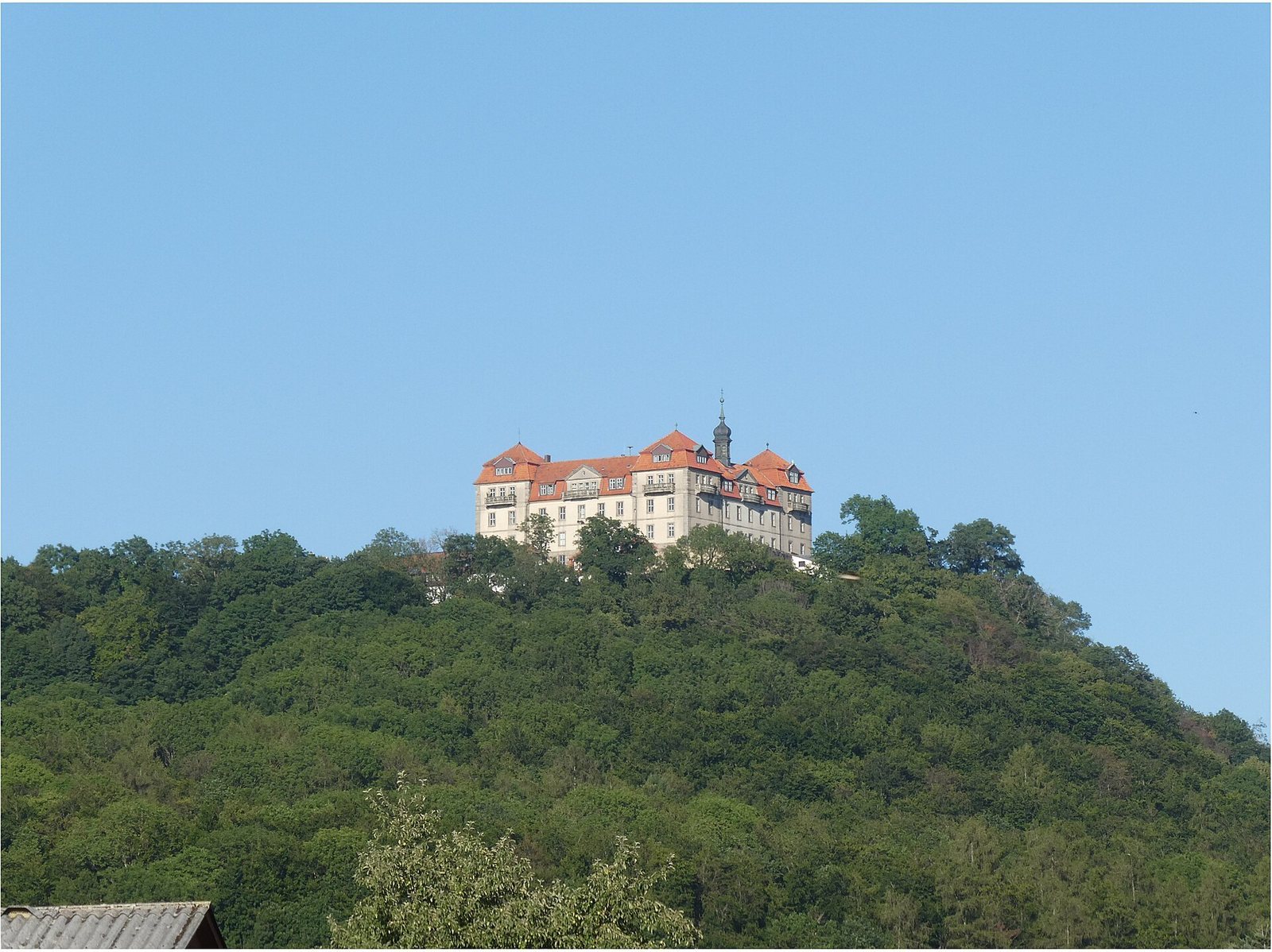
The palace stands on the 505.1-metre Kugelberg, a southern spur of the 517.7-metre Hessenliede. The land slopes away to the south towards the Bieber Valley. A draw well, about 57 metres deep, was built to reduce the need to carry water uphill from a spring below.
Palace complex
Main building
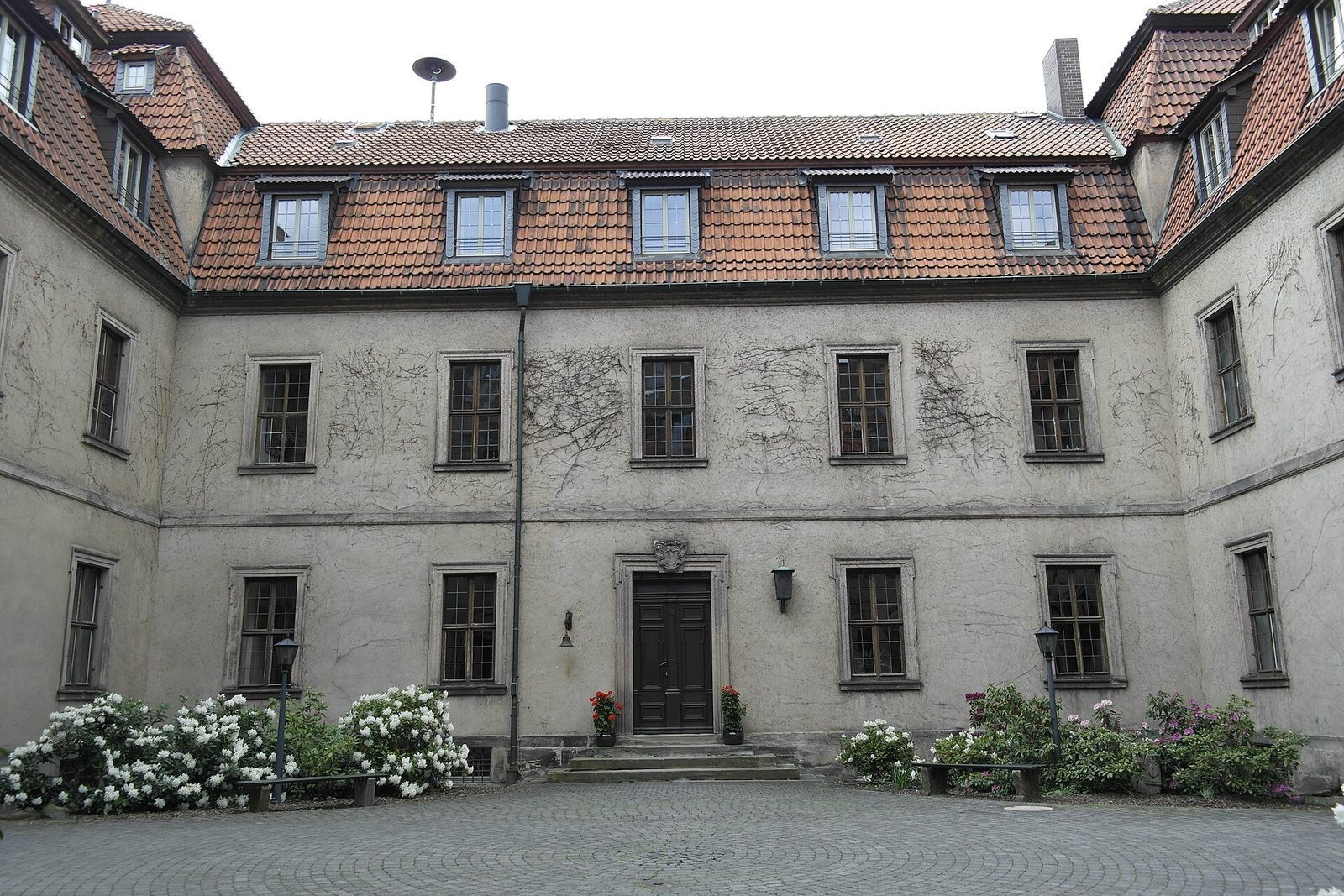
The palace’s present form reflects substantial later alteration to the Baroque complex. Following the 1908 fire, rebuilding added a full upper storey, along with towers and balconies. Repairs after the 1966 attic fire included a large balcony on the east side, an addition at odds with the building’s original style.
Chapel
The Johann Sebastian Bach Chapel forms part of the palace complex.