Citadel of Port-Louis: A Fortress at the Entrance to the Lorient Roadstead
Site at a Glance
- Popularity
- High
- Country
- France
- Primary era
- Early Modern
- Eras represented
- Early Modern
- Civilizations
- French, Habsburg, Habsburg Spain, Spanish
- Site type
- Military
- Remains
- Citadel
On this page10 sections
History
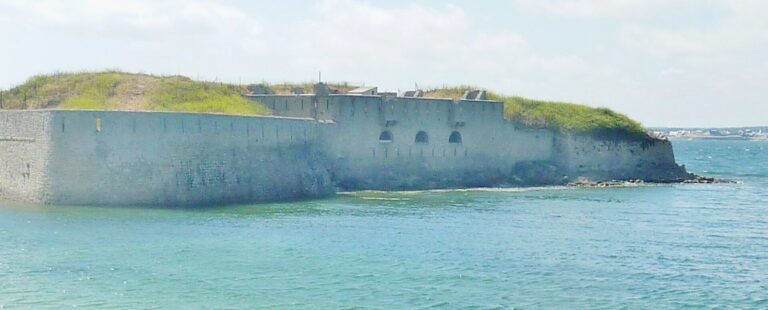
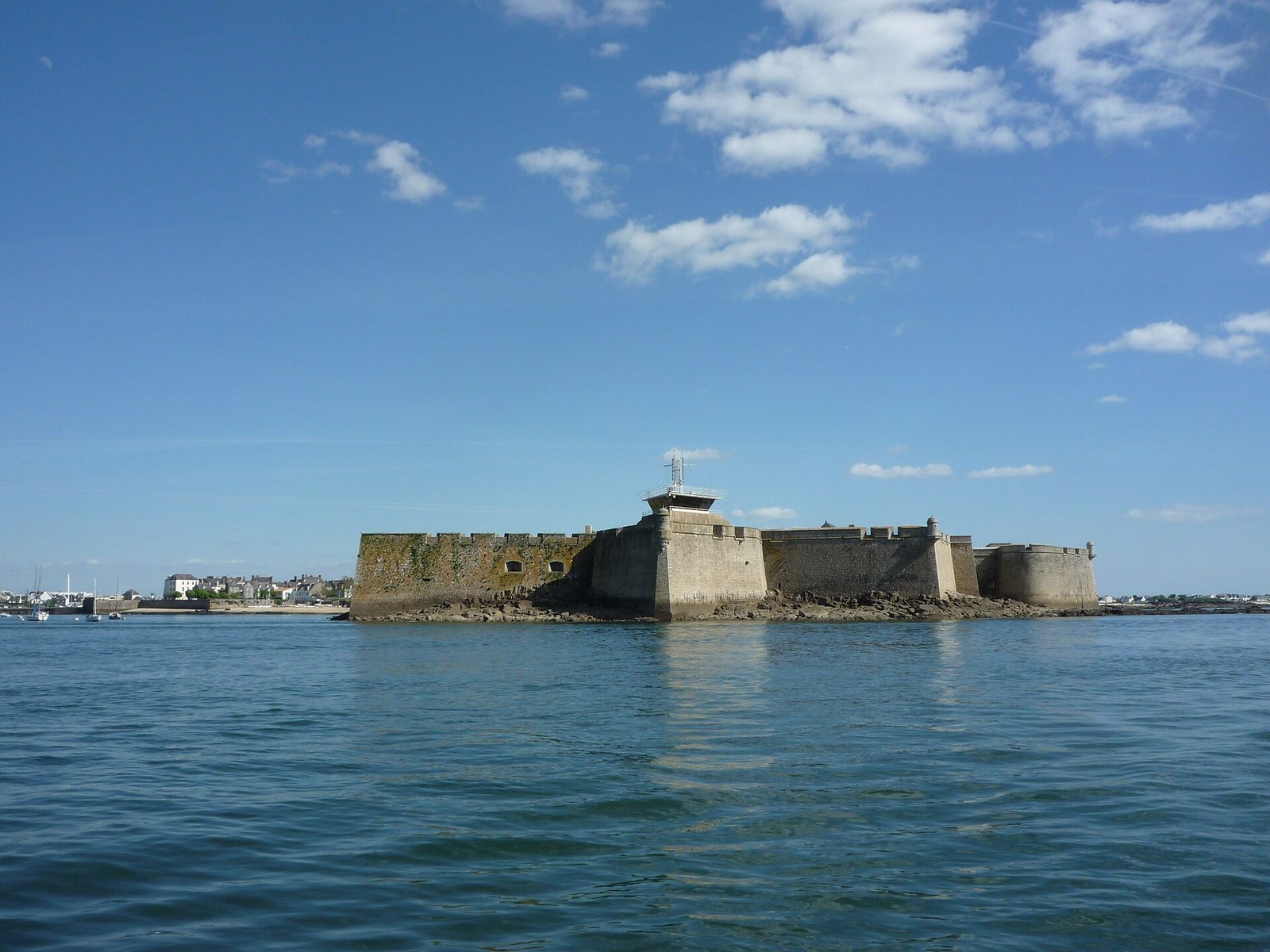
The Citadel of Port-Louis is a coastal fortress in France, at the entrance to the Lorient roadstead, a sheltered area of water where ships can anchor. Its present form dates from a seventeenth-century rebuilding, after Spanish and French efforts to control this strategically and commercially important waterway.
Early plans and Spanish fortification
In 1486, Francis II, Duke of Brittany, proposed fortifying the roadstead entrance. Two emissaries inspected the location, but funding was not released before Francis died in 1488, and the plan was abandoned. Later sixteenth-century defenses protected the town, but not the entrance to the roadstead.
During the Wars of the League, part of the French Wars of Religion, forces under the Duke of Mercœur occupied Hennebont in September 1589 and attacked Blavet, now Port-Louis, the following month. The town fell on 11 June 1590 after an assault by land and sea. Spanish troops allied with Mercœur arrived on 12 October and established a garrison.
In December 1590, Spanish military governor Juan del Águila commissioned architect Cristóbal de Rojas to build a fort at the roadstead entrance. The Spanish garrison held it until the Treaty of Vervins, the 1598 peace agreement between France and Spain. From August that year, Marshal de Brissac oversaw a partial demolition at the request of the Estates of Brittany, a provincial assembly representing clergy, nobility, and commoners, to deter another Spanish occupation.
Royal rebuilding and military use
Between 1618 and 1621, under Louis XIII, Port-Louis was made a royal town, meaning it came under the crown’s authority, and rebuilt as a larger citadel incorporating earlier fortifications. The town’s name is attributed to the king. The citadel became a central part of the defenses protecting the roadstead.
The French East India Company, a trading company established for commerce with Asia, set up at the Port-Louis roadstead in 1666, around the time Lorient was founded. The citadel served as an advanced defensive position, while the roadstead became an important center of colonial trade during the seventeenth and eighteenth centuries. Military authorities maintained, enlarged, and adapted the citadel during the eighteenth and nineteenth centuries. Additions in the eighteenth century included facilities for storing water and growing food.
Wartime occupation and later use
The citadel continued to help defend the roadstead until the Second World War. German forces controlled it from 1940 to 1945, using it as part of the defenses associated with the submarine base at Lorient. It also served as a prison and torture center, and members of the French Resistance were executed there.
After the war, the citadel was used to monitor maritime traffic. Its last military personnel departed in 2007. It now houses the Museum of the French East India Company, an art and history museum of Lorient, the Port-Louis branch of the National Museum of the Navy, and facilities devoted to sea rescue. The citadel and its ramparts have been protected as historic monuments since 29 April 1948.
Remains
The citadel’s present layout reflects the seventeenth-century rebuilding and the incorporation of earlier defensive works. Standing at the entrance to the Lorient roadstead, it includes ramparts, courtyards, interior buildings, and later service installations. The surviving fortress has been restored and is in good condition.
Early defensive works
Spanish fortifications
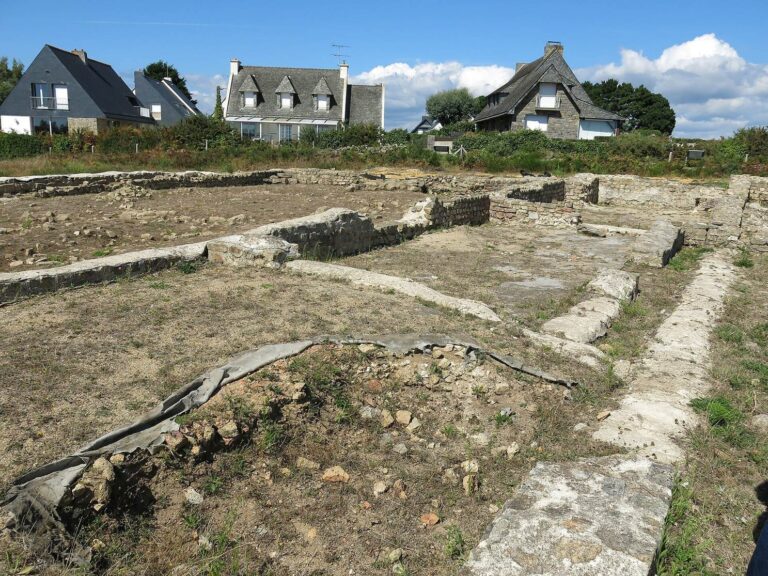
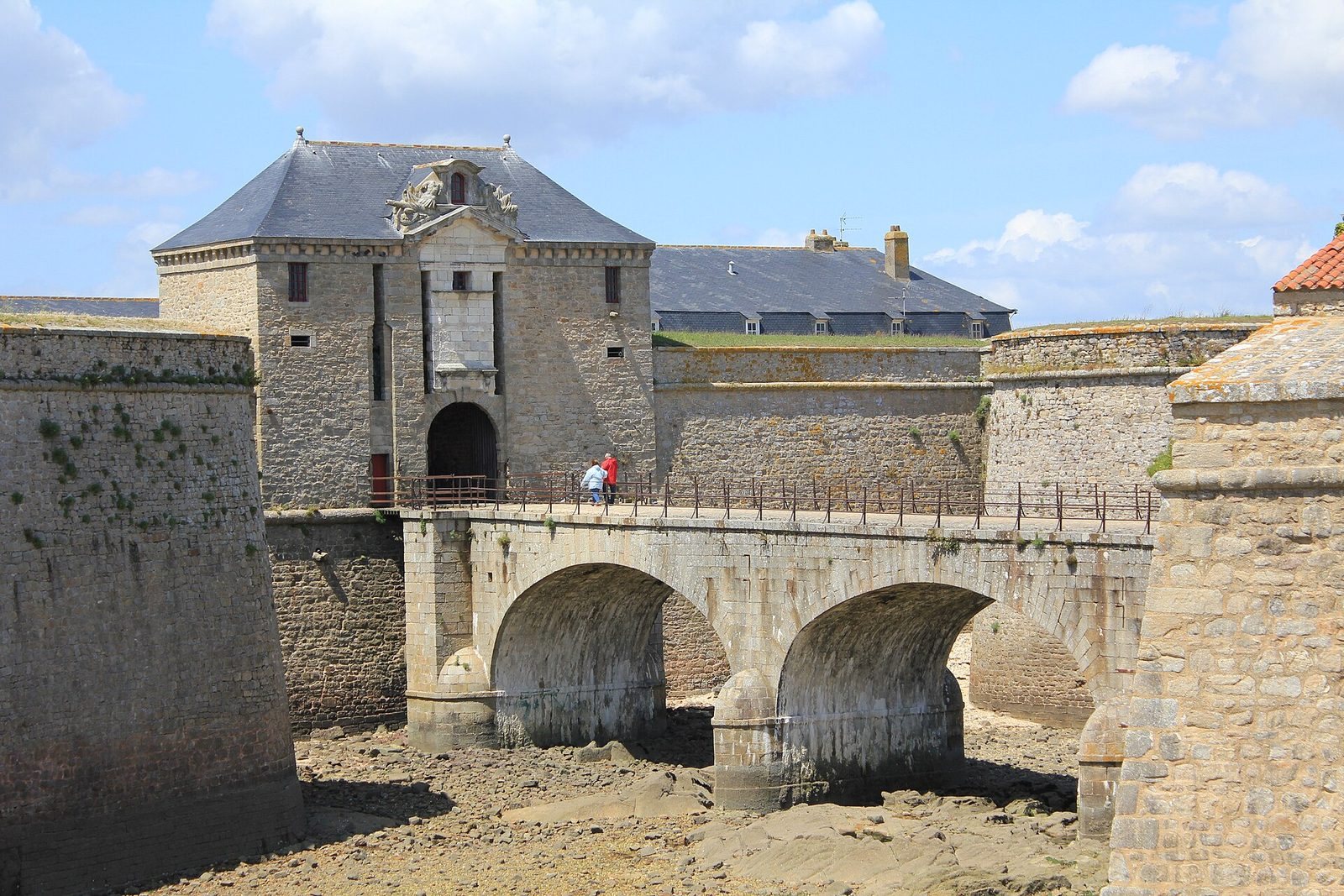
The original Spanish fort had two projecting bastions on its landward front. Their rounded shoulders and protected, enclosed gun positions along the sides were characteristic of sixteenth-century fortifications. The surviving early works include two bastions, a curtain wall joining defensive positions, bridge piers, and troop barracks. These features remained after the partial demolition of 1598.
Citadel buildings and installations
Ramparts and inner spaces
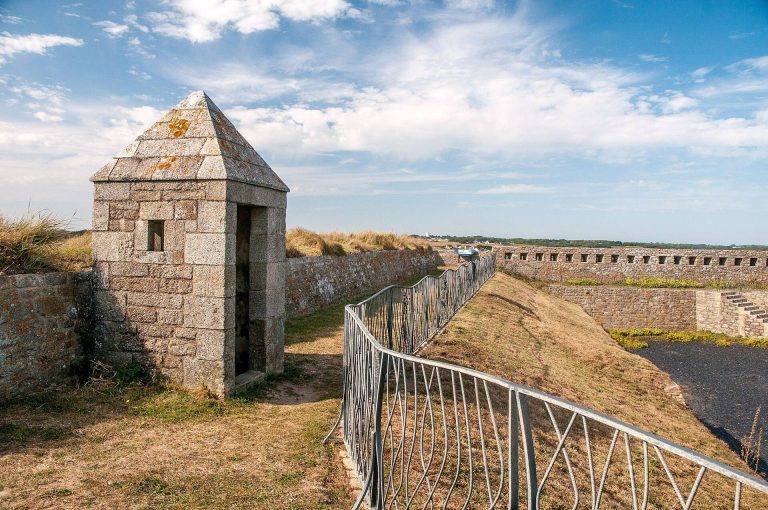
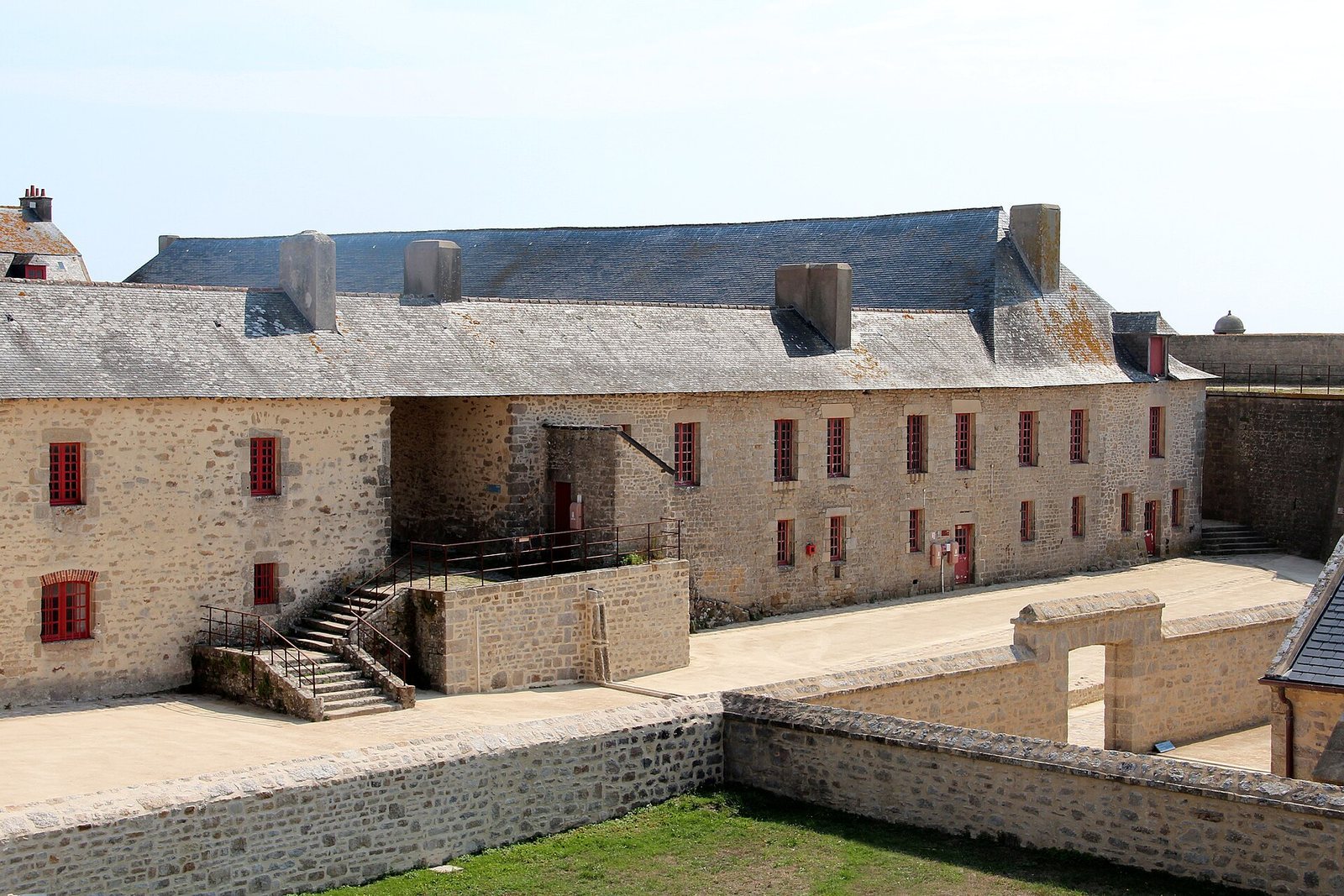
The citadel includes a south rampart, a main courtyard, interior buildings, a sentry turret, and the Bastion of the Chambers. A maritime semaphore, a station for signaling maritime traffic, also stands within the fortification.
Lower courtyard and service features
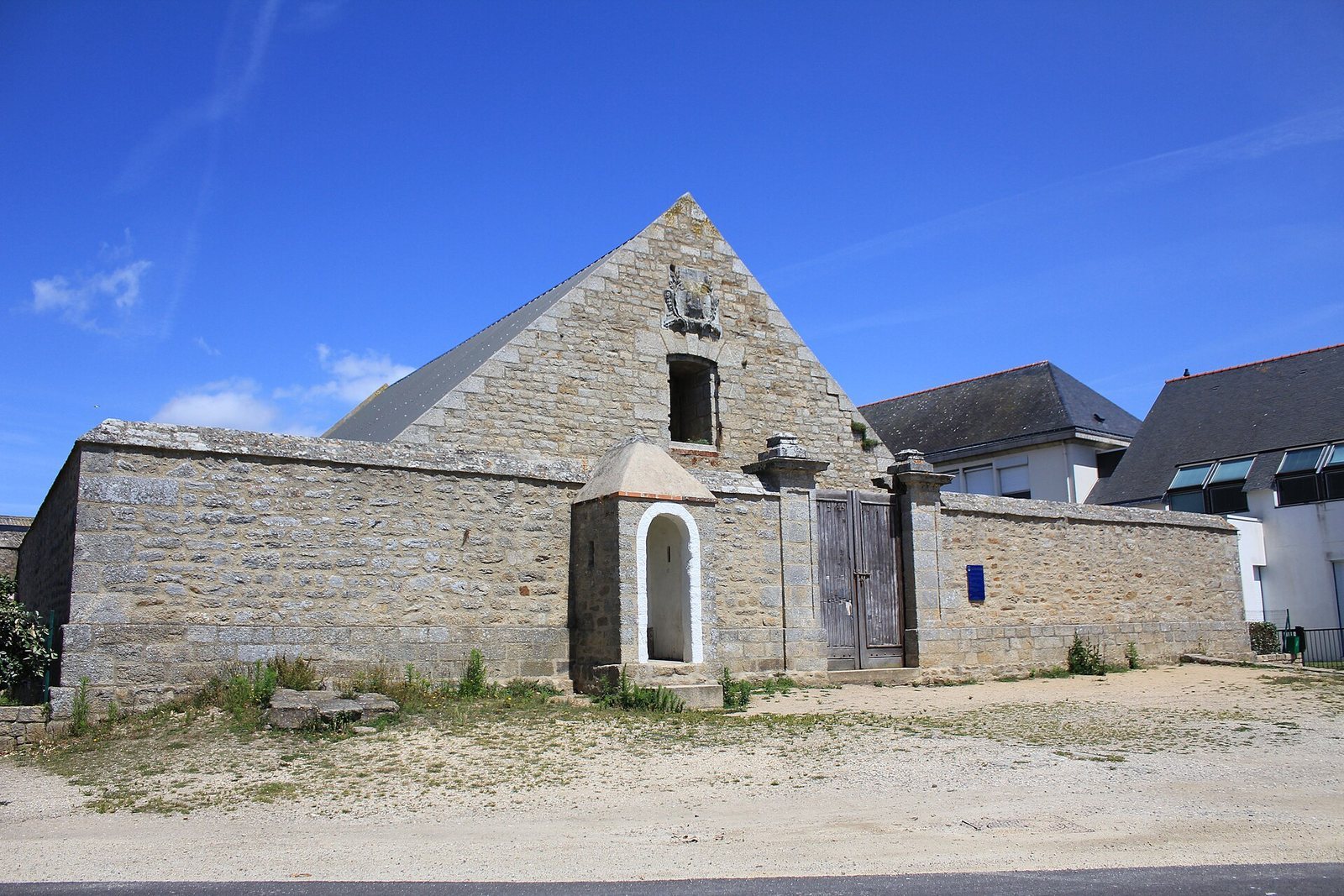
An arsenal and a cannonball store occupy the lower courtyard. These later works are attributed to Vauban, the French military engineer, but the citadel’s overall form is not attributed to him. Eighteenth-century installations also include cisterns, wells, and kitchen gardens.