Beverley Bar: A 15th-Century Town Gate
Site at a Glance
- Rating
- 4.7
- Popularity
- Low
- Country
- United Kingdom
- Primary era
- Medieval
- Eras represented
- Medieval, Modern
- Civilizations
- British, English
- Site type
- Military
- Remains
- Gate
On this page9 sections
History
Medieval origins and tolls
Beverley Bar is a 15th-century town gate in Beverley, in the East Riding of Yorkshire, United Kingdom. Beverley had no town wall in the early medieval period, but records indicate that its bars were in place by the 12th and 13th centuries. The surviving North Bar was built in 1409 and renovated in the 17th century.
The bars collected tolls from people passing through, with payments serving as a local tax. In 1420, when Henry V, king of England from 1413 to 1422, visited Beverley, toll records show that North Bar was the town’s principal entrance.
Civic and festival uses
During the 15th and 16th centuries, town governors watched plays from North Bar during Corpus Christi festivals. Corpus Christi is a Christian feast honoring the Eucharist. The Bar is also associated with the Pilgrimage of Grace, the major northern English uprising of 1536–37 against Henry VIII’s religious and governmental changes.
Civil War and fairs
In 1643, during the English Civil War, a conflict between Royalist and Parliamentarian forces, Beverley’s mayor, Manbie, ordered ward constables to lock North Bar and the Newbigin and Keldgate Bars each night from 9 p.m. until 6 a.m.
Fairs were held on both sides of the Bar. In 1673, the twice-yearly horse fair took place in the street inside it, while the twice-yearly sheep fair was held outside. In 1686, the annual cattle fair moved inside, and the sheep and horse fairs moved outside. The cattle fair relocated elsewhere in Beverley in 1865; by 1959, all the fairs had moved farther away. Beverley Bar is owned by Historic England, England’s public body for the historic environment, and is Grade I listed and included on the National Heritage List for England.
Remains
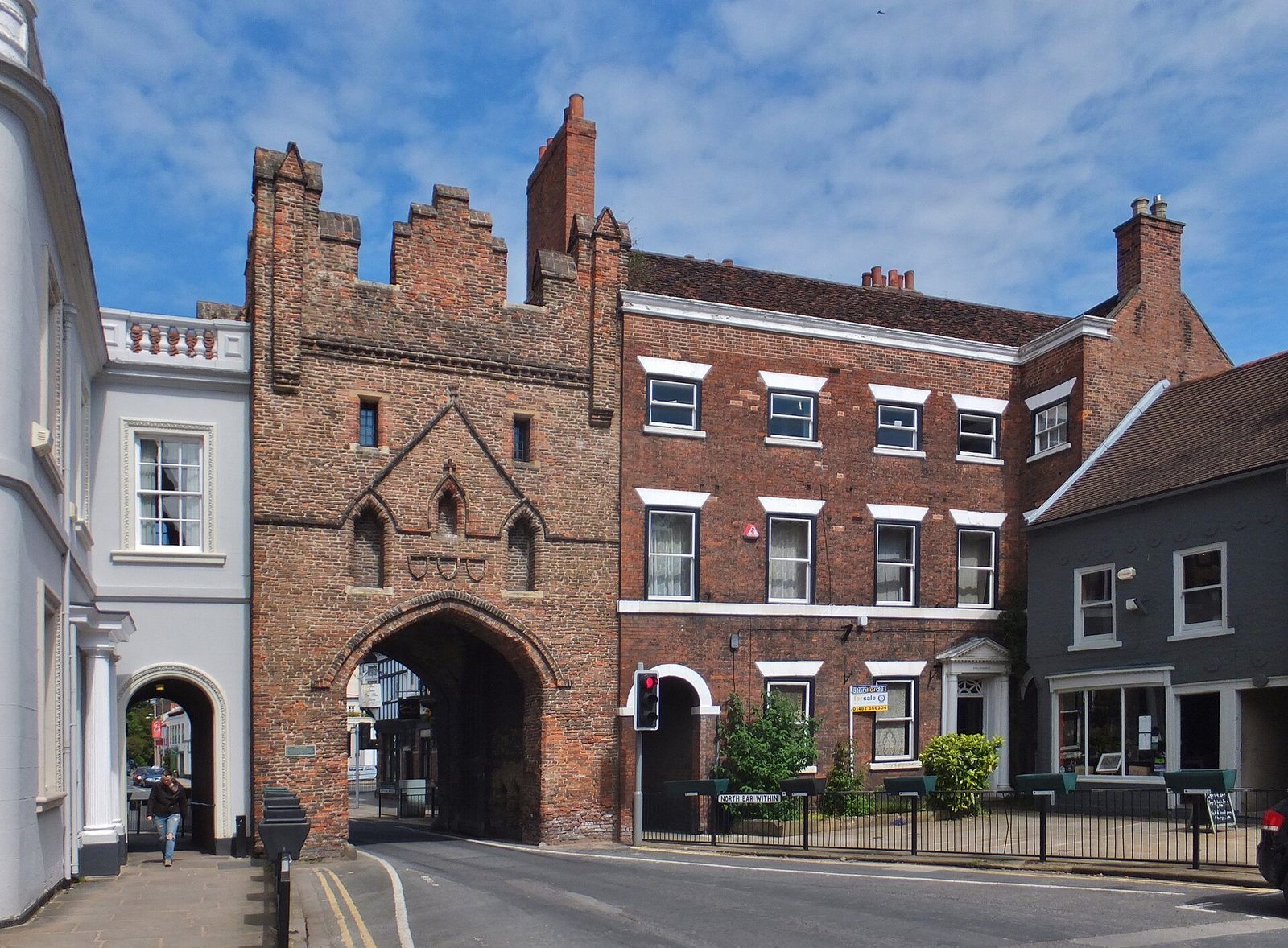
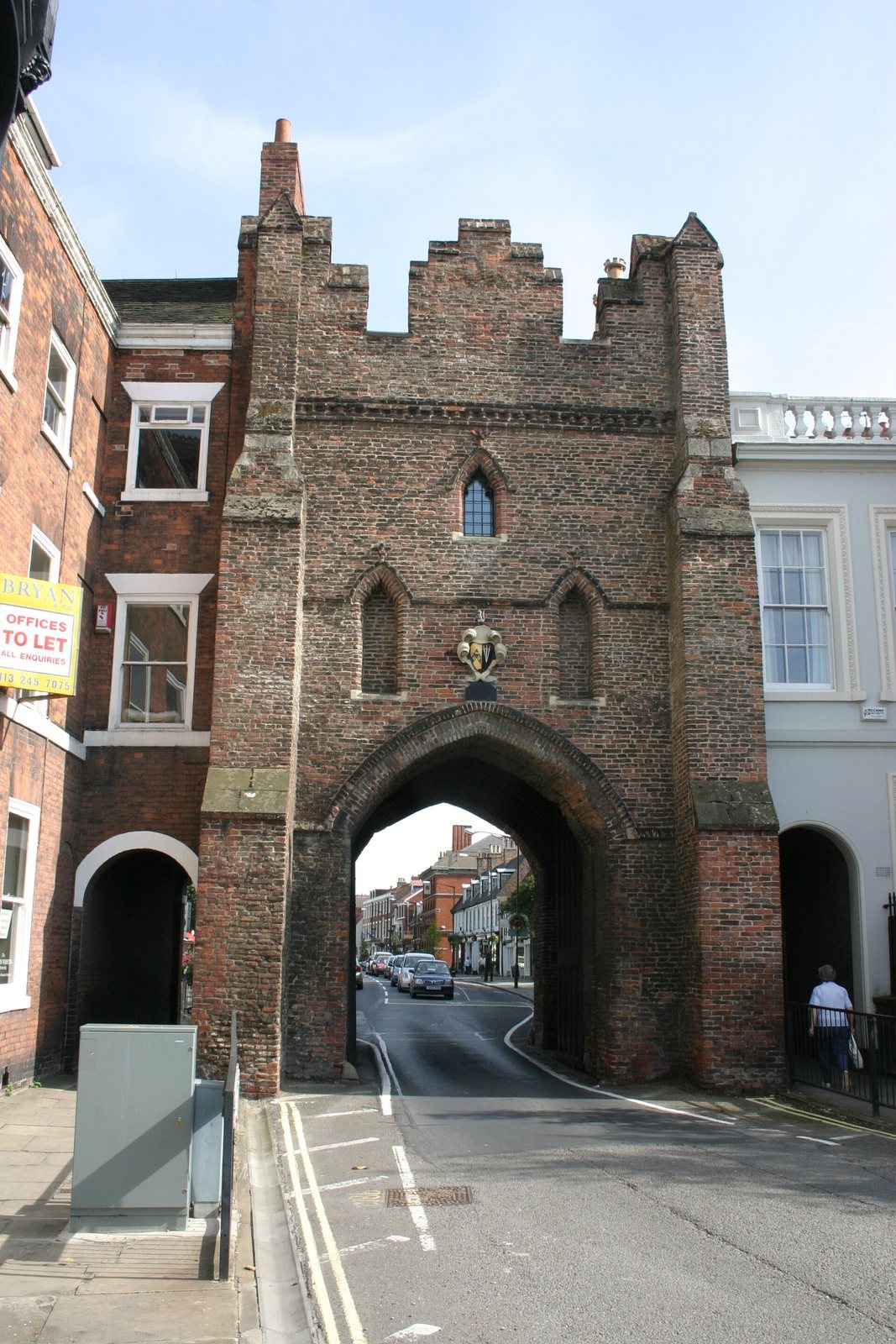
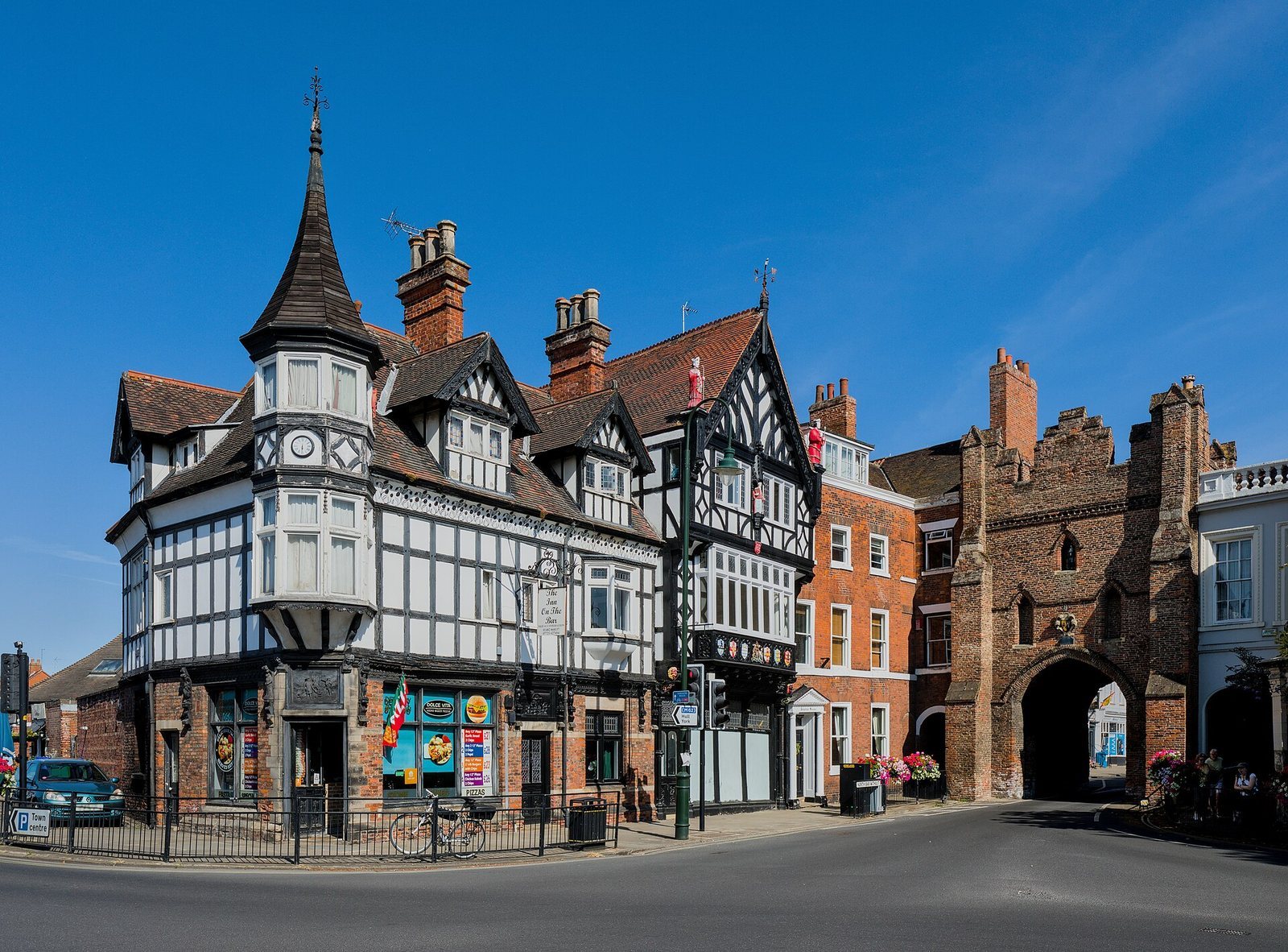
The complete, two-storey brick gateway stands between North Bar Without and North Bar Within, near Beverley St Mary’s, and abuts buildings on either side. Its arched passage runs through the structure beneath a crenellated parapet, a wall-top with alternating raised sections and openings.
Exterior and passageway
North face
Projecting brick supports flank the archway. Above it, a carved stone panel bearing a coat of arms sits between two recessed openings filled with brick, with another recessed opening higher up. A brick course marks the level below the crenellated parapet.
South face
Raised brickwork above the arch depicts three shields hanging from a line. The shields sit between two recessed windows filled with brick, with a smaller bricked-up window above. Gable-shaped brickwork frames this arrangement; two modern rectangular windows are higher up. A brick course runs below the crenellated parapet.
Interior passage
Inside the archway, rib vaulting, a ceiling supported by intersecting ribs, follows the shape of the arches and divides the passage into two sections. A groove guides a portcullis, a vertically sliding gate.