Puente de Piedra: Zaragoza’s Historic Bridge over the Ebro
Site at a Glance
- Rating
- 4.7
- Popularity
- Very High
- Country
- Spain
- Primary era
- Medieval
- Eras represented
- Medieval, Early Modern, Modern
- Civilizations
- Crown of Aragon, Habsburg, Habsburg Spain, Spanish, Umayyad
- Site type
- Infrastructure
- Remains
- Bridge
On this page12 sections
History
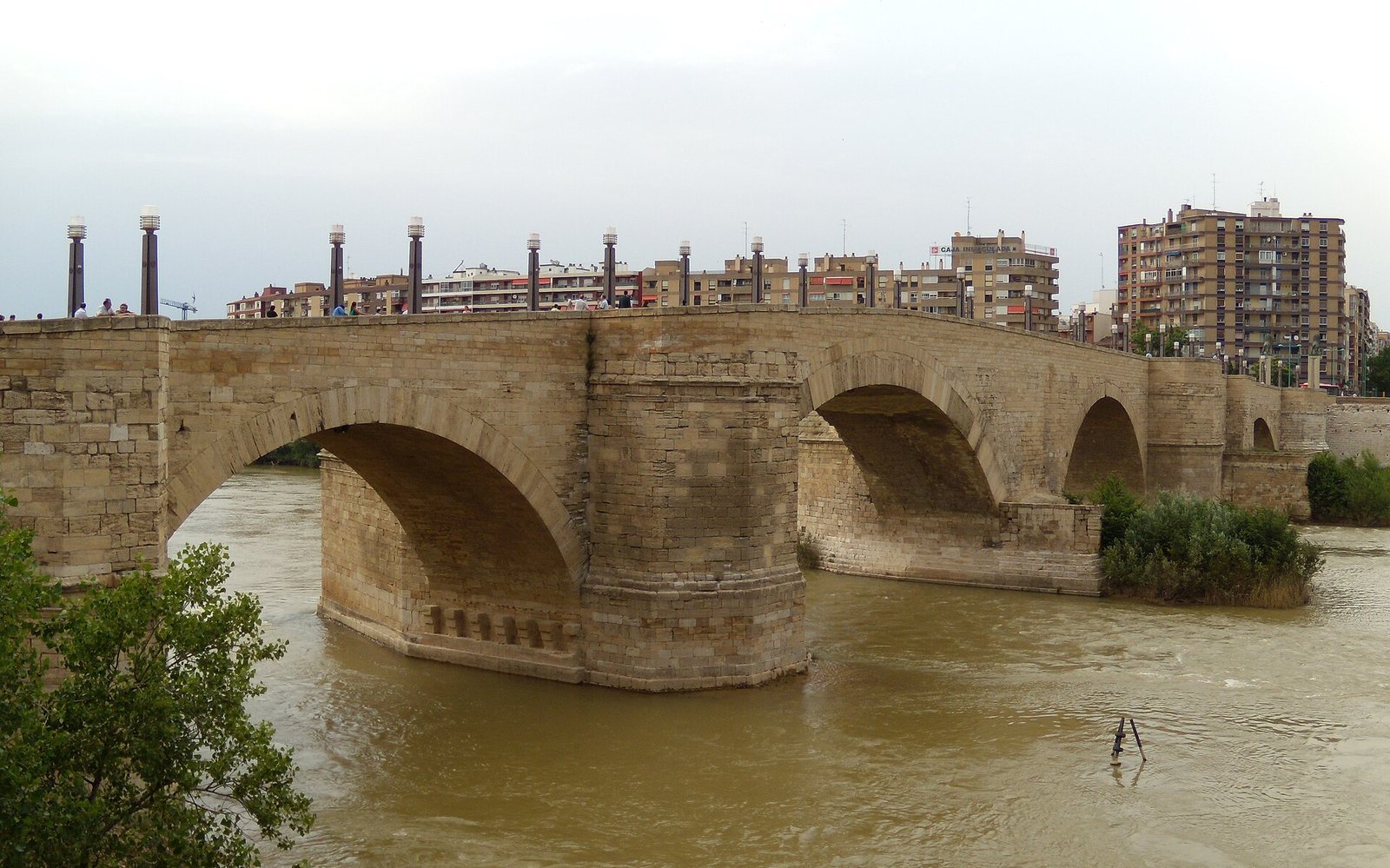
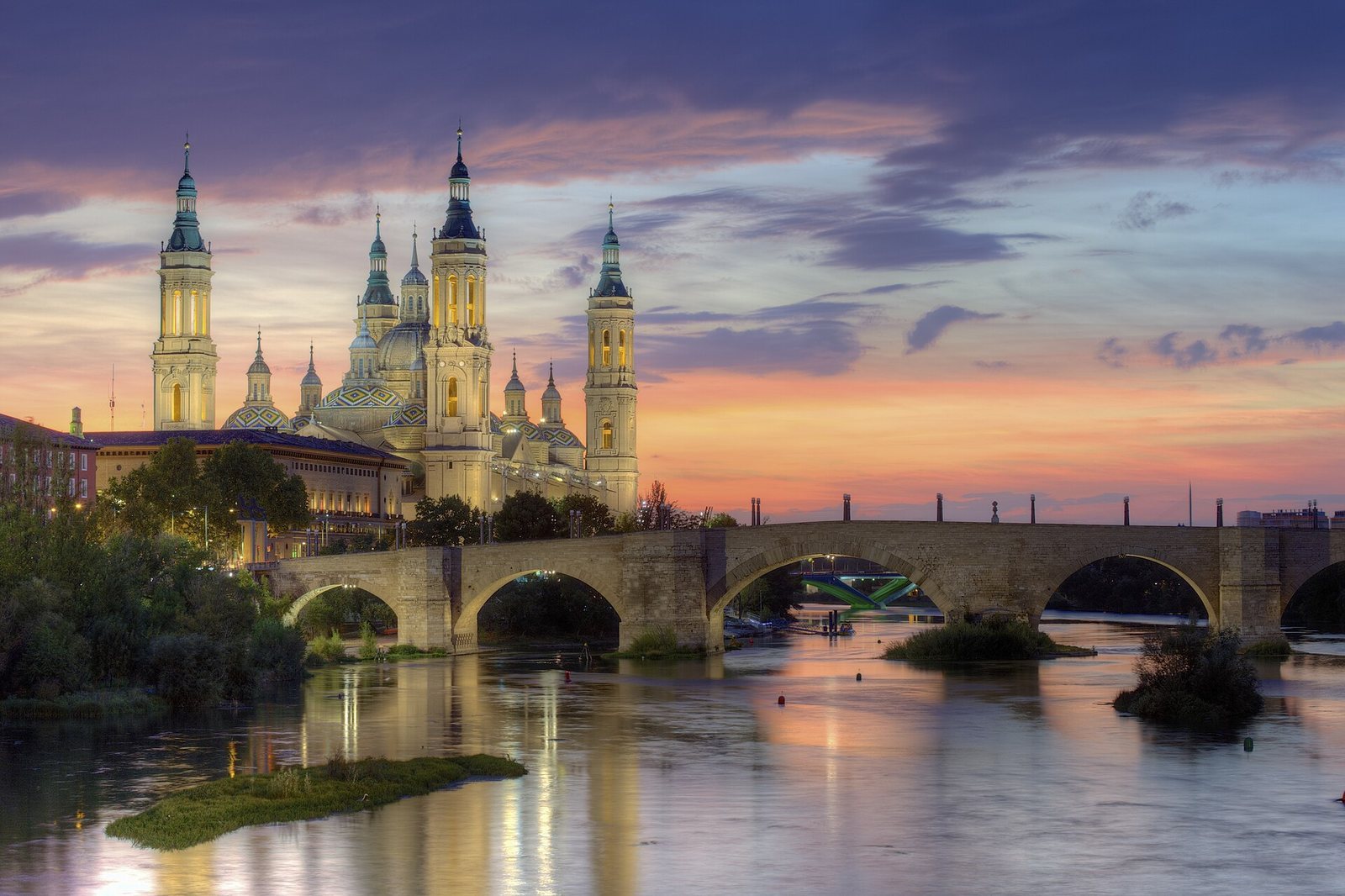
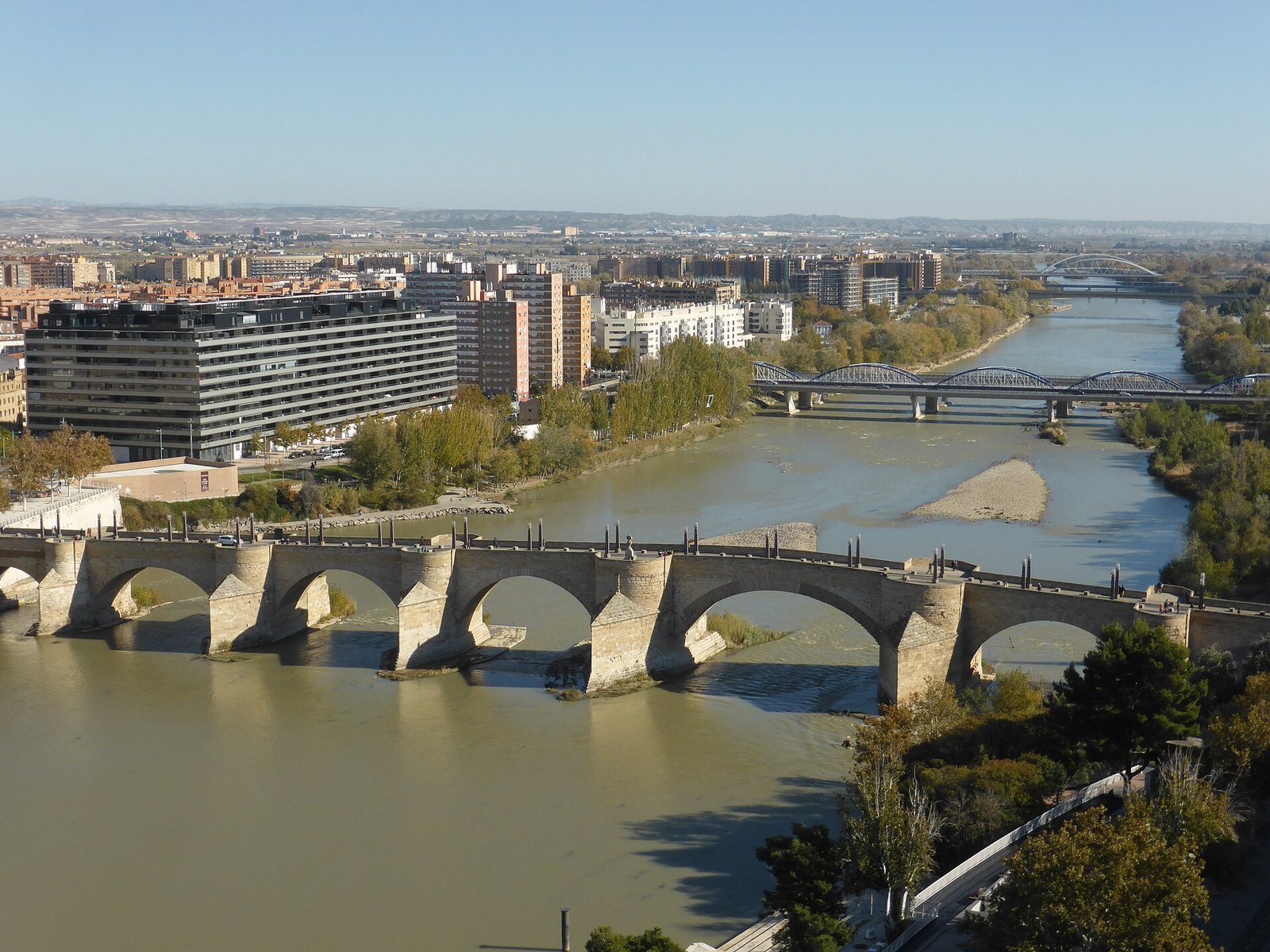
Puente de Piedra, or the Stone Bridge, crosses the Ebro in central Zaragoza, Spain. The present bridge was built between 1401 and 1440. From the mid-fifteenth century, it secured communications across northeastern Iberia, and its construction was economically important to the region and the country.
Early crossings and the medieval bridge
A bridge is said to have stood at this crossing in Roman times. It was destroyed around 827–828 and rebuilt in 839 under Abd al-Rahman II, the emir, or ruler, of Córdoba.
From the twelfth century, Zaragoza residents sought a permanent crossing of the Ebro. Work on the present bridge began in 1401 under Gil de Menestral and was completed in 1440.
Floods and river works
A flood in 1643 destroyed two central spans. In 1659, master builder Felipe de Busignac repaired the bridge, restoring two towers and enlarging its water-diverting supports and spurs. Juan Bautista Martínez del Mazo’s 1647 painting View of Zaragoza shows the bridge after the flood.
Construction of a parapet on the right bank began in 1777. A plan from 1778 shows the bridge’s last arch covered, and a topographical plan made in 1845 indicates that the parapet remained. In 1789, a flood-control wall was built along the left bank between the bridge and the Convent of San Lázaro. It was completed on 24 December, after six months of work, to reduce the risk of flooding in the city.
Sieges, changes, and commemoration
During the Sieges of Zaragoza, the fall of the church of Altabás and the Convent of San Lázaro led to the surrender of more than 2,000 defenders in the Arrabal district. This was the first surrender French forces had secured after 60 days of siege. When French troops left Zaragoza on 9 July 1813, ending the occupation, they blew up the bridge’s northern arch to delay Spanish forces pursuing them.
The bridge’s original flanking towers were demolished in 1906, and the structure underwent several remodelings during the twentieth century. Together, Puente de Piedra and the San Lázaro parapet have formal and practical importance in Zaragoza’s urban composition, helping structure its built and natural landscape. In 2002, the Government of Aragón gave both protected cultural-heritage status under Spain’s Bien de Interés Cultural designation.
A commemorative pairón, a freestanding pillar for devotion or remembrance, was made at the bridge’s northern end for the bicentenary of Zaragoza’s liberation. Commissioned by the Arrabal Neighborhood Association and funded by local residents, it was inaugurated in 2013. Sculptor Jesús Gazol, painter Rafael Navarro, designer Pablo Polo, and masons Pedro José Torres and Antonio Per created it without payment.
Remains
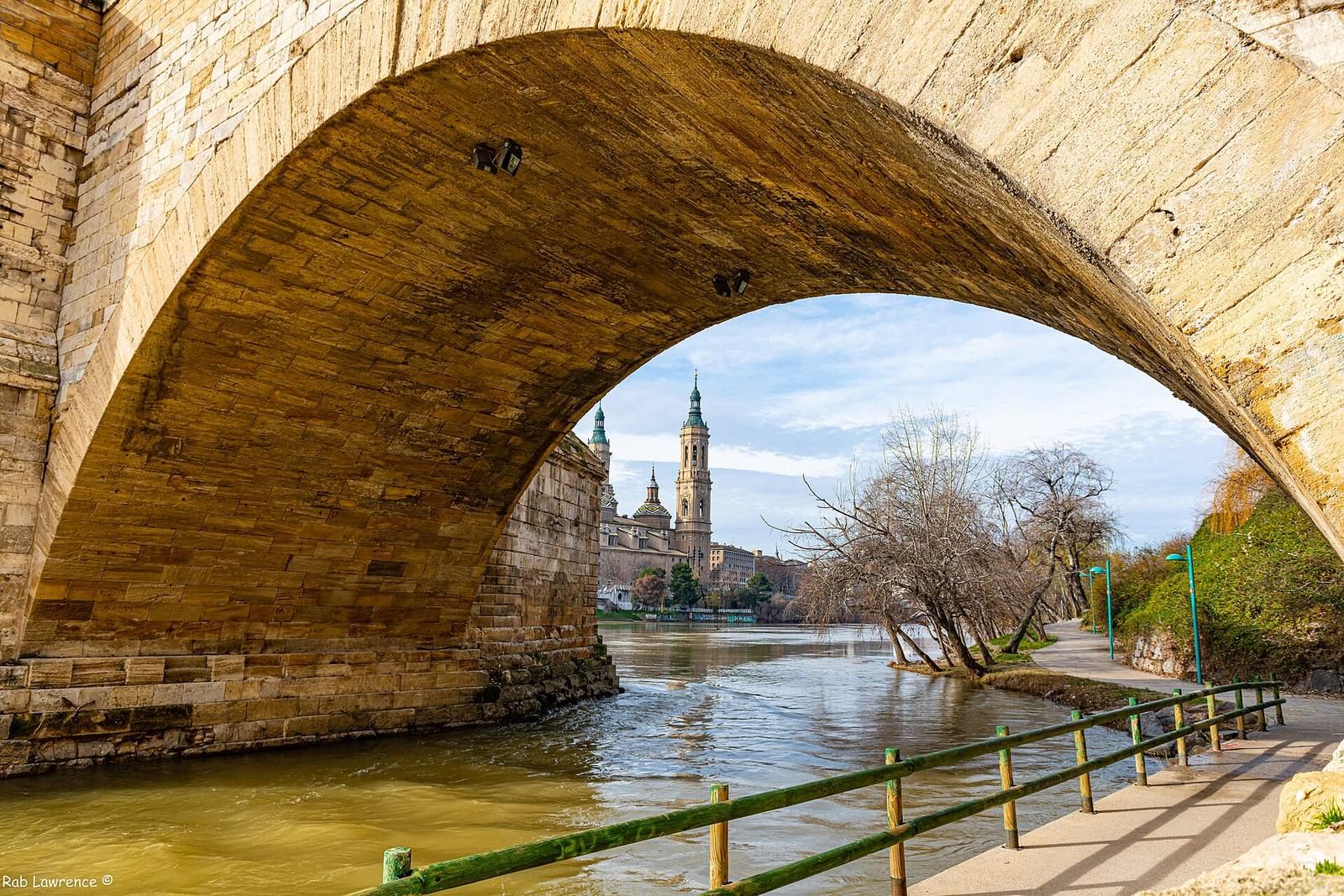
The stone bridge is about 225 metres long and has seven arches, one of which lies beneath the Echegaray promenade. The arches span between 14 and 32 metres and rest on piers of unequal widths fitted with cutwaters, projections that divert water from the piers. The bridge is built of squared stone blocks. Stone came from a quarry belonging to the Pope on Mount Burrén, between Fréscano and Bisimbre; stone from Fréscano and Grisén is also associated with its construction.
Riverbank structures
Right-bank parapet
The right-bank parapet was built in squared stone between the bridge and the Basilica of Our Lady of the Pillar, Zaragoza’s major Catholic church dedicated to Mary. Its exact present position and condition are uncertain.
Left-bank flood wall
The flood-control wall follows the left riverbank between the bridge and the Convent of San Lázaro. It was built to help protect the city during floods of the Ebro.
Sculptures and memorial features
Bronze lions and lighting
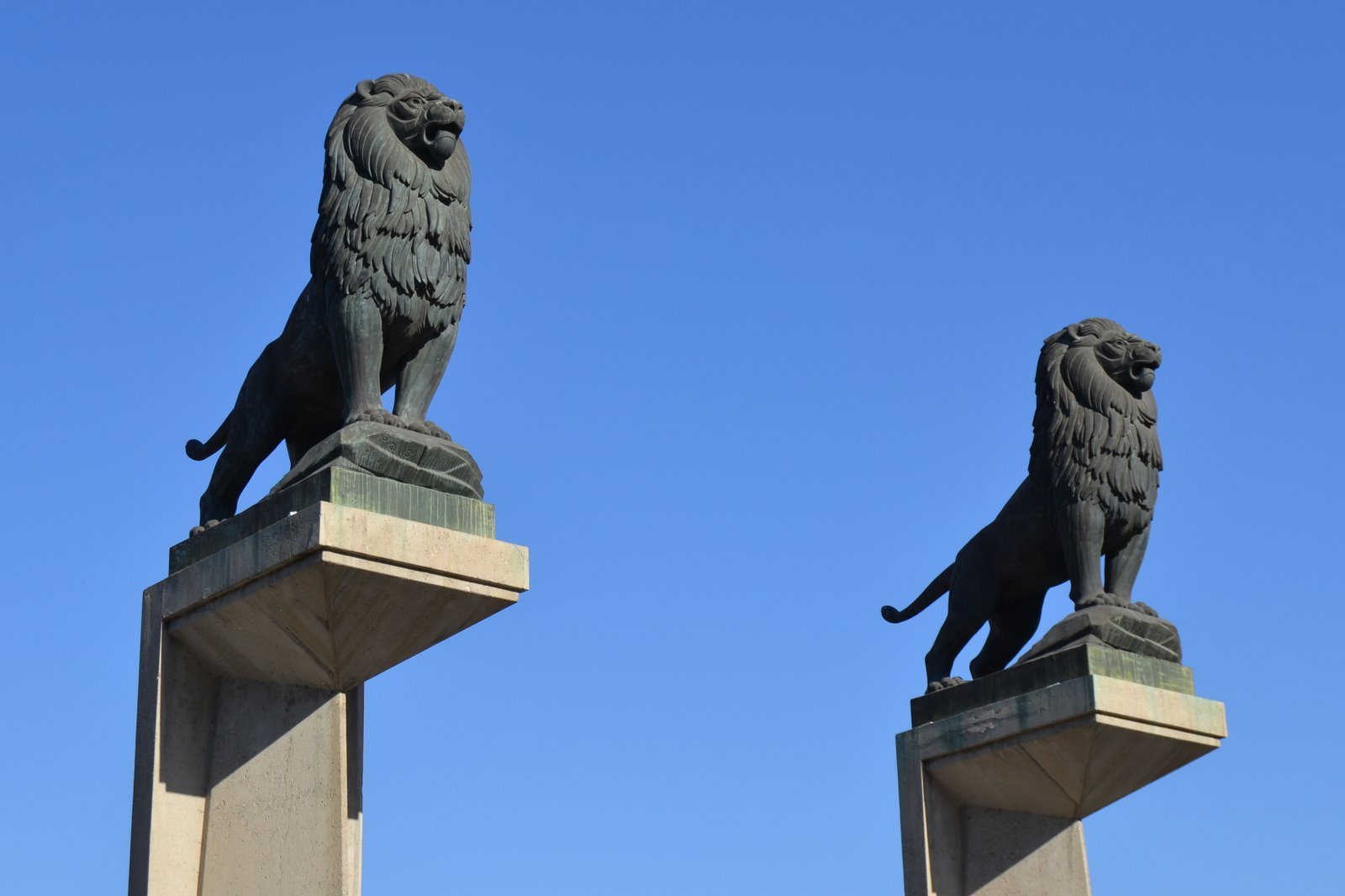
Four bronze lions, designed by Francisco Rallo Lahoz, stand on pillars at the bridge’s ends. The bridge also has light fixtures whose posts bear medallions with profiles of the lions.
Basilio’s Cross
A stone cross known as Basilio’s Cross stands on the bridge. It bears an inscription.
Northern commemorative pillar
The pairón at the northern end measures 4.30 metres high, one metre wide, and one metre deep. It has a brick pedestal, ceramic plaques, and an iron cross at its crown. A raised star motif appears on each face of its middle section, echoing Mudéjar (Islamic-derived art used in Christian-ruled Iberia) decoration.