Bergenhus Fortress: A Historic Norwegian Stronghold in Bergen
Visitor Information
Google Rating: 4.4
Popularity: Medium
Official Website: www.forsvarsbygg.no
Country: Norway
Civilization: Early Modern, Medieval European, Modern
Site type: Military
Remains: Fort
History
Bergenhus Fortress is situated at the entrance to Bergen harbour in the municipality of Bergen, Norway. It was established by the medieval Norwegians and is among the oldest stone fortifications in the country.
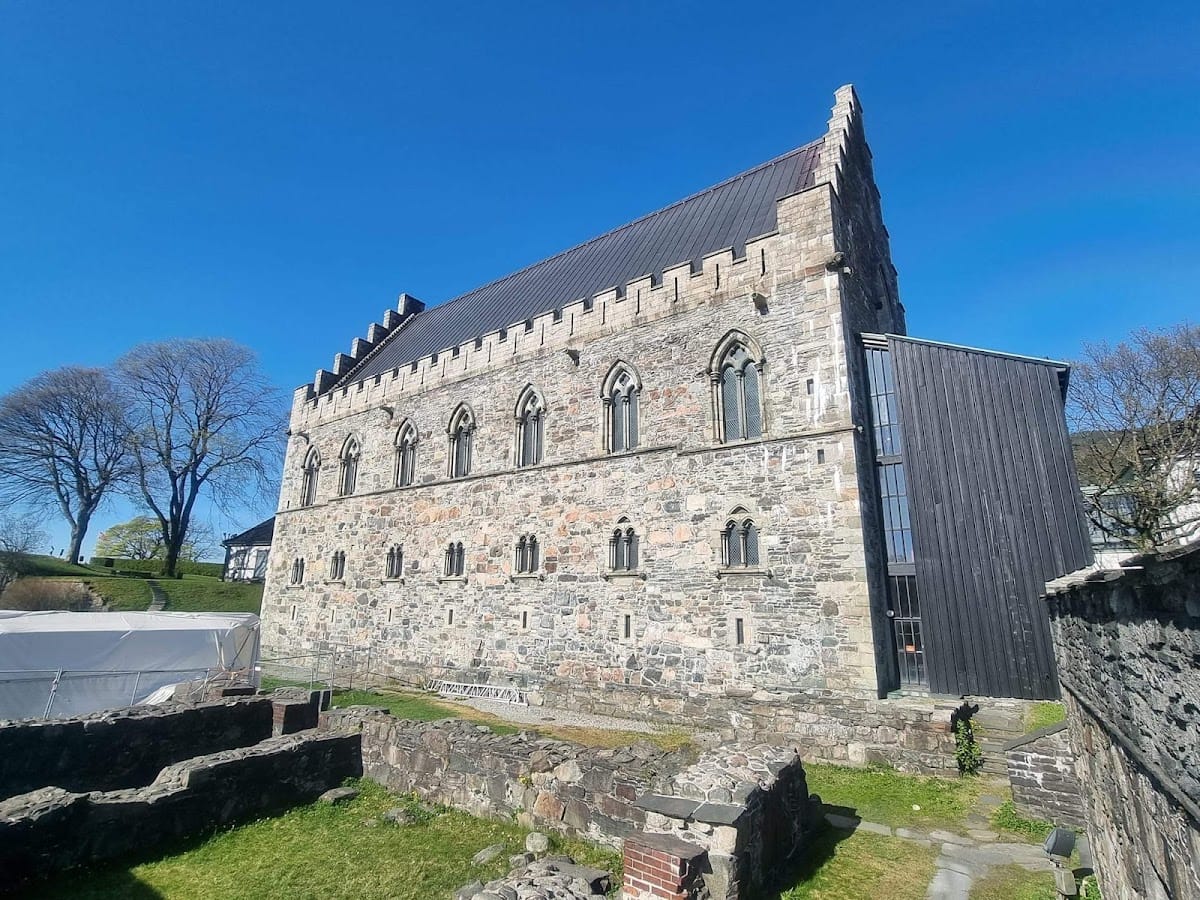
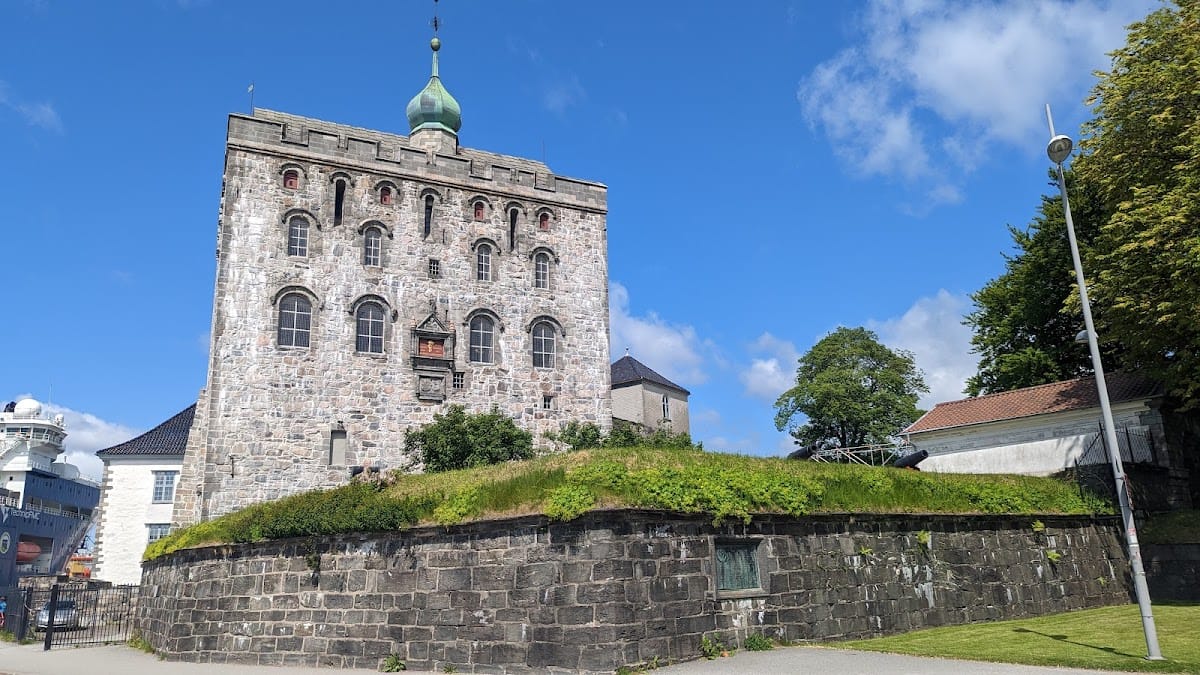
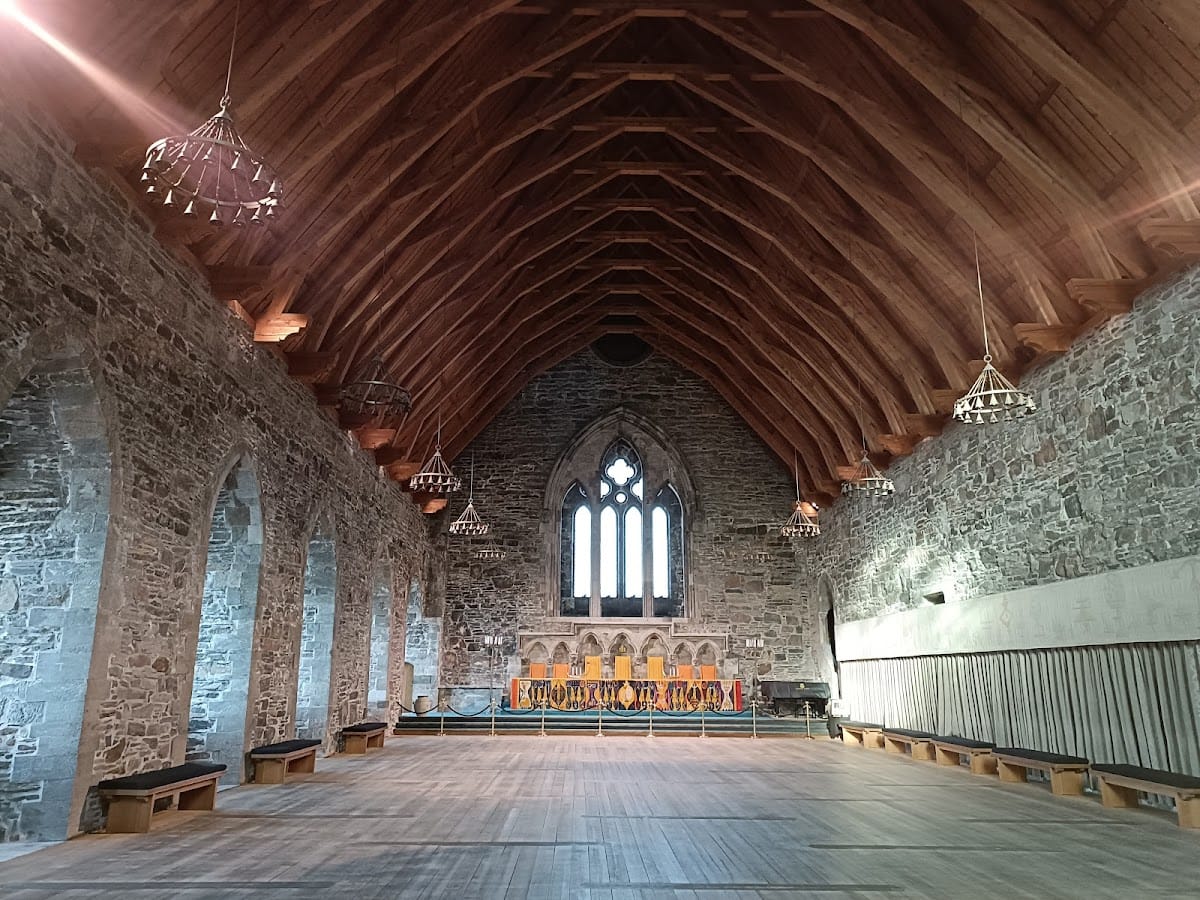
The site originally known as Holmen functioned as the royal residence and political center of Bergen during the early 12th century, with King Øystein Magnusson founding a royal estate there. Bergen was Norway’s capital until 1299. Around 1260, King Håkon IV commissioned the construction of a large stone royal hall, now known as Haakon’s Hall, and in the 1270s, a defensive tower that would later be called Rosenkrantz Tower. At this time, Holmen contained several medieval churches, including Christ Church, which was important as the site of the country’s first royal coronation in 1163 and housed the shrine of Saint Sunniva.
Following the decline of Bergen’s status as the capital—transferred to Oslo during King Håkon V’s reign—the fortress lost its royal residence role and shifted toward a military and administrative function. In the early 16th century, under Danish rule, the religious buildings on the site were removed to convert Holmen into a pure military fortress. Major enhancements took place in the 16th and 17th centuries, particularly during the governorship of Erik Rosenkrantz between 1560 and 1568. He enlisted Scottish masons to enlarge the tower and equip it for artillery defense. By around 1700, the fortress was linked with the nearby Sverresborg fortress through bastions, strengthening its defensive capacity.
Bergenhus was involved in military conflict during the Battle of Vågen in 1665. In World War II, when the fortress served as a German naval headquarters, it suffered severe damage due to a large explosion in 1944 caused by a Dutch ship loaded with dynamite in Bergen harbour.
Restoration efforts began in the late 19th century and resumed after World War II under architect Gerhard Fischer, with significant work completing in 1971. From 2002 onwards, Bergenhus ceased active military base operations but retained some military responsibilities and began hosting cultural events. A museum focusing on local resistance during WWII and military history opened in 1996. The fortress and its surrounding area received formal legal protection in 2006.
Remains
The fortress complex extends over an area bordered by Koengen, Bradbenken, Festningskaien, and Bontelabo in Bergen. Its construction primarily features robust stone masonry characteristic of medieval fortifications, with additions spanning several centuries.
Two prominent medieval structures remain intact within the fortress. Haakon’s Hall, constructed circa 1260, is the largest secular building from the medieval period preserved in Norway. It comprises three floors including a cellar and a middle floor. The hall was originally roofed with timber, but the wooden roof was destroyed in the 1944 explosion and later rebuilt during the 1950s restorations. Today, Haakon’s Hall functions as a venue for official banquets and concerts.
Rosenkrantz Tower, originating in the 13th century, was expanded in the 1560s with the work of Scottish masons who added dungeons, apartments for the governor, and cannon placements on the top level, transforming it into a multi-purpose defensive and residential structure. From the 1740s until the 1930s, Rosenkrantz Tower served as a gunpowder magazine and has been accessible to the public since 1966.
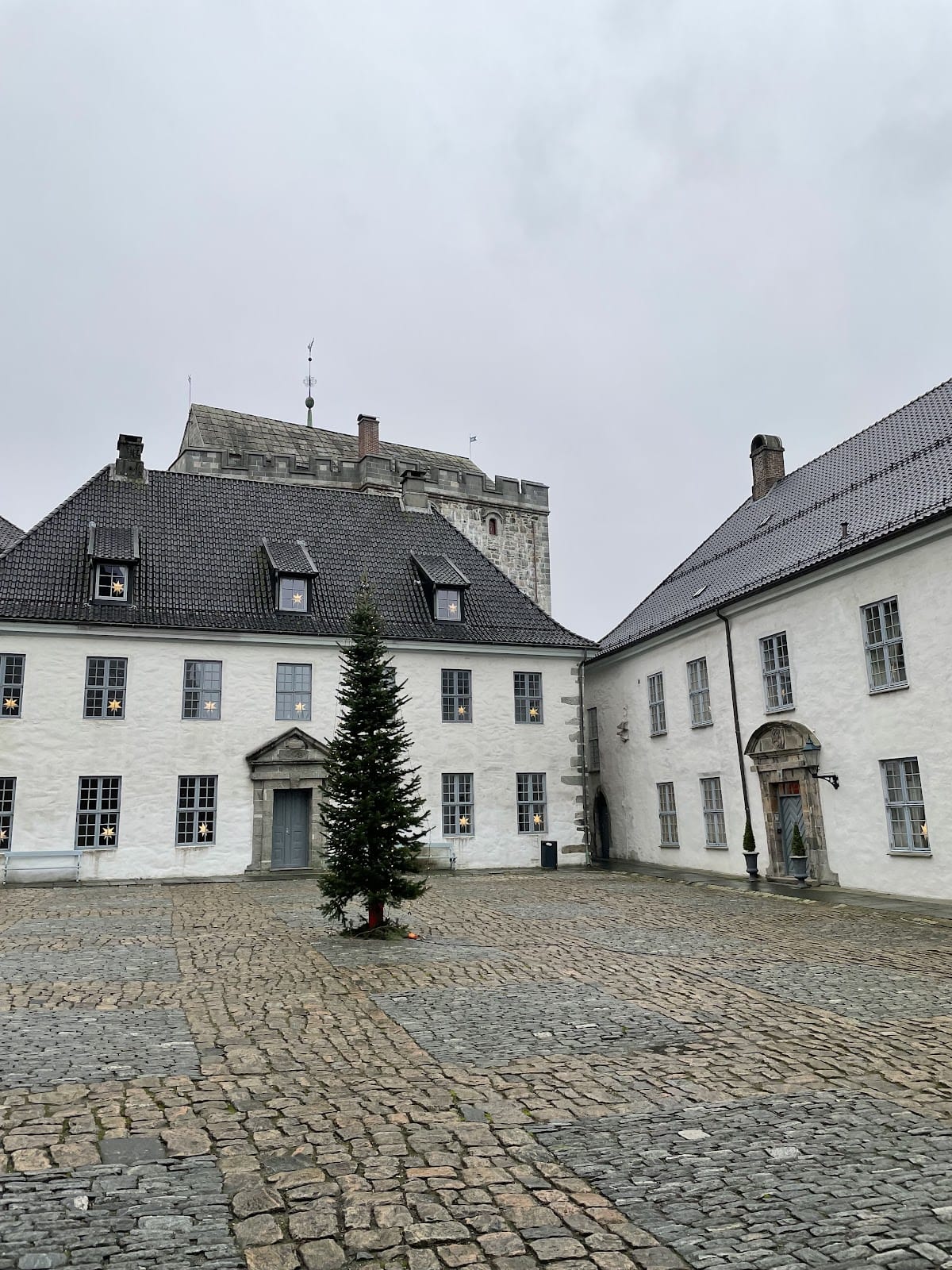
Other historic buildings within the fortress include Kommandantboligen and Stallbygningen, both dating from the early 18th century and originally used as commandant’s residence, stables, and cannon storage. Portkastellet, constructed during King Håkon Håkonsson’s reign, and Kapteinvaktmesterboligen from 1714 are also part of the site. Structures such as Hovedvakten, built in 1835, and the Artilleribygningen, which was used as a gunpowder laboratory, add to the fortress’s layered history.
Originally, Bergenhus was enclosed by stone walls constructed in the 1240s, supplemented by bastions and moats over the following centuries. Around 1520, a drawbridge was built over the moat to control access. The fortress grounds include a parade area used historically for military drills and currently for public events, with the adjacent Koengen area serving as an open-air concert space.
On the Nordre bastion, seven salute cannons remain positioned alongside a flagstaff, highlighting the fortress’s ceremonial traditions. Postwar restoration included carefully executed masonry repairs, aligned with historical accuracy, led by architect Gerhard Fischer. A commemorative oak was planted in 1971 as part of these efforts. Additionally, a statue of King Haakon VII, sculpted by Ottar Espeland, was relocated north of Haakon’s Hall in 1983, marking the site’s continued cultural significance.
Management of Bergenhus Fortress falls under Forsvarsbygg, which maintains the museum that features exhibitions on wartime resistance, censorship, and Norway’s military heritage.