Berchtesgaden Provostry: An Ecclesiastical Principality in Germany
Site at a Glance
- Rating
- 4.7
- Popularity
- Very Low
- Country
- Germany
- Primary era
- Medieval
- External website
- Open
- Eras represented
- Medieval, Early Modern
- Civilizations
- Holy Roman Empire
- Site type
- Religious
- Remains
- Monastery
On this page28 sections
History
Berchtesgaden Provostry in Berchtesgaden, Germany, was a medieval foundation established by Augustinian Canons Regular, clergy who followed a common religious rule while performing pastoral and institutional duties. Its foundation probably began in 1101, and Berchtesgaden was first mentioned in 1102. The monastery later became the centre of an ecclesiastical principality whose rulers combined religious office with territorial authority.
Foundation and early development
According to tradition, Countess Irmgard of Sulzbach vowed to establish a clerical community after her husband, Count Gebhard II of Sulzbach, survived a hunting accident. Before her death, she entrusted the project to her son, Count Berengar I of Sulzbach. Berengar founded the monastery, appointed Eberwin as its first provost, and brought three Augustinian canons and four lay brothers from Rottenbuch, the leading mother foundation of the Augustinian reform in Old Bavaria. Pope Paschal II probably placed the foundation under papal protection on 7 April 1102.
The first settlement was only a small religious cell. Between 1107 and 1109, Eberwin and the canons were transferred to Baumburg, but Eberwin returned to Berchtesgaden around 1116 after the foundation had received better endowments. The canons then settled permanently, cleared extensive areas of surrounding forest, and developed the monastery.
A women’s Augustinian community was established in the Nonntal below the Lockstein at the same time as the male foundation. Around 1400 it moved to a building at Am Anger, where it survived until 1564. Wolfgang II Griesstätter dissolved it after it had become nearly deserted, and its buildings were converted into a Franciscan monastery from 1694. A dispute with Baumburg over Berchtesgaden’s endowment was settled by Archbishop Conrad I of Salzburg in 1136 and confirmed by Pope Innocent II in 1142, after which the two foundations remained separate.
Territory, jurisdiction, and salt
Berengar I endowed the foundation with the enclosed land around Berchtesgaden and possessions in Niederheim in the Pinzgau. In 1125 he added the forest around the settlement then called Grafengaden. An exchange with Archbishop Eberhard I of Salzburg on 8 May 1155 brought Bischofswiesen into the territory. The core domain was the enclosed forest district of the Berchtesgaden valley, supplemented by scattered lordships and estates in the Salzburg region, Reichenhall, the Pinzgau, Bavaria, Austria, and other parts of the empire. The foundation also held residences in Salzburg, Munich, Regensburg, and Klosterneuburg.
As lord of the land, the monastery controlled forest clearance and settlement. These rights, together with imperial regalia and jurisdiction over newly cleared areas, became the basis of its later territorial sovereignty. In 1156 Emperor Frederick I confirmed the monastery’s territorial extent, protected its possessions, and recognized its right to choose and, when necessary, remove its advocates. He also granted forest jurisdiction and the right to prospect for and exploit salt and metal, probably through a later enlargement of the privilege.
Salt became Berchtesgaden’s principal long-term economic resource. Provost Dietrich began trading salt around 1174 to 1178, and the trade expanded under Provost Friedrich I. Production created employment and revenue, while the less productive agricultural economy required many inhabitants to combine farming with other work. Competition over salt repeatedly brought the provostry into conflict with the Archbishopric of Salzburg and with Reichenhall. Attacks on the Tuval salt workings began after Emperor Frederick I died in 1190, and Reichenhall forces destroyed salt pans and blocked mine galleries in 1193. The Hallthurm and Schellenberg Tower were subsequently established to protect routes and salt shipments.
In 1194 Emperor Henry VI granted the provosts high and low jurisdiction over the territory, including authority over cleared lands and their peasants. This made the monastery effectively immediate to the empire, meaning directly subordinate to the emperor rather than to a territorial duke or prince. The settlement became a parish in 1201, and its jurisdiction later extended through subsidiary parishes at Ramsau, Grafengaden, and Schellenberg. In 1255 the provosts received the right to use episcopal insignia, including the mitre, ring, and sandals, although they remained subject to the Archbishop of Salzburg in spiritual affairs.
From imperial prelature to prince-provostry
From 1380 the provosts were Imperial Prelates with a seat and vote in the Imperial Diet, the principal representative assembly of the Holy Roman Empire. Berchtesgaden obtained exemption from Salzburg’s metropolitan jurisdiction in 1455 and thereafter became directly subject to the pope in spiritual matters. In 1559 Emperor Ferdinand I elevated Wolfgang II Griesstätter to Prince-Provost and Berchtesgaden to a Prince-Provostry. A Prince-Provost combined the leadership of a collegiate religious foundation with the authority of a territorial prince.
Berchtesgaden became an immediate ecclesiastical principality of the Holy Roman Empire and the smallest principality in the Bavarian Circle, a regional administrative and military grouping. Its elected Prince-Provost ruled the territory, while the canons retained substantial influence over government. The territory included the Berchtesgaden valley, with Berchtesgaden, Bischofswiesen, Marktschellenberg, Ramsau, and Schönau am Königssee, as well as more distant estates.
The core territory was organized into eight rural cooperatives known as Gnotschaften: Au, Salzberg, Bischofswiesen, Ettenberg, Gern, Ramsau, Scheffau, and Schönau. They appear in the 1456 tax register and were divided into 32 districts by 1802. By secularization, the transfer of ecclesiastical property and authority to secular governments, the number of Gnotschaften had risen to 34.
Conflict, debt, and economic change
The territory’s political and economic position was repeatedly weakened by the debts and luxurious lifestyle of the canons. Estates and saltworks were pledged or sold. Salzburg held the Schellenberg saltworks as security from 1393 to 1404 and again until the debt was settled in 1556. The Berchtesgaden woodcraft known as Berchtesgadener War became an important supplementary income from the late fifteenth century. Wooden toys were distributed through Antwerp, Cadiz, Genoa, Venice, and Nuremberg, although demand later declined. The emigration and expulsion of Protestant woodworkers in 1732 and 1733 further weakened the craft.
A schism in 1382 led to the imprisonment and forced resignation of Provost Ulrich I Wulp. Sieghard Waller was elected as a rival, and Bavaria and Salzburg intervened militarily. The conflict ended in 1384, when both Ulrich Wulp and Waller were removed and Konrad Torer von Törlein was appointed. Berchtesgaden’s independence was restored in 1404 under Provost Peter II Pienzenauer, although Schellenberg and its saltworks remained pledged to Salzburg until 1556. The Eichstatt Compromise of that year settled the debt and dispute with Salzburg and secured Bavarian protection for Berchtesgaden’s salt resources.
During Gregor Rainer’s tenure, the Petersberg mine opened in 1517 and remained economically important. In 1555 Wolfgang II Griesstätter agreed with Duke Albert of Bavaria that Berchtesgaden salt would be sold exclusively to Bavaria at a fixed price. A saltworks was built at Frauenreut in 1556. The Reformation gained followers during the sixteenth century, especially among salt miners, merchants, and woodworkers, but Berchtesgaden remained a Catholic principality and increasingly restricted Lutheran books and worship.
Wittelsbach administration and the end of the principality
In 1591 Duke William V of Bavaria expelled Salzburg forces that had invaded Berchtesgaden. After the death of Jakob II Pütrich in 1594, the provostry came under the administration of the Bavarian Wittelsbach family. From 1612 this administration was held in personal union with the Electorate and Archbishopric of Cologne. Salzburg occupied Berchtesgaden in 1611 during the Oxen War, a conflict over regional power and resources, but Bavarian forces under Duke Maximilian I expelled the occupying troops. The territory largely escaped physical destruction during the Thirty Years’ War, although it had to provide financial and military contributions.
Austrian troops occupied the provostry in 1704 during the War of the Spanish Succession. After the Peace of Rastatt in 1714, the Wittelsbach rulers recovered their possessions. The administrators’ long absence and continuing debts contributed to administrative and financial decline. In 1723 the chapter rejected further outside Wittelsbach rulers and chose Julius Heinrich von Rehlingen-Radau as Prince-Provost. During his administration, Catholic reform and the Counter-Reformation were expressed through the construction of pilgrimage churches and chapels.
Protestant inhabitants faced intensified persecution after 1731. On 26 October 1732 Prince-Provost Cajetan Anton Notthafft von Weißenstein issued an emigration edict requiring Protestants to leave the territory. More than 1,100 of approximately 9,000 inhabitants emigrated in 1733, and their property was confiscated and sold. The departure reduced the population and weakened farming and woodcraft. Protestant woodworkers later contributed to the growth of the toy industry in Nuremberg.
Prince-Provost Michael Balthasar von Christalnigg continued to expand the complex despite heavy debts. Joseph Konrad von Schroffenberg-Mos later pursued financial and administrative reform, established schools, and placed the Berchtesgaden saltworks under Bavarian administration through the agreement of 28 April 1795. Secularization ended the Prince-Provostry in 1803. Berchtesgaden was incorporated into the Electorate of Salzburg, transferred to the Austrian Empire after the Peace of Pressburg in 1805, briefly occupied by France in 1809, and incorporated into the Kingdom of Bavaria in 1810.
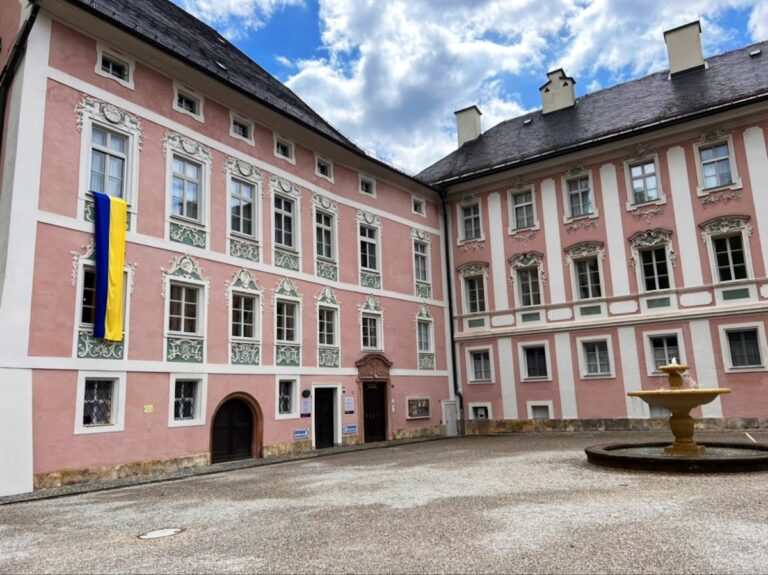
The former provostry buildings were temporarily used as barracks. In 1818 the complex became a royal summer residence of the Wittelsbachs, and after the end of the Bavarian monarchy it passed to the Wittelsbach Compensation Fund. The former monastery church became the parish church of Berchtesgaden.
Remains
The former monastery and princely residence stands in Berchtesgaden, the historical capital and main settlement of the territory. The valley is enclosed by high Alpine mountains and has a principal access route from the north, a setting that contributed to the site’s defensive and political importance. The wider landscape of the valley, Lake Königssee, and the surrounding mountains shaped the territory’s salt economy, pilgrimage network, hunting facilities, and settlement pattern.
Collegiate complex and churches
Collegiate church
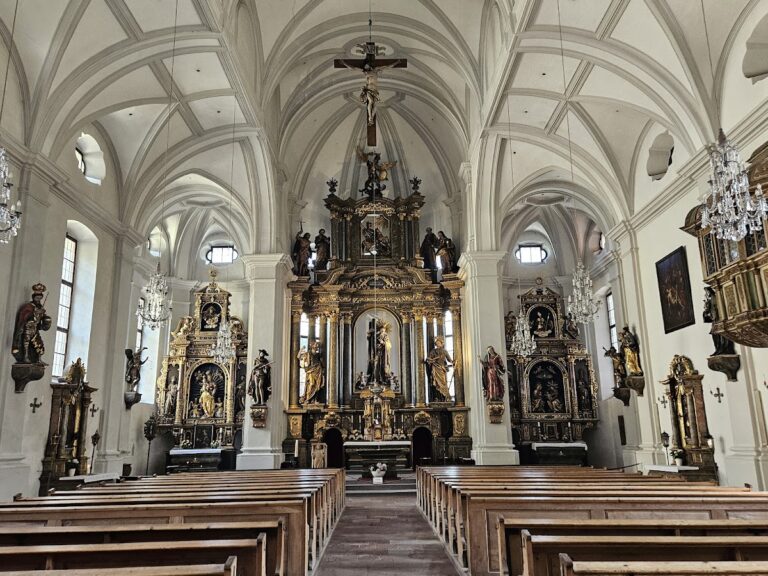
The collegiate church is dedicated to Saint Peter and Saint John the Baptist. Begun during the foundation period, it was at least partly consecrated by Archbishop Conrad I of Salzburg in 1122, according to an inscription. The church became the parish church of the Roman Catholic parish of Saint Andrew after 1803. The collegiate complex around it included a cloister, administrative and residential rooms, and the institutional spaces of the canonry. Its buildings later served as a royal residence, with some rooms remaining residential and others opened for public visits.
Church of Saint Andrew
The church of Saint Andrew beside the collegiate church was built by the citizens of the Berchtesgaden market in 1397. Its exterior took shape during rebuilding from 1480, and its interior was enlarged and given a Baroque treatment in 1698 to 1700. After 1803 it became a subsidiary church while retaining its parish dedication.
Monuments and library collections
Seventeen provosts were buried at Berchtesgaden, and thirteen tombs retain monuments in the form of floor slabs or large relief epitaphs. The oldest surviving provost’s monument commemorates Hartung von Lampoting, who died in 1306. The latest commemorates Joseph Konrad von Schroffenberg-Mos, who died in 1803. Other tombs and epitaphs are located in the collegiate church and the cloister, while the Franciscan church contains the tomb monument of Wolfgang II Griesstätter, who died in 1567.
The collegiate library was expanded especially under Michael Balthasar von Christalnigg and may have held about 10,000 volumes by the end of the eighteenth century. Its holdings were transferred to Salzburg in 1805, with surviving material also held by the Bavarian State Library and the Roman Catholic parish library of Berchtesgaden. The collegiate choir preserves about 150 manuscripts, autographs, and copies by approximately 60 composers, including music from the sixteenth to the eighteenth century.
Former women’s foundation and religious buildings
Franciscan Church
The church now known as the Franciscan Church was originally Our Lady at Am Anger. It was built from 1480 to 1488 for the former women’s Augustinian foundation, which had moved there from the Nonntal. Franciscans took over the former women’s complex from 1695. The church contains the tomb monument of Wolfgang II Griesstätter.
Church of Saint Bartholomew
The chapel of Saint Bartholomew stands on the western shore of Lake Königssee on the Hirschau peninsula. It was consecrated as Basilica Chinigesee on 24 August 1134 and substantially altered in Baroque style in 1697 and 1698. A hunting lodge for the provosts and canons was built nearby around 1700 and is now used as a restaurant.
Parish and pilgrimage churches
Church of Saint Sebastian
The church of Saint Sebastian in Ramsau was built in 1512 under Provost Gregor Rainer and dedicated to Saints Sebastian and Fabian. Since 1803 it has served as the parish church of Ramsau.
Church of Saint Nicholas
The church of Saint Nicholas was built in Marktschellenberg in 1521. Structural decay led to its demolition in 1870 and 1871, except for its tower. A Neo-Gothic building replaced the demolished structure.
Maria Gern and subsidiary chapels
The pilgrimage church of Maria Gern was built from 1708 to 1724 during the administration of Joseph Clemens of Bavaria. Its high altar contains a carved Madonna and Child from 1666, dressed in Baroque garments according to the liturgical season, and the church contains numerous votive panels. The Hilger Chapel, also called Maria Dorfen, was built as a subsidiary church in 1725 during the administration of Julius Heinrich von Rehlingen-Radau.
Ettenberg and Maria Kunterweg
The pilgrimage church of the Visitation of Mary at Ettenberg was built in 1725 on the order of Rehlingen-Radau in the then separate Ettenberg Gnotschaft of Marktschellenberg. The pilgrimage church of the Assumption of Mary, also called Maria Kunterweg, was built in Ramsau from 1731 to 1733 in the Rococo style under the direction of Salzburg court architect Sebastian Stumpfegger. A ceiling painting commemorates the emigration of Berchtesgaden Protestants in 1733.
Calvary and Maria Hilf
Michael Balthasar von Christalnigg established the Calvary complex in 1760. It consists of four subsidiary chapels and a principal chapel. The pilgrimage church of Maria Hilf in the Loipl district of Bischofswiesen was probably built by local farmers in 1798 and 1799. It was consecrated in 1800 and became a pilgrimage church in 1805 after an indulgence was granted.
Residences and civic buildings
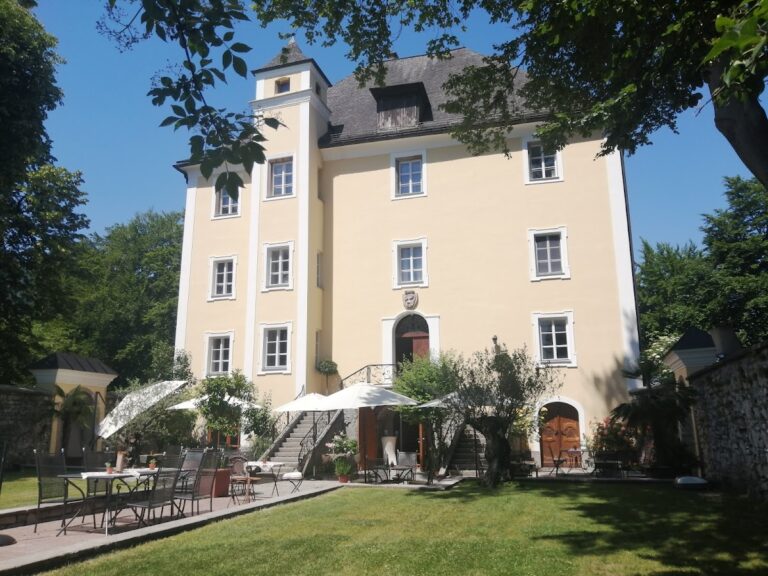
Schloss Adelsheim
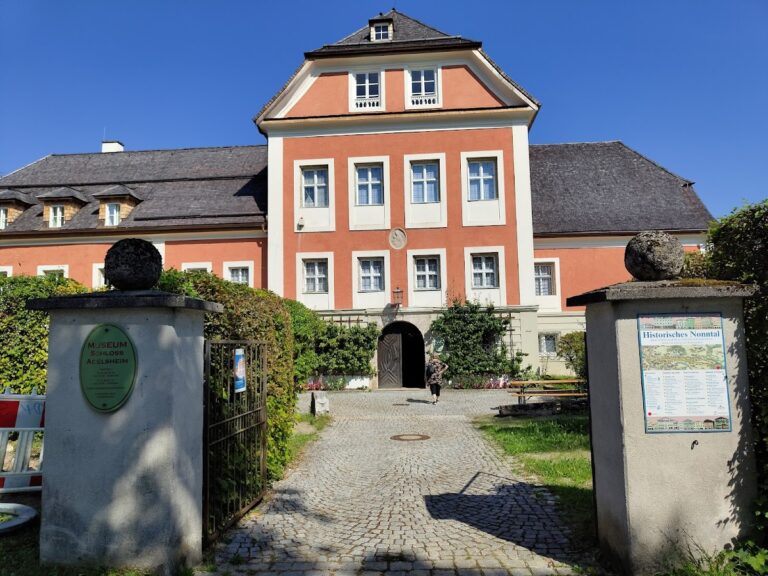
Schloss Adelsheim was built in 1614 by Stiftsdekan Degenhart Neuchinger at the northern edge of the Berchtesgaden centre. Initially a noble residence, it became the seat of the Bavarian central salt office in 1795 and served as the residence of Joseph Konrad von Schroffenberg-Mos during the final weeks of his life. Since 1968 it has housed the exhibition rooms of the Berchtesgaden local history museum.
Schloss Fürstenstein and Schloss Lustheim
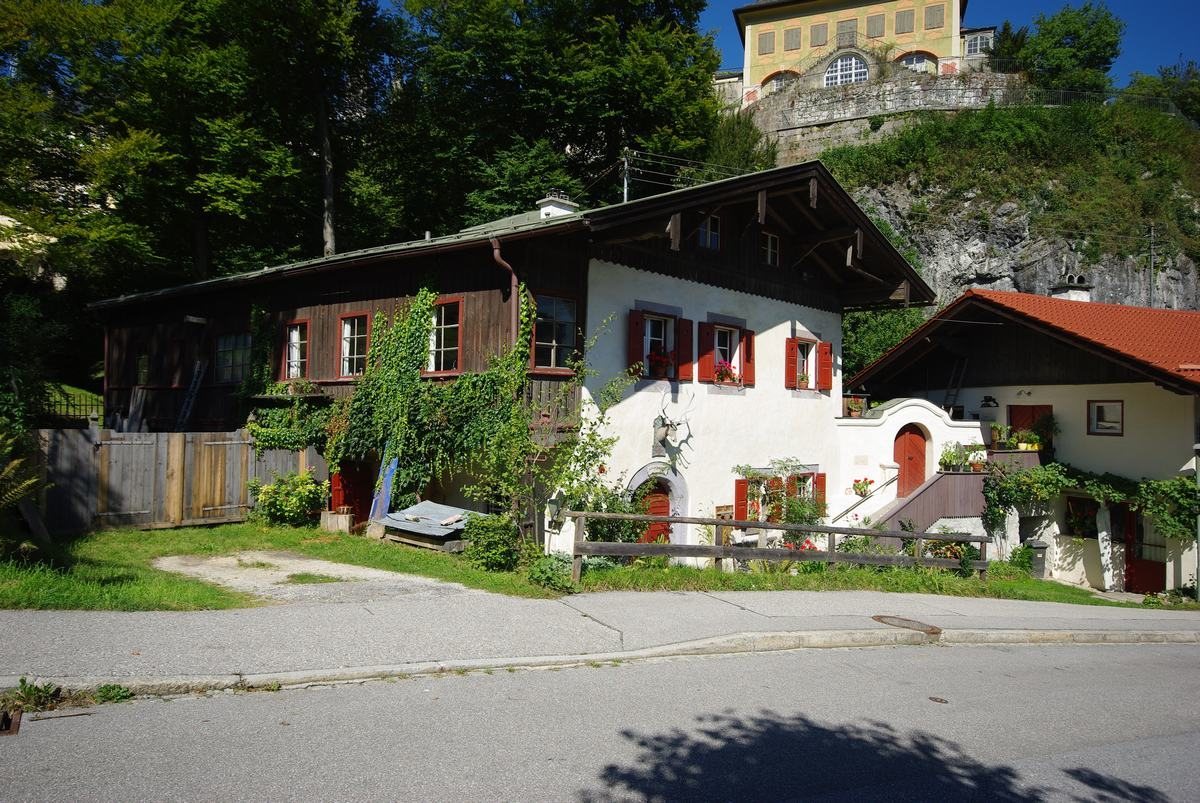
Schloss Fürstenstein was built in 1758 on the slope of the Kalberstein by Michael Balthasar von Christalnigg. Its complex included a chapel, a farm estate, and associated buildings. Schloss Lustheim was built by Franz Anton Josef von Hausen-Gleichenstorff on the Sulzberg in the Oberschönau Gnotschaft. It was demolished during the Nazi period for a planned redevelopment, and the site is now occupied by a mountain cemetery maintained for residents of Berchtesgaden, Bischofswiesen, and Schönau am Königssee.
Forestry and estate buildings
The Wildmeisterhaus, built in 1608, was the residence of the Prince-Provost’s chief forester or gamekeeper. Jakob II Pütrich commissioned the Gasthaus Neuhaus and the farm estates of Dietfeld and Rosenhof, the latter originally a salt-pan building. He also commissioned the Etzerschlössl near the Rosenhof in 1574, in the first district of the Berg Gnotschaft. This small pleasure palace had ten rooms, Zirbel pine paneling, and elaborate stoves, and sometimes provided citizens with refuge during epidemics. It was demolished in 1960 after later use as a children’s home, and the associated Etzermühle was also demolished because of structural decay.
Fortifications, salt infrastructure, and townscape
Access defenses
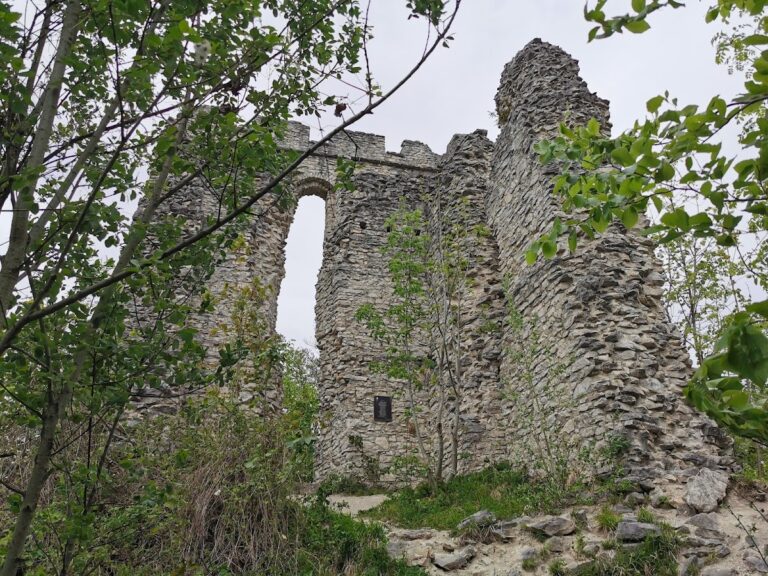
The Hallthurm was built after the salt conflicts of the late twelfth century as part of a fortification controlling the northern access route. Schellenberg Tower, first mentioned in 1252, served as a defensive and passage tower near the border with Salzburg.
Salt workings and water management
The territory’s salt infrastructure included the Petersberg and Frauenberg workings, the saltworks at Schellenberg and Frauenreut, transport routes, bridges, and water-management installations. Floods in 1786 and 1787 damaged or destroyed parts of the saltworks, timber-transport installations, and water-control structures.
Civic houses
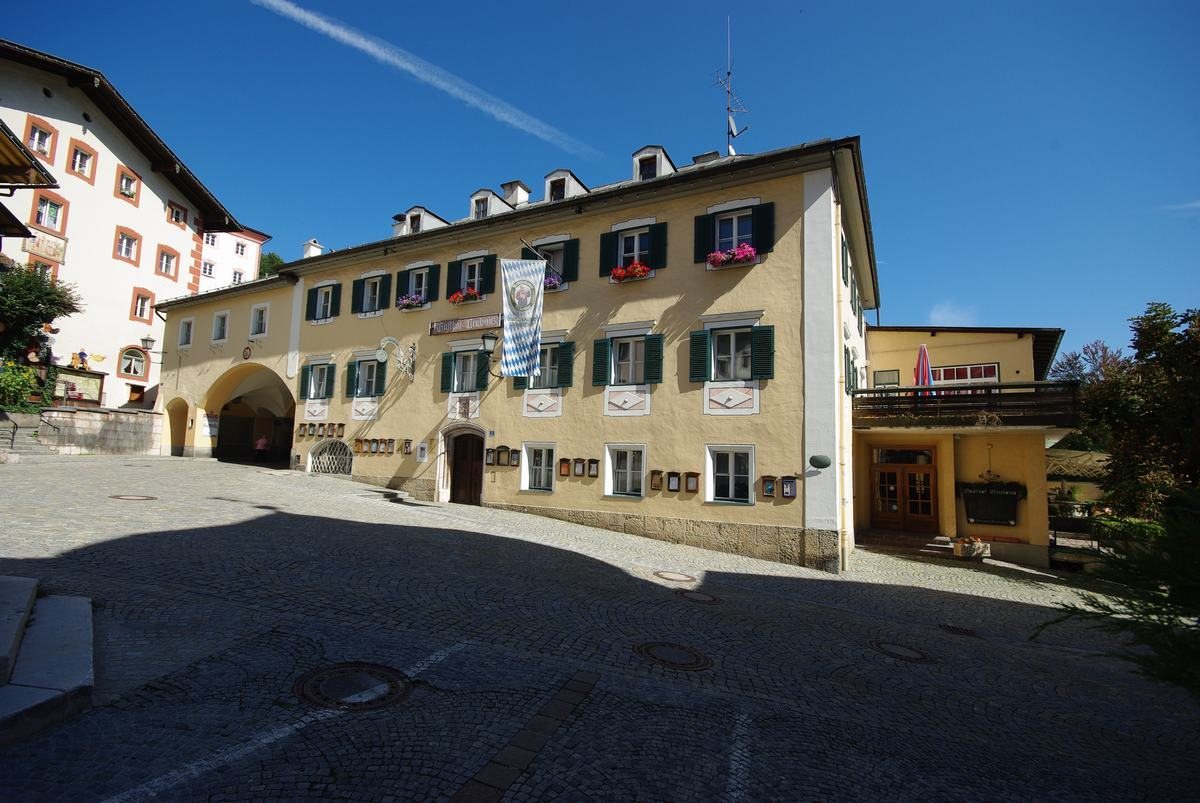
The settlement and surrounding territory contain sixteenth- and seventeenth-century civic houses decorated with Lüftlmalerei, painted facade decoration. The Hirschenhaus in Metzgergasse retains facade paintings dated 1610, including monkeys used to symbolize human vices.