Benátky nad Jizerou Castle: A Renaissance and Baroque Aristocratic Residence
Site at a Glance
- Rating
- 4.6
- Popularity
- Low
- Country
- Czechia
- Primary era
- Early Modern
- External website
- Open
- Eras represented
- Early Modern
- Civilizations
- Holy Roman Empire, Kingdom of Bohemia
- Site type
- Domestic
- Remains
- Castle
On this page12 sections
History
Benátky nad Jizerou Castle in Czechia is a Renaissance aristocratic residence rebuilt around 1525 on the site of the earlier Dražice fortress. Its development reflects the changing fortunes of the surrounding estate, the religious conflicts of fifteenth-century Bohemia, and later Renaissance, Baroque, and Rococo transformations.
Dražice estate and the medieval monastery
From the thirteenth century, Benátky nad Jizerou belonged to the neighboring Dražice estate. Around 1343, the settlement moved from the left bank of the Jizera to the right bank, received town status and numerous privileges, and began to prosper. In 1349, Jan V of Dražice founded a monastery of the Cyriac order on the hilltop. This medieval religious order was devoted to charitable and pastoral work. The foundation included a church and a school.
The religious complex and the nearby Dražice Castle were drawn into the Hussite Wars, the fifteenth-century religious and political conflicts associated with the reform movement of Jan Hus. In 1420, Hussite forces captured and burned the castle because its owner, Aleš Škopek of Dubá, supported the Catholic side. After Škopek adopted the Utraquist faith, a Hussite movement that advocated Communion in both bread and wine, Catholics burned the castle again in 1424. The castle was captured once more in the middle of the fifteenth century and then gradually declined. The Cyriac monastery disappeared during this period.
The Donín residence and Renaissance court
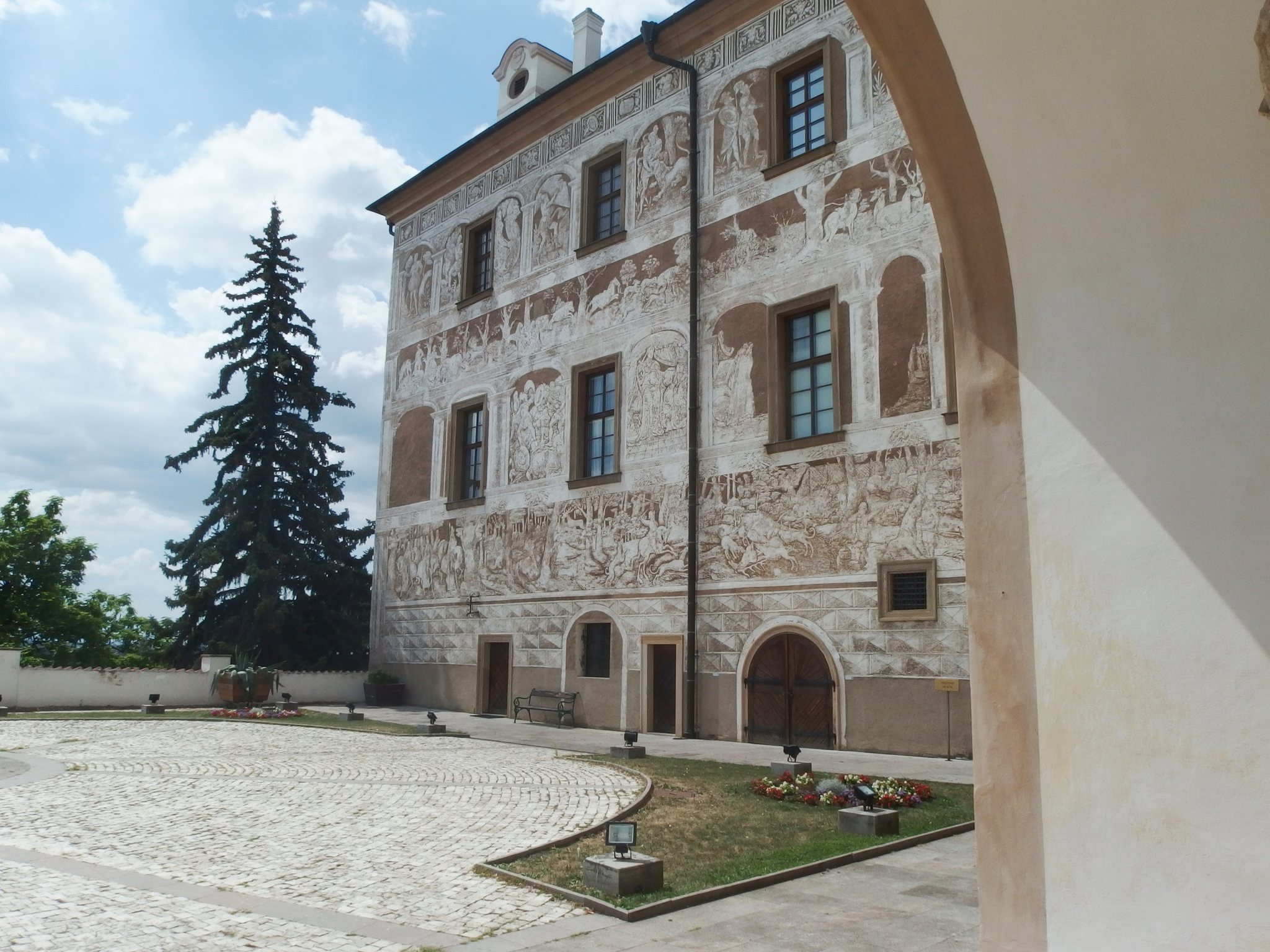
Around 1525, Bedřich of Donín rebuilt the inadequate old Dražice fortress as a representative aristocratic residence. The Donín family subsequently adopted the name “of Benátky” instead of “of Dražice,” and the oldest part of the present castle dates from this reconstruction. The residence may have been built over the ruins of the former Cyriac monastery. Alterations and decoration continued until the end of the sixteenth century, including the installation of sgraffito, a wall-decoration technique made by scratching through one plaster layer to expose a contrasting layer beneath.
The Danish astronomer Tycho Brahe stayed at the castle in 1599 and 1600 while serving at the Prague court of Rudolf II, the Habsburg Holy Roman Emperor whose court supported science and art. An observatory was established at the castle in 1599. Brahe’s precise observations of the heavens later contributed to the development of early modern astronomy.
Baroque alterations and rebuilding
Under Jan of Werth, also known as Jan of Wörth, the residence underwent major alterations, including the construction of a new Baroque wing. Contemporary documents distinguished between the “old” Renaissance castle and the “new” Baroque castle. A fire in 1656 severely damaged the new wing. During the same period, an enclosed complex of service buildings and a church was formed around the castle.
In the late seventeenth century, the Schützen family acquired the estate and began a fundamental campaign of repair and rebuilding. This work brought the castle substantially closer to its present form. The lords of Klenová and Janovice later altered the surrounding grounds and gardens, with Ignác Zikmund of Klenová and Janovice acting as the principal promoter of these changes. His son Václav was eventually forced to sell the financially troubled estate to Antonín Příchovský of Příchovice, the archbishop of Prague.
Rococo interiors and nineteenth-century associations
After Příchovský’s death in 1793, his relatives remodeled the interiors in the Rococo style according to plans by the architect Filip Heger. The family retained the estate until 1816, when it passed by inheritance to Marie, Josefína, and Eliška of Solopisky. Eliška married Leopold Felix, Count of Thun-Hohenstein.
From 1844 to 1848, the young Bedřich Smetana worked at the castle as a music teacher. He composed his first piano sonata there. His aristocratic pupils were later taught by his future wife, Kateřina Kolářová. Smetana became one of the founders of modern Czech national music.
Municipal ownership and conservation
At the end of the nineteenth century, the Vienna banking house Länderbank became the castle’s owner, after which the complex began to deteriorate. The Kinský family were its last aristocratic owners. They also neglected the castle and sold some of its furnishings at auction.
After the First World War, sculptures associated with the Špork estate were removed to Lysá and later to Nové Město nad Metují. The last six statues were restored in the 1950s and returned to the castle grounds. In 1920, the town purchased the castle from the Kinský family and began repairs. From 1937, the buildings served as the seat of the municipal administration.
A municipal museum was established on the second floor in 1955. Its displays addressed the history of the Benátky region and included memorial rooms devoted to Tycho Brahe, František Benda, Jiří Antonín Benda, and Bedřich Smetana. Major repairs in the 1980s and 1990s corrected defective masonry, improved the structural stability of the complex, treated ceilings damaged by dry rot, restored the sgraffito, and substantially altered the courtyard between the castle wings. The castle is owned by the town of Benátky nad Jizerou and is a protected cultural monument.
Remains
Castle layout and principal wings
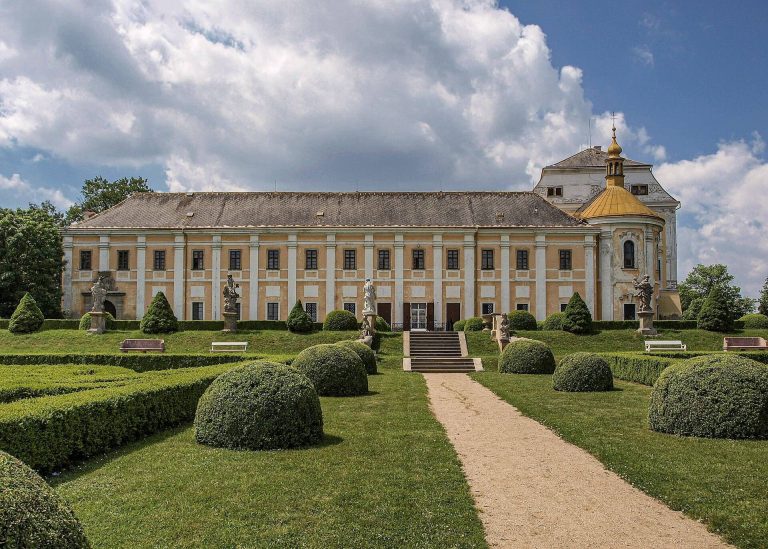
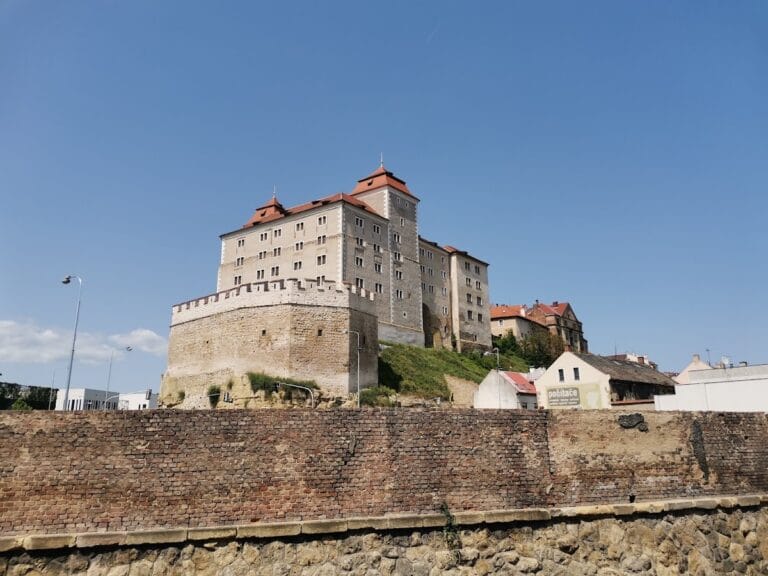
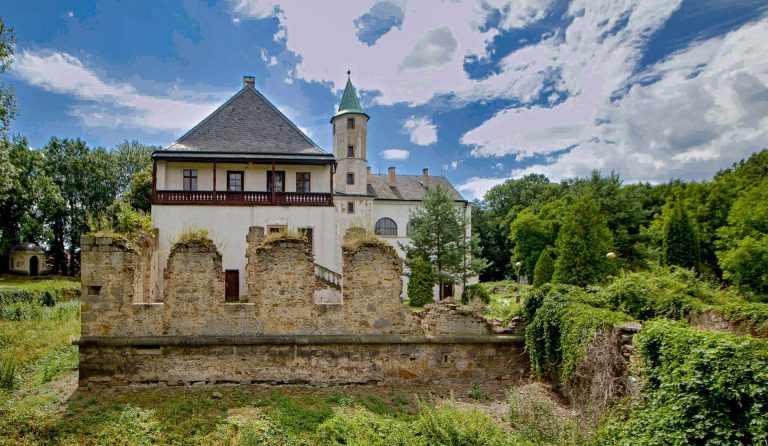
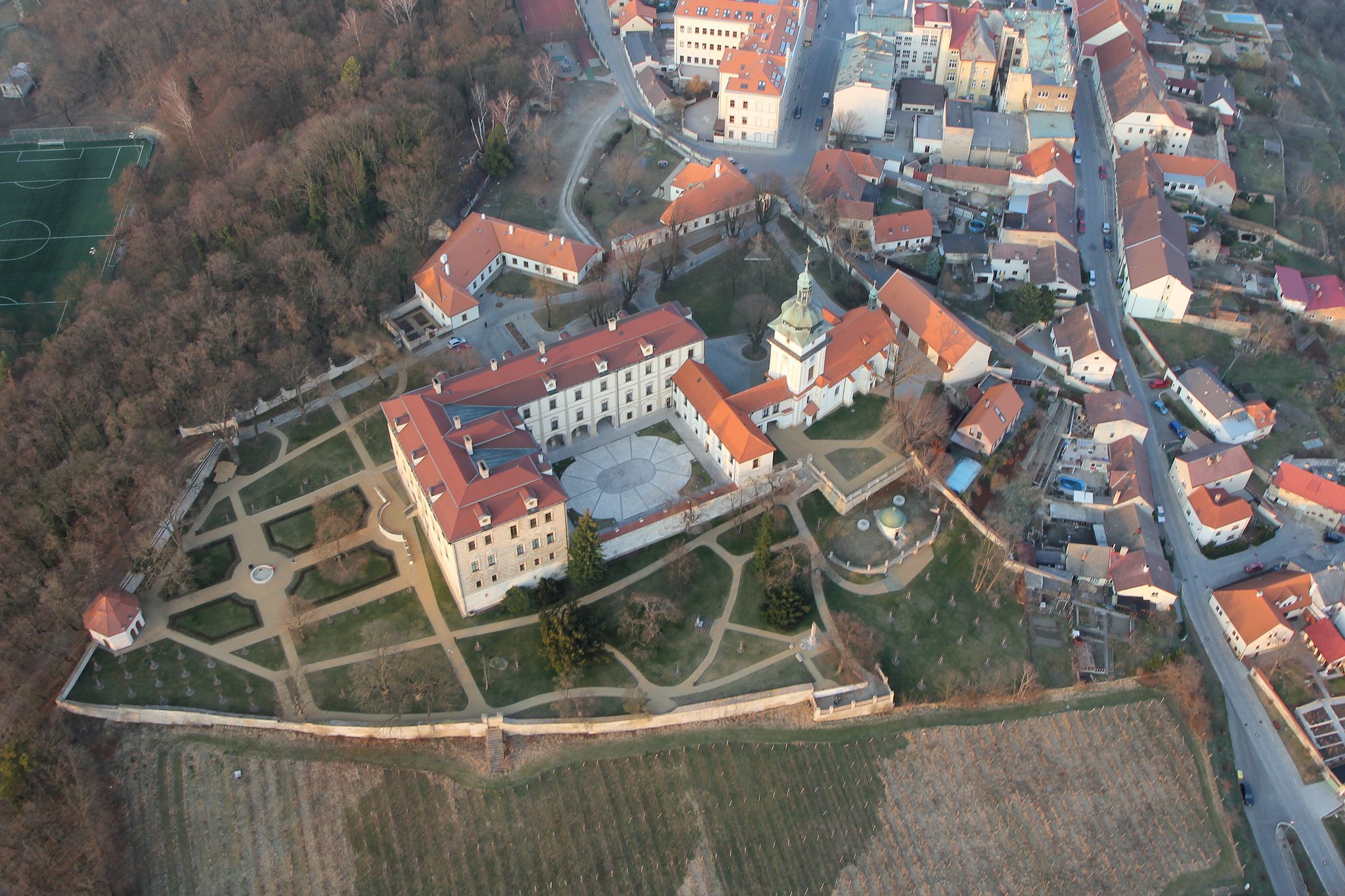
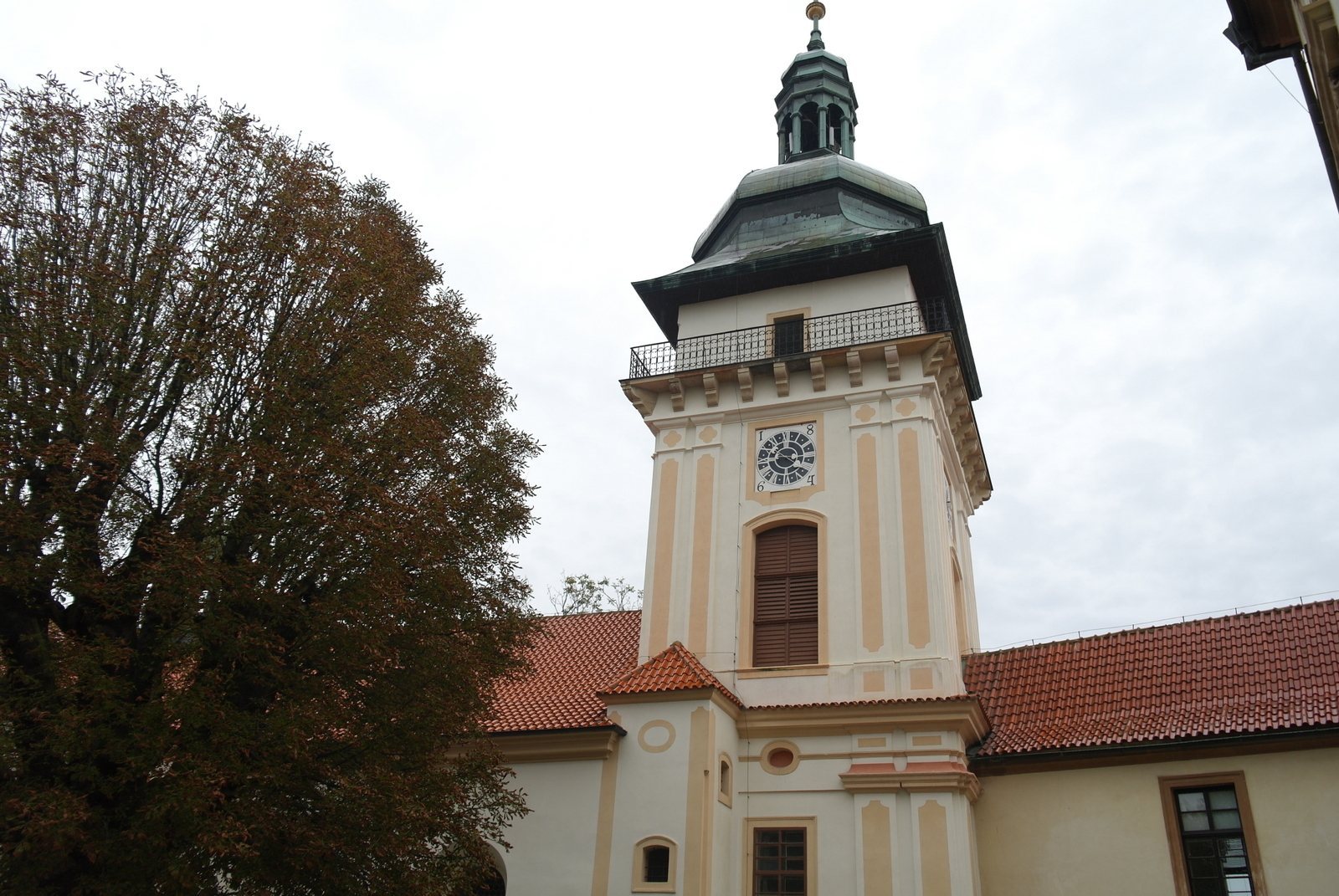
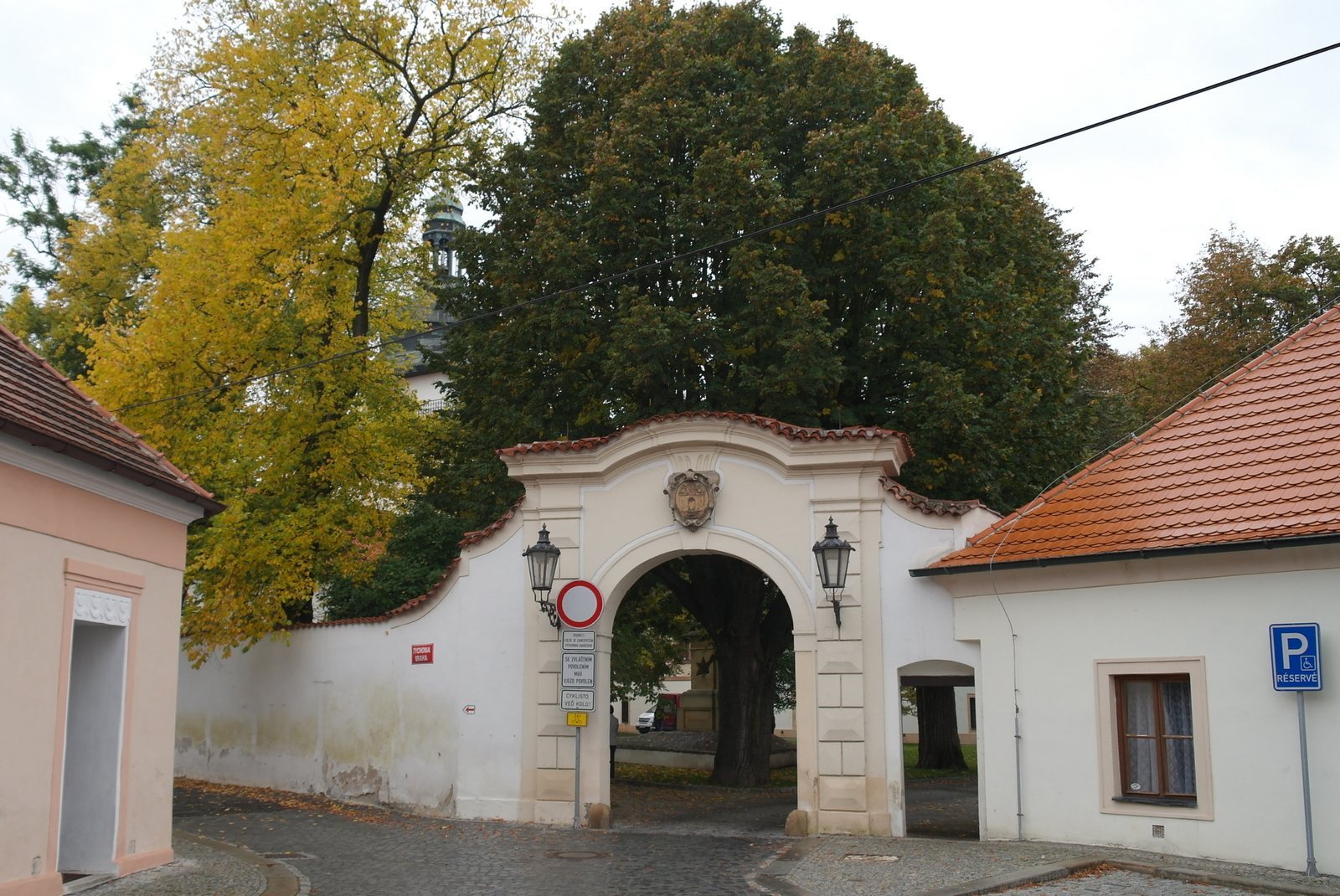
The castle stands on a prominent spur above the right bank of the Jizera, with a reconstructed park below it. The complex includes the Church of the Nativity of the Virgin Mary and combines Renaissance buildings with later Baroque alterations and Rococo interiors. Despite these successive changes, the buildings form a visually unified group.
Western wing
The original residence built for the Donín family forms the present western wing. It represents the oldest surviving part of the castle and may occupy the demolished site of the former Cyriac monastery. Its Renaissance fabric belongs to the rebuilding campaign begun around 1525.
Baroque wing and enclosed complex
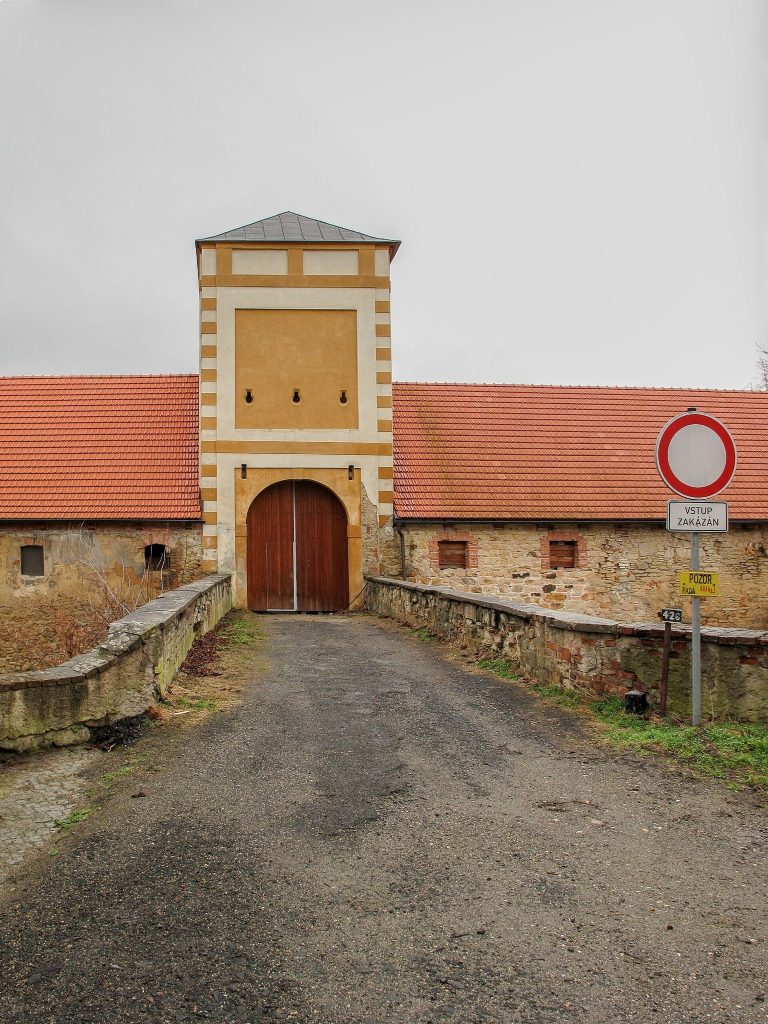
The Baroque wing was added under Jan of Werth and was later severely damaged by the fire of 1656. The castle is accompanied by an enclosed area containing service buildings and a church, preserving the expanded arrangement created during the Baroque period.
Park sculpture
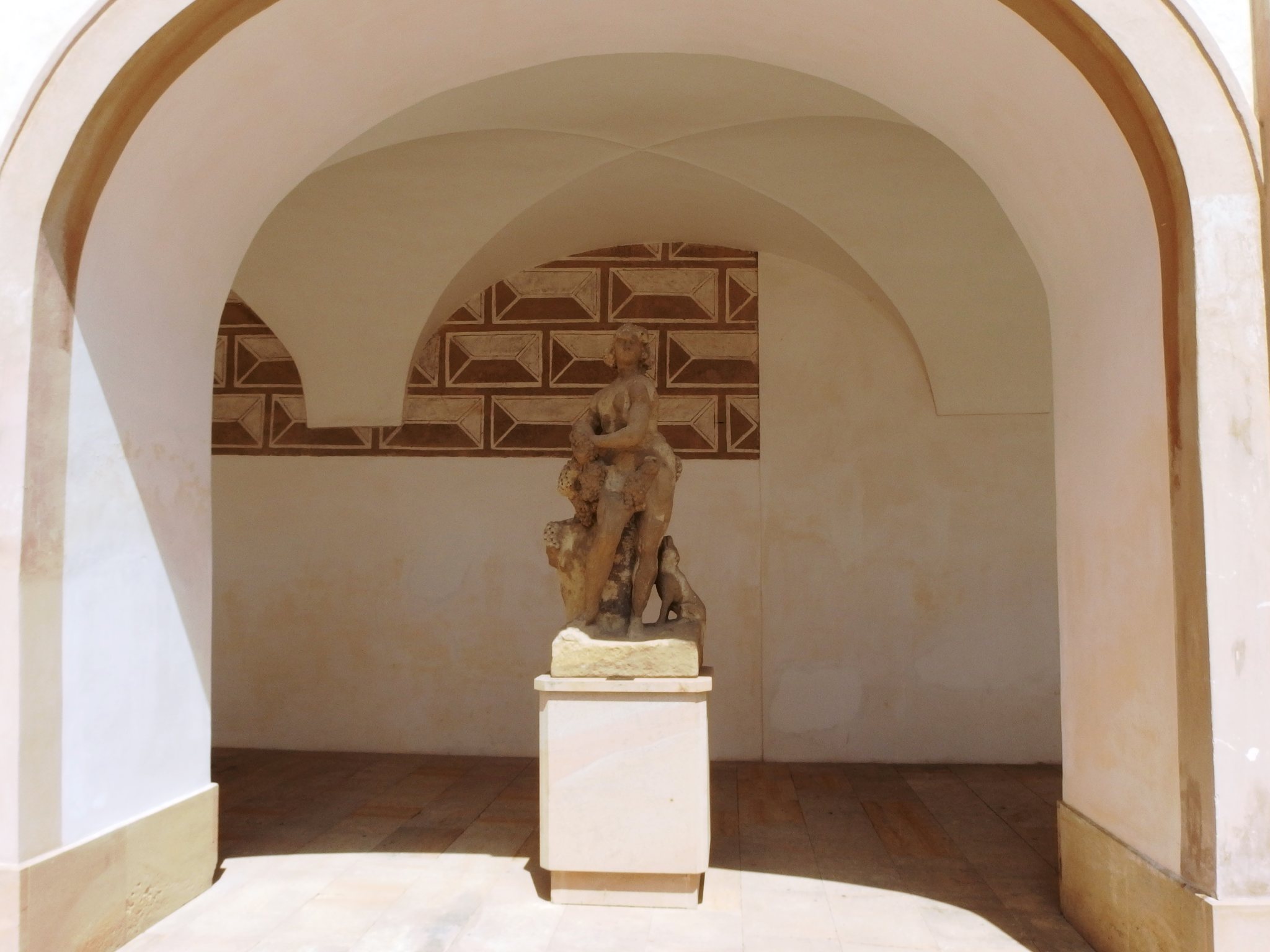
The castle and park contain Baroque sculpture representing the Sun and Moon, Hercules fighting Atlas, Atlas carrying the globe, and allegories of Autumn and Winter. Some works are attributed to the local sculptor František Adámek, while the wider sculptural decoration is associated with Matthias Braun, a major Baroque sculptor active in Bohemia, and his pupils.
The Klenová family acquired sculptures caricaturing servants from Count František Antonín Špork, owner of the neighboring Lysá estate and a major patron of the arts. The park now preserves a group of six restored statues that was returned during the 1950s after earlier removal to Lysá and Nové Město nad Metují.
Interiors and present functions
The restored sgraffito forms part of the castle’s Renaissance decorative fabric. The upper floor contains museum exhibitions and repositories, including collections of the former Benátky municipal museum, now part of the Mladá Boleslav District Museum. Exhibitions address the lords of Dražice, Tycho Brahe, Jan of Werth, and the Celts. The ground floor contains the private Jiří Fiala Toy Museum, while the castle also houses offices of the municipal authority and AVE CZ.