Basilika Absam: A Late Gothic Marian Pilgrimage Church in Austria
Site at a Glance
- Rating
- 4.7
- Popularity
- Low
- Country
- Austria
- Primary era
- Medieval
- External website
- Open
- Eras represented
- Medieval, Early Modern, Modern
- Civilizations
- Habsburg, Holy Roman Empire
- Site type
- Religious
- Remains
- Basilica
On this page12 sections
History
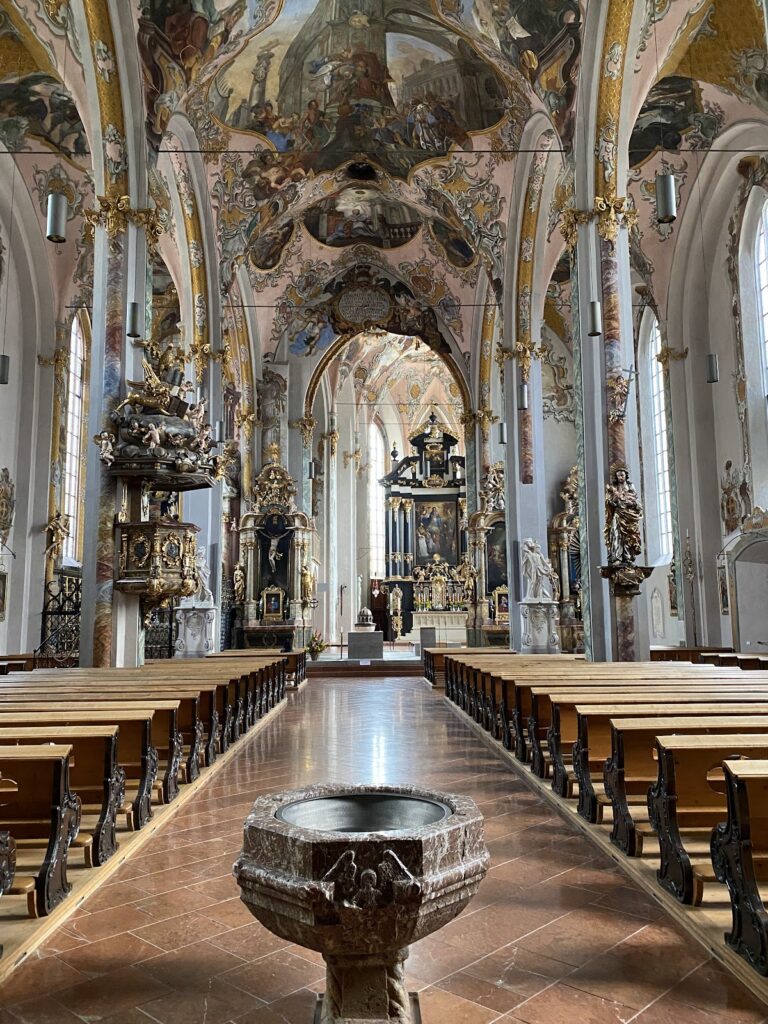
Basilika Absam is a Roman Catholic parish church in Austria, rebuilt between 1420 and 1440 as a three-nave Late Gothic hall church after the destruction of an earlier building. Also known as Basilika St. Michael, it is Tyrol’s most important Marian pilgrimage site and belongs to the Diocese of Innsbruck.
Origins and medieval rebuilding
The church is regarded as an Augsburg foundation. Its dedication to the Archangel Michael, a heavenly protector and leader of the angels in Christian tradition, and Augsburg possessions in Absam recorded from 1071 support this attribution. Older parish landholdings indicate that a church may have stood here as early as the ninth century, while the earliest written reference to the church dates from 1331.
Bavarian forces burned the original church in 1413. It was rebuilt during the following decades, between 1420 and 1440, in the Late Gothic style. In a Late Gothic hall church, the nave and side aisles have broadly similar heights, creating a unified interior rather than a strongly elevated central space.
Parish changes and eighteenth-century transformation
During the fifteenth century, the parish was transferred to Hall in Tyrol. Basilika Absam then became a neglected filial church, meaning a subsidiary church with reduced pastoral care. Repeated complaints from the inhabitants led to the appointment of a chaplain in 1653, which renewed parish life.
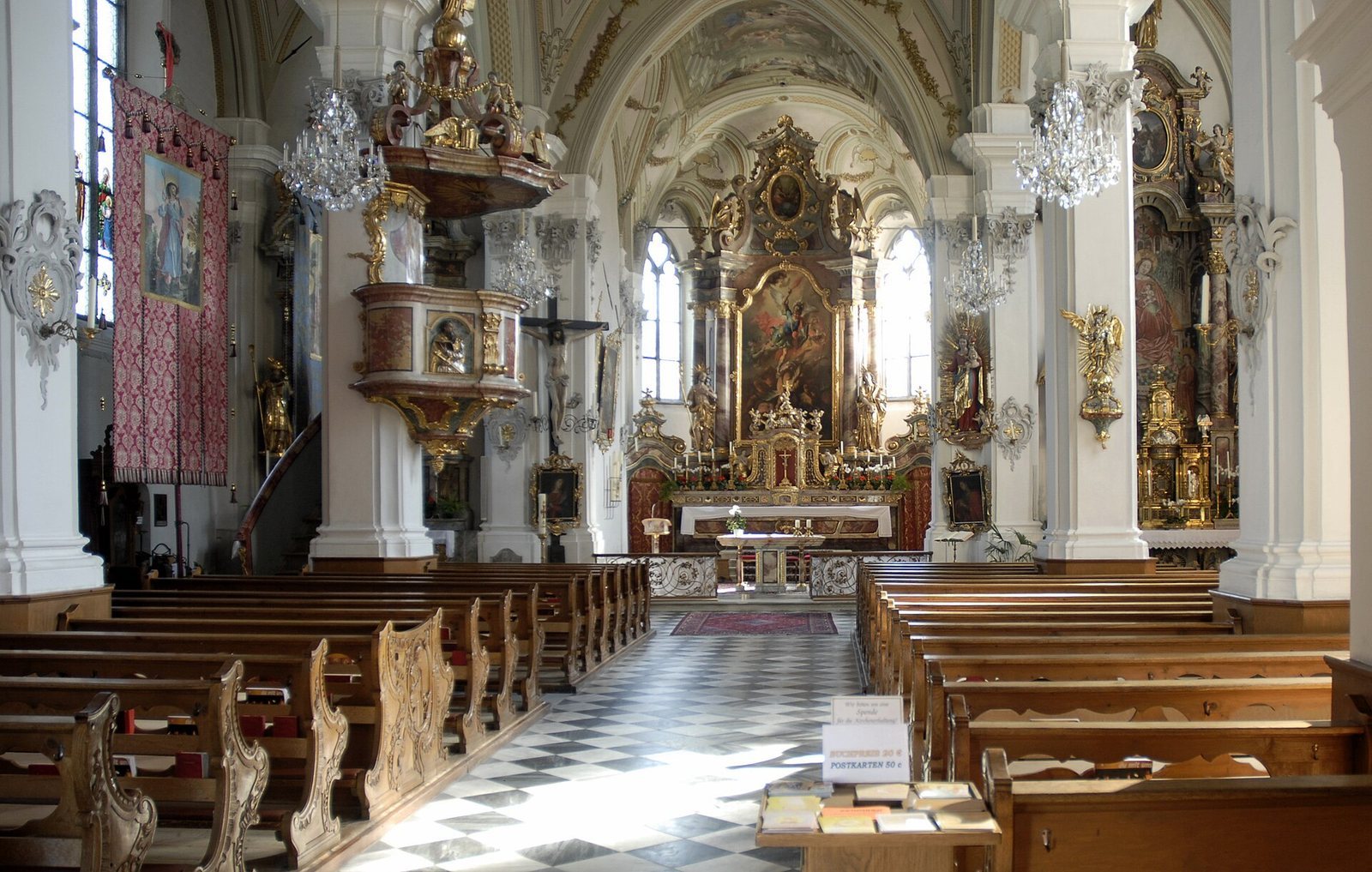
An earthquake damaged the church in 1670. A rebuilding campaign lasting 46 weeks restored the tower and replaced its pyramidal roof with a lantern, a raised windowed structure that admits light. The interior was remodeled in the Baroque style during the eighteenth century, and Josef Anton Zoller painted its frescoes in 1779.
The roof covering was replaced in 1871, and an entrance vestibule was added in 1898. The interior underwent restoration in 1976–1977, followed by exterior restoration in 1988–1989.
Marian pilgrimage and basilica status
The pilgrimage began after a reported apparition on 17 January 1797. A colorless image resembling a woman’s head appeared on a windowpane in a farmer’s house and was interpreted as a miraculous representation not made by human hands. Ecclesiastical and state authorities initially objected, and the window was examined several times before being ceremonially transferred to the parish church on 24 March 1797.
The pane was taken to Innsbruck for further examination, then returned to Absam and carried in procession to the church. The Marian image has been venerated there ever since. It is honored especially on 17 January, the anniversary of the apparition, and on 24 June, the feast of the church’s second patron, John the Baptist, the Christian prophet and preacher associated with the baptism of Jesus. The apparition is also commemorated on the seventeenth day of each month, while numerous votive plaques express thanks for answered prayers.
On 24 June 2000, Pope John Paul II raised the church to the status of Basilica minor, an honorary papal title for churches of particular religious or historical importance. Because of its Marian pilgrimage, it became the first non-monastic church in Tyrol to receive this designation. Basilika Absam is protected as an Austrian cultural monument and is included among Absam’s cultural heritage monuments.
Remains
The surviving building is a three-nave Late Gothic hall church constructed between 1420 and 1440. Its eastern end has a polygonal termination associated with the tower. Later Baroque decoration, the altered tower roof, medieval furnishings, the organ, bells, and the venerated Marian image together preserve the church’s successive phases.
Church fabric and decoration
Tower and lantern
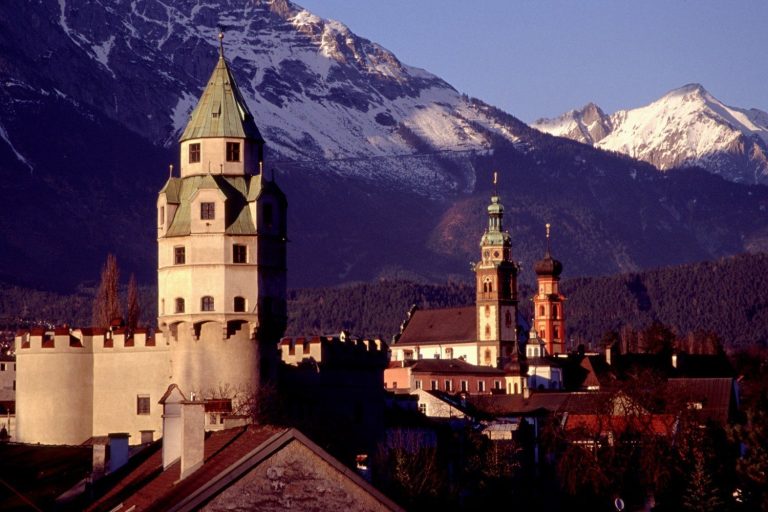
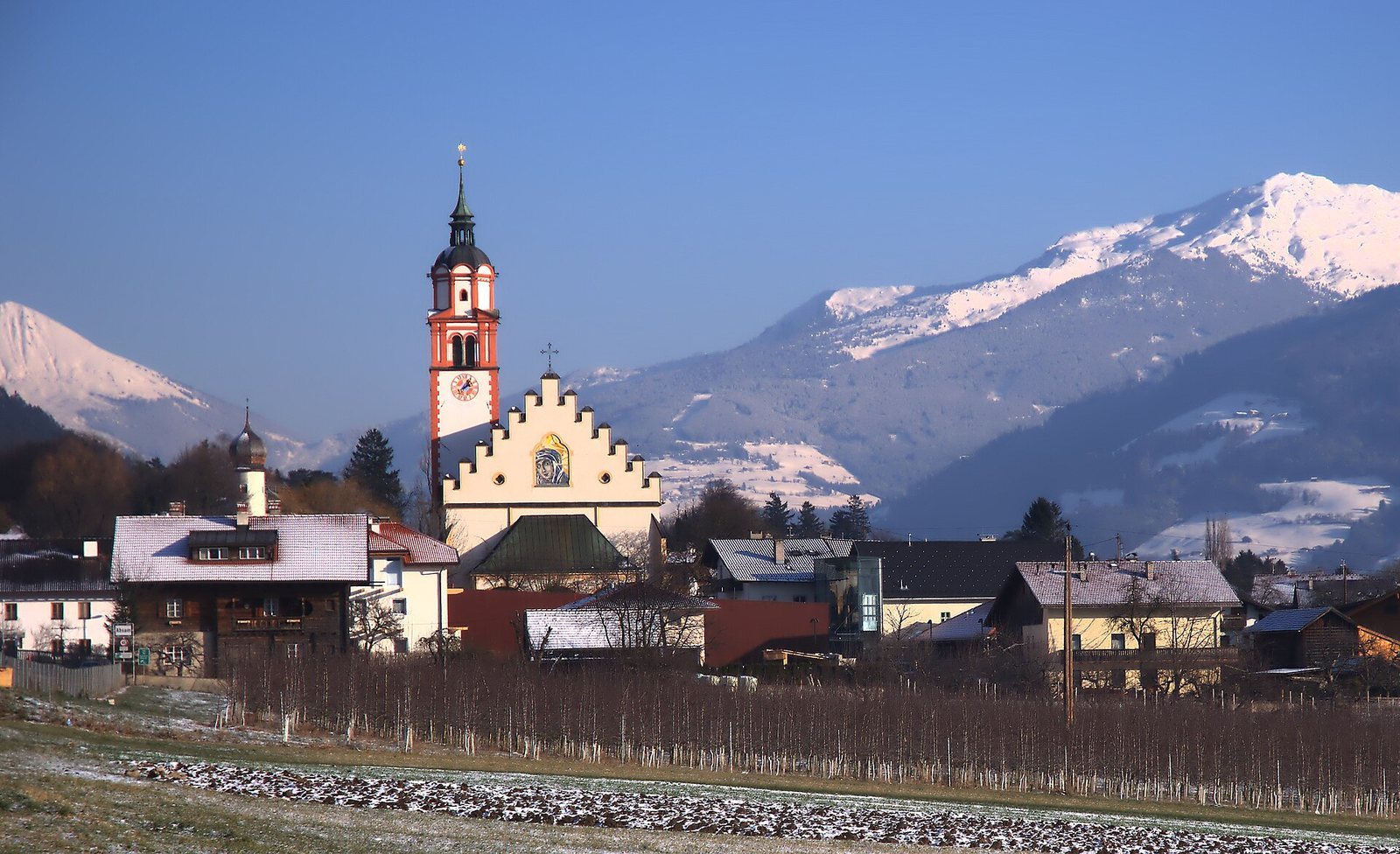
The tower rises at the eastern end of the church and has a lantern in place of its former pyramidal roof. Following the roof work of 1871, the lantern was covered with copper. Its raised, windowed form provides the tower’s surviving upper termination.
Frescoes and medieval furnishings
The Baroque refurbishment includes frescoes painted by Josef Anton Zoller in 1779. Earlier furnishings include a painted altar from 1470 and a Late Gothic crucifix from 1492 known as the Fieger Cross.
Organ and bells
Organ
Johann Anton Fuchs built the organ in 1776. Josef Aigner reconstructed it in 1841, and its first restoration took place in 1948, when Johann Pirchner worked under the direction of Egon Krauss. Christian Erler overhauled the instrument in 2002, after which the Vier organ-building firm voiced it. The organ has 23 stops, two manuals, and a pedal, with mechanical action.
Bells
The present bell set consists of five bells cast in 1958 by the Grassmayr bell foundry in Innsbruck. They replaced four earlier steel bells made by the Böhler works. The older bells were retained and placed in front of the church.
Marian image and votive displays
The devotional image began as a colorless, copperplate-like image of a woman’s head on a windowpane. After the pane was washed, the image reportedly reappeared. It was first placed on the high altar and later positioned beneath a wall painting of the Gothic Madonna at the altar on the epistle side, the side traditionally associated with the reading of the Epistle during worship.
A large copy of the Marian image is mounted outside above the portal. Inside, numerous votive plaques are displayed as material expressions of prayers believed to have been answered.