Barnbougle Castle: A Rosebery Estate Castle on the Firth of Forth
Site at a Glance
- Rating
- 4.6
- Popularity
- Low
- Country
- United Kingdom
- Primary era
- Medieval
- External website
- Open
- Eras represented
- Medieval, Modern
- Civilizations
- British, Kingdom of Scotland, Norman
- Site type
- Domestic
- Remains
- Castle
On this page8 sections
History
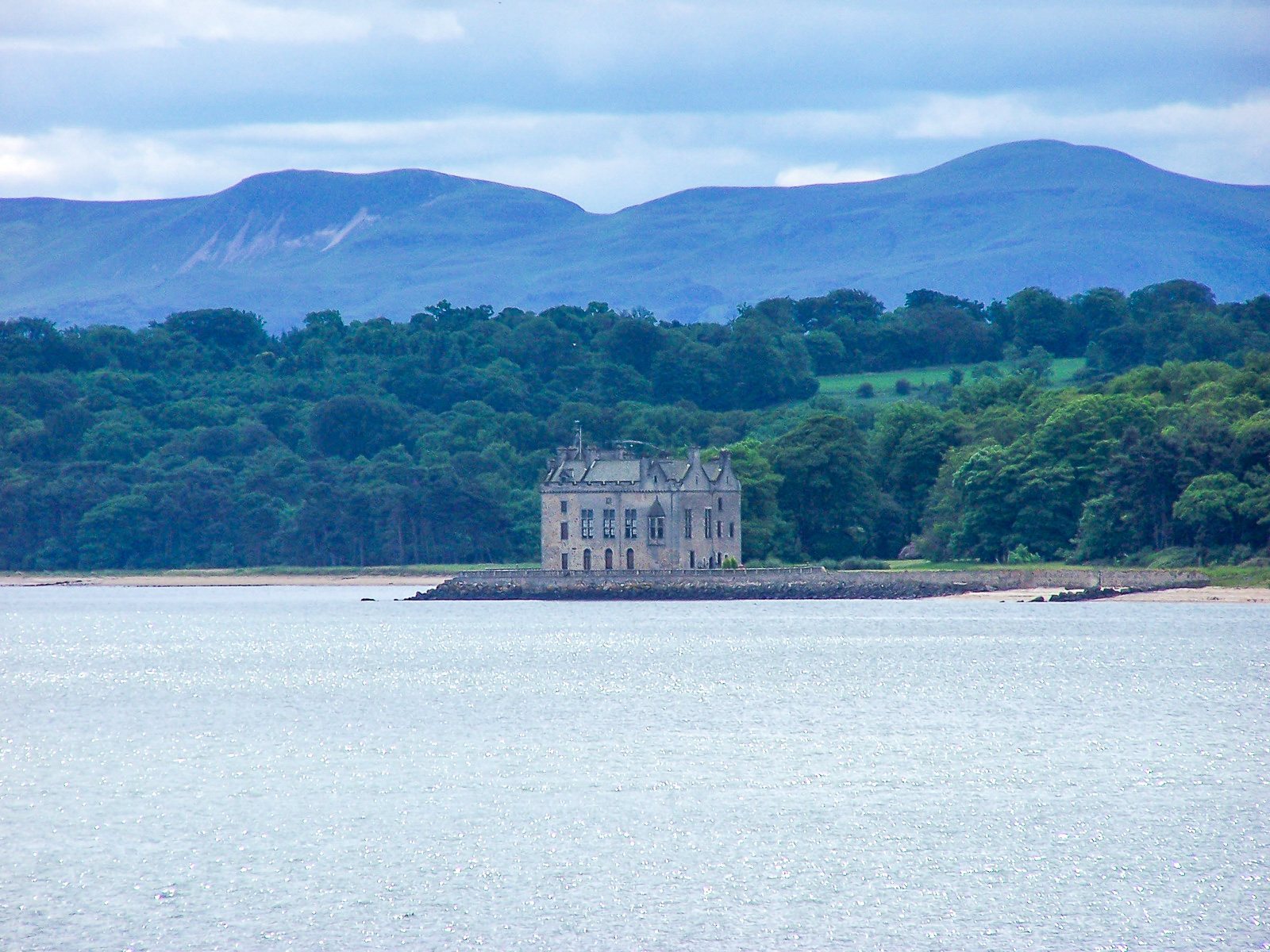
Barnbougle Castle is a historic castle in the United Kingdom, standing on the southern shore of the Firth of Forth between Cramond and Queensferry. Its earliest structure was a thirteenth-century tower house built by the Mowbrays, a Norman aristocratic family connected with the lordships of Dalmeny and Inverkeithing. Philip Mowbray is identified as its builder. Most of the present building, however, dates from a late nineteenth-century reconstruction in the Scots Baronial style, a revival of medieval and early-modern Scottish forms.
The Mowbray Castle
The Mowbrays retained Barnbougle for centuries. Sir John Mowbray of Barnbougle, laird of Dalmeny, was knighted by Sir Thomas Erskine after the Battle of Homildon Hill in 1402. In the sixteenth century, John Mowbray supported Mary, Queen of Scots, the Stuart monarch whose political struggles shaped Scottish history during the period. His wife was the sister of William Kirkcaldy of Grange, and two of their daughters served Mary in England. Gillis Mowbray was betrothed to Mary’s apothecary, while Barbara married Gilbert Curll, the queen’s secretary. Tradition connects the jewellery later called the Penicuik Jewels with a gift from Mary to Gillis.
The Links of Barnbougle were the scene of a judicial combat on 15 March 1597. This was a legally sanctioned duel intended to settle an accusation through single combat. James Carmichael had killed Stephen Bruntfield, Captain of Tantallon, in a duel on 22 December 1596, and was compelled to fight Adam Bruntfield. The judges were the Duke of Lennox, the Laird of Buccleuch, and Sir James Sandilands. Adam Bruntfield killed Carmichael, reportedly before about 5,000 spectators.
Transfer to the Rosebery Family
In 1615, the Mowbrays sold Barnbougle to Sir Thomas Hamilton, later Earl of Haddington. His grandson sold it in 1662 to Sir Archibald Primrose of Carrington, a senior judge who became Lord Justice General of Scotland in 1676. This is Scotland’s senior judicial office. Primrose’s eldest son from his second marriage, also named Archibald Primrose, became Earl of Rosebery in 1703, and Barnbougle then became the family’s seat.
The original tower house was rebuilt or replaced during the seventeenth century. In 1774, the architect Robert Adam proposed a triangular building that would have incorporated the old tower at its seaward corner, but the plan was never executed. By the beginning of the nineteenth century, Barnbougle had become dilapidated. A wave was said to have entered the dining room during supper. After the 4th Earl of Rosebery built Dalmeny House, the family moved there when it was completed in 1817. Barnbougle was subsequently used to store explosives, suffered damage in an accidental explosion, and was left as a ruin.
Nineteenth-Century Reconstruction
In 1881, Barnbougle was entirely reconstructed and extended to designs by James Maitland Wardrop of Wardrop and Reid. The work created a Scots Baronial setting for the Rosebery family’s private library and included a purpose-built gallery hall where the 5th Earl of Rosebery practised his speeches. Archibald Primrose, the 5th Earl, served as Prime Minister from 1894 to 1895 and wrote Napoleon: The Last Phase. The castle remains part of the Dalmeny Estate and is owned by the Rosebery family. It is a Category A listed building, the highest category of listed-building protection in Scotland.
Name and Legend
The name appears in older forms including Barnbughall, Barbogle, Parnbogalle, and Pronbugele. Proposed origins include British expressions interpreted as “shepherd’s hill,” “shepherd’s hill top,” and “shepherd’s tree.” These explanations probably refer to the raised ground behind the shore, overlooking grazing land at the mouth of the Cockle Burn. An antiquarian record from 1851 preserves a legend connecting Barnbougle and nearby Hound Point with the deaths of the castle’s lords. In one version, a black man accompanied by a hound appears at the point and sounds a death note on a bugle. Other versions describe the baying or howling of a hound. The story inspired William Wallace Fyfe’s poem about the legendary Sir Roger Mowbray and his dog during a crusade in the Holy Land.
Remains
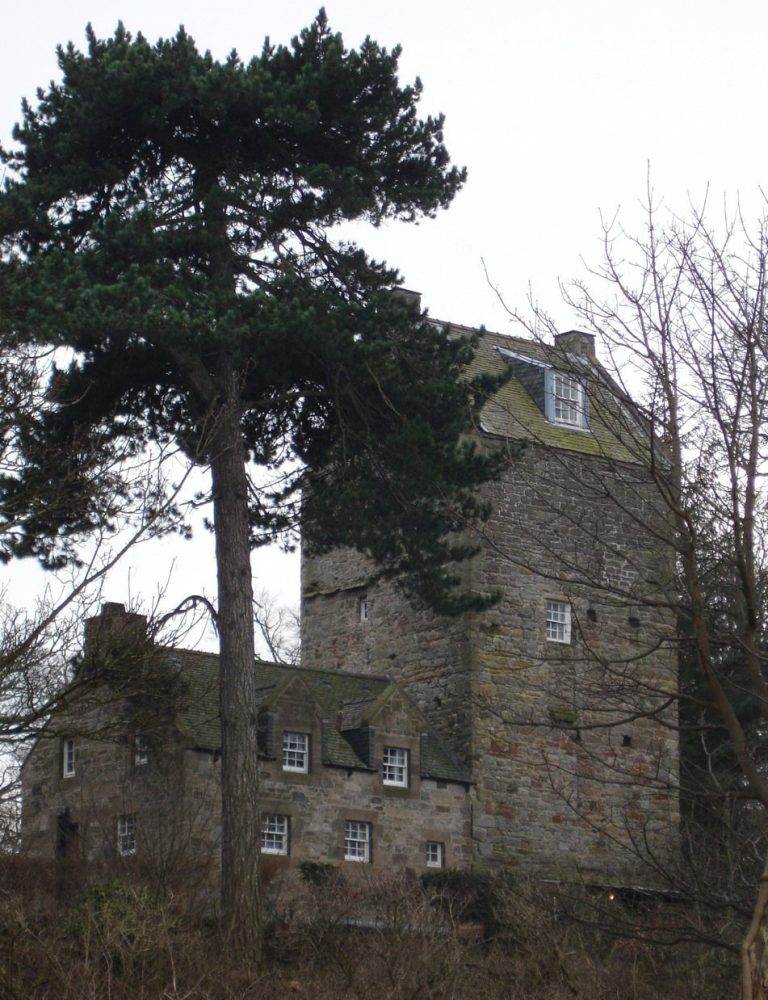
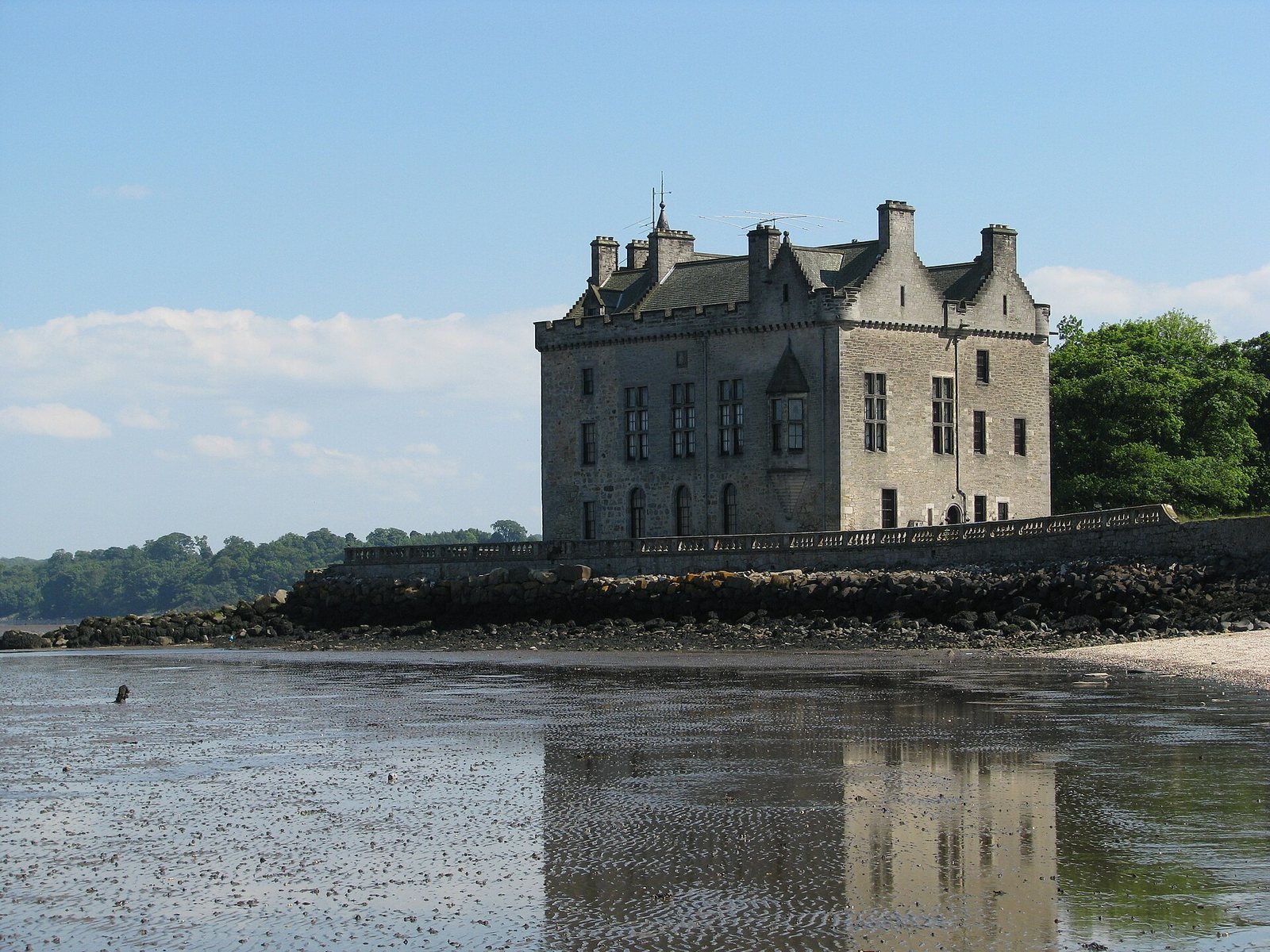
Barnbougle Castle occupies a projecting rocky terrace above the Firth of Forth. Older fabric survives on the north and east sides, while most of the three-storey building and attic belongs to the 1881 reconstruction. The structure is built of rubble faced with dressed ashlar sandstone, combining the surviving earlier material with the medieval-inspired forms of the Scots Baronial revival.
Castle Structure
The exterior is defined by crow-stepped gables, a crenellated parapet, and bartizans, which are projecting wall turrets, at the two western corners. The bartizans have water spouts. An inscription on a panel of the east wall reads, “Remove Not The Ancient Landmark Which Thy Fathers Have Set. Proverbs XXII.28.” Together, these features express the building’s nineteenth-century architectural character while the older fabric remains incorporated into its north and east sides.
Garden Sundial
A 2.4-metre-high obelisk sundial stands in the castle garden. It was moved to its present position in 1890.