Huaca Aznapuquio: An Inca-Period Pottery and Administrative Site in Lima, Peru
Site at a Glance
- Rating
- 3.8
- Popularity
- Low
- Country
- Peru
- Primary era
- Medieval
- Eras represented
- Medieval, Early Modern
- Civilizations
- Inca
- Site type
- Economic
- Remains
- Production Complex
On this page9 sections
History
Huaca Aznapuquio is an archaeological mound in Los Olivos, Lima, Peru, dating primarily to the Late Horizon, the final major pre-Hispanic period in the central Andes and the era of Inca expansion. Its principal occupation belonged to the Inca period, when it functioned as a pottery workshop and may also have supported distribution and administration within the Inca coastal network. The complex occupied a water-rich setting that helped sustain its productive activities.
Successive occupations and Inca-period activity
Sand-covered archaeological levels contain discarded ceramics whose styles range from the Middle Horizon to the Late Horizon. The Middle Horizon preceded the Late Horizon and was associated with earlier large-scale political and cultural developments in the Andes. These deposits indicate successive periods of activity at Aznapuquio, although the identities of the groups who used the site, the length of each occupation, and the precise work carried out during every phase remain uncertain.
The evidence points most clearly to pottery production during the Late Horizon. Local communities may have worked there under Inca direction, possibly including mitimaes, populations relocated by the Inca state for administrative, economic, military, or colonizing purposes. Similarities with sites in the lower Chillón Valley and a polygonal character resembling Inca stone construction support this interpretation, while the population history of the site remains unresolved.
Aznapuquio may also have served as an economic or administrative center. Repeatedly renewed floors, layers of sand laid down before floors were sealed, and signs of heavy movement suggest organized and sustained activity. The combination of production evidence and possible administrative functions places the huaca within the wider Inca system of making, storing, transporting, and redistributing goods, although its exact institutional role is not established.
Water resources and colonial transformation
Water accumulation was central to the site’s economic sustainability. The Chillón Valley and the Piedra Liza irrigation channel converged beside Aznapuquio. The channel began on the slopes of San Cristóbal Hill and carried water from the Rímac River. Ponds and wetlands created by this system supplied water more consistently than the coastal rivers and supported the site’s productive activities.
The associated wetland existed before the main occupations and continued into the colonial period, when it gradually contracted or was drained into other irrigation channels. Later references describe it as a pond used by viceroys for duck hunting. The name Aznapuquio is linked with expressions meaning “stinking water” or “black water,” and with the description “stinking spring,” all referring to the nearby wetland and its concentrated groundwater.
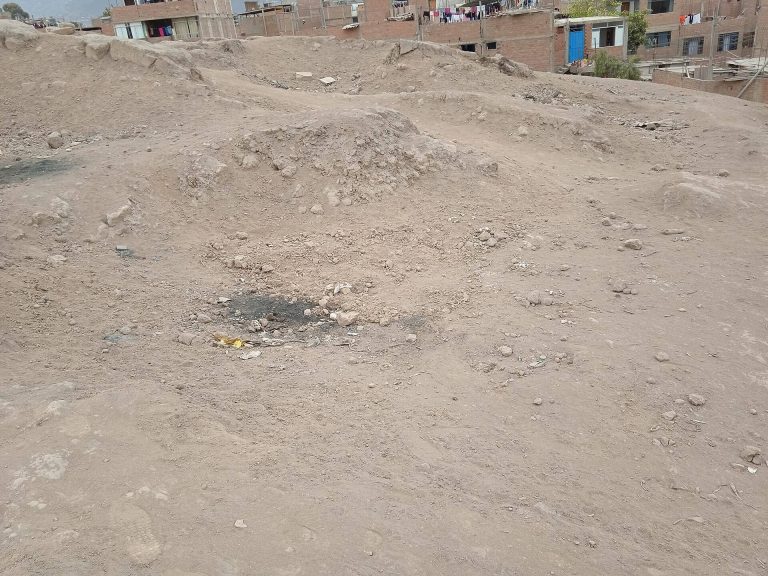
Aznapuquio was abandoned during the colonial period. In the modern era, urban expansion, road construction, modernization, and related development reduced the archaeological territory from the mid-twentieth century through the beginning of the 2000s. The complex originally comprised four mounds, but the other mounds were destroyed over time, leaving the present huaca as the surviving identified component.
Protection and continuing investigation
Huaca Aznapuquio became part of Peru’s National Cultural Heritage in 2002. Its perimeter was legally delimited in 2010, and the defined area was fenced a few years later. Access has remained highly restricted, including for maintenance. Part of the archaeological territory has been urbanized, making further investigation more difficult, while additional excavation is needed to clarify the complex’s functions and development.
Remains
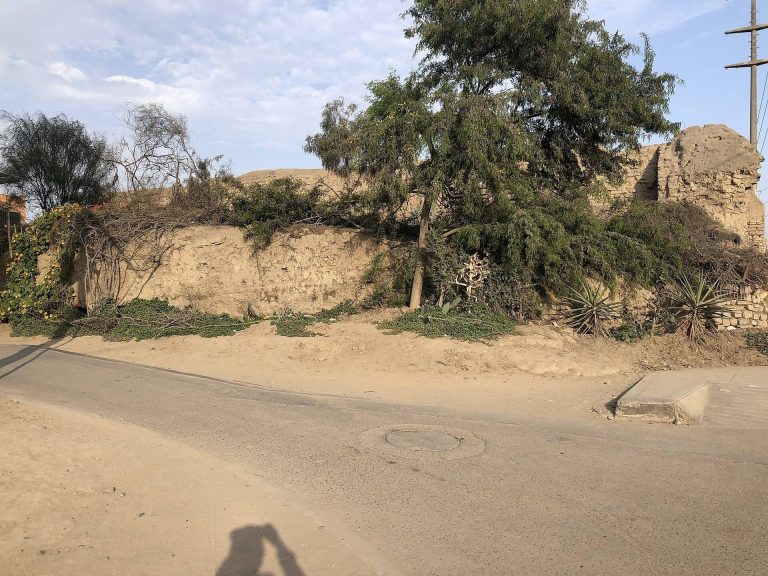
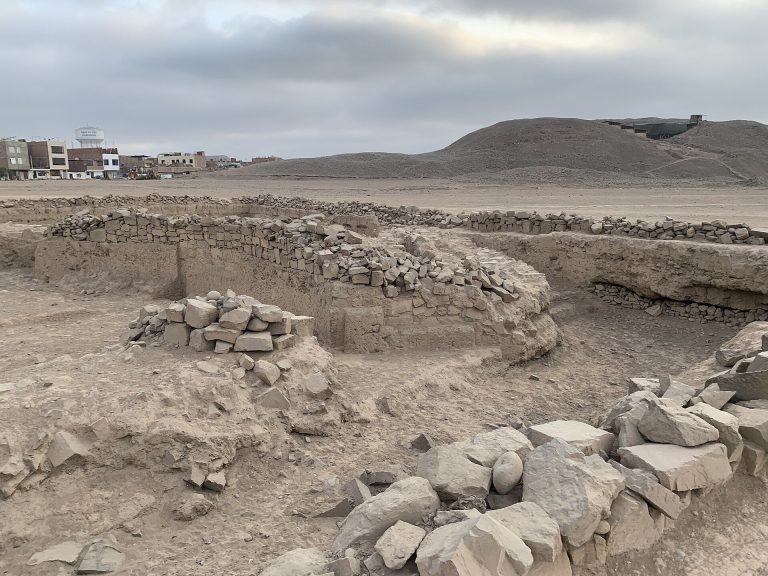
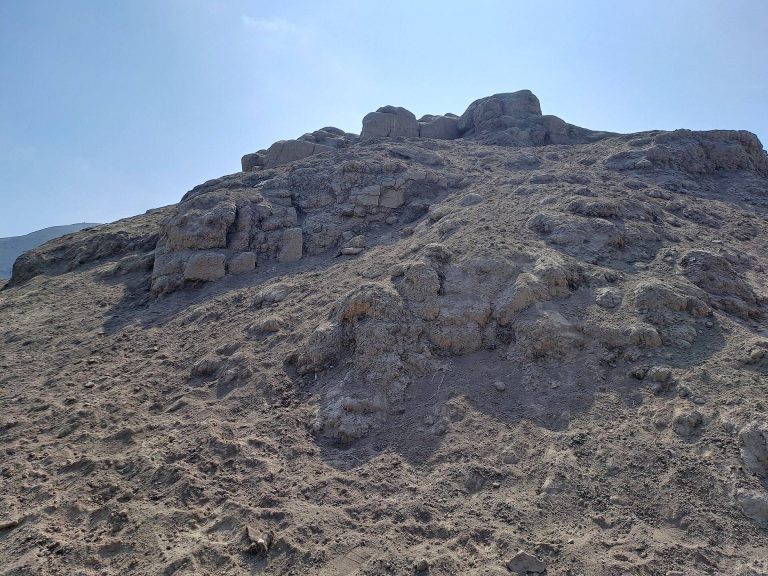
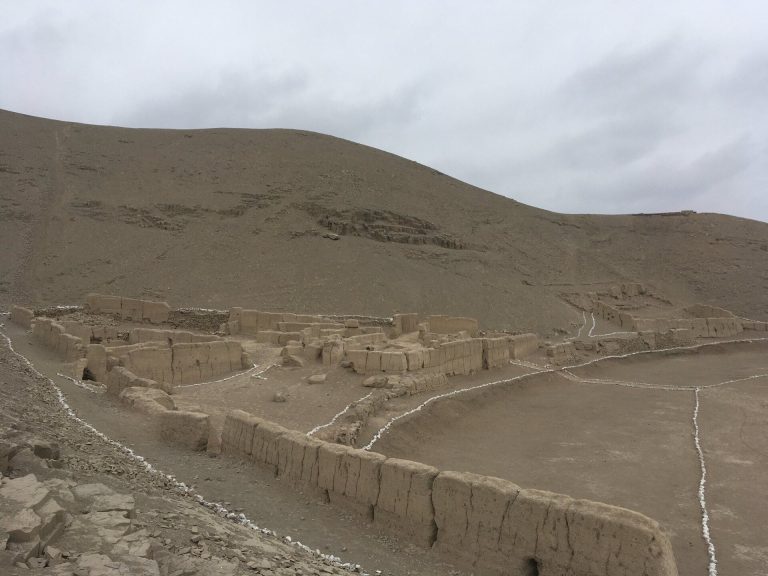
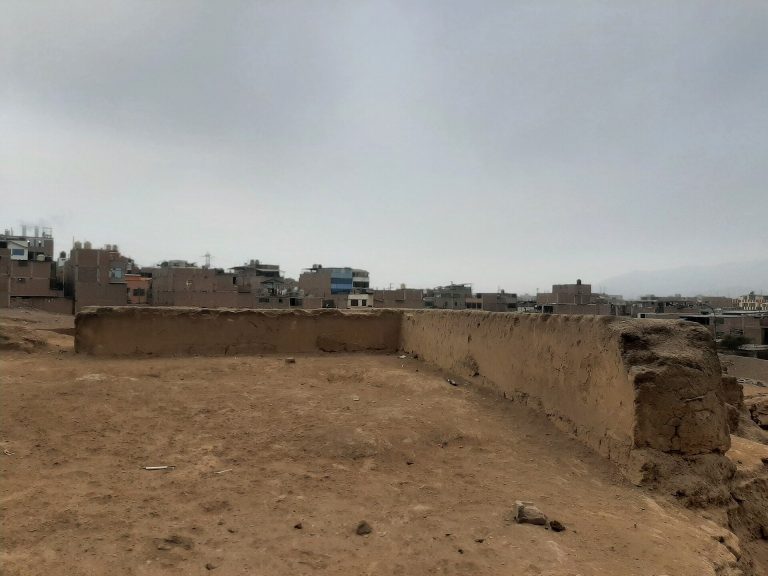
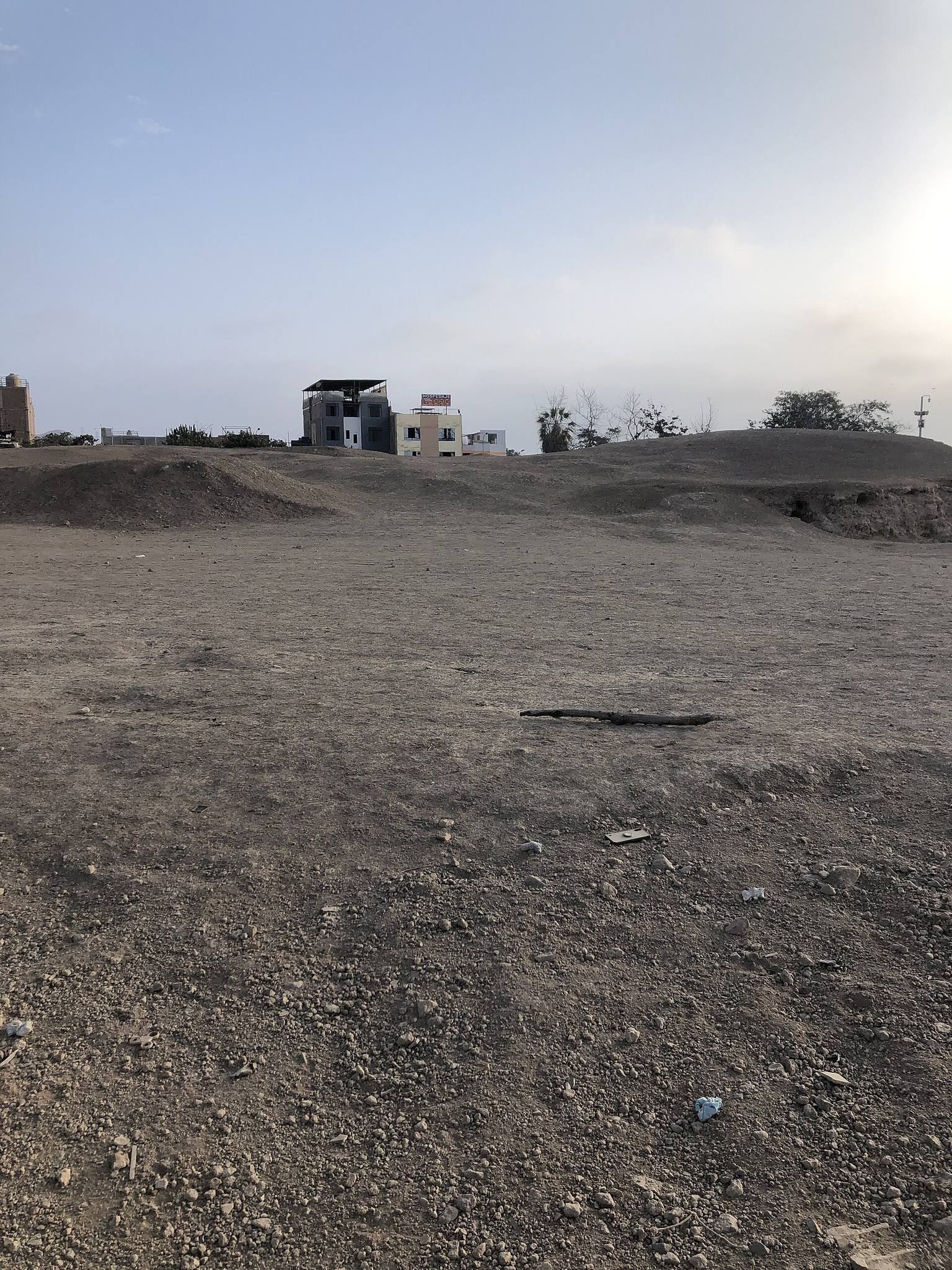
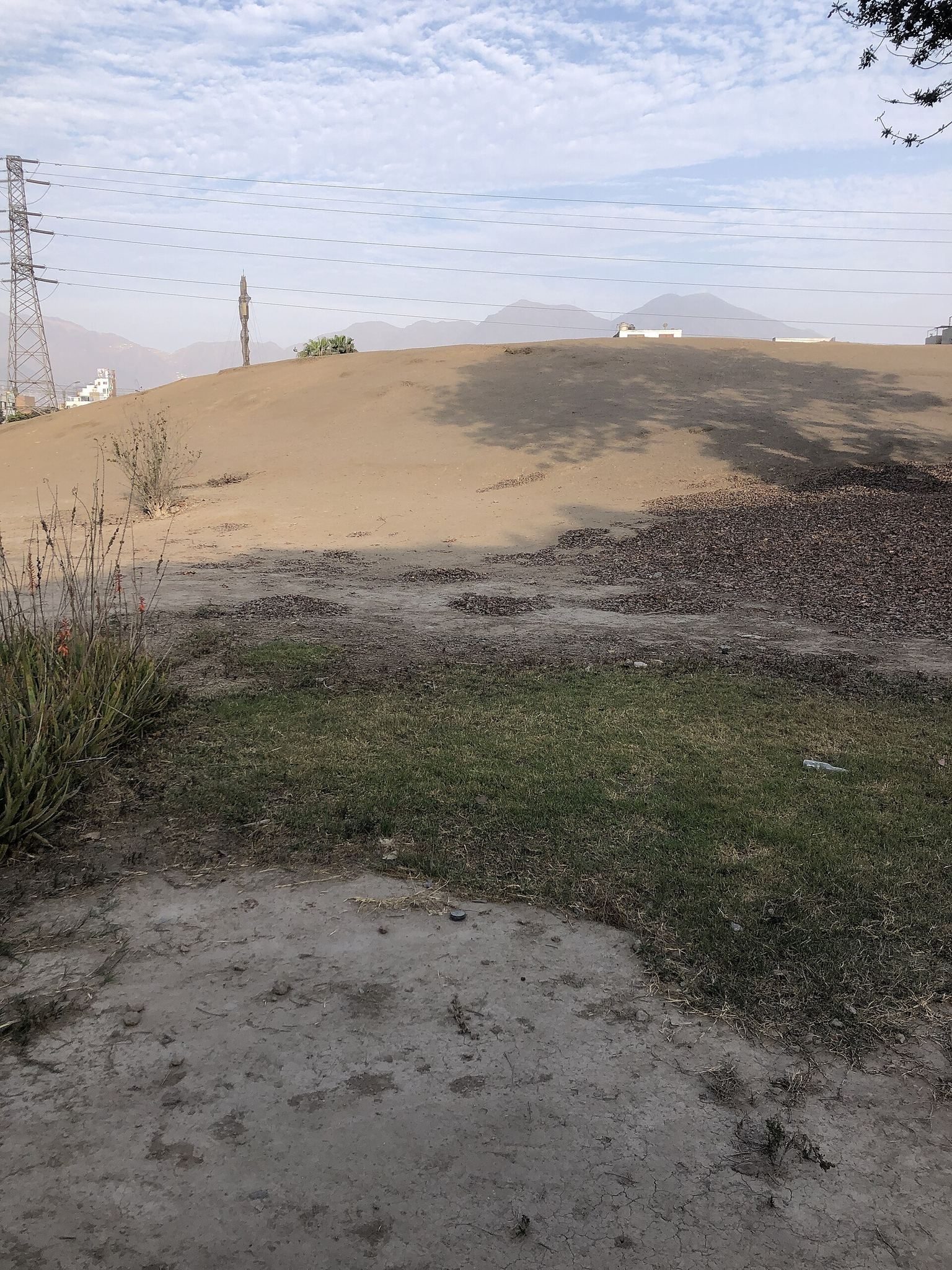
Huaca Aznapuquio survives as a pyramidal adobe mound surrounded by houses and a school in the urban district of Los Olivos. Adobe is a building material made from earth or clay, formed into blocks and dried before use. The mound measures approximately 65 to 80 meters in length and about 5 meters in height. Its preservation limits a full understanding of its construction, but similarities with lower-Chillón sites and its polygonal character provide architectural evidence associated with the Inca period.
Mound and production areas
Surviving adobe huaca
The surviving mound formed part of a larger four-mound complex. Its pyramidal body, yellowish soil, and accumulated floor levels distinguish the archaeological area from the surrounding terrain. The upper floors were repeatedly renewed, with added sand placed over earlier surfaces before they were sealed. This sequence appears to relate to heavy traffic across the site and indicates repeated modification during its use.
Kilns and ceramic deposits
Archaeological intervention revealed kilns and varied ceramic fragments, supporting the identification of Aznapuquio as a pottery-production area. The pottery includes objects of Ichma origin, associated with a pre-Inca culture of the central Peruvian coast, as well as Inca material. The mixture does not form a single uniform style and reflects the complex history of activity at the site.
Refuse deposits also contained domestic objects and a mortar. These finds point to activities beyond firing vessels, but their variety does not establish every function carried out at the complex. The repeated floor renewal, sand preparation, and concentration of discarded material together show a working area that underwent sustained use and alteration.
Wetland resource zone
The wetland and water deposits beside the mound formed an associated natural resource zone. They supplied clay for pottery and grasses used in basketry and other grass-fiber work. The same clayey ground later made housing construction difficult because building on it involved high associated costs. Groundwater concentrated in the area produced the marshy environment before the principal occupations and maintained or increased it during the Late Horizon.