Banja Monastery: A Serbian Orthodox Center in the Dabar Region
Site at a Glance
- Popularity
- Medium
- Country
- Serbia
- Primary era
- Medieval
- Eras represented
- Medieval, Early Modern, Modern
- Civilizations
- Ottoman, Serbian
- Site type
- Religious
- Remains
- Monastery
On this page16 sections
History
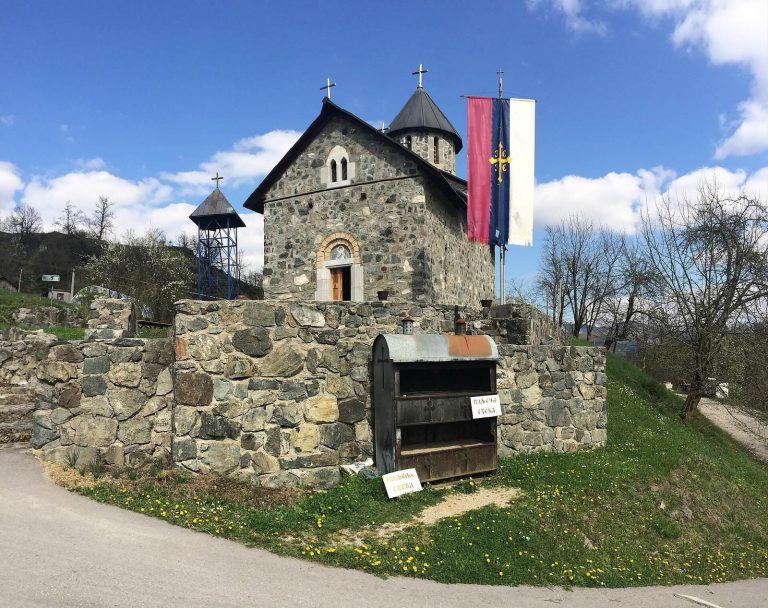
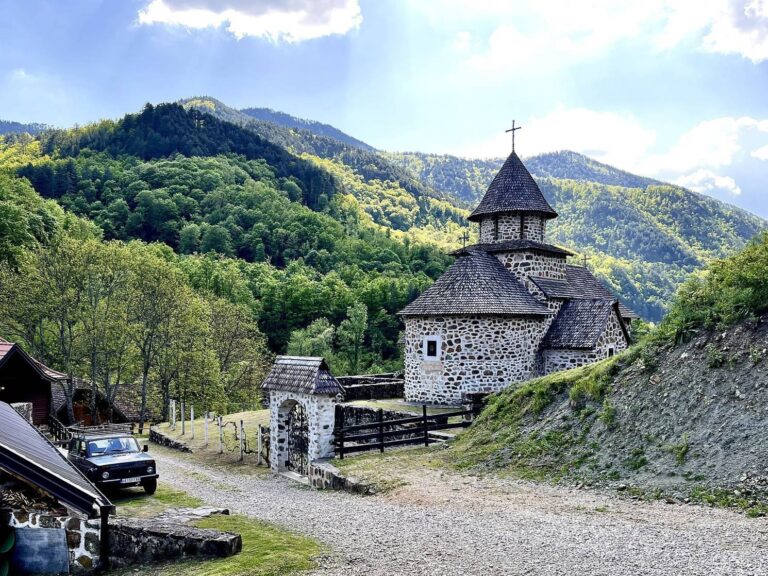
Banja Monastery is a Serbian Orthodox monastic complex in the village of Banja, Serbia, about 3 km from Priboj. Its beginnings are uncertain, but it became an important medieval religious center in the Dabar region. The Church of Saint Nicholas, the principal church, dates to 1329.
Origins and ecclesiastical standing
One tradition assigns the monastery’s foundation to the 11th century and names župan Vukan, a medieval South Slavic territorial lord or official, as its founder. Vukan’s identity in this account is uncertain. Other proposals place the monastery’s beginnings before the Nemanjić dynasty, perhaps during the Middle Byzantine period, broadly dated from the 9th to the 12th centuries. A Byzantine noble may have established it, possibly to oppose Bogomilism, a Christian movement regarded as heretical by established churches. This explanation remains a hypothesis.
The wider region underwent major ecclesiastical changes under Byzantine rule. In 1020, the Diocese of Ras was placed under the Archbishopric of Ohrid, and Greek clergy were sent into the area. Theodore, identified as its first priest, was of Greek origin. These developments provide context for possible Byzantine influence, but do not settle when or by whom Banja was founded.
Banja is first named in the Studenica Typikon of 1208, a monastic rule governing community life and worship. It records the monastery’s abbot taking part in the selection of Studenica’s abbot, a responsibility indicating Banja’s place among the six leading Serbian monasteries of the time. Around 1219–1220, Banja became the seat of the Diocese of Dabar, and it later served as the center of the Dabro-Bosnian Metropolitanate, a senior church jurisdiction.
In 1219, Saint Sava, the first Serbian archbishop, established the autocephalous Serbian Church, which governs itself rather than answering to another church hierarchy, and organized its dioceses. Banja’s position as a diocesan center reflected its standing in Dabar, a historical region associated with the lower Lim valley. The monastery also served as a spiritual and cultural hub and a base for religious and political activity. Its location near territories whose populations were regarded by established churches as predominantly heretical added to its regional importance.
In the medieval period, the monastery was known as Saint Nicholas of Dabar, combining the name of its patron saint with that of the region. King Uroš was its first donor from the Nemanjić dynasty, Serbia’s medieval ruling house, and other Nemanjić rulers also supported it. Local traditions connect the monastery’s thermal spring with healing. One says Saint Sava bathed there to ease pain in his legs; another tells that Stefan Uroš I recovered from a skin disease after bathing. In the latter story, Orašac, Kratovo, Rutoši, and Radojinja mark stages of the king’s recovery. Radojinja is also connected with a separate tradition about Saint Sava.
Medieval destruction and rebuilding
In 1324, a struggle between Stefan Dečanski and his cousin Vladislav over control of Dabar ended with Dečanski’s victory and the destruction of the monastery. He began its rebuilding, and the present Church of Saint Nicholas is dated to 1329. During the 14th century, attacks by the Bosnian ban, or regional ruler, Stjepan Kotromanić also brought damage. Before 1329, the young King Dušan fought in the area against people called Babuni, described at the time as godless and impious and identified with the ban’s subjects.
The monastery was damaged or destroyed and rebuilt repeatedly, yet continued to serve worshippers and the local community. It retained an important position under the Serbian emperors Stefan Dušan and Stefan Uroš V.
Sixteenth-century restoration
A restoration around 1570, during the leadership of Patriarch Makarije Sokolović, prepared the monastery for a major assembly in 1572. At the Saint Nicholas gathering, Makarije transferred leadership of the restored Peć Patriarchate, the Serbian Orthodox patriarchal institution centered at Peć, to his nephew Antonije Sokolović. A fresco painted in 1574 commemorates the transfer. Makarije was closely attached to Banja and visited often. He was probably a cousin of Mehmed Pasha Sokolović, the Ottoman Empire’s grand vizier.
Destruction and renewal
During the Great Turkish War, a late-17th-century conflict between the Ottoman Empire and a European coalition, Ottoman forces destroyed the monastery in 1690. Some monks were killed, while others escaped to Saint George Monastery in nearby Mažići. Before fleeing, they concealed part of the monastery’s treasury beneath the church floor.
Restoration in 1853 received financial help from Prince Alexander Karađorđević. A two-storey school opened near the monastery that year and became the oldest school in the Priboj area. On Ilinden, the Orthodox feast of the prophet Elijah, in 1875, a large gathering followed the church service. Participants agreed to join a general uprising in Polimlje and Stari Vlah, setting its start for 28 August, the Feast of the Dormition of the Mother of God. After the uprising was defeated, Ottoman forces used the monastery for storage and built barracks in its courtyard.
The monastery remained in ruins for more than 20 years. Sultan Abdul Hamid II authorized its restoration in January 1899, and Turkish officials attended a thanksgiving service there. Further restoration took place in the early 20th century, after which the church was reconsecrated on Ilinden. Church services and community occasions, including weddings, baptisms, and holiday gatherings, resumed.
In 1974, archaeological work uncovered 40 church objects buried beneath the church floor. The collection was held at the Serbian Orthodox Church Museum in Belgrade until its return to Banja on 1 June 2007. The monastery remains part of the Serbian Orthodox Church and the Diocese of Mileševa. It is protected by the Serbian state as a cultural monument of exceptional importance.
Remains
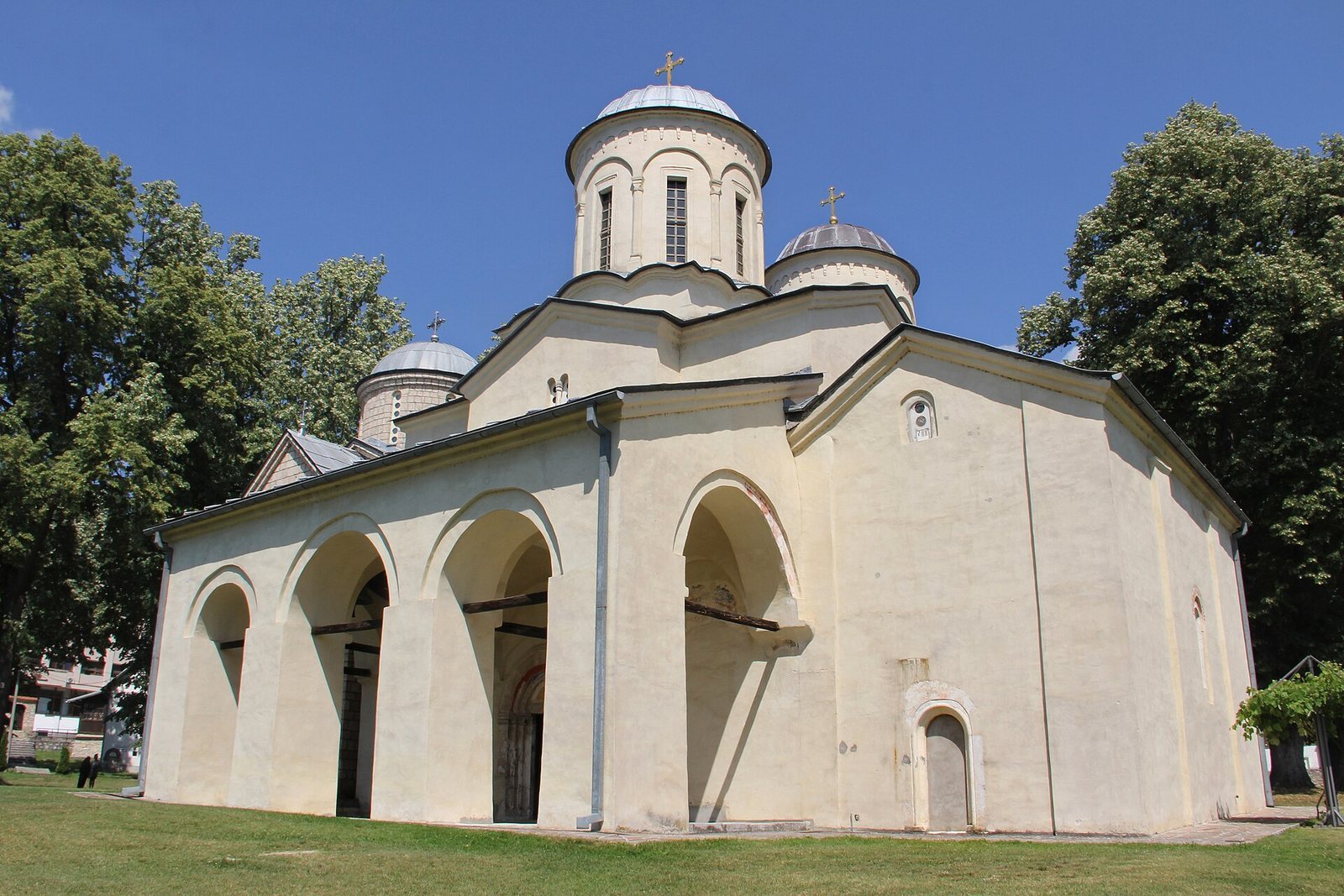
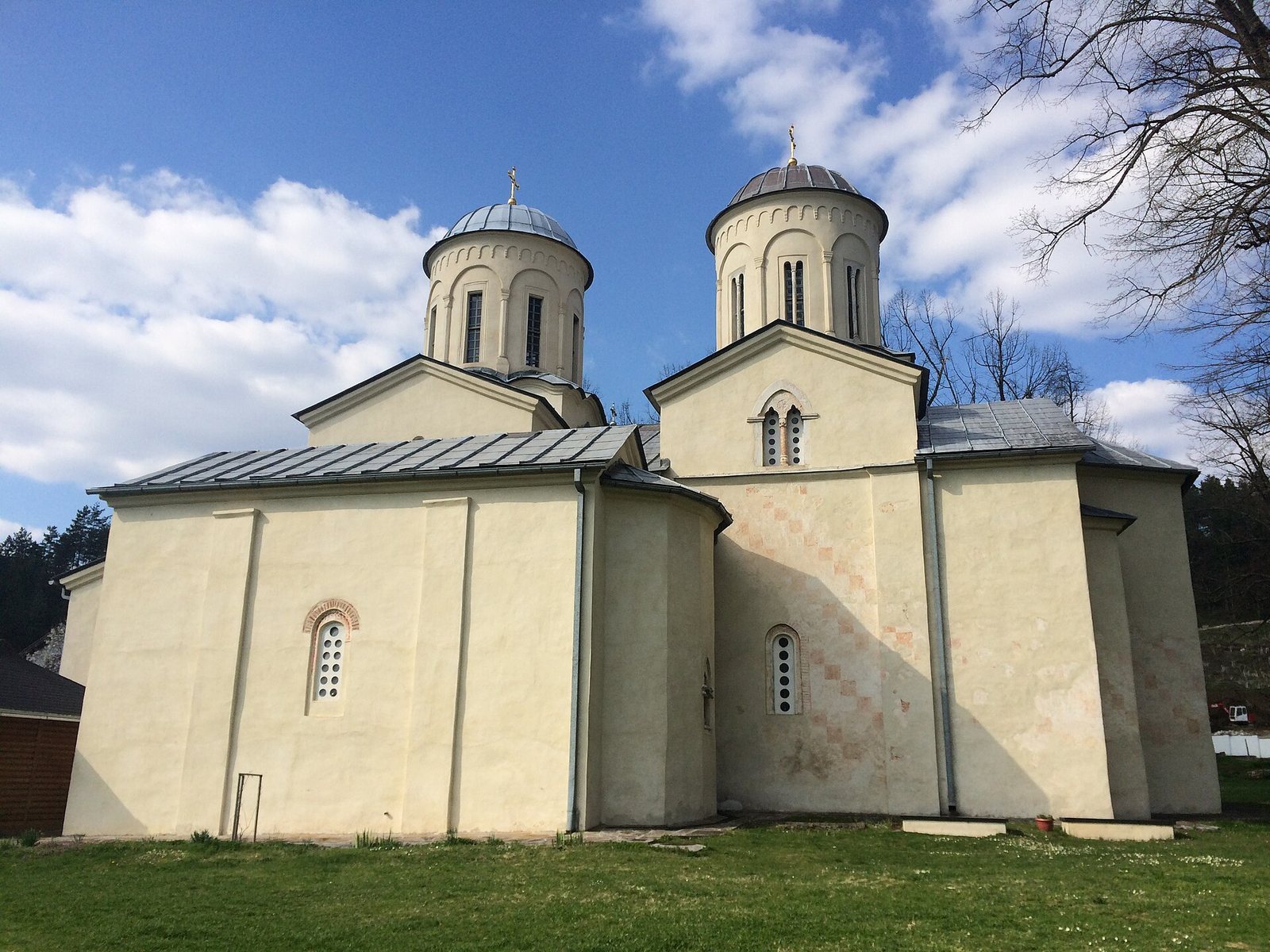
The complex brings together three churches and associated monastic buildings. Its principal structure is the Church of Saint Nicholas, also called Saint Nicholas of Dabar, dedicated to Saint Nicholas of Myra, a 4th-century Christian bishop venerated as a saint.
Layout and surrounding structures
Churches and monastic buildings
The Church of the Dormition of the Mother of God stands beside the principal church’s south wall, while the Church of Saint Elijah lies to the north. The Dormition is the Orthodox tradition concerning Mary’s death and assumption into heaven. Two monastic residential buildings date to 1902 and 1976. The school built nearby in 1853 is also part of the complex’s historical setting.
Spring and bathing place
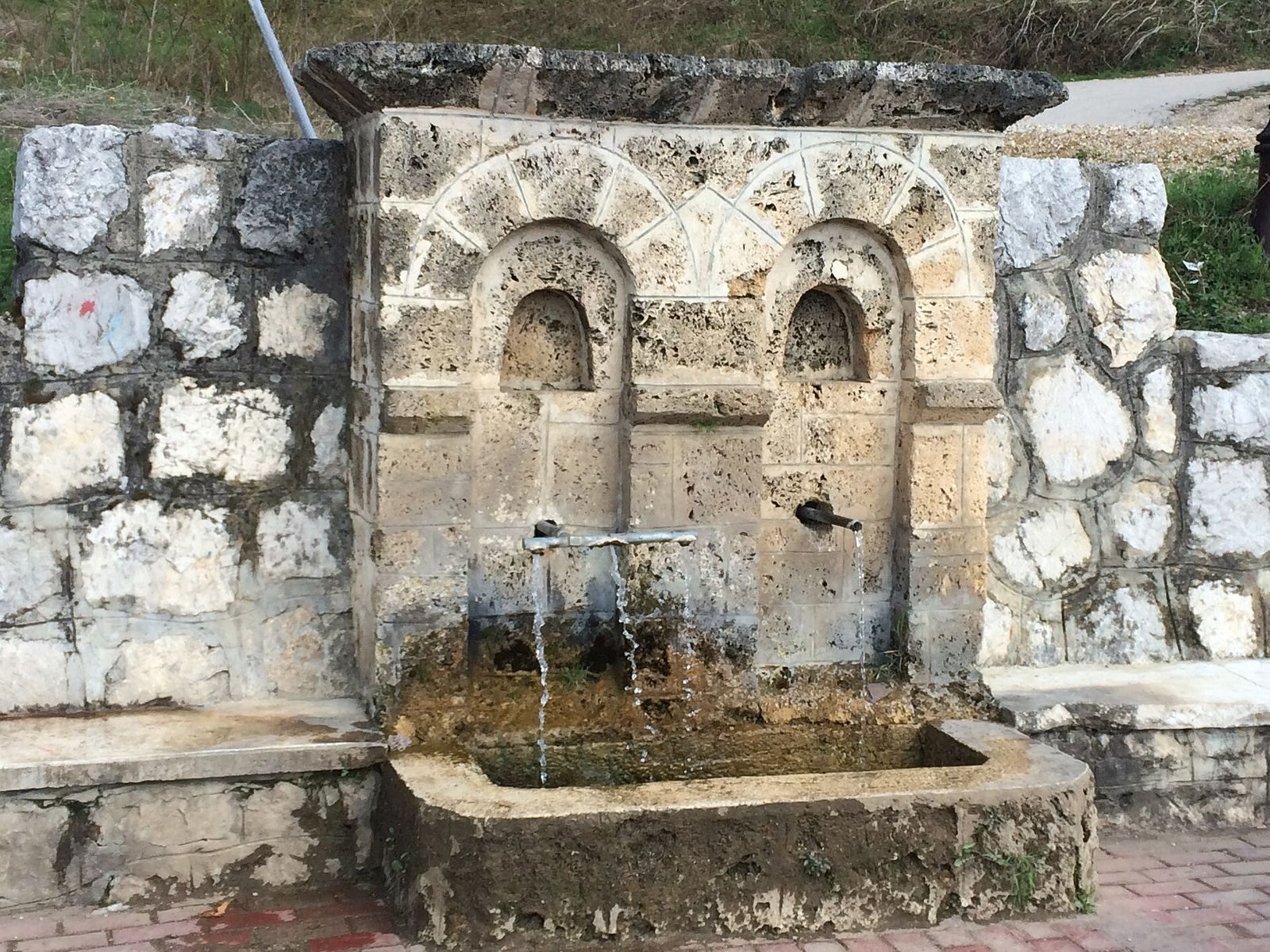
A thermal spring near the monastery and the Lim River drew people for bathing. After the 1853 restoration, monks built a wooden bathing pool beside the spring and enclosed it with a fence. A rise next to the spring overlooks the pool.
Church of Saint Nicholas
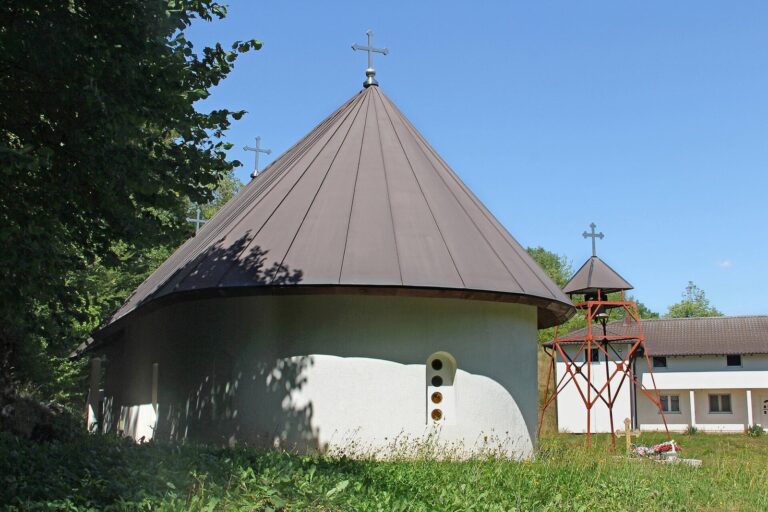
Plan and exterior
The church has a cross-shaped plan, with an altar end formed by a semicircular apse, which projects from the building. The apse is polygonal on the exterior, and two semicircular niches occupy the eastern end. At the west, an entrance hall called a narthex and a spacious open porch lead into the church. One dome rises above the main worship space and another above the western entrance area. Their current forms date to restoration in the early 20th century. The western dome is windowless, while windows open in the eastern dome. A tradition links this contrast to Stefan Dečanski’s blindness and recovery of sight, which he was said to have regained at Banja through prayer before rebuilding the church.
Frescoes and interior
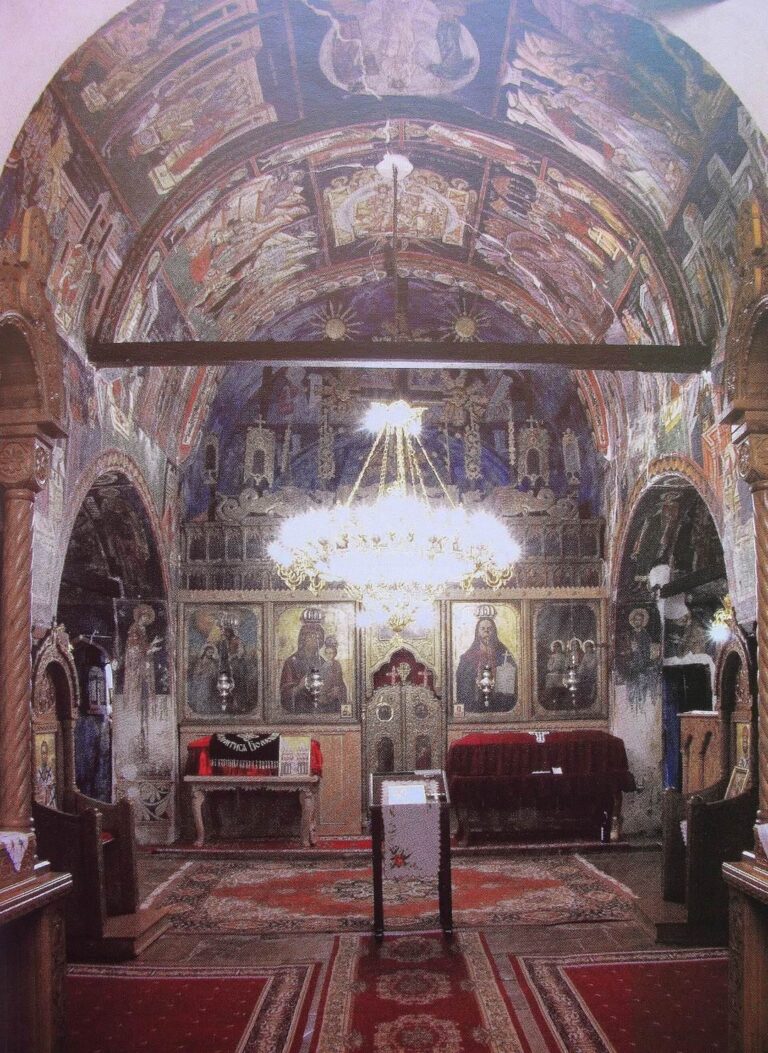
The altar and main worship space retain portions of two layers of wall paintings. The earlier paintings date to the first half of the 14th century, and sections remain visible alongside later work. A second layer, made near the end of the 16th century by painters associated with the Peć workshop, repeats the earlier paintings’ style and imagery. Paintings in the entrance hall and fragments on the west façade belong to this later phase.
The earlier paintings reflect a Serbian style that moved away from the classical forms of the Palaiologan Renaissance, a revival of Byzantine art and learning under the Palaiologan dynasty. The church’s stylistic features have also been associated with Middle Byzantine design. Its scale is unusual beside local pre-Nemanjić churches, which were generally small. An iconostasis, a screen bearing icons that separates the sanctuary from the main worship space, is also part of the church interior.
Burials and movable objects
Tombs and mausoleum
The monastery complex includes tombs of members of noble families from the reigns of Stefan Dušan and Stefan Uroš V. For a time during its family’s peak in the third quarter of the 14th century, the Vojnović family mausoleum was also located at Banja.
Treasury and liturgical objects
The 40 objects recovered from the hidden treasury include liturgical fans, a reliquary, censers, chalices, cups, crosses, lamps, devotional medallions, spoons, and buttons. Makarije Sokolović’s two gilded liturgical fans are associated with the monastery. Other objects in its heritage include a gilded silver chalice, 27.5 cm high and 12.5 cm across, made in Hungary or Transylvania in the late 15th or early 16th century.
A silver censer, or incense burner, made in a Transylvanian workshop between 1560 and 1580 bears a Church Slavonic inscription, in a historical Orthodox liturgical language. It names Metropolitan Pavle of Zvornik as its donor and states that he bought it for 68 talers, large European silver coins. A gilded silver reliquary, a container for sacred relics, was made by a craftsman from the Romanian Principalities. Its 1573 inscription names Joseph, Metropolitan of Dabar.
Several hand crosses were made in Banat in the late 17th century. One, dated 1693–1694, has a wooden core covered in silver and ornamented with fine twisted wire and precious and semiprecious stones. Its inscription records a donation by Joseph, Metropolitan of Timișoara. Another silver-covered wooden cross, 34.3 cm high and decorated with filigree and precious stones, bears the name of Priest Vuk of Becicherecul Mare. A further 34 cm cross has a silver covering and filigree decoration.
Icon of the Virgin and Child
A 14th-century icon of the Virgin Mary holding the Christ Child was formerly kept at the monastery. It is now in the Church of the Dormition in Čajniče, where it is called the Beauty of Čajniče and associated with miraculous powers. It is thought that monks carried it there while fleeing the Ottomans.