Banagher Old Church: A Medieval Church Ruin near Londonderry
Site at a Glance
- Popularity
- Very Low
- Country
- United Kingdom
- Primary era
- Medieval
- Eras represented
- Medieval
- Civilizations
- Irish
- Site type
- Religious
- Remains
- Church
On this page7 sections
History
Banagher Old Church is a medieval church ruin on Carnanbane Road near Londonderry, United Kingdom, probably founded in the late 11th century. Local tradition credits either Saint Patrick, Ireland’s principal patron saint, or, more often, Saint Muiredach O’Heney, a locally venerated Irish saint. The church may have been founded under the Mac Loughlainn kings, a medieval Irish ruling family.
The first definite historical reference appears in the Annals of Ulster, a medieval Irish chronicle. In 1121, a king of the Ciannachta, an Irish people and territory, was killed by his own kinsmen at the church. In 1397, John Colton, archbishop of Armagh, a senior bishop with authority over an archdiocese, used the church as his base during a visit to the Diocese of Derry.
Ruin, pilgrimage, and preservation
The date when the church was abandoned is unknown. A survey found it already in ruins in 1622. For centuries, the mortuary house, a small building associated with burial or the keeping of remains, drew pilgrims who believed it held O’Heney’s remains. This association also fed a continuing tradition that Banagher Sand brings good luck, particularly in sporting events.
Interest in the ruin revived in the late 19th century. The church passed from the Church Temporal Commissioners into state care in 1880, and excavation and conservation took place in the 1970s. The church, mortuary house, crosses, and residence are scheduled monuments in state care.
Remains
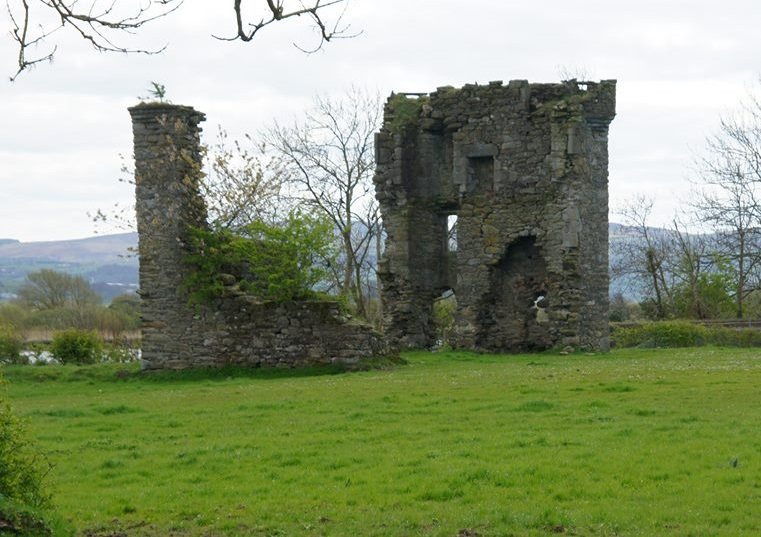
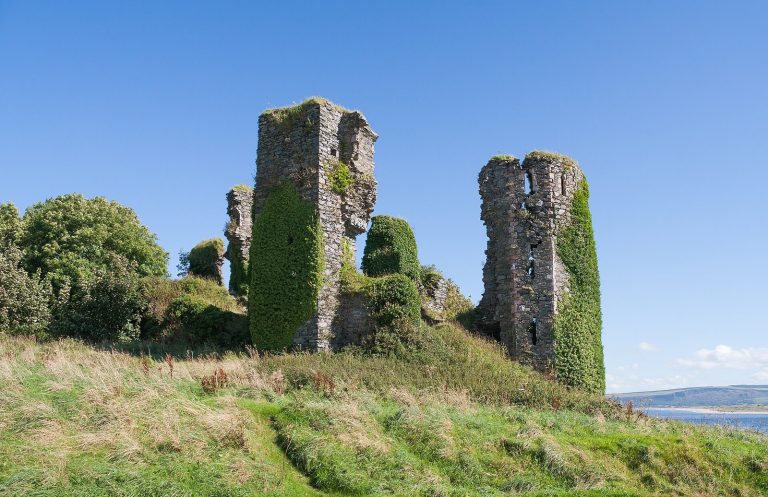
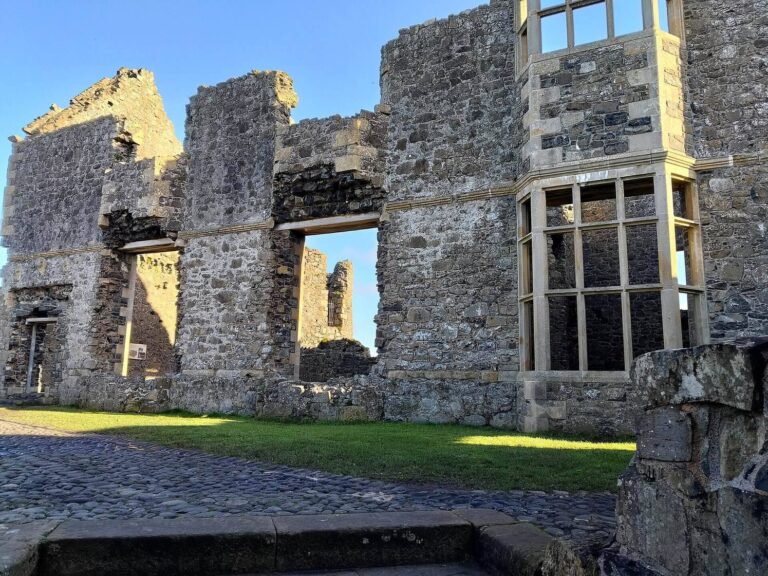
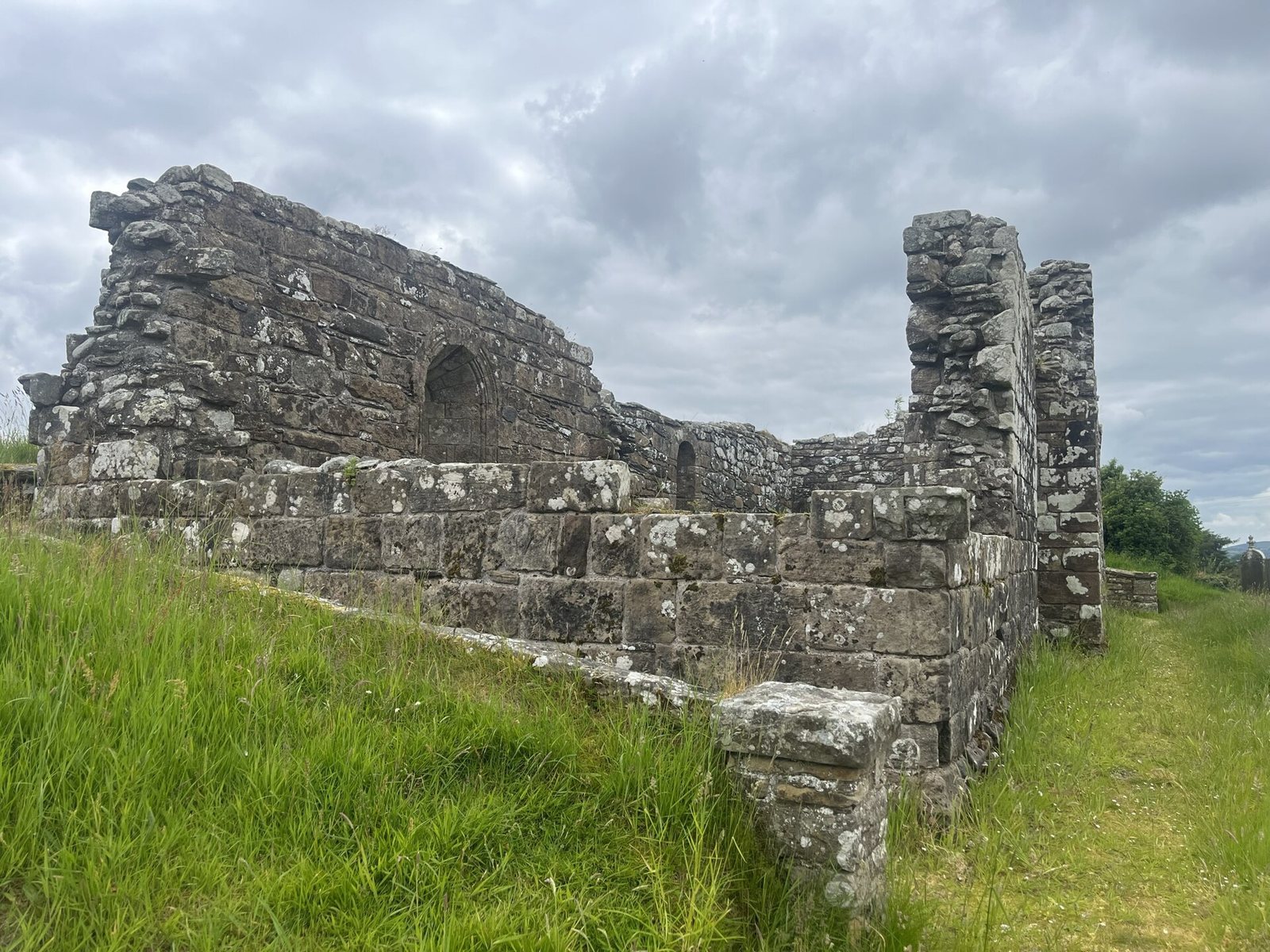
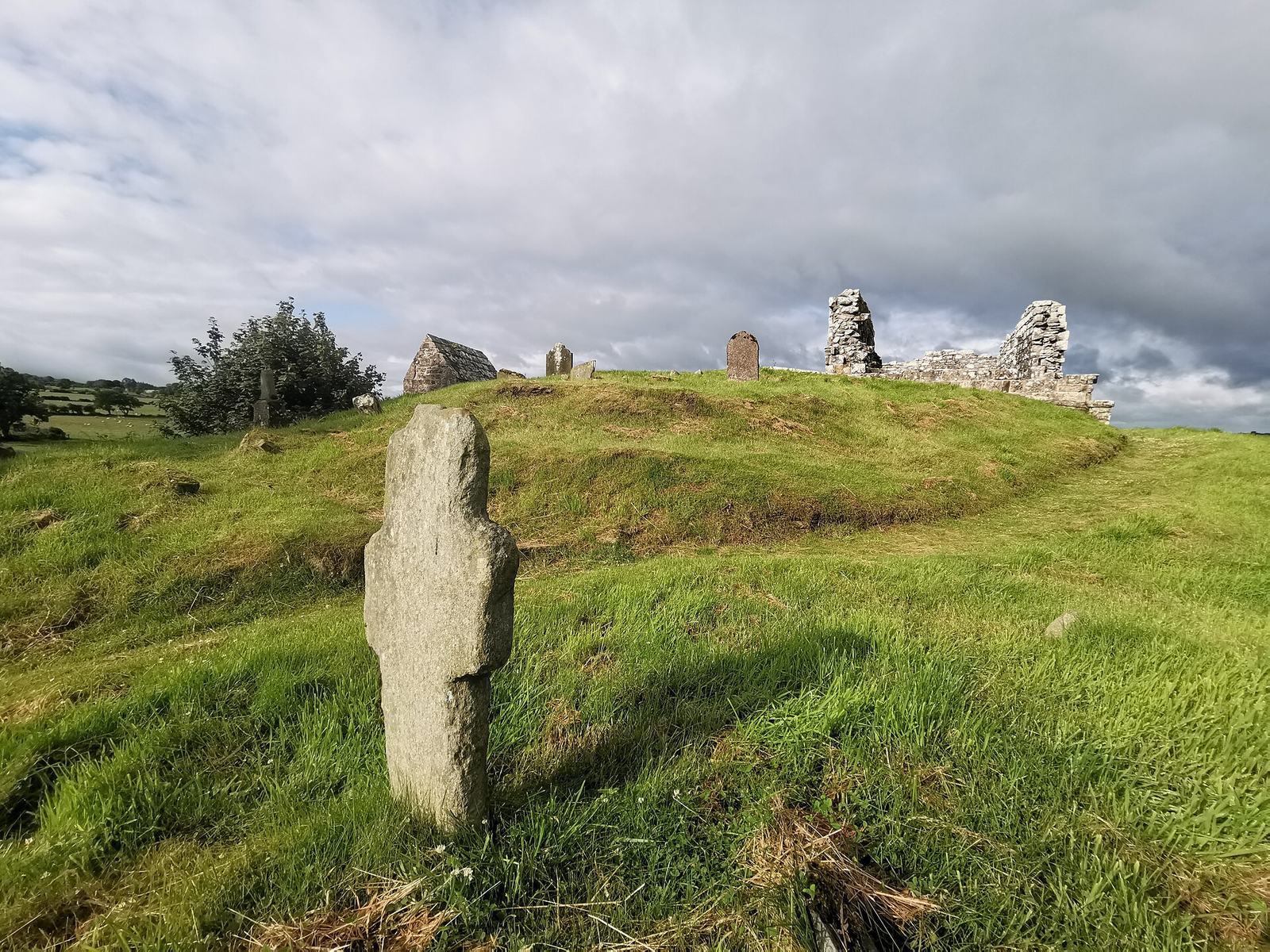
The remains include a ruined church on a glacial drumlin, a mortuary house in its graveyard, a building known as the residence outside the church, and two termon crosses. Much of the drumlin has been quarried for sand and gravel. The church’s surviving fabric reflects several building phases.
The church
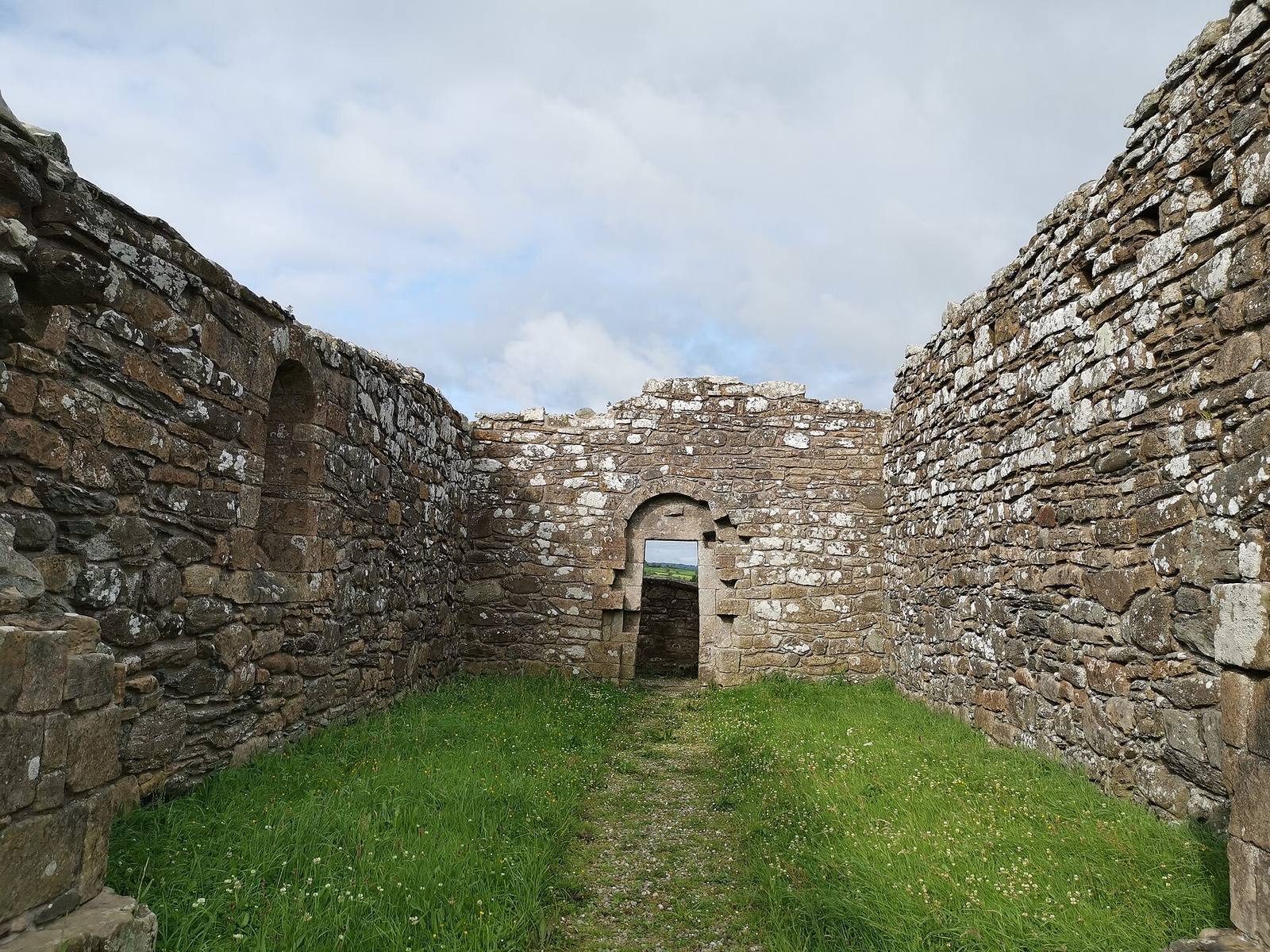
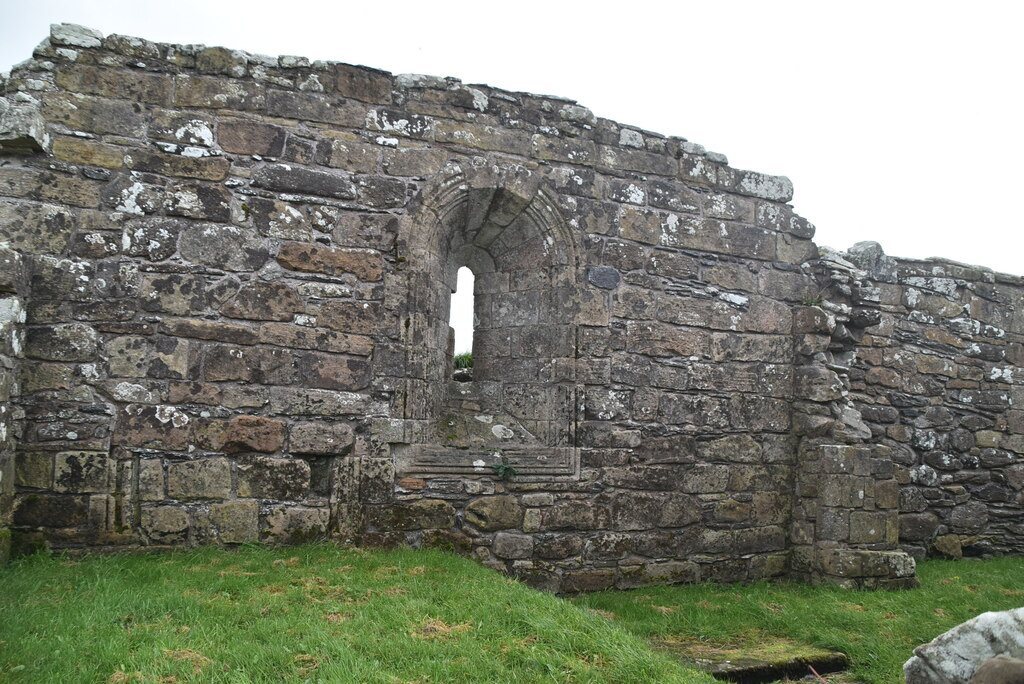
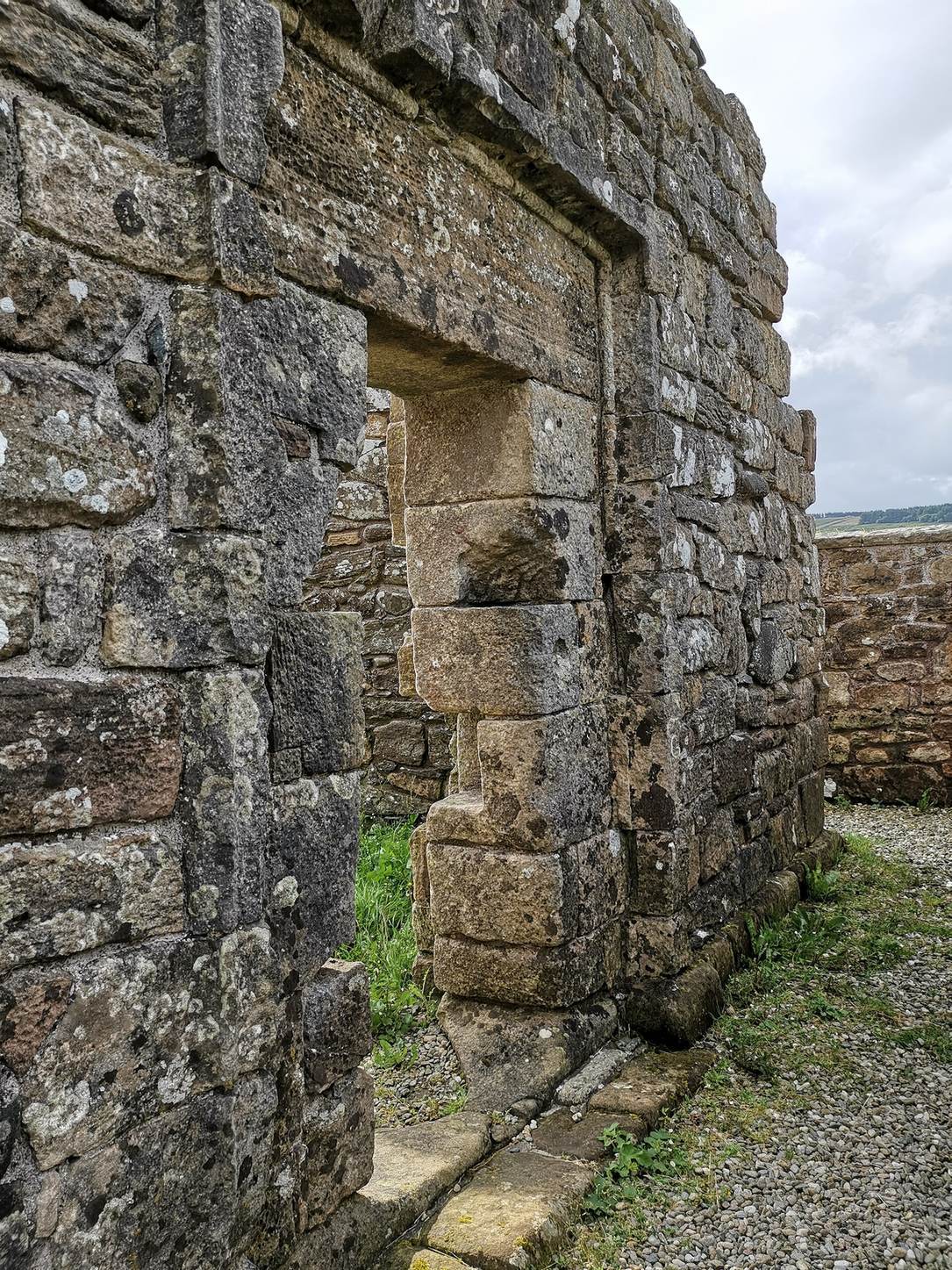
The nave is the oldest part of the church and probably dates to the late 11th century. A chancel was added in the early 12th century, and the east end was extensively remodelled in the 15th century. At the west end, the doorway has a heavy lintel and side posts with cross-shaped recesses. An inscription cut inside the entrance in the 1730s claims that the church was built in 474, but there is no evidence for so early a date. The nave’s small south window is noted for its workmanship and Romanesque-Gothic design, which combines features of both styles and was especially used between 1210 and 1225. A matching window in nearby Dungiven church is likely to be of a similar date.
The mortuary house
About seven feet high, the mortuary house is a relatively well-preserved, house-shaped structure in the graveyard. It is described as the most sophisticated of a small group of Ulster mortuary houses extending from County Down to County Donegal. Its construction resembles that of the mortuary house at Bovevagh.
The residence
The building called the residence stands outside the church. It may have been a fortified house intended to protect the church’s possessions and provide accommodation for the rector, but its date is unclear. O’Heney was believed to have appeared there.
The termon crosses
Two simple termon crosses survive from what was probably an original group of five. Such crosses marked the boundaries of early Christian church lands where the right of sanctuary applied. Their plain forms make them difficult to date.