Anta da Estria: A Prehistoric Dolmen in Portugal
Site at a Glance
- Popularity
- Low
- Country
- Portugal
- Primary era
- Stone Age
- Eras represented
- Stone Age
- Civilizations
- Unclassified
- Site type
- Burial
- Remains
- Tomb
On this page6 sections
History
Prehistoric date and the Antas de Belas
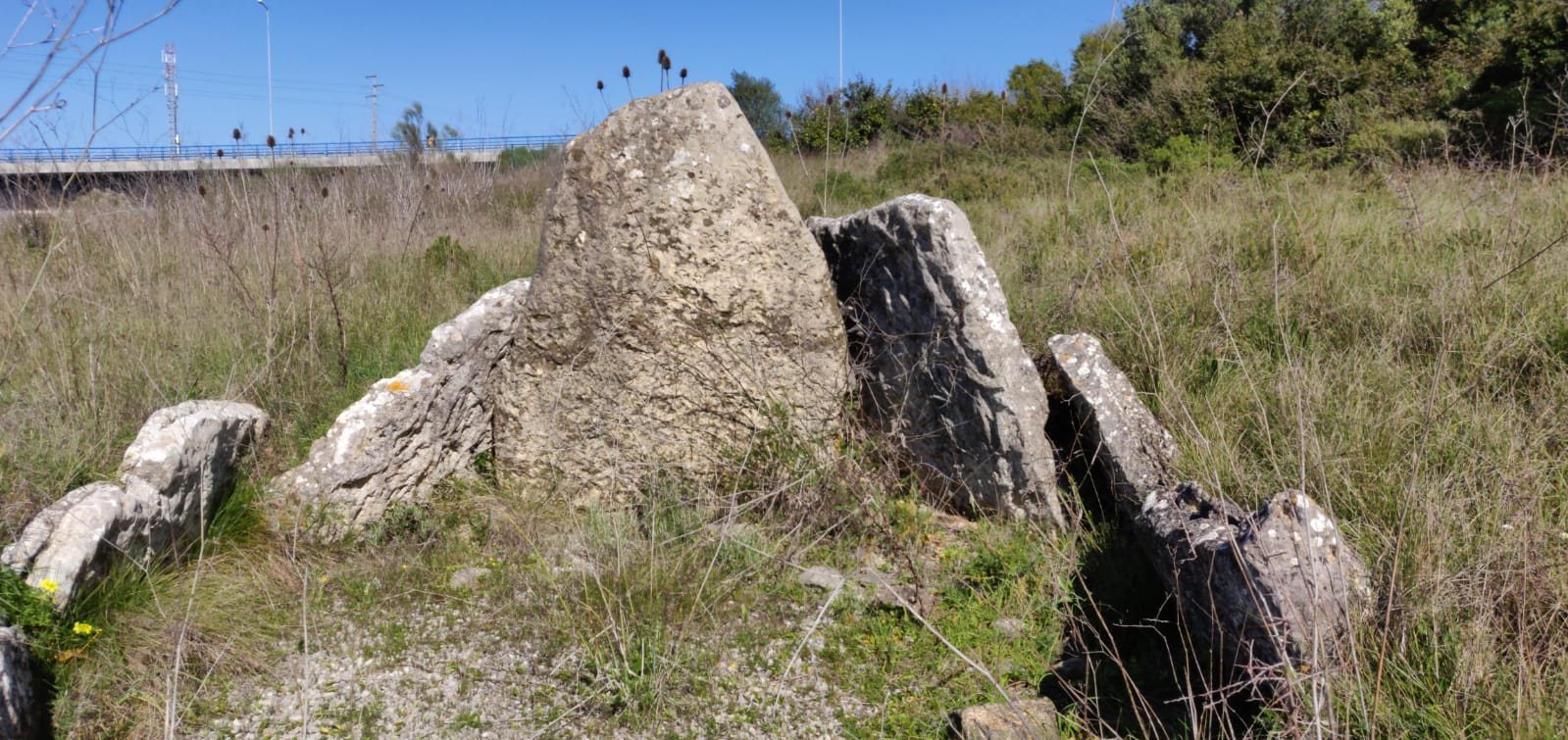
Anta da Estria is a prehistoric megalithic tomb, or dolmen, in Belas, Portugal. Human remains place it broadly between the Late Neolithic and early Chalcolithic, also called the Copper Age, around 4000–2500 BCE. Its precise construction date is uncertain. In the 1870s, Carlos Ribeiro identified it as one of three tombs now known collectively as the Antas de Belas. The group also includes Anta do Monte Abraão and Anta da Pedra dos Mouros, also called Anta do Senhor da Serra.
Excavation, protection, and damage
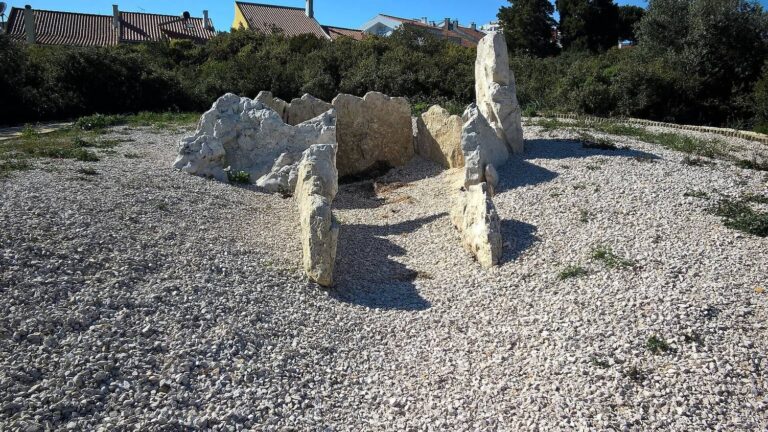
Ribeiro excavated Anta da Estria in January and February 1875 and published his findings in 1880. Later investigations included work by Georg and Vera Leisner and excavations led by archaeologist Ana Carvalho Dias for the Portuguese Institute of Architectural and Archaeological Heritage, an institution associated with the Directorate-General for Cultural Heritage. In 1910, the three Antas de Belas were protected together as a National Monument. Construction of Portugal’s A9 motorway in the 1990s came close to destroying the tomb. It was subsequently incorporated into the landscaped grounds of a motorway service area.
Remains
Chamber, passage, and mound
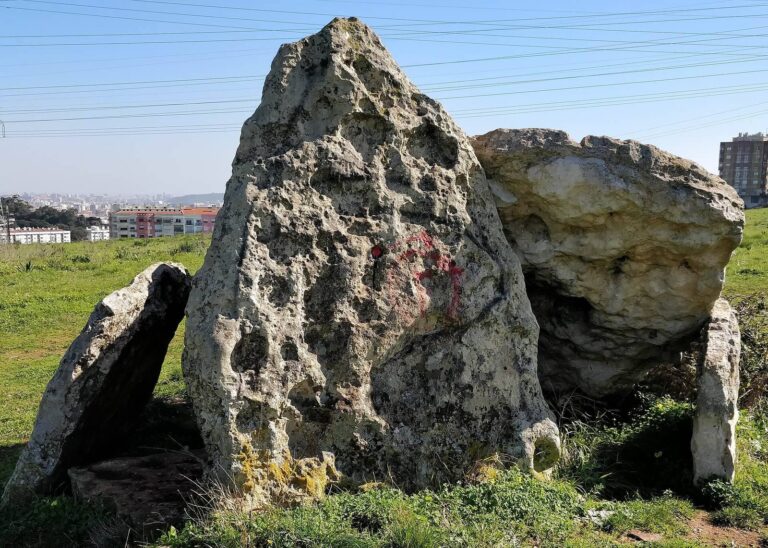
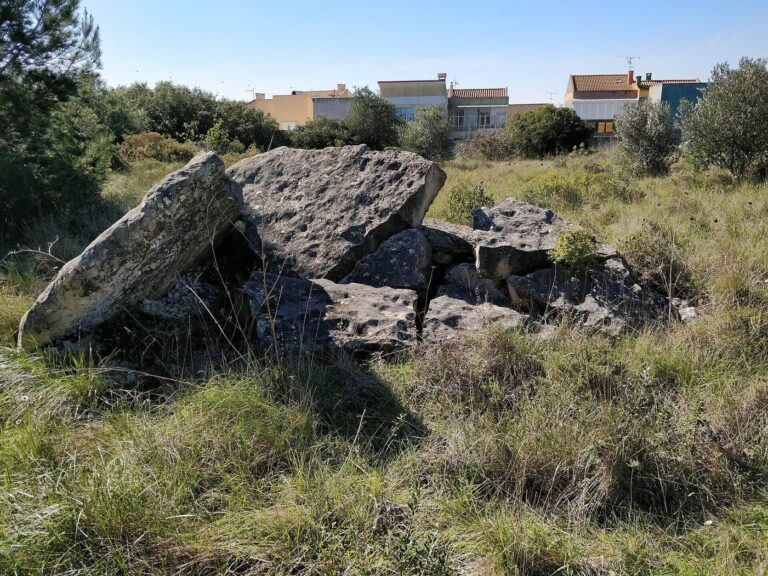
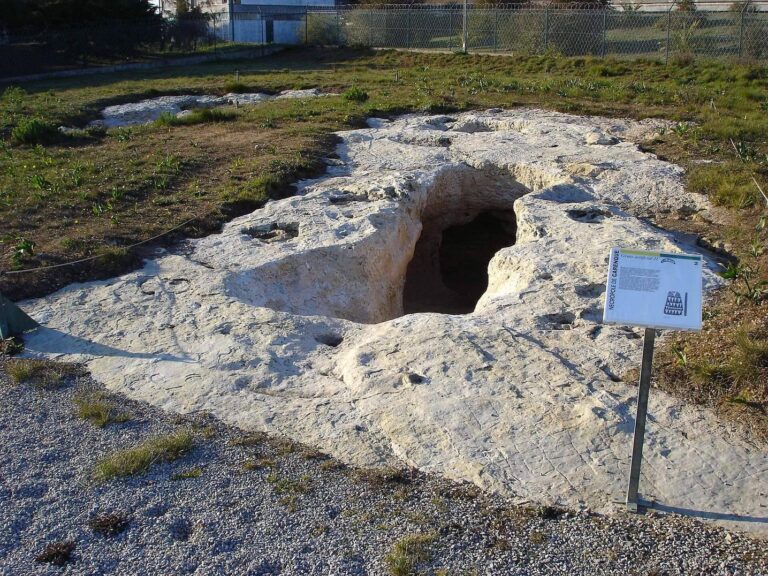
The surviving layout includes a long, polygonal chamber, a passage, and remains of a mound. The tomb’s hard limestone was sourced locally, and is similar to stone used in the other Antas de Belas. Ribeiro described the chamber as about 2 metres by 5 metres in plan and 2.75 metres high. Its remains include parts of six supporting stones; Ribeiro counted nine upright stones. Small limestone uprights bordered the passage. The passage follows a sloping hollow that already existed in the rock, and this feature determined its orientation, given as 212–213 degrees west. The monument is now severely degraded.
Human remains and finds
Human remains were recovered, but Ribeiro could not determine how many people had been buried in the tomb. Finds include twelve arrowheads, two bone objects, and three small pots that were nearly complete. Other objects attributed to the site include a staff-shaped object, ceramics, a crescent-shaped ornament, flat limestone and slate objects interpreted as idols, and an axe dedicated as an offering.