Schloss Schleiz: A Palace of the House of Reuß
Site at a Glance
- Popularity
- Medium
- Country
- Germany
- Primary era
- Early Modern
- Eras represented
- Early Modern, Modern
- Civilizations
- Holy Roman Empire
- Site type
- Domestic
- Remains
- Palace
On this page10 sections
History
Medieval origins and Reuß rule
Schloss Schleiz was a palace in Schleiz, Germany, held by the counts and princes of Reuß, a ruling house whose territories lay in Thuringia. Its earliest described castle complex belonged to the medieval lords of Lobdeburg and dates to the 13th and 14th centuries. On 4 June 1422, a league for maintaining public peace was concluded at the castle, with the nobleman Hans von Sparneck involved.
Around 1500, Heinrich der Mittlere von Reuß replaced the earlier complex with a two-wing palace.
Expansion and later fires
A fire in 1689 prompted major changes, including removal of the keep, the castle’s principal fortified tower. Architect Johann Gottlieb Riedel was responsible for a substantial expansion carried out from 1753 to 1755.
French emperor Napoleon Bonaparte stayed overnight at the palace on 9 and 10 October 1806, after visiting Ebersdorf. On seeing Oettersdorf destroyed, he reportedly exclaimed, “This is war!” Another fire struck the palace in 1837, and in 1840 it received a unified architectural design.
Archive and destruction in the 20th century
Schleiz’s municipal archive moved into the state-owned palace in 1919. On 8 April 1945, bombing by the U.S. Army Air Forces set most of the building ablaze. The attack had destroyed the main water supply, so firefighters could not extinguish the flames. The palace church and its 17 apartments also burned. Nearly all of the Reuß family archive, the library, and the Oberland local history museum, including its weapons hall, were lost. Tapestries and other artworks brought from Schloss Osterstein in Gera because of the bombing threat there were also destroyed, apart from a few remnants. The municipal archive’s surviving holdings were moved to the town hall at the end of 1945.
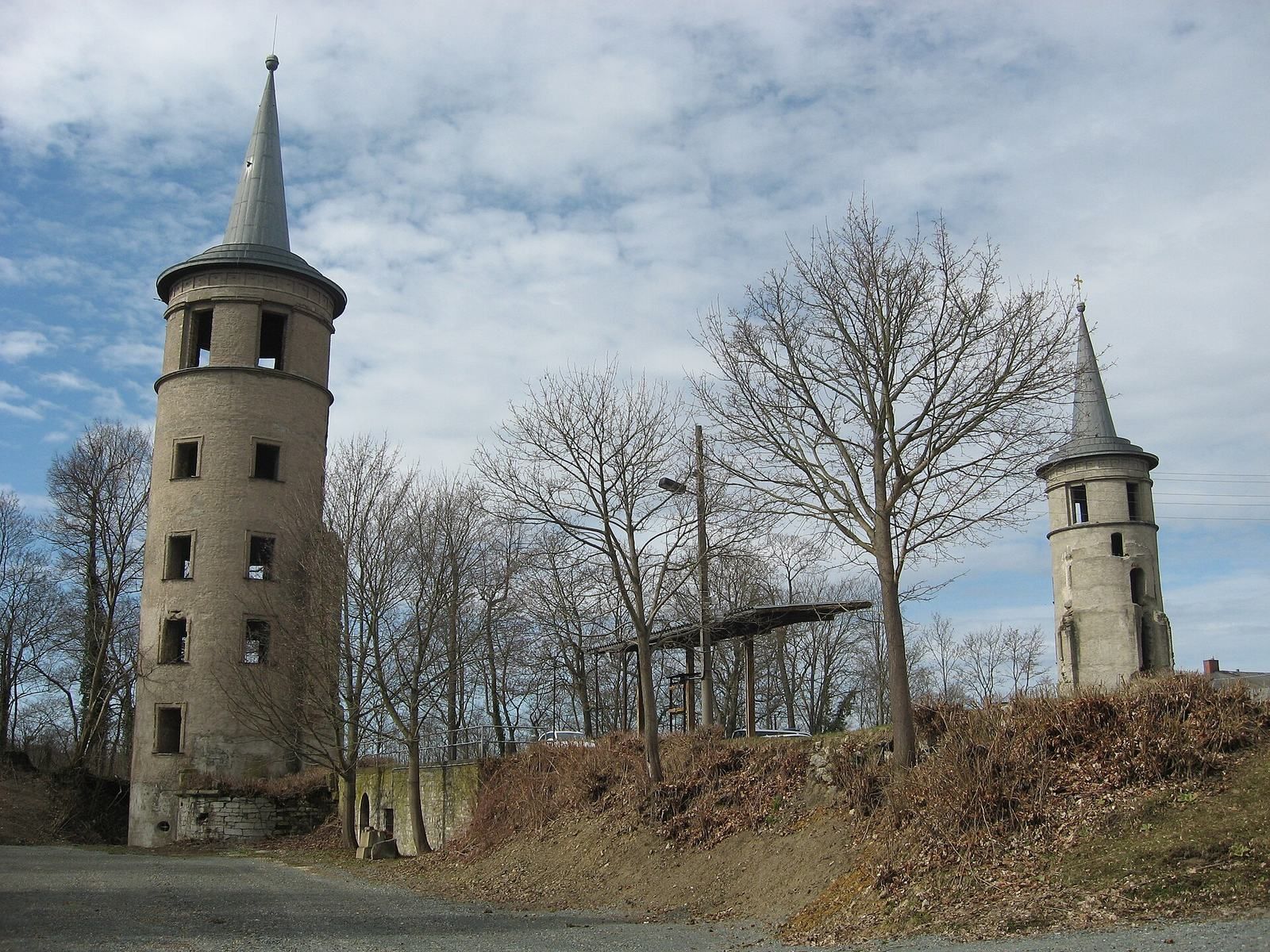
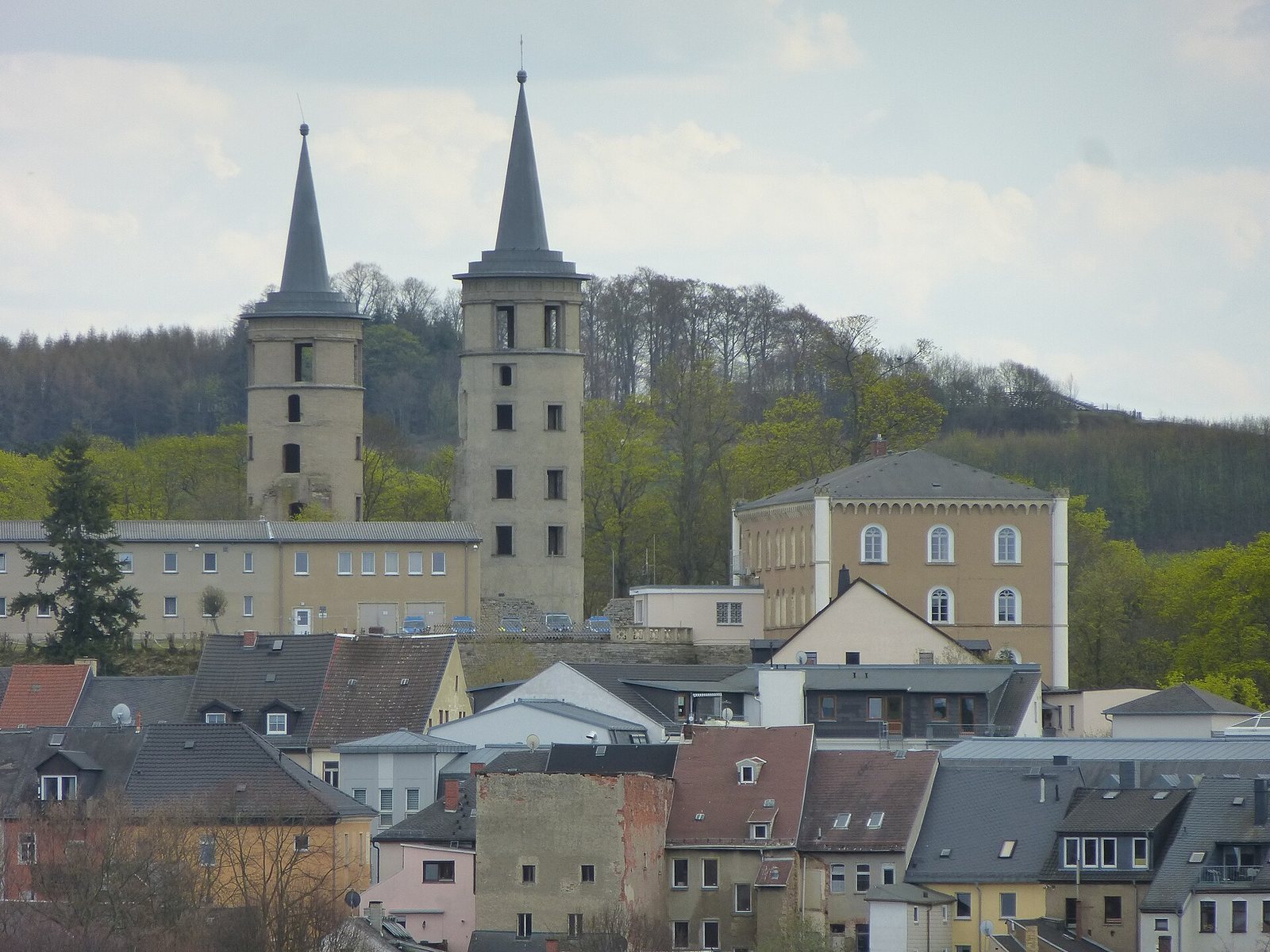
The palace ruins were dismantled in 1950, but local residents helped preserve its two burned towers. The court stable was partly damaged in the 1945 fire, and a further fire in 1958 consumed its remaining portions. In the late 1950s, the former palace grounds became a site for East Germany’s People’s Police. The secured area, which included temporary buildings, was enclosed by barbed wire and steel gates and guarded by dogs.
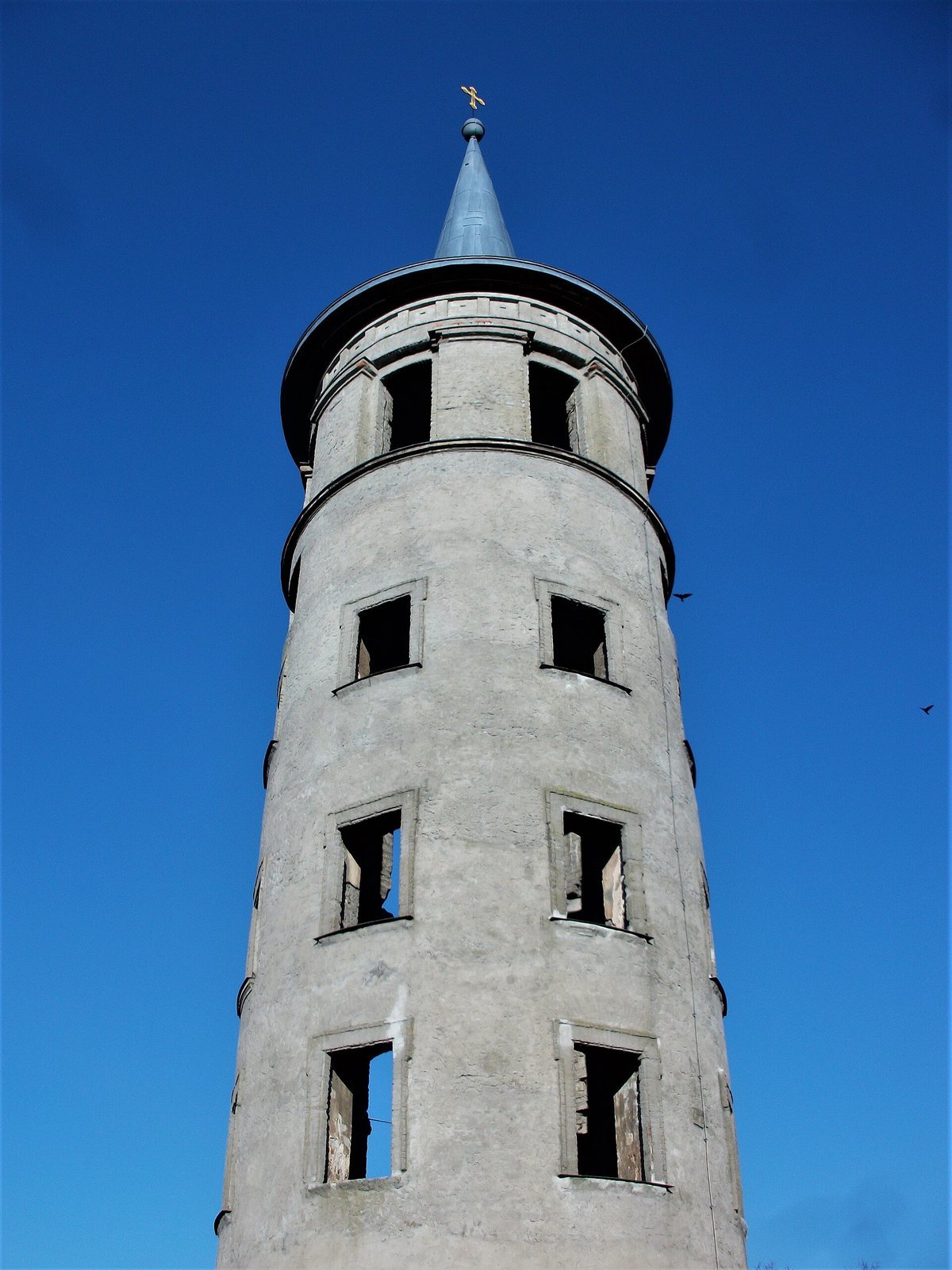
A nine-month building campaign, completed in mid-December 1993, reconstructed roofs on the towers. The palace itself was not rebuilt.
Remains
Palace architecture
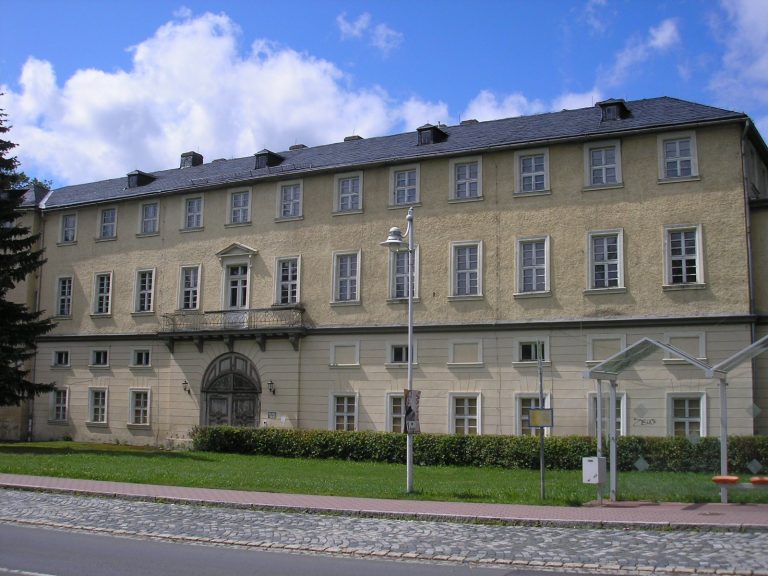
The expanded palace had a regular horseshoe plan and rose three to four stories. Its south wing, added from 1753 to 1755, contained the main portal and had two towers. The redesign of 1840 made the palace four stories throughout, with half-hipped gable roofs, window-filled façades with little architectural articulation, and pointed conical roofs on the towers. Elements of earlier Baroque decoration, a European style prominent from the 17th into the 18th century, included a portal and a balcony with ironwork dating to 1755. The grand ballroom was known as the White Hall. The wider complex also included a large court stable and extensive service buildings.
Surviving features
The palace grounds retain features from different phases of the site, including the two ruined towers and buildings used for police purposes.
Towers
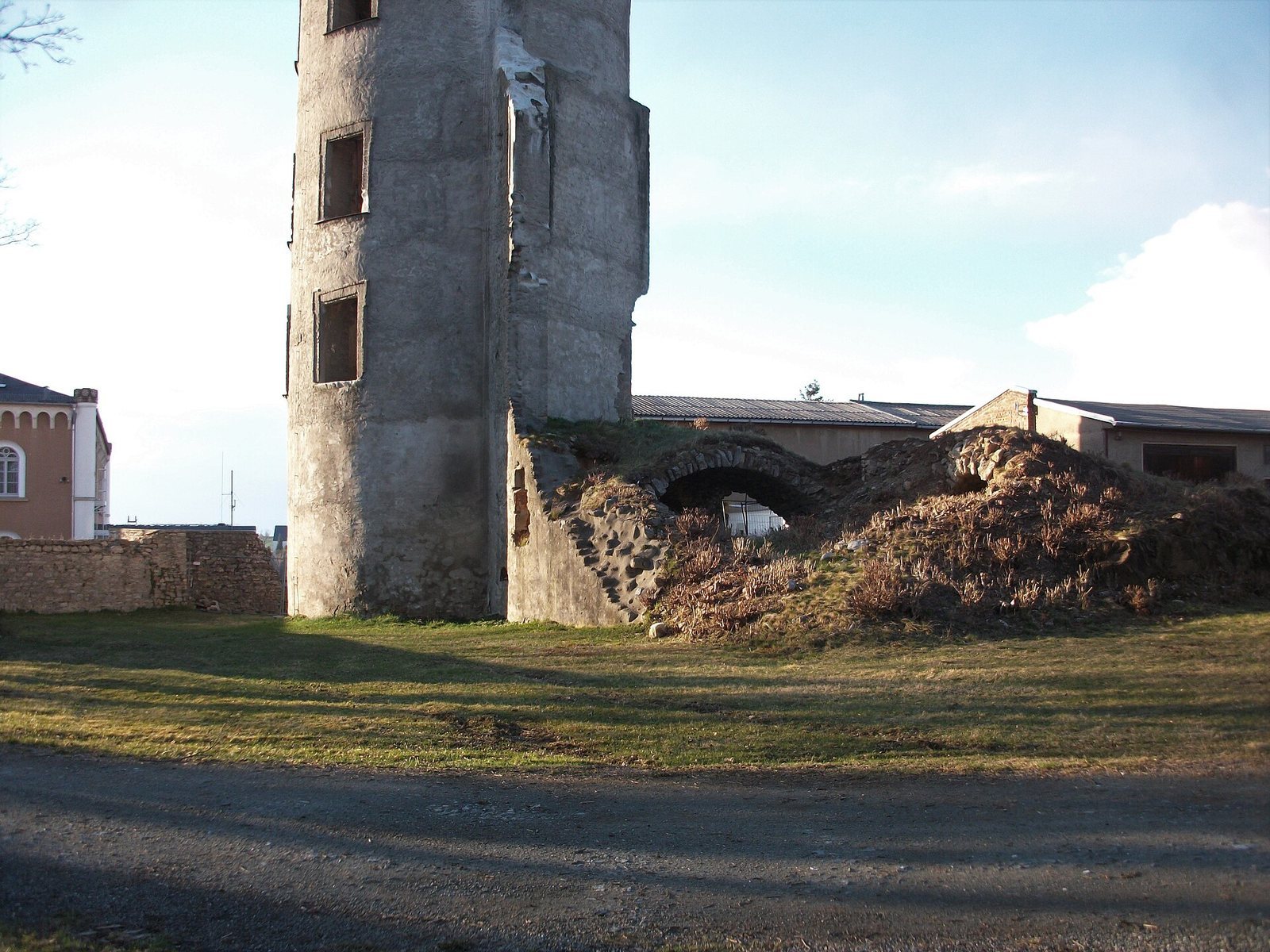
The two burned towers remain in a ruinous condition, with reconstructed roofs. Local citizens’ efforts helped preserve them when the palace ruins were dismantled in 1950.
Police buildings and grounds
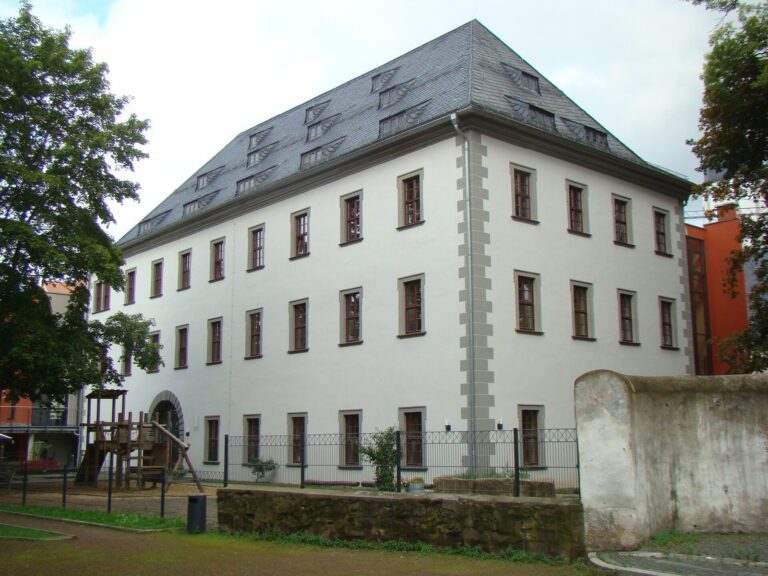
A substantial building near the demolished palace, formerly the princely chamber and rent office, now houses the Saale-Orla-Kreis police inspectorate. A rent office administered a ruler’s revenues and estates. A low-rise utility building constructed in the 1950s for garages and traffic training also stands on the grounds, which are owned by the Thuringian Ministry of the Interior. A Soviet memorial cemetery was established in the former palace park.
Cellar and caves
The old wine cellar and adjoining caves were converted into an air-raid shelter.