Baghsar Fort: A Historic Defensive Fort in Pakistan
Site at a Glance
- Rating
- 4.2
- Popularity
- Very Low
- Country
- Pakistan
- Primary era
- Early Modern
- Eras represented
- Medieval, Early Modern
- Civilizations
- Mughal
- Site type
- Military
- Remains
- Fort
On this page8 sections
History
Baghsar Fort is a historic defensive fort in Pakistan, located in the Samahni Valley near Bhimber and close to the locality of Baghsar. Its origins may reach back to the fifteenth century, and its Indo-Islamic and Mughal architectural character reflects both local rule and later Mughal-period rebuilding. The fort takes its name from the surrounding area and is associated with the regional history of Chibhal and the Mughal Empire, the Islamic empire that ruled much of the Indian subcontinent from the sixteenth to the eighteenth century.
Fifteenth-century origins
Little is known about Baghsar Fort’s earliest history. During the fifteenth century, Bhimber was controlled by the local chieftain Jasrat, who is associated with the construction of several forts in the region. Baghsar Fort may have been first built during his rule, although its early development remains uncertain.
Chibh and Mughal-period control
The fort later came under the authority of the Chibh kings of Chibhal, a historical region linked to the Chibh ruling house. They may have reconstructed the fort with assistance from Mughal architects and builders, giving the site its association with both regional dynastic rule and Mughal architectural practice.
The English traveller Godfrey Vigne mentioned the site as “Bagh Sar castle” in his travel book. Baghsar Fort is also linked with the death of Jahangir, the Mughal emperor who ruled from 1605 to 1627. During Jahangir’s journey from Kashmir toward Lahore, his entrails were removed and buried at the fort to preserve the body. His body was then taken to Lahore, where it was buried in a mausoleum beside the Ravi River.
Present condition
Baghsar Fort remains partly abandoned and is severely neglected in maintenance and conservation. Its position beside the Line of Control, the de facto boundary between the Pakistan-administered and Indian-administered parts of Kashmir, has affected access to some sections and complicated the site’s preservation. The fort is identified as a historic Mughal fort, and its current owner is the Government of Pakistan.
Remains
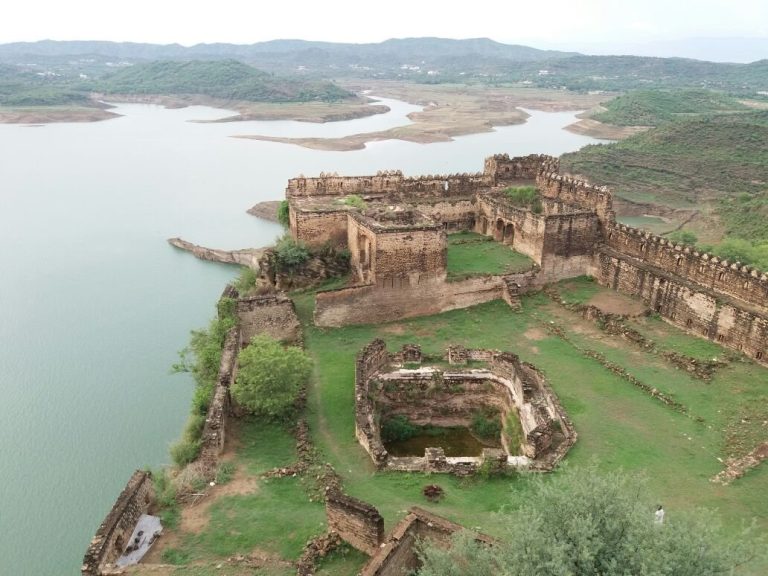
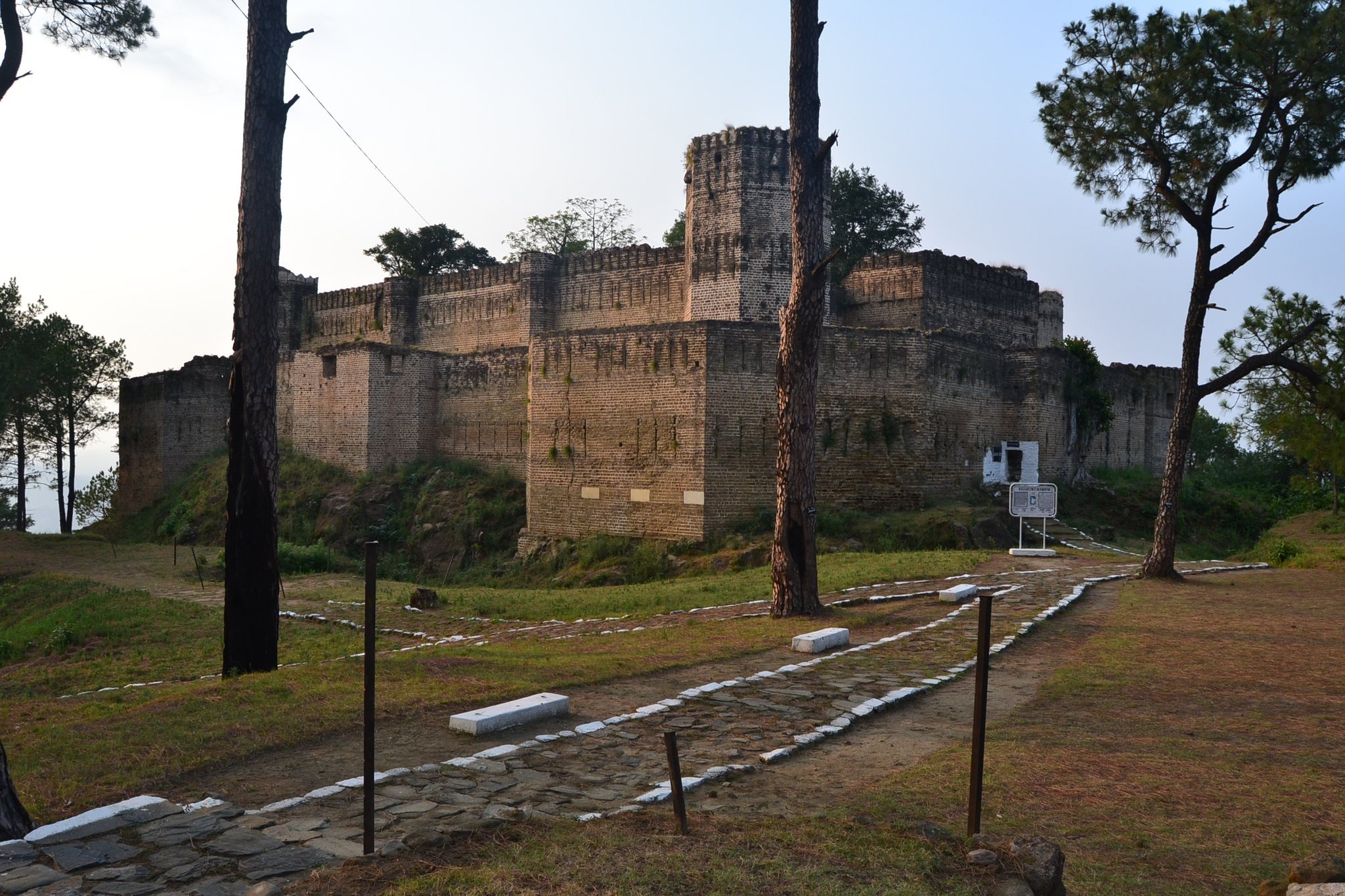
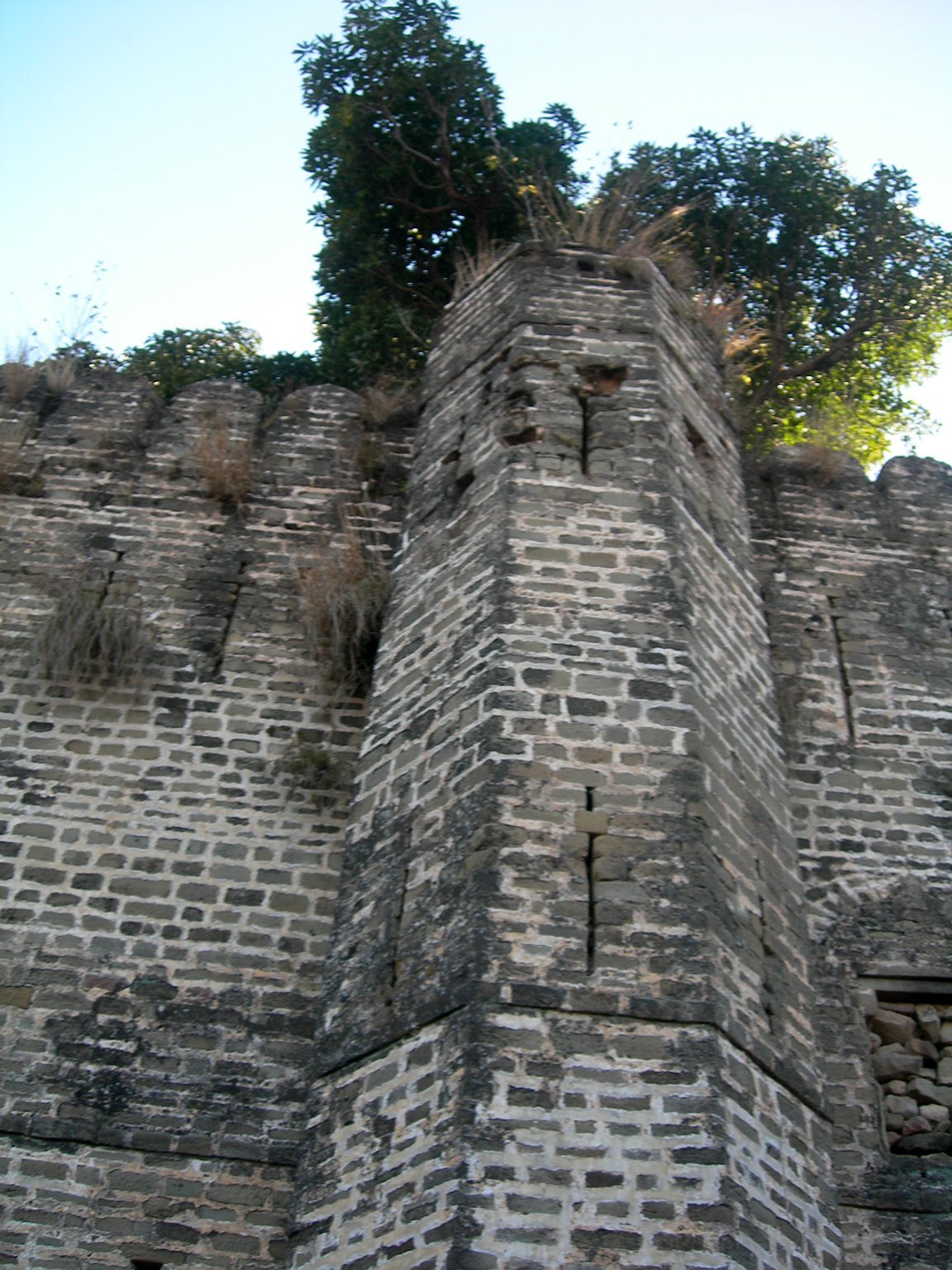
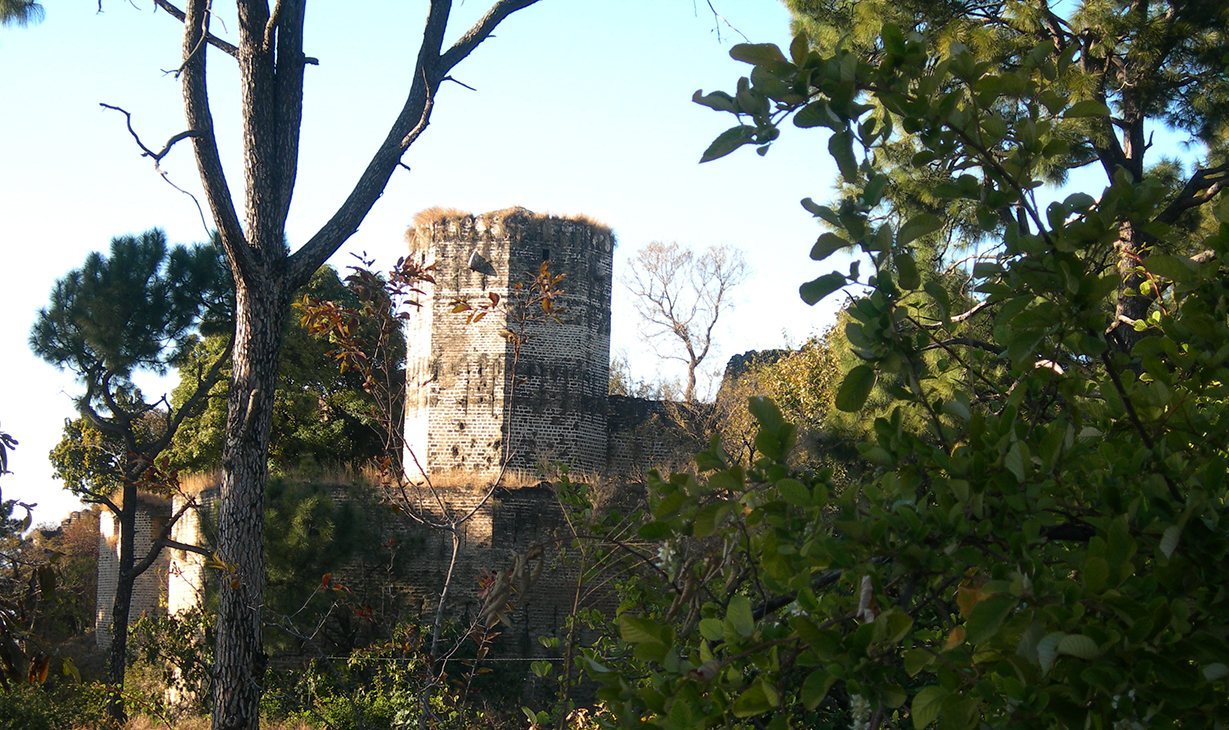
Baghsar Fort is a one-storey, rectangular structure built from stone and brick. Its physical organization consists of an outer enclosure and an inner section, linked by three entrances. The general structure remains intact, although the fort is in a severely neglected state of conservation.
Enclosure and entrances
The outer enclosure is formed by a boundary wall containing thirty-eight small rooms. Three entrances serve the complex: a main entrance on the northern side, another at the south-east, and a third leading into the inner enclosure. These access points organize movement between the outer boundary and the more enclosed central part of the fort.
Defensive positions
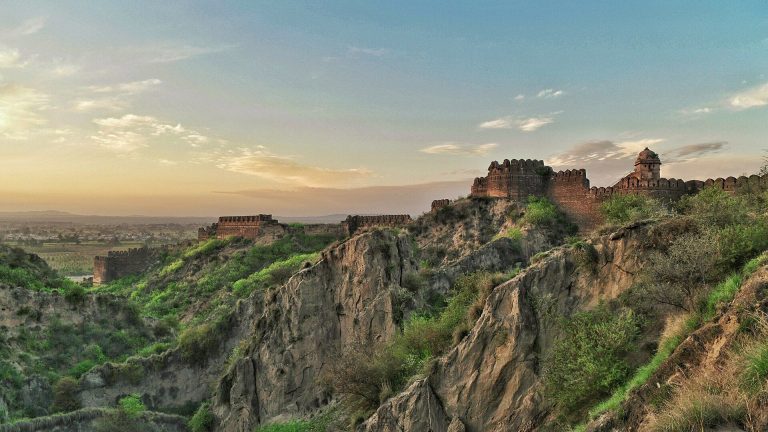
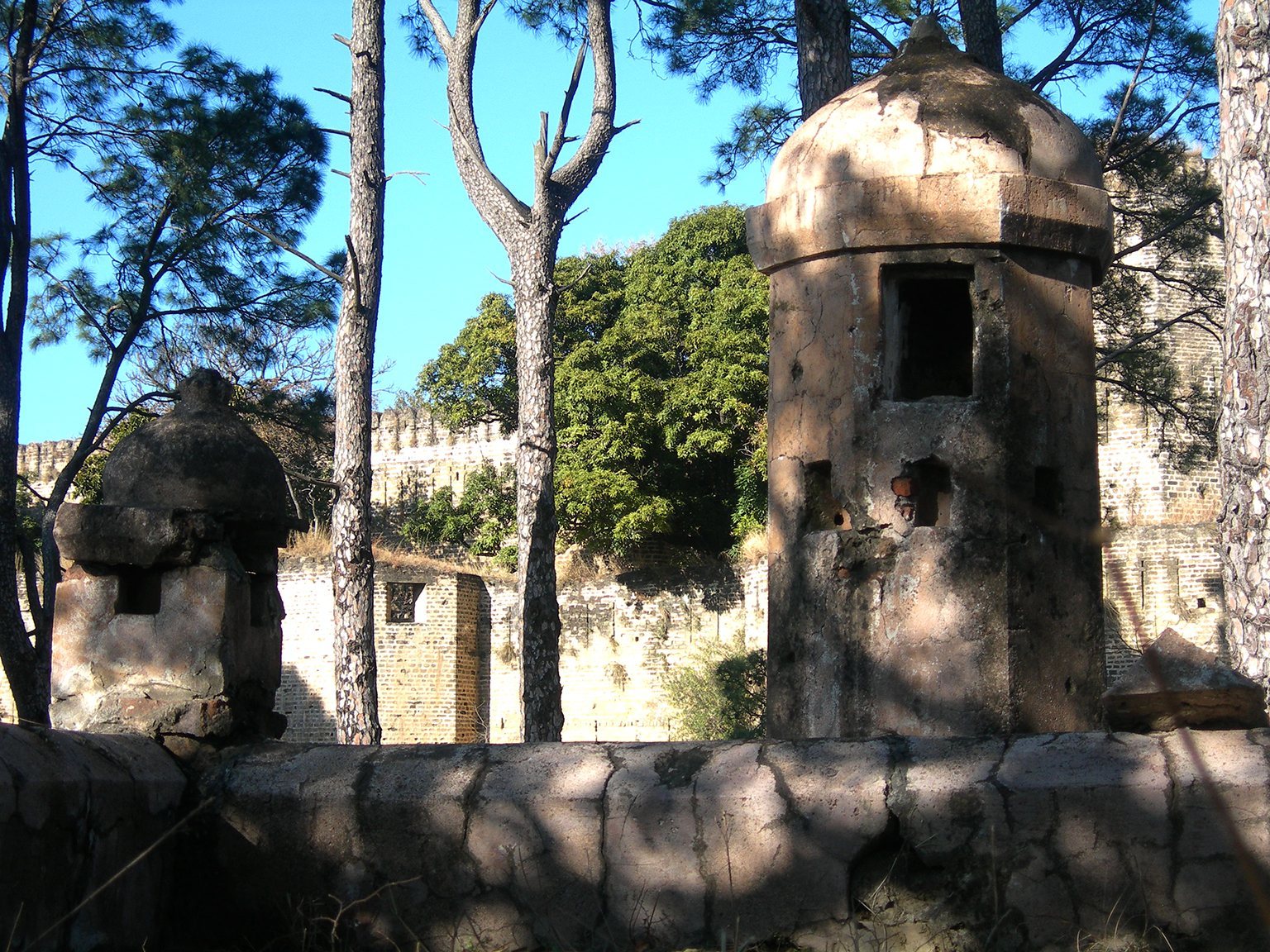
A prominent observation point occupies the south-eastern corner, while a firing bay is set into the western wall. Embrasures, which are openings allowing defenders to fire while remaining protected by the surrounding wall, are arranged through the fortifications. Together, these features reflect the fort’s defensive purpose and its control of firing positions along the walls.
Inner enclosure and audience space
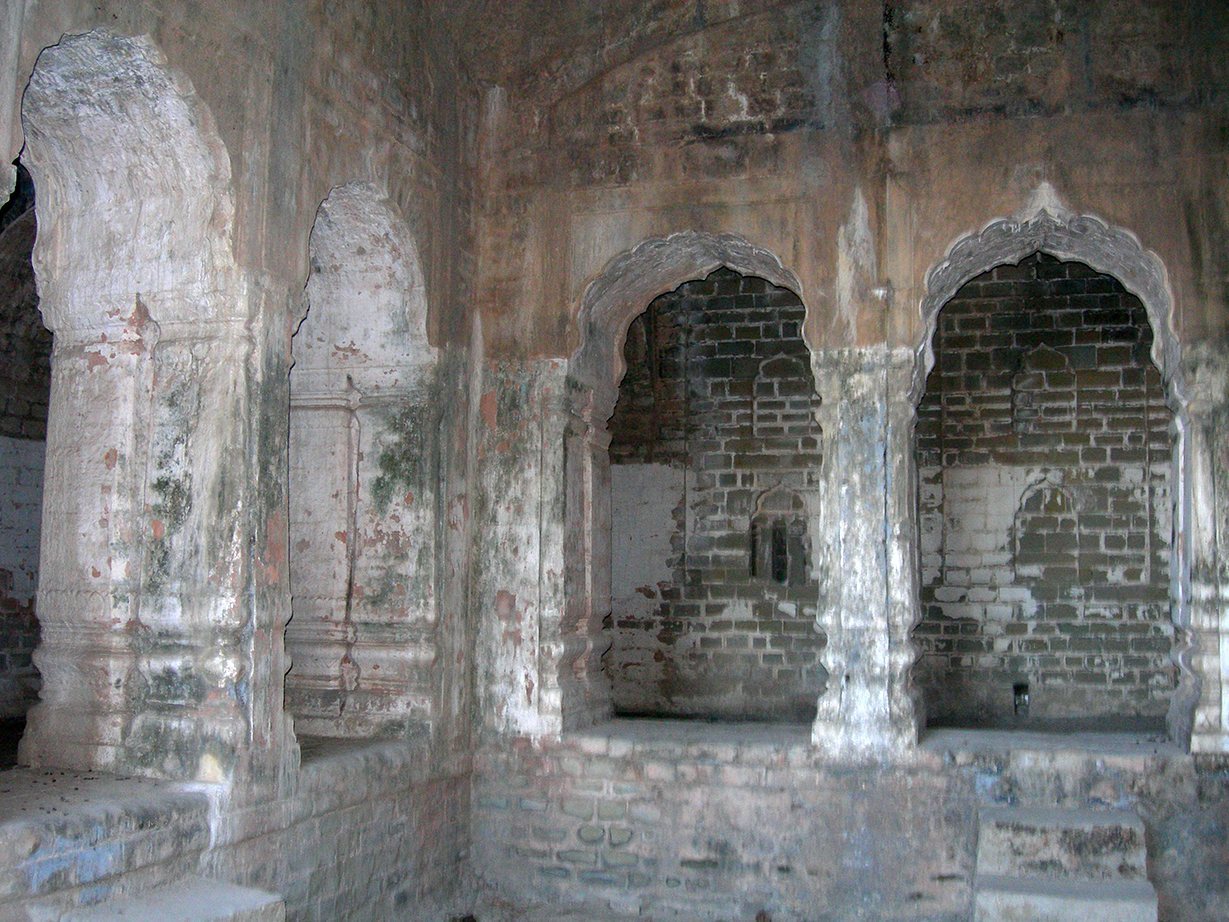
The inner section contains a water pond, a formal darbar hall for receiving officials, courtiers, and delegations, and forty-three rooms. Combined with the thirty-eight rooms in the outer enclosure, these spaces give the fort a stated total of eighty-one rooms.
A large room extends along the southern wall. It was used by the ruler of the period for meetings with courtiers and delegations, giving the southern range an administrative and ceremonial function within the fortified complex.