Ayuntamiento of Antigua Guatemala: The City’s Municipal Palace
Site at a Glance
- Popularity
- Medium
- Country
- Guatemala
- Primary era
- Early Modern
- Eras represented
- Early Modern
- Civilizations
- Spanish
- Site type
- Civic
- Remains
- Town Hall
On this page9 sections
History
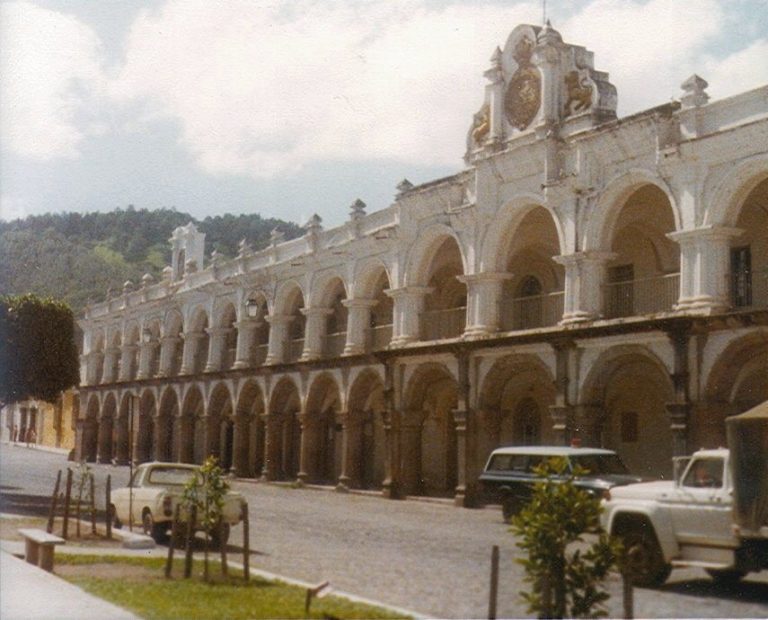
The Ayuntamiento of Antigua Guatemala is the city’s Baroque municipal palace in Guatemala. Built between 1740 and 1743, it was planned and constructed by Luis Diez de Navarro, Juan de Dios Aristondo, and especially Diego de Porres, then the city’s chief architect.
Site and construction
After the city moved to the Panchoy Valley, it was laid out on a grid, with north–south and east–west streets arranged around a central plaza. Religious and government buildings occupied important sites around the plaza. Between 1549 and 1563, land southeast of it, formerly belonging to Bishop Francisco Marroquín, was sold to the Spanish Crown. Alonso López Cerrato, the first president of the Royal Audiencia of the Confines, a Spanish Crown court and governing institution for parts of Central America, occupied the property while also serving as governor and captain general.
An earlier building on the site preceded the present palace, also known as the Casa de Cabildo, or council house. That smaller structure had adobe walls, a tiled roof, a timber ceiling, and a portal.
Earthquakes and relocation
An earthquake in 1751 damaged the city but left the municipal palace intact. On July 29, 1773, an initial tremor was followed about an hour later by a violent earthquake that lasted roughly a minute during heavy rain. The disaster devastated religious, government, and private buildings and broke aqueducts. Food shortages followed in part when Indigenous suppliers fled to the mountains. The palace suffered no major damage.
At meetings on August 2 and 4, Governor Martín de Mayorga and local authorities, including the municipal council, considered moving the capital and reporting the destruction to the Crown. Further strong shocks on December 13 added support for relocation. In January 1774, the Council of the Indies, the Spanish monarchy’s governing body for its overseas territories, issued a ruling about an interim move to the nearby valley of La Ermita. During Matías de Gálvez’s administration from 1779 to 1783, the evacuation was considered resolved. The proposed destination was regarded as safer partly because it lay away from volcanoes, which people then believed caused the tremors.
Restoration and later uses
Antigua Guatemala remained relatively abandoned during the nineteenth century. As some families returned, local authorities were installed and buildings were repaired or partly reconstructed. The palace was restored in 1853 by José María Palomo y Montufar, the local corregidor, an administrative and judicial official. A clock had been installed on the building in 1851; it was removed after the 1976 earthquake as a precaution against further structural damage.
The ground floor served as a municipal prison until 1955. On January 2, 1956, the building became the Museum of Santiago, also called the Museum of Arms. It now houses the offices of Antigua Guatemala’s municipality. The palace is included in UNESCO’s 1979 World Heritage listing for La Antigua Guatemala, which recognizes places considered to have outstanding universal value.
Remains
Exterior and setting
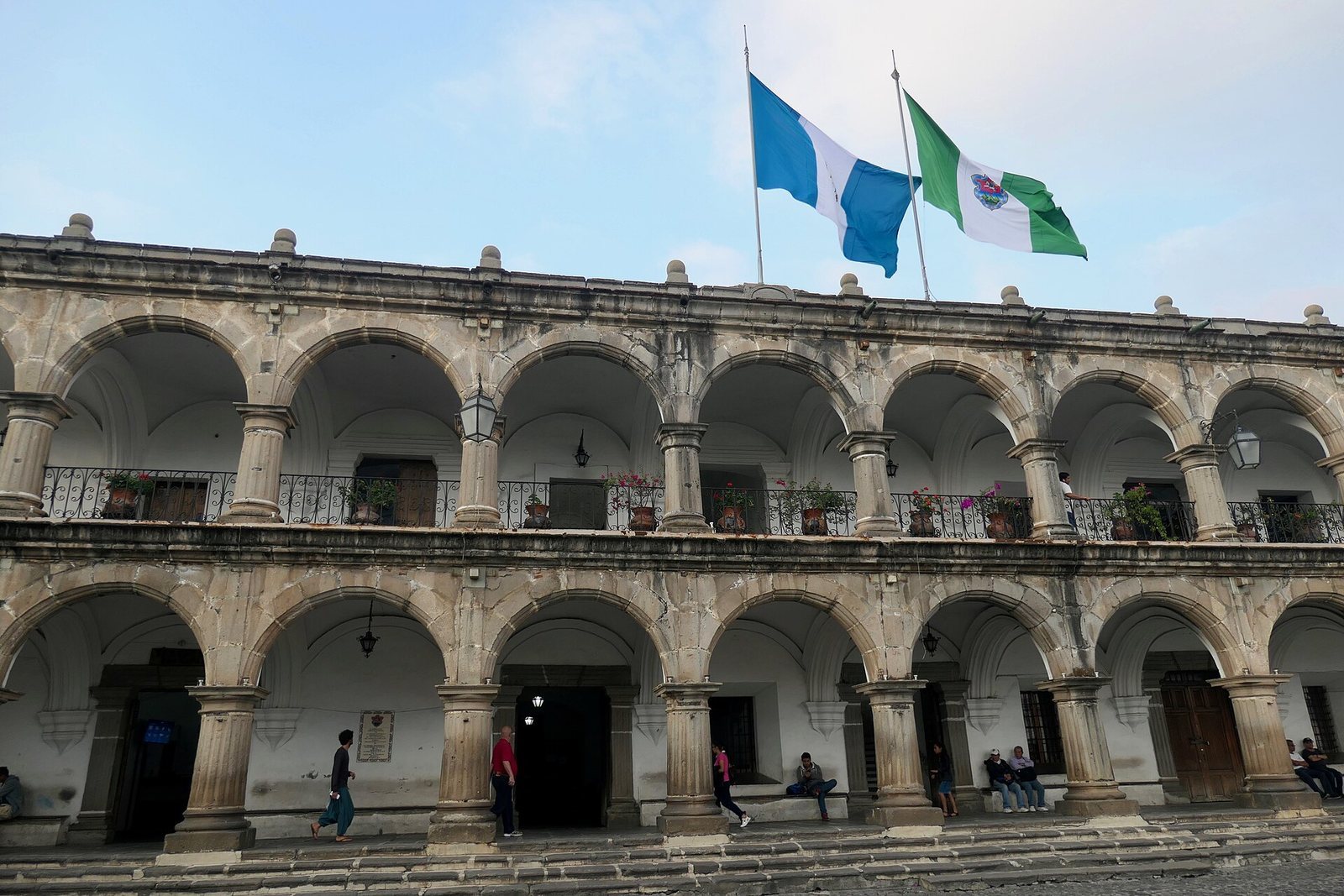
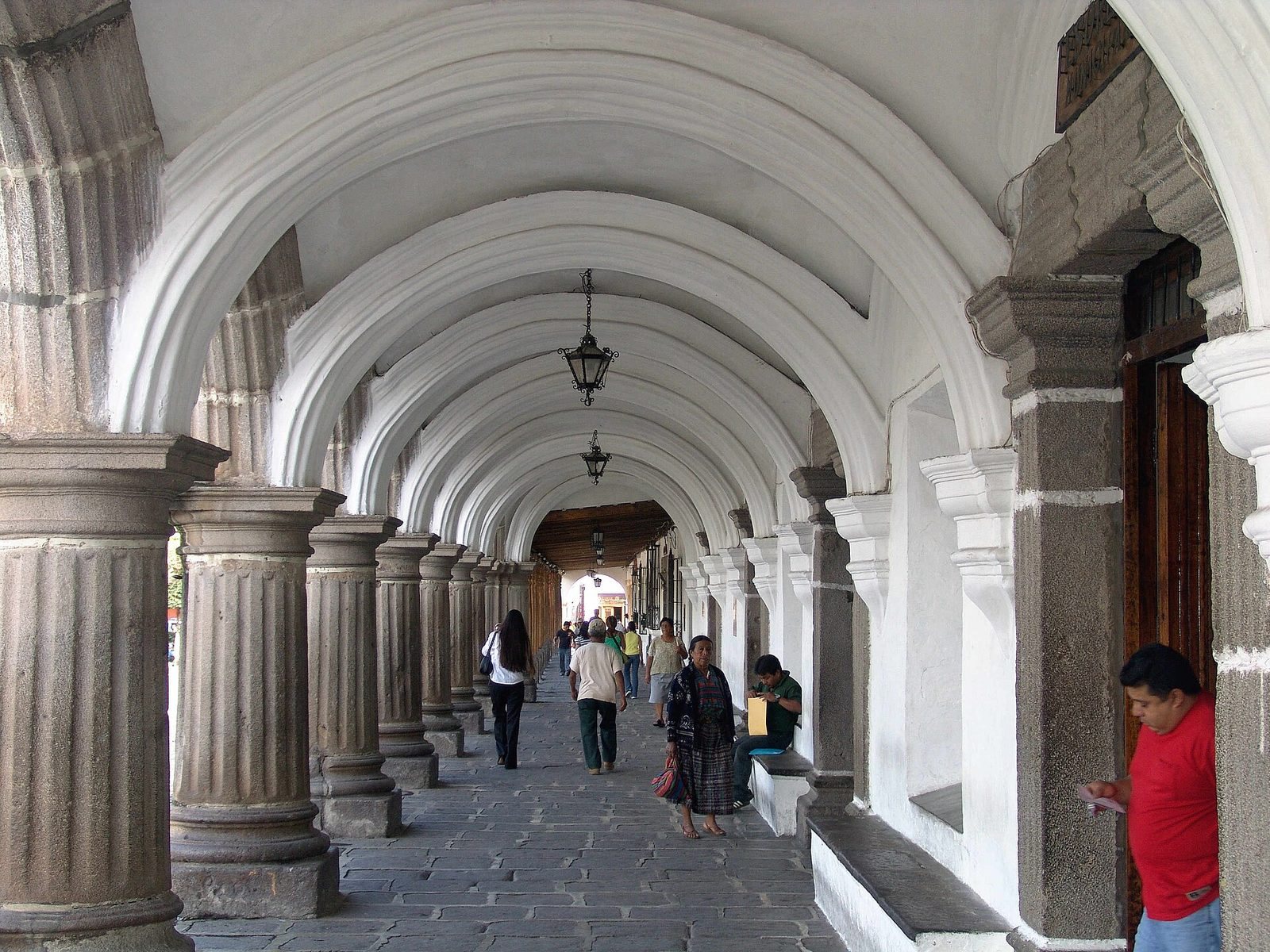
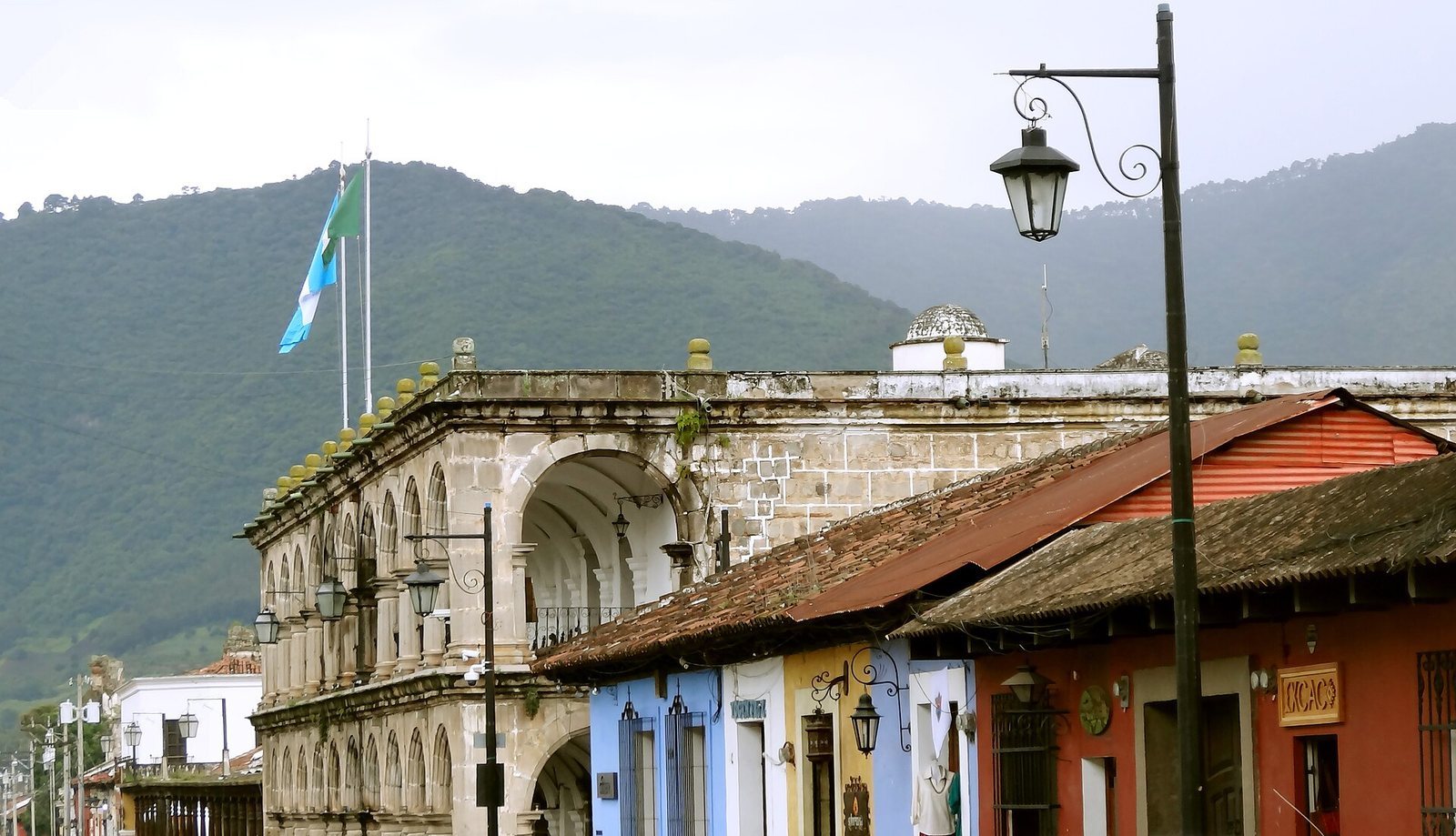
The palace stands on Fourth Street, facing Central Park and beside the Cathedral. Its façade has a double arcade of solid-stone columns in the Tuscan order, a plain classical design. The eastern wall is faced with carved stone. The building withstood the 1976 earthquake and is in good condition.
Former prison and museum interiors
Prison cell
A cell in the former prison is associated with the Guatemalan folk legend of La Tatuana. In the story, a woman imprisoned for witchcraft and illicit dealings escaped in a magical boat that she drew in charcoal on the cell wall.
Museum rooms
The museum’s five exhibition rooms displayed paintings, sculpture, ceramics, and heraldry, alongside ironwork, furniture, and colonial weapons.