Assumption Cathedral, Staraya Ladoga: A 12th-Century Monastery Church
Site at a Glance
- Popularity
- Medium
- Country
- Russia
- Primary era
- Medieval
- Eras represented
- Medieval
- Civilizations
- Novgorod Republic
- Site type
- Religious
- Remains
- Church
On this page9 sections
History
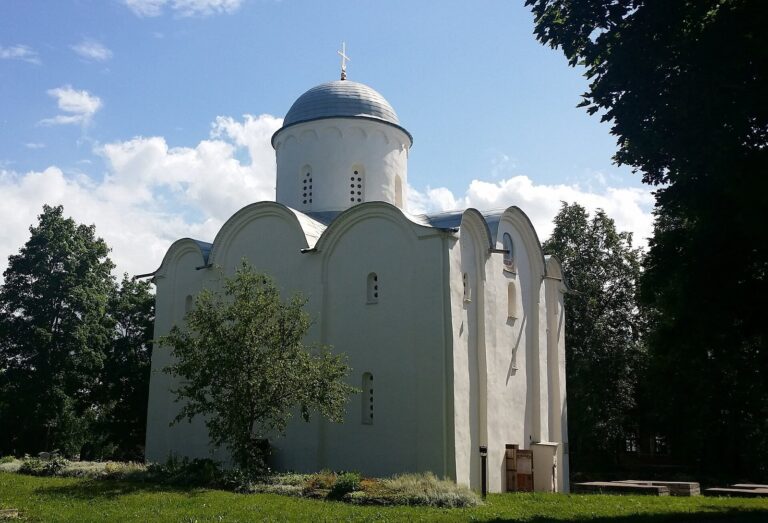
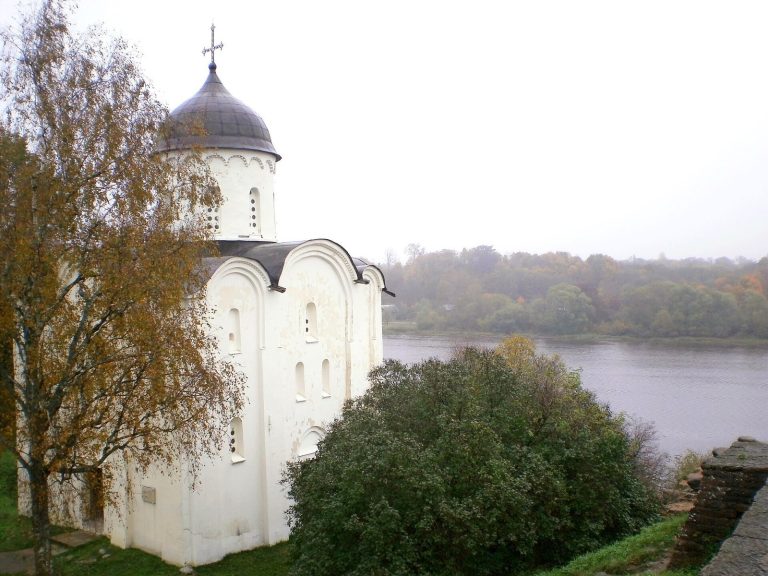
Assumption Cathedral of Staraya Ladoga is the principal church of the women’s Dormition Monastery in Russia. Probably built by craftsmen from Novgorod, a major medieval city and political center, it dates to the mid-12th century and is commonly dated to 1154–1159. Dedicated to the Dormition of the Theotokos, the Eastern Orthodox observance of Mary’s death and reception into heaven, its name refers to the Assumption; Theotokos means “Mother of God.” The cathedral is regarded as the oldest surviving church in northwestern Rus, a medieval East Slavic polity, and the northernmost church from the period before the Mongol invasions of Rus in the 13th century. It is also among the few surviving buildings of that earlier period in Russia.
Foundation and medieval role
An incised Rurikid emblem on an arch in the monastery is associated with Sviatopolk Mstislavich and Rostislav Mstislavich, princes of Novgorod and grandsons of Vladimir Monomakh. The Rurikids were the ruling dynasty of medieval Rus. The emblem has been taken as evidence that the cathedral was built during the princes’ time. In the 15th century, it served as an Orthodox religious center for Ladoga’s Mother of God district.
Damage, rebuilding, and later changes
Swedish devastation in the early 17th century damaged the cathedral along with other churches in Ladoga. Repairs followed, and it was consecrated again in 1617. A side chapel was added to the north in 1761. Two more chapels were constructed on the west side, and a bell tower was erected, in 1854–1856.
Closure and restoration
The cathedral closed for services in 1925. A major restoration in the 1950s removed the side chapels and bell tower. The building returned to the Russian Orthodox Church in 2005 and was transferred to the revived monastery after restoration in 2007. In 2008, the cathedral and other monastery buildings received federal cultural-heritage status.
Remains
Plan and exterior
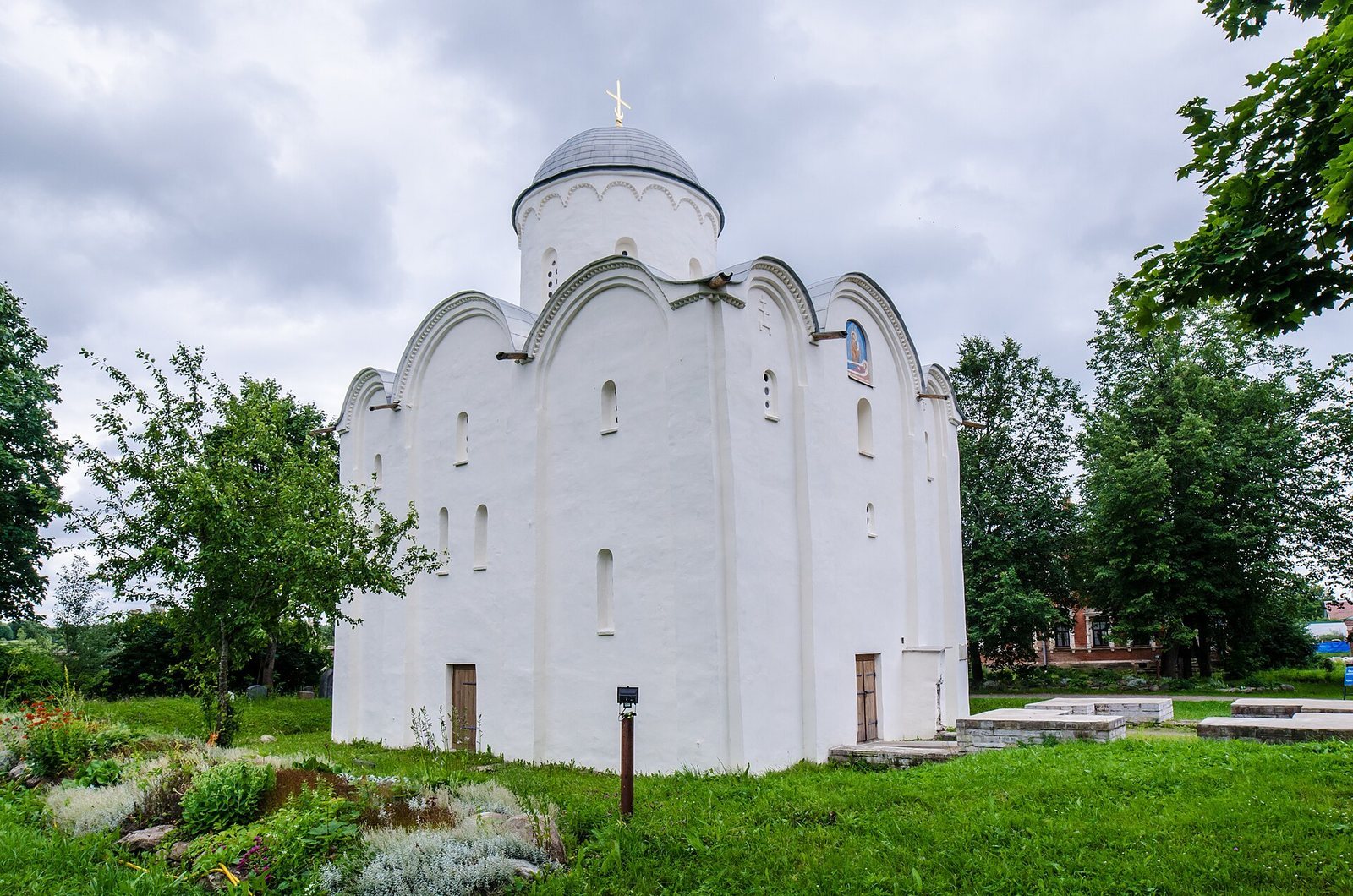
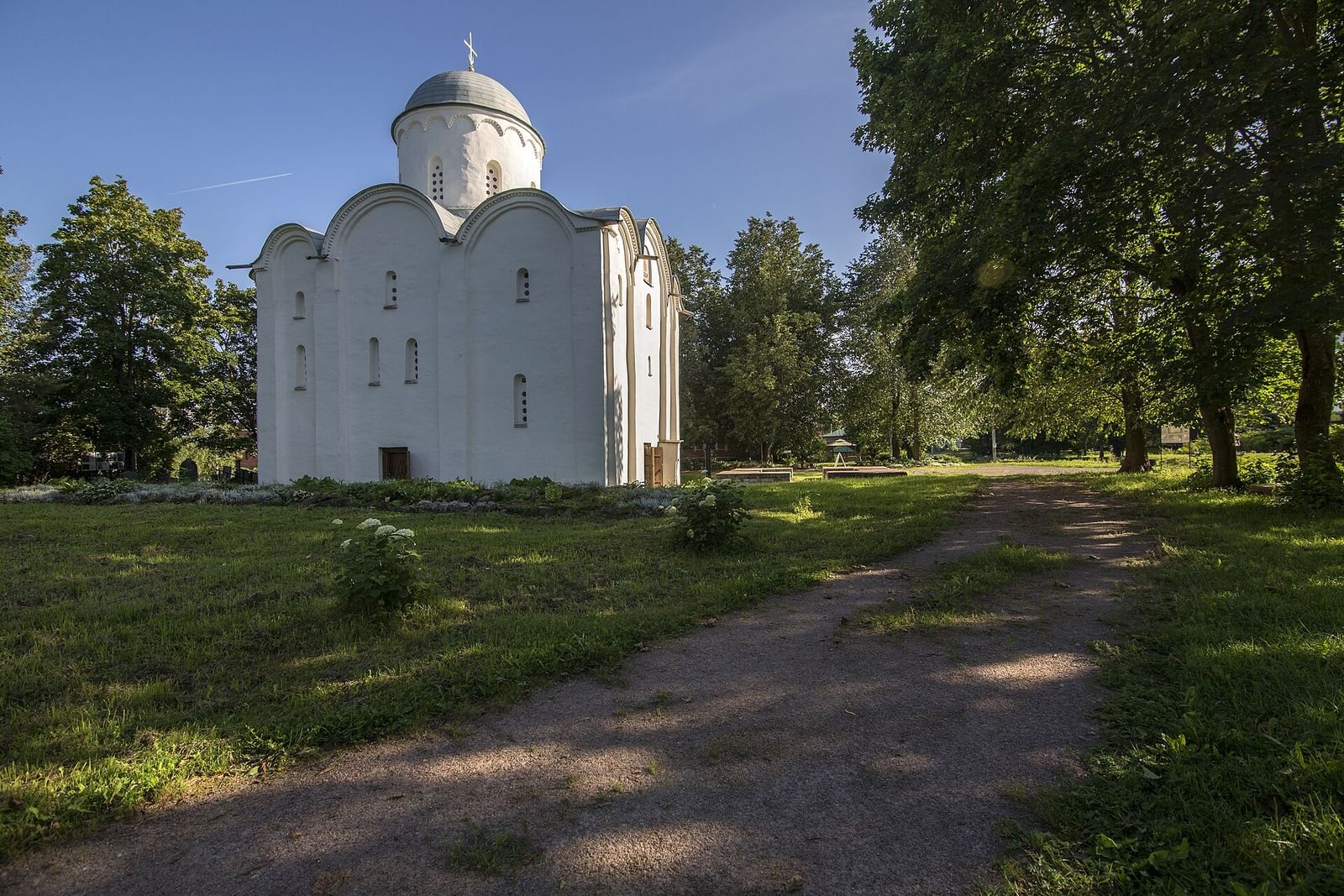
The cathedral stands within the monastery complex on the left bank of the Volkhov River. Built of plinthite, a broad, flat brick used in medieval construction, it has a simple cubic plan, three apses (semicircular projections at the ends of the church), and a single dome. It measures 18 metres long and 14 metres wide, and rises more than 19 metres. Its interior could accommodate more than a dozen people. Two decorative crosses are set into the western facade beneath its semicircular gable arches: a four-armed Greek cross and a Golgotha, or Passion, cross referring to the Crucifixion of Christ.
Interior
Burial features
Deep, semicircular arched niches in the interior have led historians to interpret the cathedral as a princely burial place. A large niche intended for a painting survives in the semicircular area of the central section. Abbess Dionysia, who led the monastery for 39 years and seven months, was buried by the altar; her gravestone remains to its right.
Frescoes
The interior was originally painted with 12th-century frescoes, wall paintings made on wet plaster. Repeated repairs left surviving fragments on the walls, pillars, and window reveals. About 13,000 fragments found in the cathedral and monastery grounds amount to nearly 35 square metres; 20th-century restoration also uncovered around 50 square metres of original painting, mostly in fragments. A fresco with a secular subject, once part of the cathedral’s facade decoration, is held at the Russian Museum.