Askana Fortress: A Feudal Stronghold in Guria, Georgia
Site at a Glance
- Country
- Georgia
- Primary era
- Medieval
- Eras represented
- Classical, Medieval, Modern
- Civilizations
- Unclassified
- Site type
- Military
- Remains
- Castle
On this page13 sections
History
Askana Fortress is a feudal-era stronghold at Mtispiri in Guria, Georgia. Its earliest construction layer dates to the 4th century, while later building phases continued into the 19th century. The fortress served as a treasury storehouse for the Principality of Guria and, after its renovation in the early 19th century, as the principality’s principal and largest prison.
Early fortress and the Marwan tradition
A tradition associates the fortress with Marwan the Deaf, also known as Marwan ibn Muhammad, an Umayyad military commander who later became caliph. According to the story, Marwan could not capture the stronghold, so he ordered his men to pile up their horses’ saddles and climb onto them. The defenders set the pile on fire with heated arrows, forcing the attackers to retreat. During their pursuit, Marwan lost his helmet, which tradition says remained for a long time in the fortress church. The Georgian Chronicles, a historical chronicle of Georgia, records Marwan’s campaign in Guria.
Gurieli rule and Ottoman attacks
By the mid-18th century, members of the Manvelishvili family held the office of fortress commander, followed by members of the Asatiani family. Ottoman forces captured Askana in 1770 and again in 1774. On both occasions, Mamia Gurieli and Solomon I recovered it. The Gurieli were Guria’s ruling princely house, while Solomon I ruled the neighboring Kingdom of Imereti.
Sieges and Russian control
In 1804, Kaikhosro Gurieli besieged the fortress for six weeks but failed to take it. Bejan Beridze, an impoverished nobleman, treacherously lured commander David Asatiani outside, where Kaikhosro’s forces killed him. After capturing Askana, Kaikhosro removed command from the Asatiani family and appointed Simon Taqaishvili. He also renovated the fortress in the early 19th century.
In 1819, Ahmed Pasha Khimshiashvili, an Ottoman commander, tried to capture the fortress. Pasha was a high-ranking Ottoman title. His detachment attacked the village and abducted several residents. Mamia Gurieli’s men intercepted the Ottomans, killed their aga and 34 men, and captured about 90 people, including a cousin of Ahmed, two officials, 75 soldiers, and 12 standard-bearers. They returned the abducted residents to their homes.
In 1828, Sophia Gurieli fortified herself at Askana while opposing the establishment of Russian rule in Guria. Russian troops captured the fortress on September 30.
Later condition
In the 1870s, valuable objects, money, furniture, a water reservoir, a prisoners’ cell, and a cannon remained at the fortress. In 1884, a district chief ordered part of a corner wall broken away so its thickness could be measured. By 1910, the church still had a roof, an east-facing window, and painted decoration. The fortress’s cannons were taken to Ozurgeti in the 1930s, and the site remained unstudied by scientific expeditions.
Remains
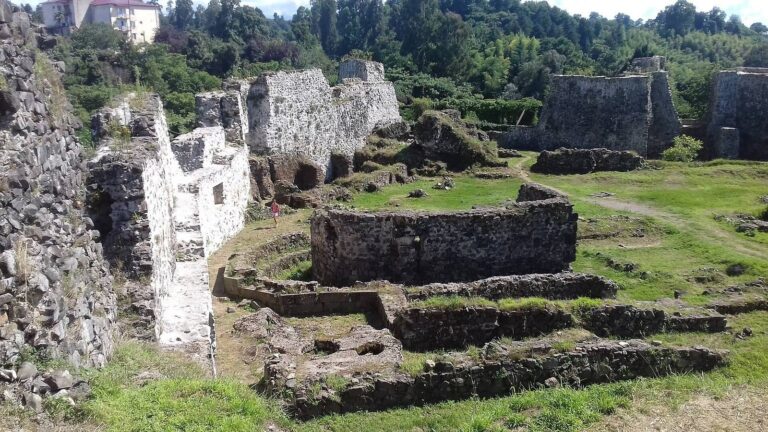
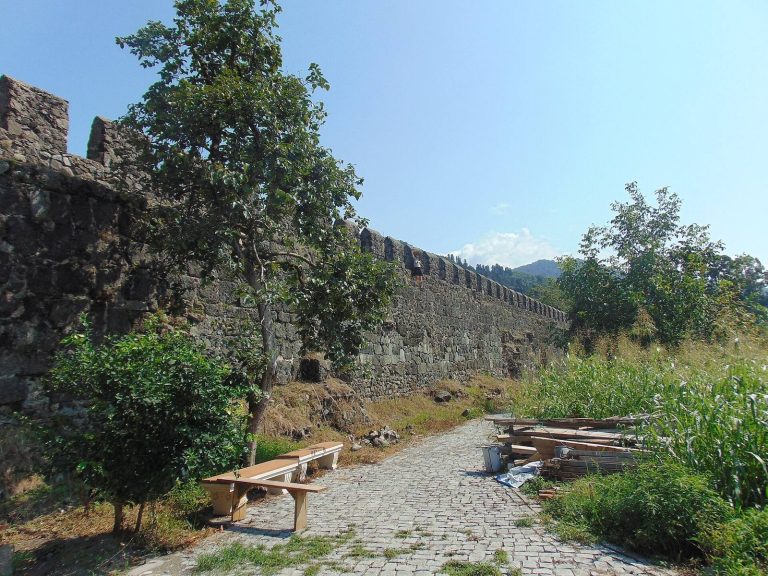
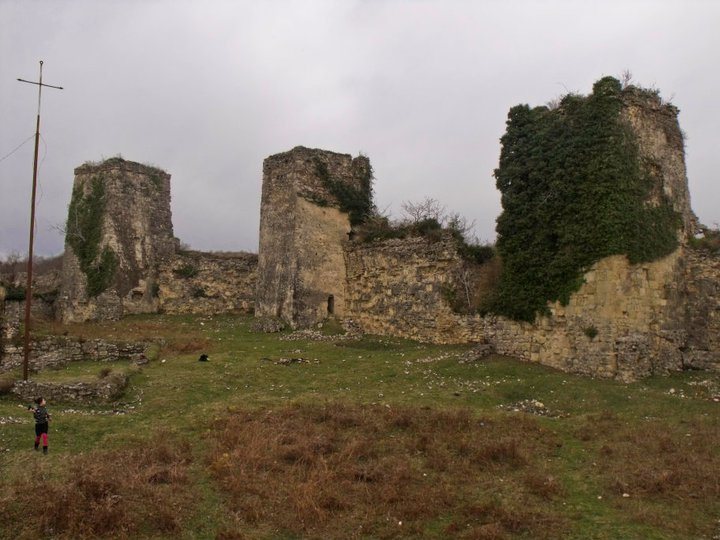
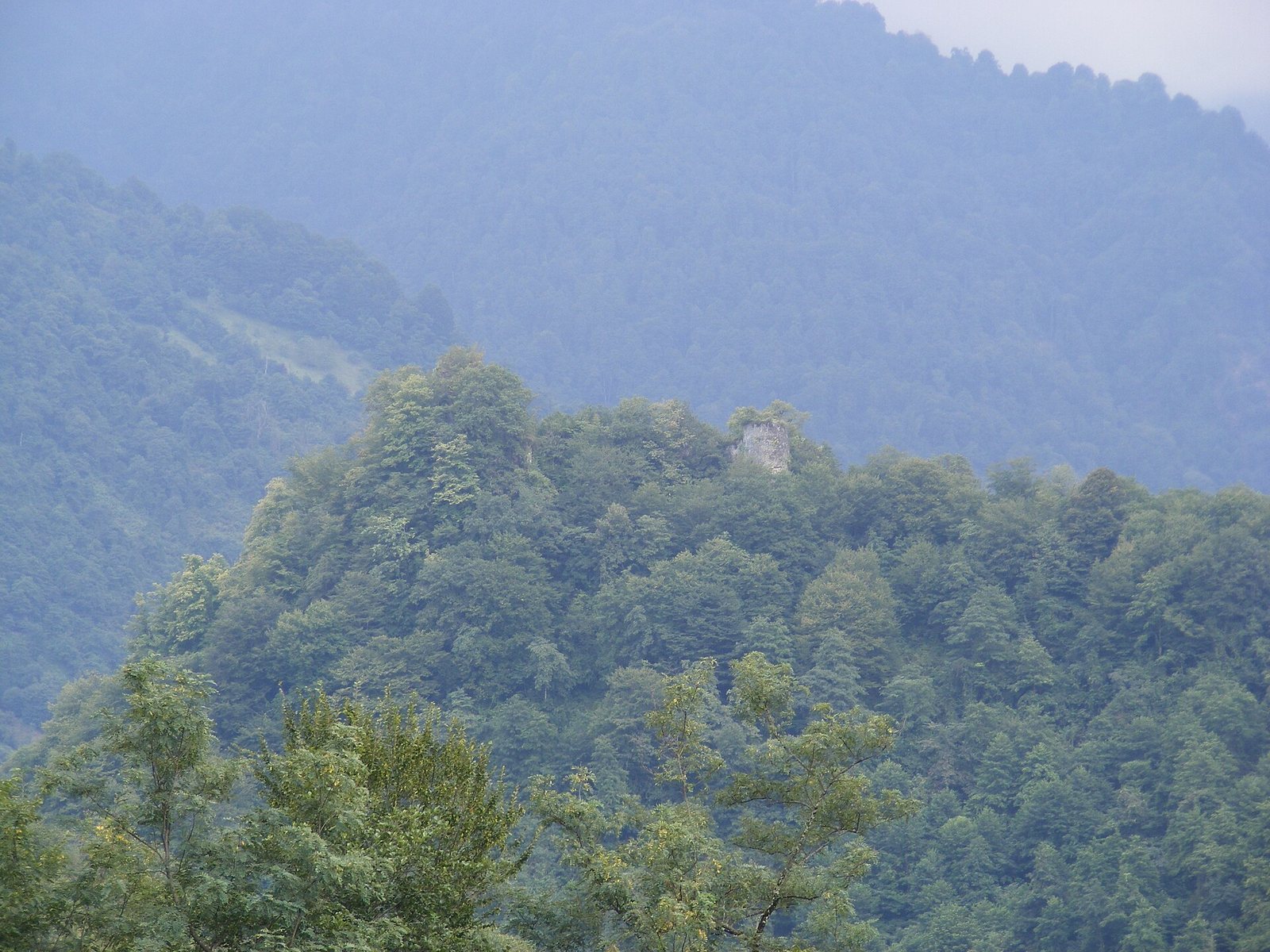
The fortress stands on the site of the abandoned settlement of Tsikhisubani, between the Delemuri and Tapuriati mountains and beside the Bakhvistsqali River. Its masonry uses split stone and lime mortar. The enclosure, entrance, well, cliffside palace, and church structures form the principal features described at the site. In 1833, the fortress included two towers and several wooden huts.
Enclosure and water supply
Walls and entrance
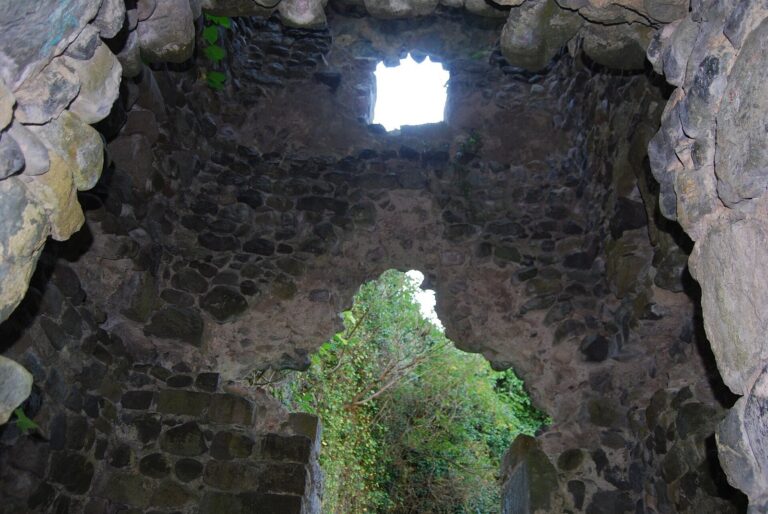
The enclosure walls are badly damaged but rise more than 6 metres and are more than 2 metres thick. The entrance is on the southwest side.
Well and river tunnel
A deep well lies to the left of the entrance. A tunnel descended from it to the Bakhvistsqali River. The well is now filled with stones and rubble.
Palace and religious buildings
Palace
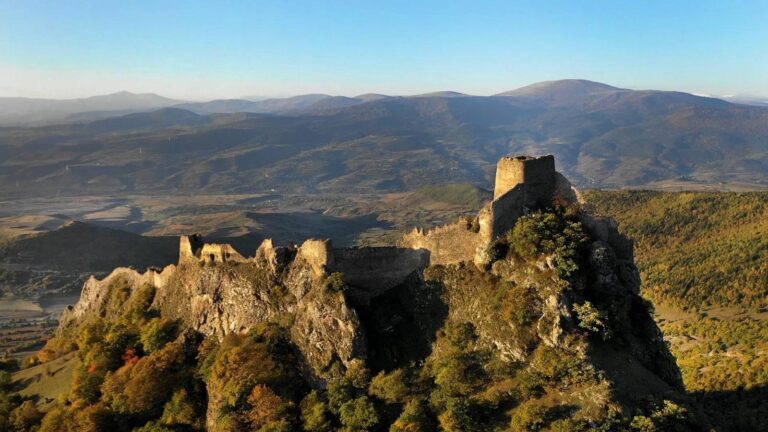
The palace was built on a high cliff and now survives as a ruin.
Basilica and chapel
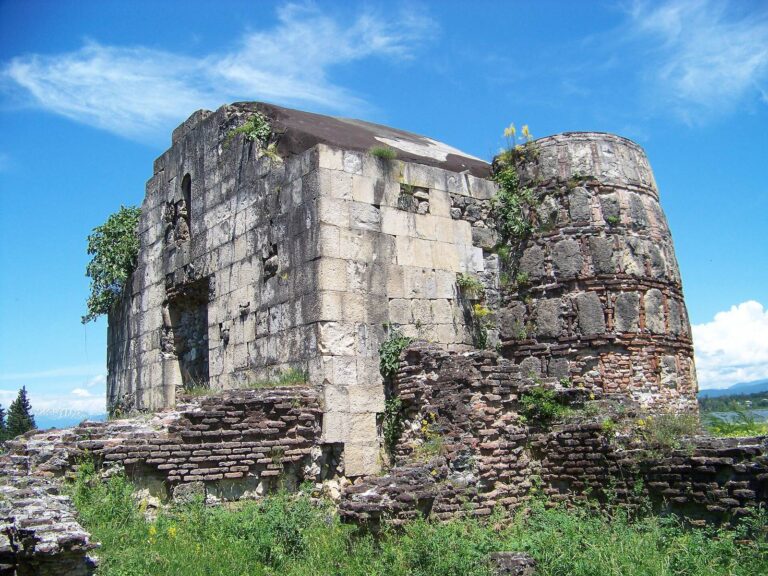
A dressed-stone basilica stands beside the palace and dates to the 5th–7th centuries. A basilica is a church organized around a central nave, often with side aisles. A description from 1833 identifies a chapel built of red marble. By 1910, the church retained its roof, an east-facing window, and painted decoration.
Stone vessels and furnishings
In 1889, two large stone vats stood within the fortress, one known as a water-measuring vat. A stone feature associated with banqueting measured about 4 metres high and 2 metres wide. By 1910, four enormous stone blocks remained: three were used as water reservoirs and one as a table.