Palace of the Inquisition: Cartagena’s Tribunal and Historical Museum
Site at a Glance
- Country
- Colombia
- Primary era
- Early Modern
- Eras represented
- Early Modern
- Civilizations
- Spanish
- Site type
- Civic
- Remains
- Palace
On this page8 sections
History
The Palace of the Inquisition is a two-storey colonial building in Cartagena, Colombia, associated with the city’s tribunal of the Holy Office, the Inquisition institution that investigated and prosecuted religious offenses. The present building was completed in 1770 in Spanish Colonial style with Baroque elements. It is an important example of Cartagena’s late-colonial secular architecture.
Establishment of the tribunal
In 1610, Philip III of Spain ordered the creation of Cartagena’s tribunal. It was the third Inquisition tribunal established in Spanish America, after those in Veracruz and Lima, and its jurisdiction extended across the Viceroyalty of New Granada, a Spanish colonial territory in northern South America. Cartagena’s importance as a commercial center and a link between the Caribbean and Spanish settlements in western South America helped prompt its establishment. Portuguese merchants were among those suspected of secretly practicing Judaism while identifying as Christians. From 1580 to 1640, Spain and Portugal shared a monarch, and Portuguese merchants were active in Spain’s overseas colonies.
Operation and rebuilding
The tribunal operated for more than two centuries, ending its work in the early nineteenth century amid Colombian independence. It handled about 800 cases. Three to five people were executed, while most people convicted received flogging as a sentence. An earlier palace building was destroyed in an English attack in 1741, and the present structure was completed in 1770.
From residence to museum
By the late nineteenth century, Bartolomé Martínez Bossio owned the Palace and had adapted it as his home. The Colombian government bought the building from his descendants in 1940 and converted it into a museum. Renovations took place in 1983, the 450th anniversary of Cartagena’s founding, and the building has also undergone partial restoration to preserve Colombia’s cultural heritage. It now houses the Historical Museum of Cartagena, with exhibitions on the city’s colonial and republican history and the Inquisition’s work, including trials, imprisonment, and autos-da-fé, public ceremonies where sentences were announced but not necessarily carried out as executions. In 2015, displays related to torture were removed before Pope Francis’s visit to Colombia; some were later returned.
Remains
Architecture
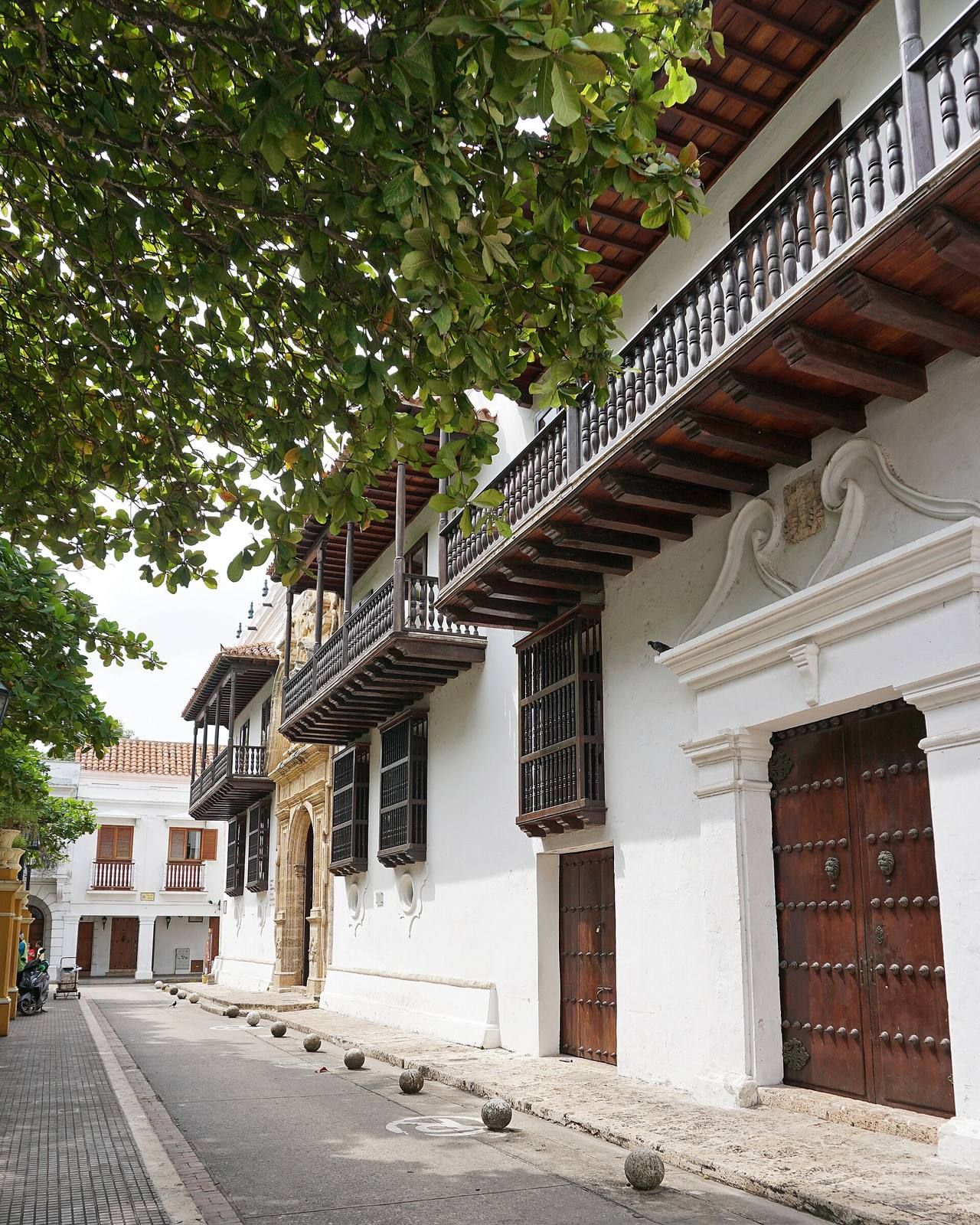
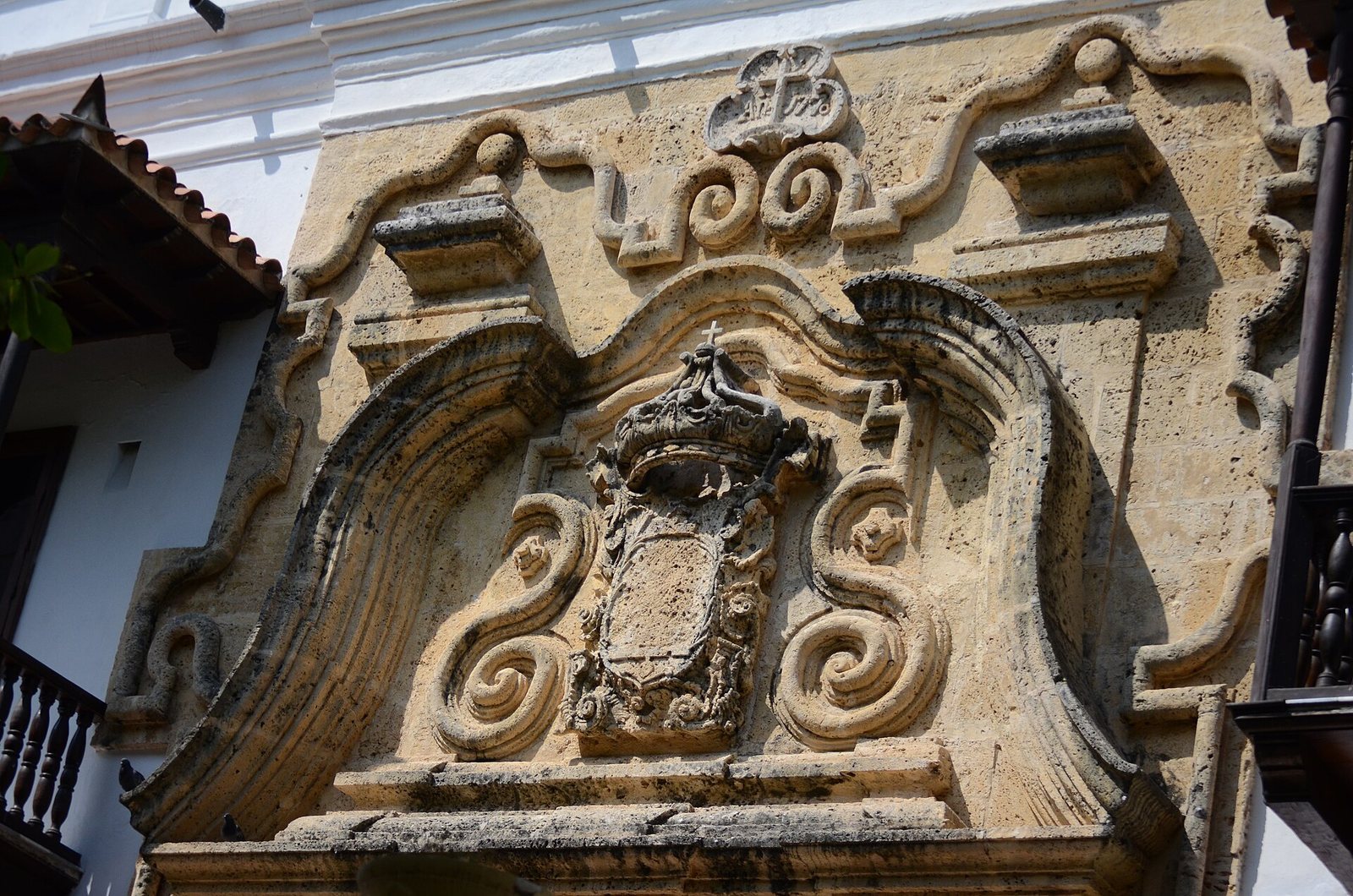
The two-storey building faces Parque de Bolívar. Its construction combines white brick, limestone, stone gateways, a timber framework, and rooms built mostly of masonry. A prominent Baroque portal and wooden balconies form part of the façade, while the building’s overall design reflects Spanish Colonial architecture with Baroque details.
Interior features
Inside, a colonial corridor and a window associated with anonymous complaints form part of the building’s historical features. A crucifix is mounted on a wall facing displays of torture equipment. The museum’s collections include coins, maps, weapons, furniture, church bells, and depictions of notable generals. Some displayed devices associated with Inquisition torture appear to be modern replicas or general reconstructions, and there is little evidence that the Cartagena tribunal used them.
Museum exhibitions
Permanent displays include an Independence Hall on Colombia’s path to independence, a hall devoted to Cartagena’s history, and an exhibition on the Inquisition and human rights.