Armatambo: An Ichma Capital and Inca Administrative Center in Peru
Site at a Glance
- Popularity
- Medium
- Country
- Peru
- Primary era
- Medieval
- Eras represented
- Medieval, Early Modern
- Civilizations
- Inca
- Site type
- Settlement
- Remains
- City
On this page11 sections
History
Armatambo is an urban settlement built by the Ichma, a pre-Inca culture of the Lima region, at the foot of Morro Solar in Chorrillos, Lima, Peru, and it flourished during the Late Intermediate Period (about 900–1460). This period preceded the Late Horizon, the era of Inca rule.
Ichma capital
During the Late Intermediate Period, Armatambo was a major Ichma settlement and the capital of Sulco, a local Andean chiefdom. Early chroniclers used the name Surco for the settlement’s political role, and Armatambo for its function as a tambo, or roadside rest station, on the route to Pachacamac, a major pre-Columbian sanctuary on the central Peruvian coast.
Inca administration
The Incas occupied Armatambo from about 1460 to 1532, during the Late Horizon. It became an important administrative center and a seat of Inca government, with approximately 10,000 people obligated to provide tribute to the state. Its role as a tambo on the coastal route to Pachacamac continued. This occupation formed part of the Inca Empire’s Third Expansion, a phase of its territorial growth. The settlement’s abandonment is tentatively dated to around 1529.
Archaeology and urban expansion
In the late nineteenth century, Adolph Bandelier carried out the first archaeological excavations at Armatambo and produced its first plans. He estimated its population at 4,500 to 6,000 and attributed the poor condition of the remains to earthquakes and colonial-period looting. Huaca Cruz de Armatambo, a huaca (a sacred place or feature in Andean traditions), was discovered in the 1980s.
Urban development began in the 1920s, first with large estates and later with housing on Morro Solar’s slopes. Land occupations began in 1959, and some settlements were subsequently formalized. An effort to rescue the huacas in 2016 failed, after which rubbish accumulated in some areas. The Ministry of Culture has sought recognition of the complex as Peruvian cultural heritage.
In 2021, authorities removed 50 precarious houses from a protected area of Morro Solar covering 3,700 square metres. The houses had occupied land within the protected boundary, and the removal was carried out under Legislative Decree 1467, which established heritage-protection measures during the pandemic.
Remains
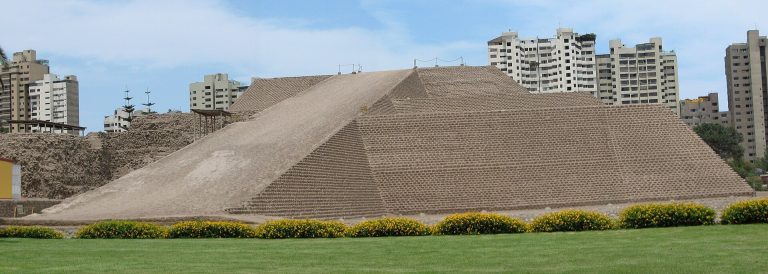
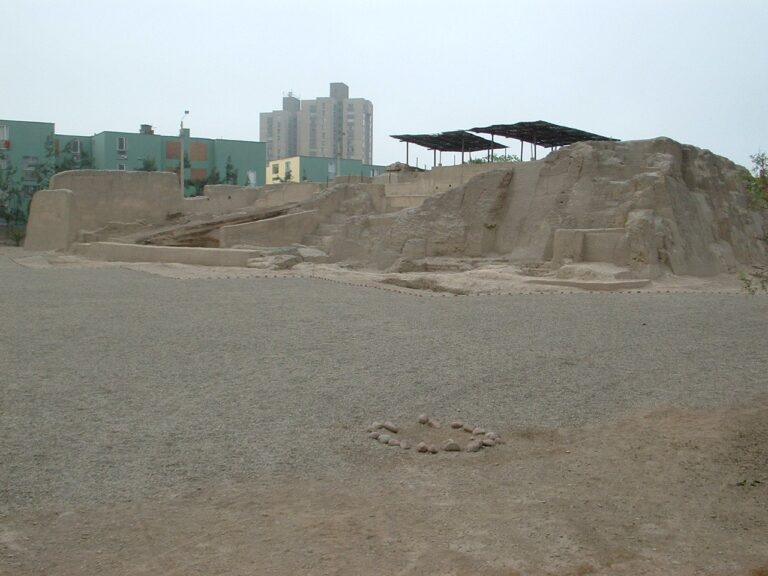
Armatambo lies on the left bank of the lower Rímac Valley, beside the Pacific Ocean and below Morro Solar, a coastal hill. The complex consists of pyramidal buildings and other structures, set among extensive platforms and numerous storage spaces.
Settlement layout and construction
Urban layout
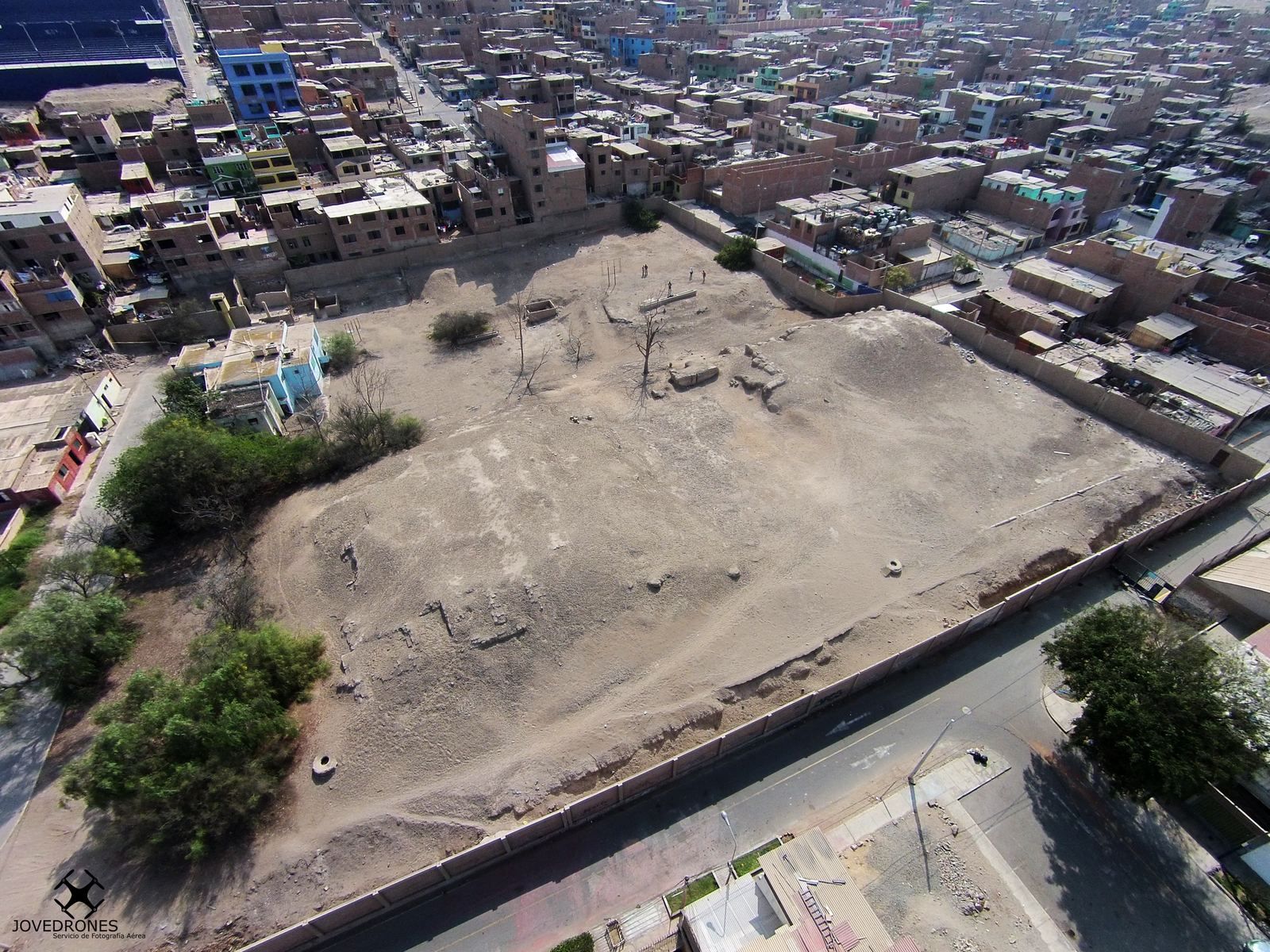
Groups of buildings were enclosed by walls and divided by narrow alleyways that served as streets. Plans made by Bandelier show small settlements at the eastern end, a larger group toward Chorrillos, a cemetery, and a smaller group near the summit of Morro Solar. Urban settlements now cover about 95 percent of the complex’s total area. In the fenced area that remains unoccupied by settlements, 74 percent of the land was in poor condition; waste from residential and livestock activity has polluted the soil.
Building methods and decoration
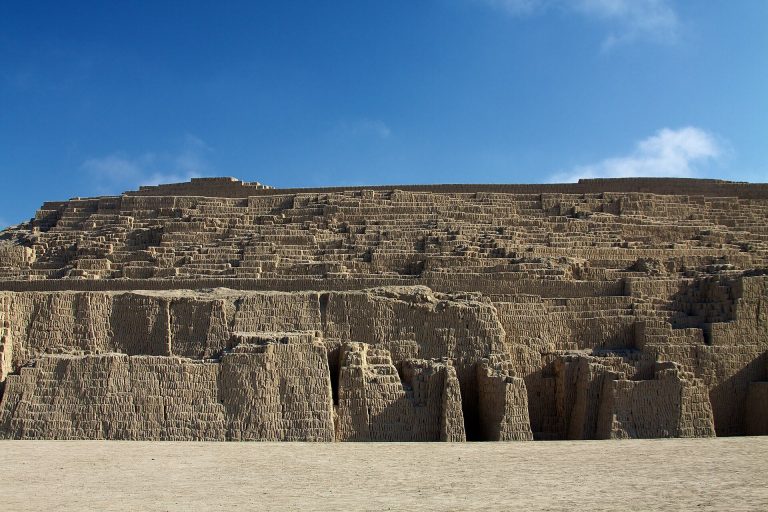
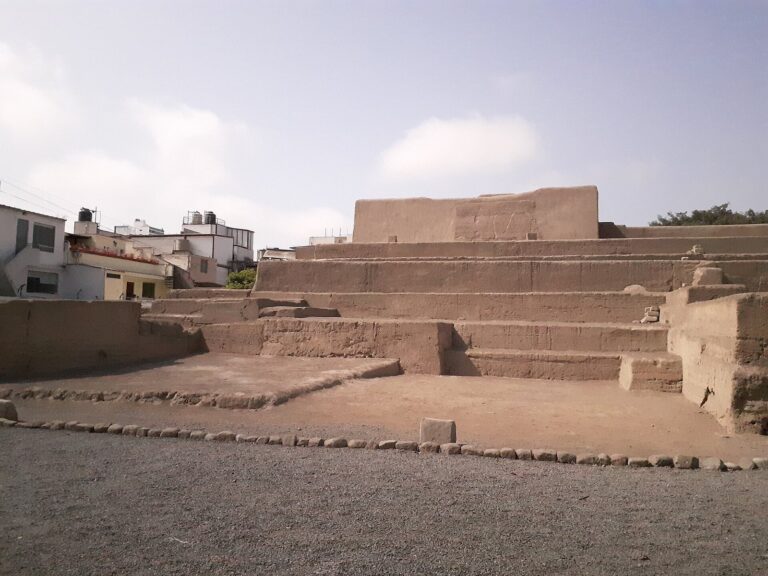
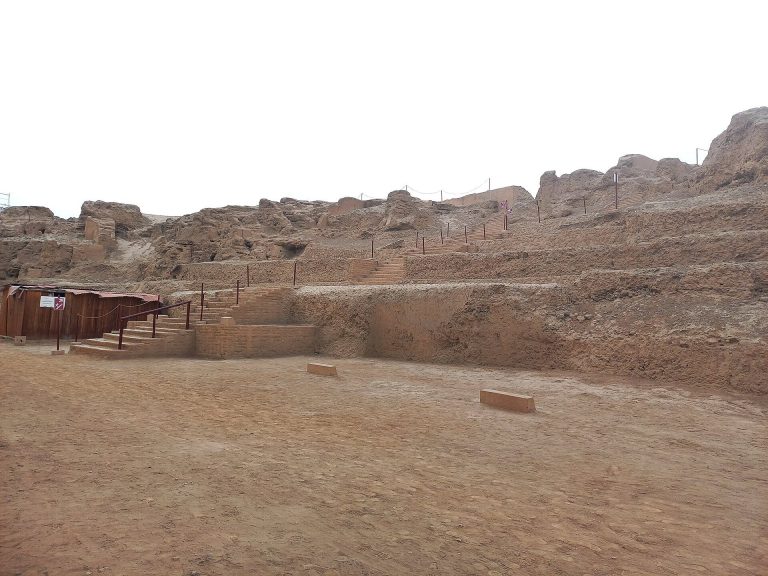
The buildings include pyramids, some with ramps, as well as platforms and storage structures in varied forms. Construction materials include rammed earth, large adobe blocks, rectangular adobe bricks, and stone masonry. Rammed-earth walls were made by packing damp clay into wooden frames. Large adobe blocks are associated with Ichma construction, while rectangular bricks are linked to the Inca period; both types occur together. One explanation for the rectangular bricks is that they allowed varied buildings with thinner walls, while rammed earth required more labour and material transport and was less suited to narrow, varied spaces. Some walls had mud plaster and coloured murals, while reliefs remain visible on others.
Surviving pyramids and features
Other surviving huacas
Huaca San Pedro, Huaca Marcavilca, and Huaca La Lechuza are among the few surviving huacas in the complex. Huaca Ministerio de Salud is one of Armatambo’s ancient pyramidal structures. The surviving huacas are in poor condition.
Huaca Cruz de Armatambo
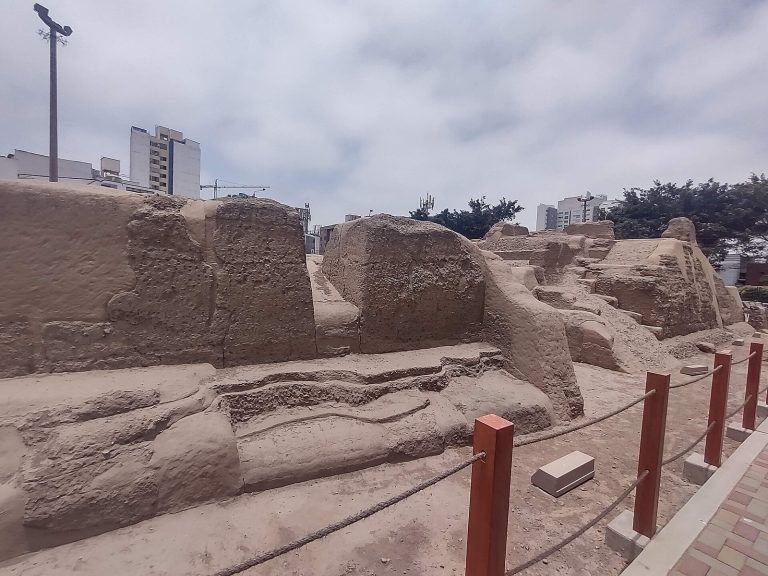
A concrete wall protects the higher part of the relief at Huaca Cruz de Armatambo, and railings enclose other sections. A cross known as the Santo Madero was placed there to represent the huaca, giving it its current name. A plaque installed on 4 June 2000 lists members of the 1999–2000 commission.