Huaca Huallamarca: A Pre-Columbian Ceremonial and Burial Monument in Lima
Site at a Glance
- Rating
- 4.4
- Popularity
- Medium
- Country
- Peru
- Primary era
- Classical
- External website
- Open
- Eras represented
- Classical, Modern
- Civilizations
- Unclassified
- Site type
- Religious
- Remains
- Sanctuary
On this page14 sections
History
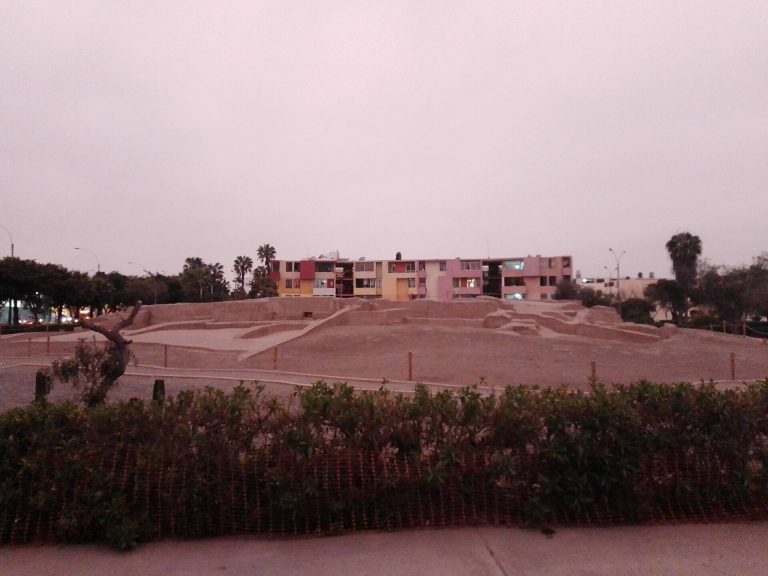
Huaca Huallamarca is a pre-Columbian stepped pyramid in San Isidro, Lima, Peru, whose construction began around 200 BC during the early cultural development of Peru’s central coast. Initially associated with the Pinazo tradition, an early coastal tradition known for hand-shaped conical adobe construction, the monument served ceremonial, administrative, political, and social functions for part of the lower Rímac Valley population.
Early ceremonial use
The earliest construction belongs to a period before Lima building traditions had fully developed in the valley. Its adobe technique has consequently been linked with the Pinazo tradition, dated approximately to 100 BC to AD 200, and with the Huallas of the lower Rímac Valley. The monument’s early platforms contained enclosed plazas, patios, passageways, and restricted areas, reflecting an organized ceremonial and administrative complex.
Huallamarca was formerly called Pan de Azúcar, or “Sugar Loaf.” The name referred to the monument’s earlier appearance and to the resemblance of its adobe elements to a Lima sweet of the same name. The proposed meaning of Huallamarca is “village or region of the Huallas,” although the application of that name to the pyramid remains uncertain.
Cemetery and Inca-period occupation
After the monument ceased to function as a ceremonial center, probably by around AD 300, its upper areas were used as a cemetery. Burial activity continued through several cultural phases, including those associated with Lima, Ychsma, Chancay, Huaura, Sicán, and Chincha communities. The cemetery remained in use through approximately AD 900 to 1300 and continued into the Inca period.
During the Inca period, approximately AD 1400 to 1532, Huallamarca served as a public building. Food remains, textiles, and large vessels belong to contexts connected with this phase. Access was socially differentiated: a kuraka, an Indigenous community leader or local authority, could reach the upper area, religious personnel occupied small houses in the middle area, and the general population remained below. This arrangement was associated with the belief that greater height brought people closer to the gods, the Moon, and the Sun.
Exploration, damage, and reconstruction
Thomas Hutchinson published the first recorded information about Huallamarca in 1873 after scientific explorations. He described the stepped building, its dimensions and elevation, the surrounding environment, and human remains, textiles, ceramics, and other funerary materials recovered there.
Julio C. Tello directed the first archaeological excavations in 1942. He identified three principal occupation moments associated with the Lima, Ychsma, and Inca periods, and interpreted Huallamarca as part of a larger archaeological group connected with the Huatica and Surco canals.
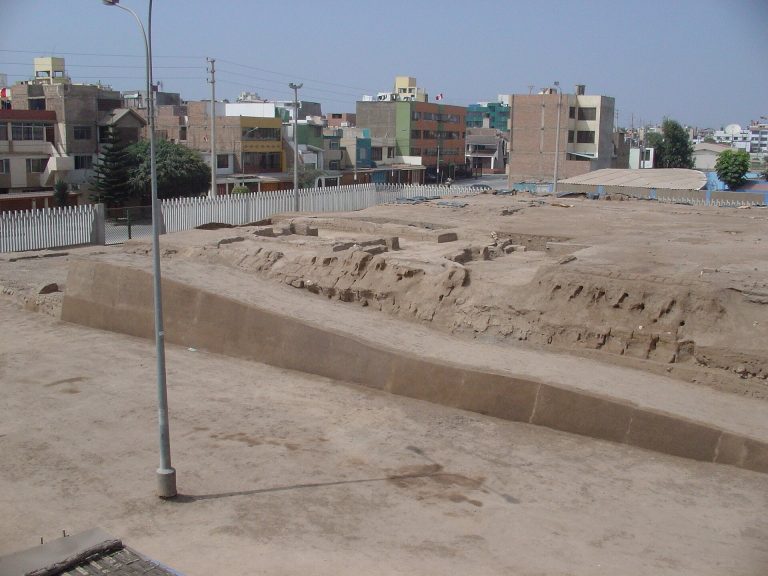
In the early twentieth century, the monument was exploited as a quarry for construction material. Large cuts were made into its sides during the 1920s to create a route to the summit, which was levelled. Quarrying also produced a major depression. The Municipality of San Isidro began demolishing the monument in 1941, but the National Archaeology Board stopped the work. In the 1950s, a proposal to demolish it for a public park also failed.
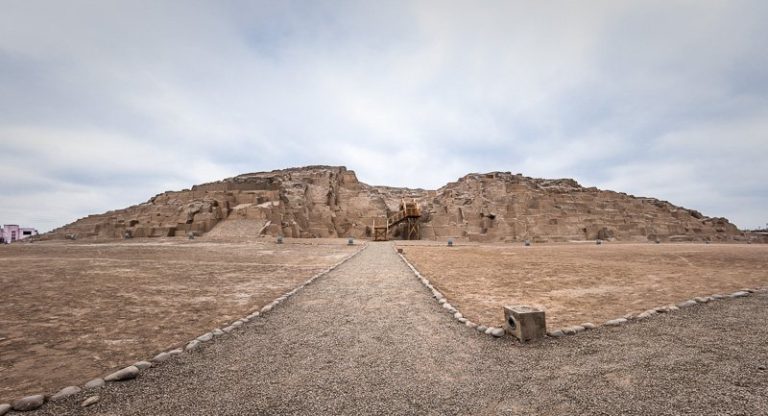
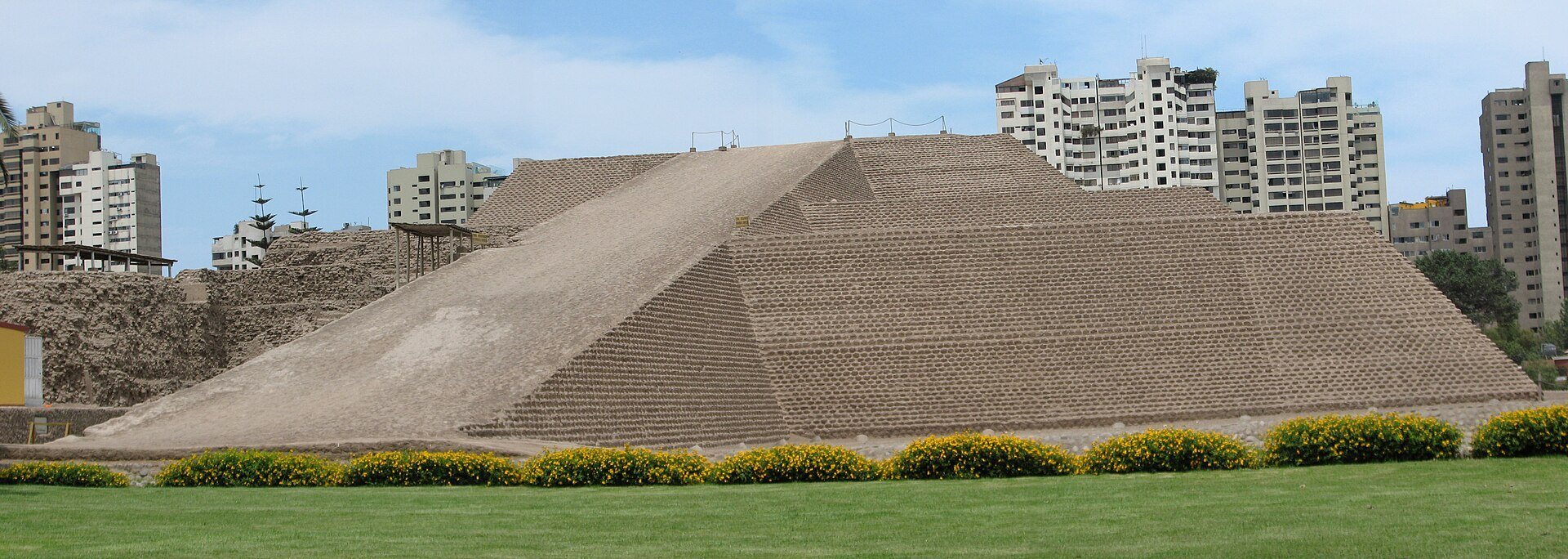
The Casa de la Cultura del Perú then began the monument’s revaluation and reconstruction with the patronage of district mayor Carlos Neuhaus Rizo Patrón. Arturo Jiménez Borja and Jorge Zegarra Galdós excavated the summit cemetery in 1958 and recovered 48 funerary bundles. Their work encouraged restoration and the creation of a site museum. The reconstruction, carried out principally during the 1950s and 1960s under Jiménez Borja, was a stabilizing and creative intervention rather than an exact reproduction of the original monument. It established the rectangular appearance and frontal ramp seen today.
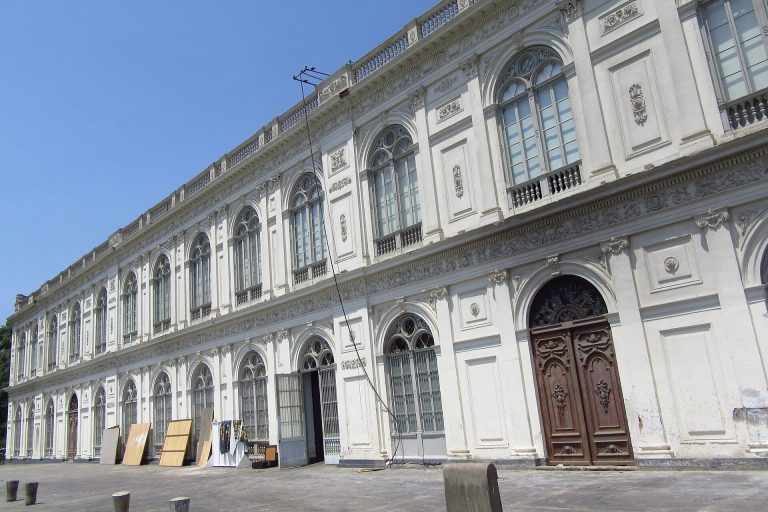
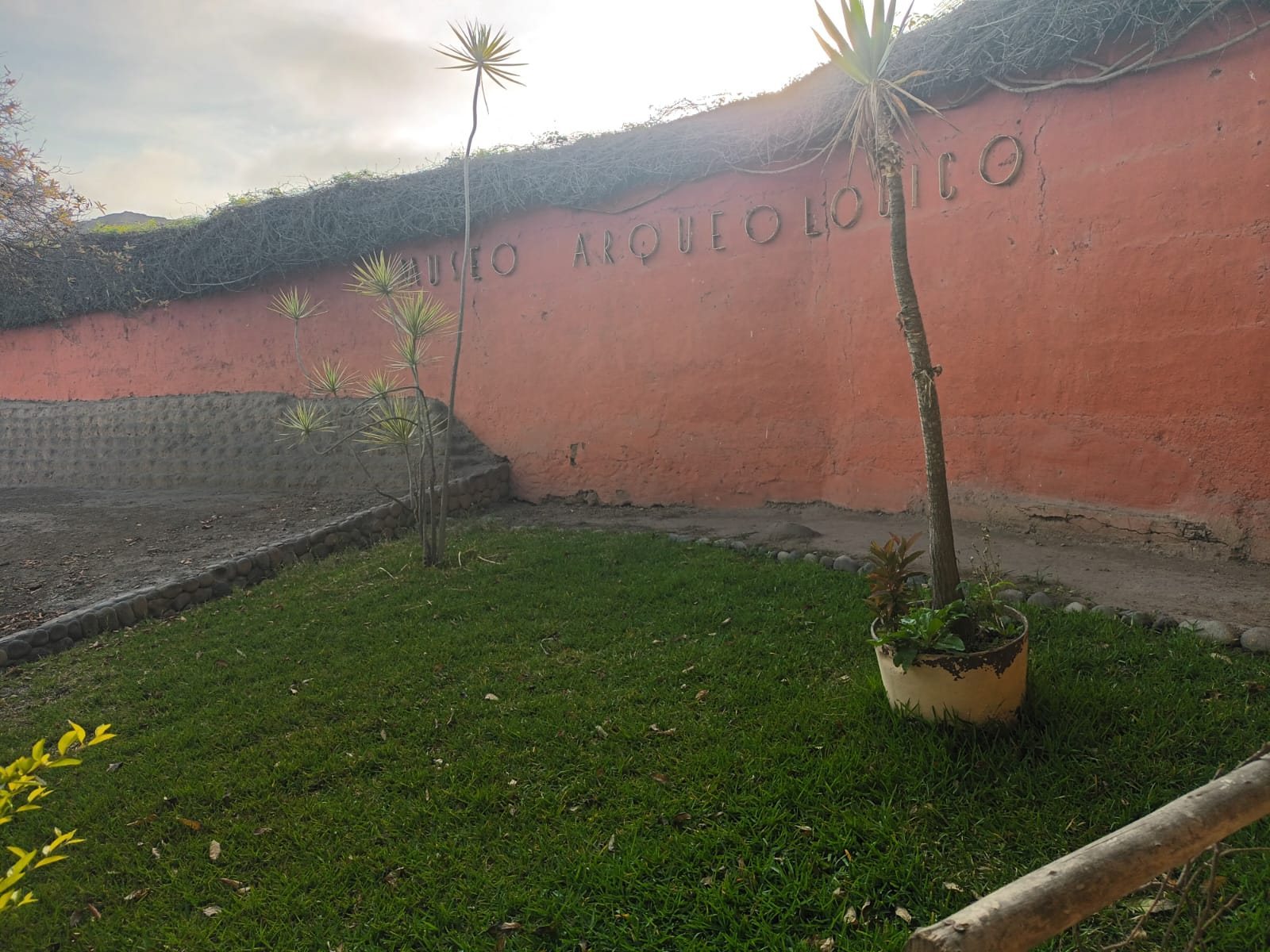
The Huallamarca Site Museum opened on August 8, 1960, becoming the first site museum in Peru. It houses archaeological material recovered at the monument and forms part of the national state museum system. Between 1991 and 1992, Clide María Valladolid directed three excavation seasons under an agreement involving the Municipality of San Isidro, the Museum of the Nation, and the National Institute of Culture. Additional excavations took place on the pyramid’s southwest side between October 1997 and August 1998 during preparations for renovation. Later conservation helped protect the monument from surrounding urban development and private construction.
Remains
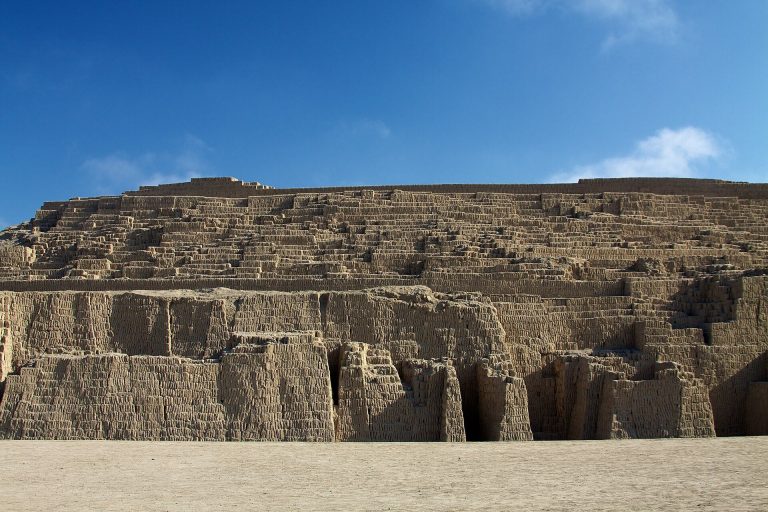
Huaca Huallamarca survives as a truncated stepped pyramid whose reconstructed form rises approximately 19 to 20 metres. The present base measures about 85 metres from north to south and 67 metres from east to west, while earlier descriptions gave dimensions of approximately 120 by 75 metres. The difference reflects the extensive alteration caused by quarrying and twentieth-century reconstruction.
Pyramid form and adobe construction
Platforms and frontal ramp
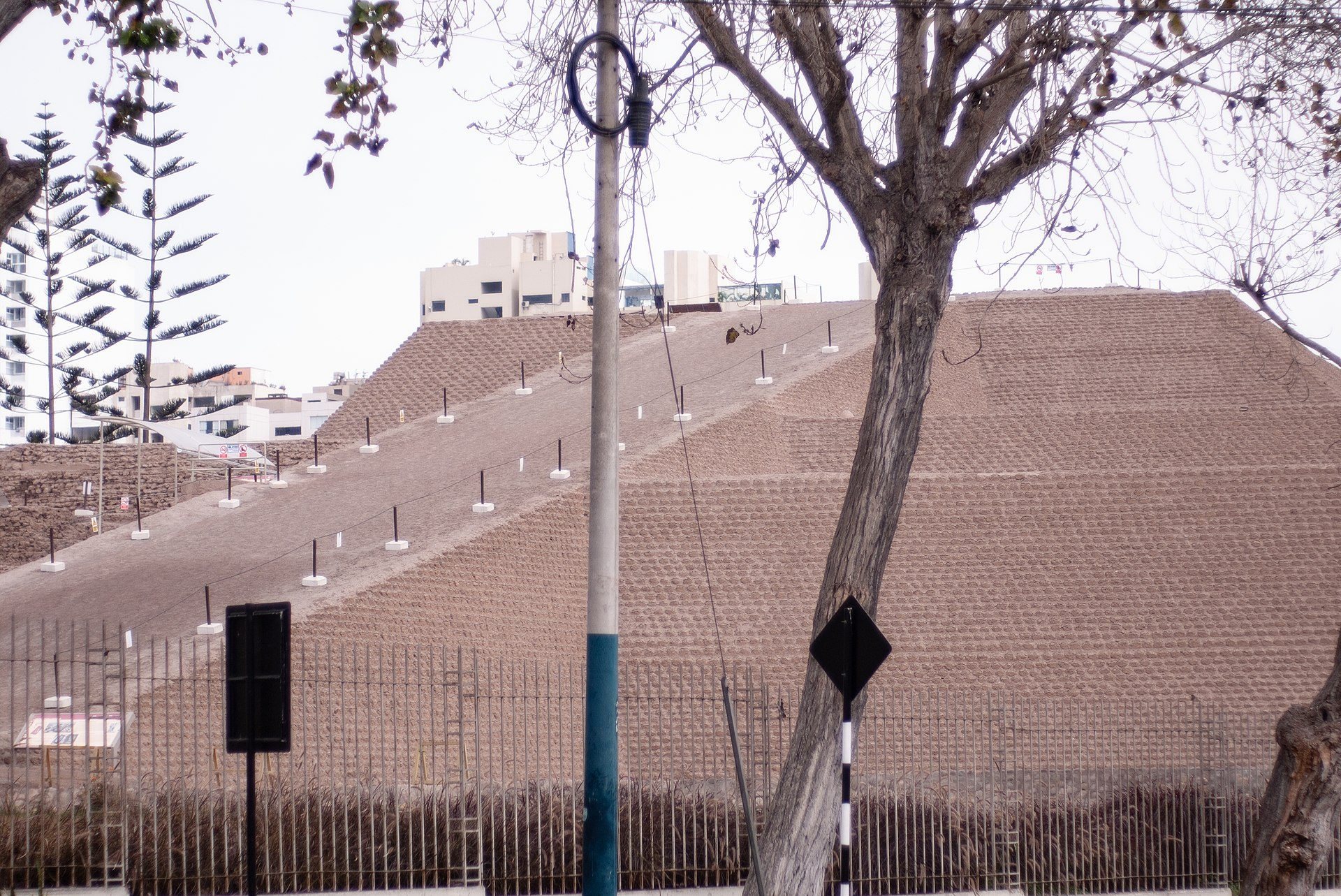
The reconstructed monument consists of three superimposed platforms and has a frontal ramp about 9 metres wide. The ramp was created during the twentieth-century intervention by filling the large depression left by quarrying, so it did not belong to the original design. Earlier descriptions present the building as a large stepped platform with two visible levels, massive walls, and steep sloping sides. One estimate places the original volume at more than 50,000 cubic metres.
Hand-shaped adobe elements
The monument was built almost entirely from small, hand-shaped adobe pieces. Many are irregular cones or molar-shaped forms often compared with corn grains. They were laid in uneven courses around the structure, with gravel serving as internal fill and as retaining material where adobe courses were not present. The pieces preserve impressions of the builders’ palms, while spaces between some adobes are described as contributing to the structure’s resistance to earthquakes.
Internal spaces and access
Superimposed constructions
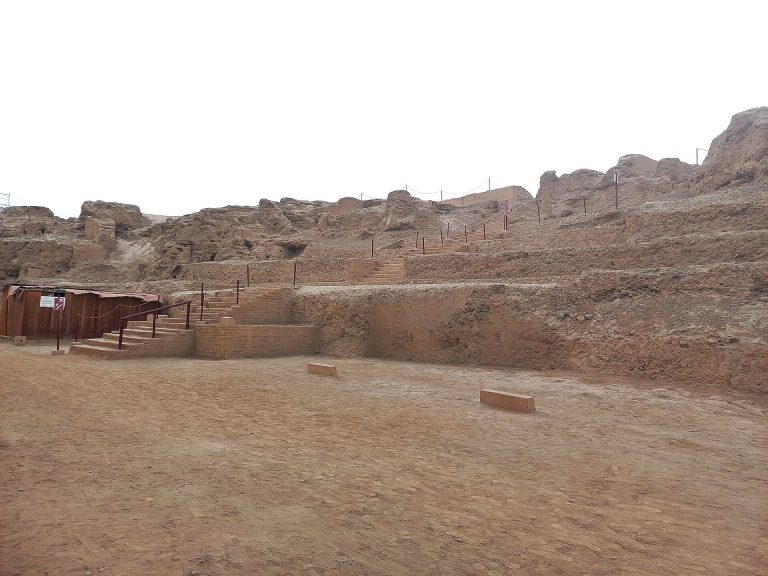
Excavations in the 1990s exposed several pyramidal constructions beneath the reconstructed exterior. Their summits contained rooms linked by corridors and stairways, and the walls were painted yellow. The routes may have guided a select group toward the summit, although that interpretation remains inferential. Earlier platforms were sometimes reused as foundations for later construction, producing successive levels with rooms, patios, passageways, and enclosed areas.
Socially divided areas
The surviving arrangement also reflects differentiated use of the monument’s height. During the Inca-period occupation, the upper area was associated with the kuraka, small houses for religious personnel occupied the middle area, and the general population remained below. These areas formed part of the monument’s public use rather than the earlier ceremonial layout alone.
Burials and archaeological materials
Funerary contexts
Numerous burials and funerary contexts are concentrated in the upper part of the monument. The finds include human remains, funerary bundles, textiles, ceramics, metal objects, decorated gourds, sewing and spinning tools, agricultural implements, children’s toys, and musical instruments. A funerary bundle is a burial package in which a deceased person and associated grave goods were wrapped together in layers of textile or other materials.
Ceramics and subsistence evidence
The earliest ceramics belong to the Pinazo style, with monochrome surfaces and double-spout bottles joined by bridge handles. Later assemblages include Lima, Huaura, Sicán, Chincha, Chancay, and Ychsma wares. Lima-period materials include large neckless jars linked with simple domestic structures, anthropomorphic jars and bottles with mainly red, white, and black geometric designs, and zoomorphic vessels used as liquid containers.
Materials associated with the late Middle Horizon, around AD 900, include Ychsma funerary bundles showing Wari influence and modeled polychrome jars in cream and orange-red tones decorated with vertical triangular bands. Ceramics from the Late Intermediate Period, approximately AD 1000 to 1100, represent the early Ychsma phase and occur within funerary assemblages.
Food remains and related evidence indicate agriculture, fishing, shellfish gathering, and the keeping of guinea pigs. The identified food resources include maize, beans, pallar beans, chili peppers, guinea pig, camelids, birds, fish, mussels, snails, limpets, and shrimp.