Anwil Castle Ruin: A Medieval Residential Tower in Switzerland


Site at a Glance
- Rating
- 4.5
- Popularity
- Very Low
- Country
- Switzerland
- Primary era
- Medieval
- External website
- Open
- Eras represented
- Medieval
- Civilizations
- Holy Roman Empire
- Site type
- Military
- Remains
- Castle
On this page6 sections
History
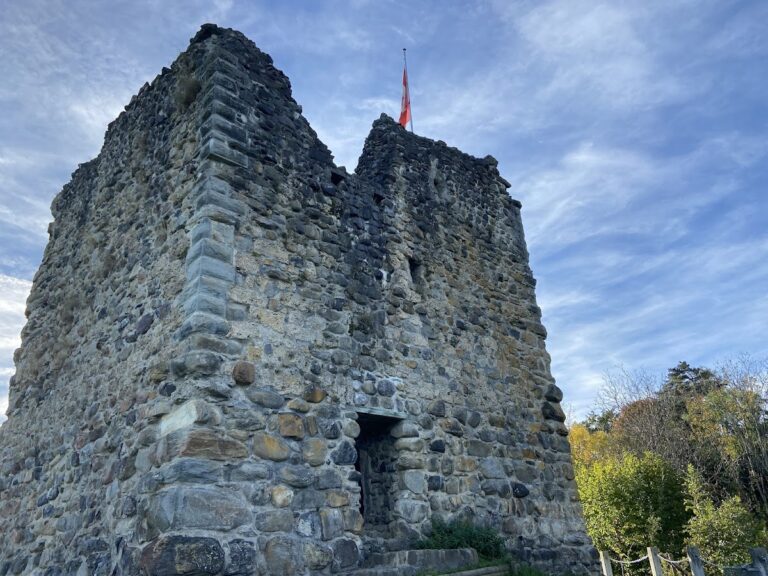
Anwil Castle Ruin is a medieval residential tower in Switzerland, near Kradolf-Schönenberg in the canton of Thurgau. The site is broadly dated to the twelfth century, although excavations in 1984 indicated that its first residential tower was built in the middle of the thirteenth century, leaving the precise construction date uncertain. A residential tower was a fortified medieval dwelling whose vertical form combined living quarters with defensive functions.
Origins and Changing Ownership
The castle was first mentioned in 1385. During the fourteenth century, it belonged to the von Röta family before being sold to the Lords of Sax in 1387. Its ownership changed several times in the following centuries. In 1463, the castle was sold to the Knights of Helmsdorf, and it continued to pass between owners until the seventeenth century.
Destruction and Decline
In 1405, Appenzellers, members of the historical political community of Appenzell in northeastern Switzerland, plundered and destroyed the estate. The castle was mentioned again in 1440, showing that the site remained part of the historical record after the attack. It later ceased to be inhabited and gradually fell into decay.
Investigation and Maintenance
Archaeological investigation and restoration took place in 1984, 2005, and 2016. Ground-penetrating radar, a non-invasive method that uses radar signals to detect buried walls and foundations, provided new information about buildings around the tower. The Ruins Cooperative of Kradolf-Schönenberg currently owns and maintains the site.
Remains
Residential Tower and Surrounding Development
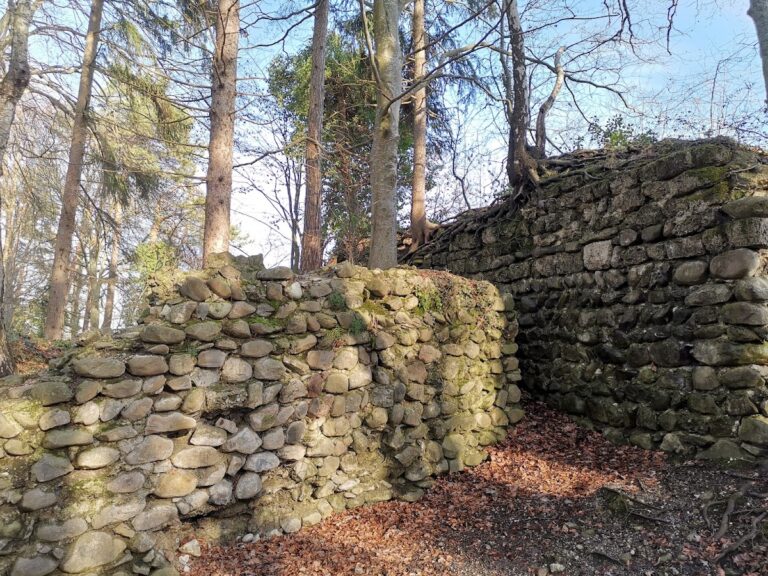
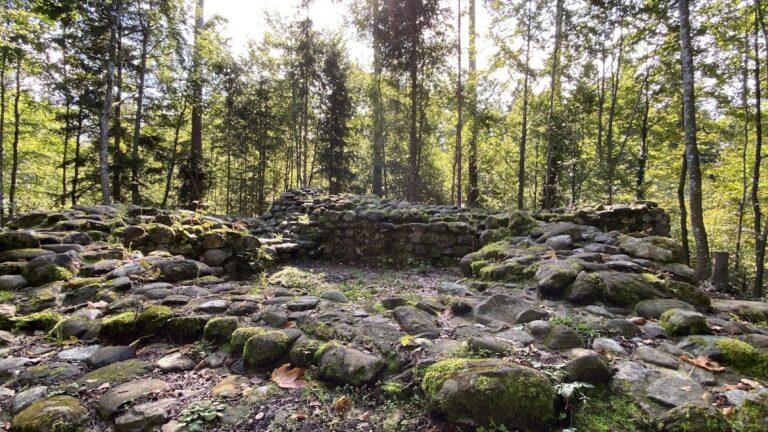
The ruin stands on a hill near Kradolf-Schönenberg. Its principal structure was a two- or three-storey residential tower containing a cistern, a constructed tank for collecting or storing water. The tower survives in ruined form. Archaeological investigations have also identified development around it, while ground-penetrating radar has revealed further information about buried buildings associated with the complex.