Altenklingen Castle: A Late-Renaissance Family Castle in Switzerland


Site at a Glance
- Rating
- 5
- Popularity
- Very Low
- Country
- Switzerland
- Primary era
- Early Modern
- External website
- Open
- Eras represented
- Medieval, Early Modern
- Civilizations
- Holy Roman Empire, Swiss
- Site type
- Domestic
- Remains
- Castle
On this page16 sections
History
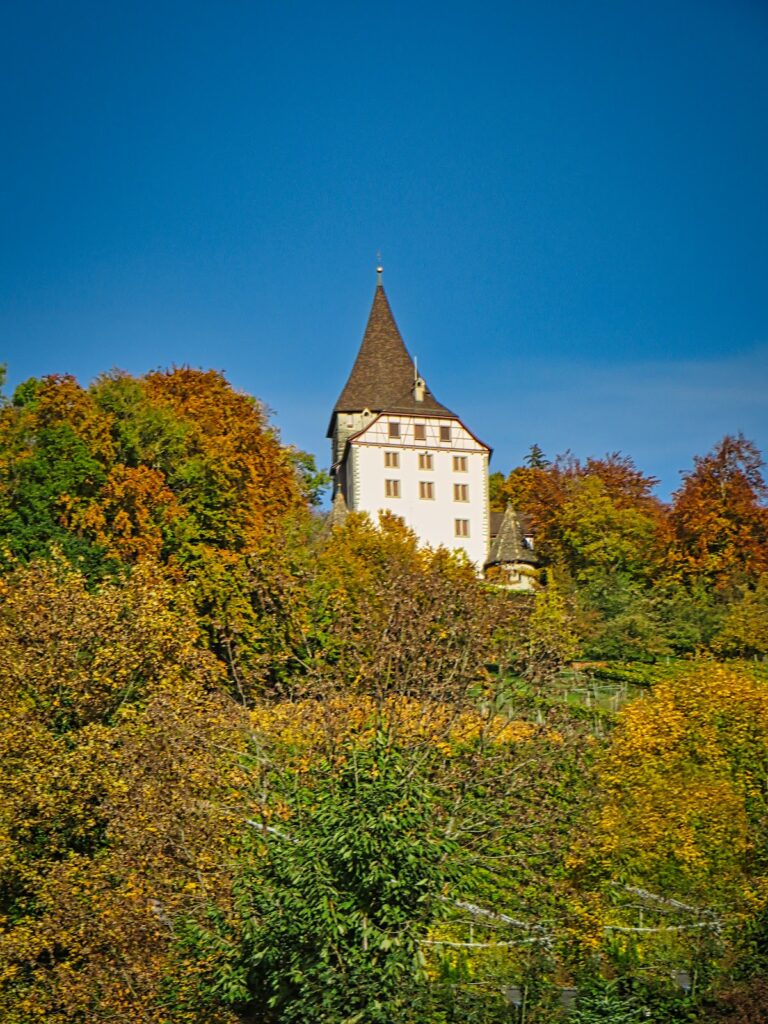
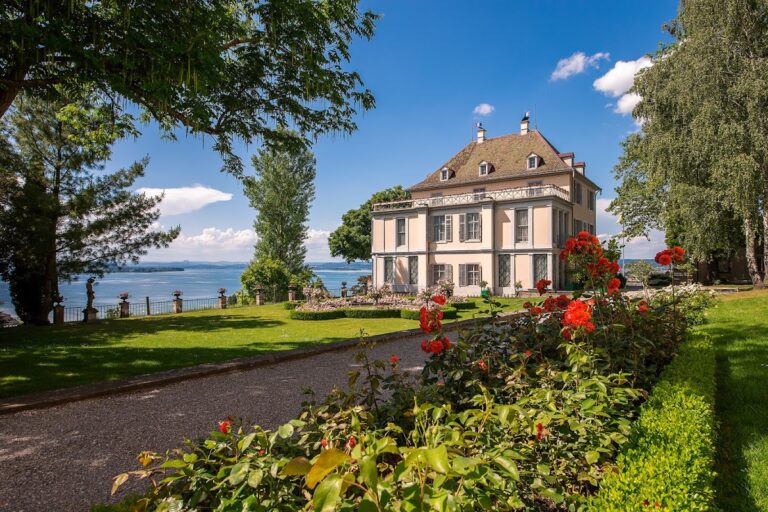
Altenklingen Castle is a late-Renaissance castle in Switzerland, in the municipality of Wigoltingen in the canton of Thurgau. The present complex was built in the 1580s for Leonhard Zollikofer, while its site preserves the history of the medieval Burg Klingen and the earlier Altenburg. The castle became the centre of the Lordship of Altenklingen, which was the largest non-ecclesiastical and non-sovereign judicial lordship in Thurgau.
Altenburg and the Lords of Klingen
The earliest predecessor, known as Altenburg, stood about 600 metres from the present castle on a spur south of the Chemebach. It developed from around 900 on the route linking the Thur Valley with Constance and was the first castle complex north of Märstetten. The Lords of Klingen are believed to have commissioned it.
From around 930, probably in response to the Hungarian invasions, Altenburg acquired a ditch, a gate complex, a ring wall, and a wall-walk, a passage running along the top of a defensive wall. A stone residential building and a tower followed between 950 and 1050. Because the tower stood above a ravine and developed structural problems, it had to be rebuilt in the eleventh century.
From the eleventh century until 1396, the Lords of Klingen exercised low jurisdiction in Märstetten and Illhart. This was the authority to administer specified lower-level civil and judicial matters. They held jurisdiction over Wigoltingen from the Bishopric of Constance and also founded settlements and religious institutions, including Klingenzell, Feldbach monastery, Sion monastery, and Klingenzell Priory.
Burg Klingen and medieval ownership
Around 1200, the Lords of Klingen abandoned Altenburg and built Burg Klingen on a spur north of the Chemebach, approximately where the present castle stands. The new stronghold remained their residence until 1395. During the thirteenth century, members of the family served the Habsburgs, a major European ruling dynasty with extensive territories and influence in central Europe.
Walther von Klingen, known from 1240 to 1286, was a confidant of Count Rudolf, the future King Rudolf I of Habsburg. He was also a minnesinger, a medieval German-language courtly poet and singer, and a tournament knight. Eight of his compositions survive in the Codex Manesse, a medieval manuscript preserving the works and portraits of German-language courtly poets.
The Lords of Klingen died out in 1395 after several members were killed while fighting as knights alongside Leopold of Austria at the Battle of Sempach. Burg Klingen then passed through several noble families, including the Lords of Bussnang, the Lords of Enne, the Muntprat of Constance, and the Lords of Breitenlandenberg. The Lords of Enne acquired the castle through marriage and defended it for fourteen days in 1407 against attackers from Appenzell and citizens of St. Gall during the Appenzell Wars.
The Zollikofer rebuilding
After Hans Ulrich von Landenberg died in 1559, the castle passed to his sister Rosina, the wife of Eberhard Brümsi. Their son Berthold, who was judicial lord in Berg, sold it in 1585 for 25,633 guilders to Leonhard Zollikofer, a town judge, councillor, and treasurer of St. Gall.
Zollikofer received a landholding charter from the Eight Old Swiss Cantons. It granted him the rights and privileges of the Thurgau nobility, including low jurisdiction and membership in the judicial-lord estate. In the 1580s, he demolished the medieval castle and commissioned Mathäus Höbel of Kempten to construct the late-Renaissance building that survives today.
In 1586, Zollikofer established the castle and lordship as a fideicommiss, a legally restricted family trust intended to keep an estate intact within a designated lineage. The arrangement benefited the four sons of his deceased elder brother Laurenz and the six sons of his second brother Georg. These nephews had contributed 22,000 guilders towards enlarging the lordship and were named co-founders.
Family estate and modern interpretation
The Lordship of Altenklingen was dissolved in 1798 during the political liberation of Thurgau, but the fideicommiss and castle estate continued. The Zollikofer family, later known as Zollikofer von Altenklingen, retained ownership into the twenty-first century. By 2023, a family council administered the estate.
Rather than serving as an ordinary residence, the castle was used by the Zollikofer family for representation, receptions, and gatherings. It has also functioned as a family museum since 1864. Excavations at Altenburg in 1910 and 2014 to 2015 examined the earlier fortification, while a building survey in 2021 identified remains of Burg Klingen beneath or within the present castle. The survey clarified that the medieval stronghold occupied largely the same location. The archive of the former Lordship of Altenklingen is held by the Thurgau State Archives.
Altenklingen also has an association with Saint Wiborada of Klingen, a tenth-century Christian saint linked with St. Gall who was canonized in 1047 and is venerated as the patron saint of libraries. Archaeologist Iris Hutter has suggested that Altenburg may have been the place where Wiborada grew up. The sixteenth-century chapel at Altenklingen was dedicated to her, and her statue remains there. Altenklingen Castle is protected as a Swiss cultural property of national significance.
Remains
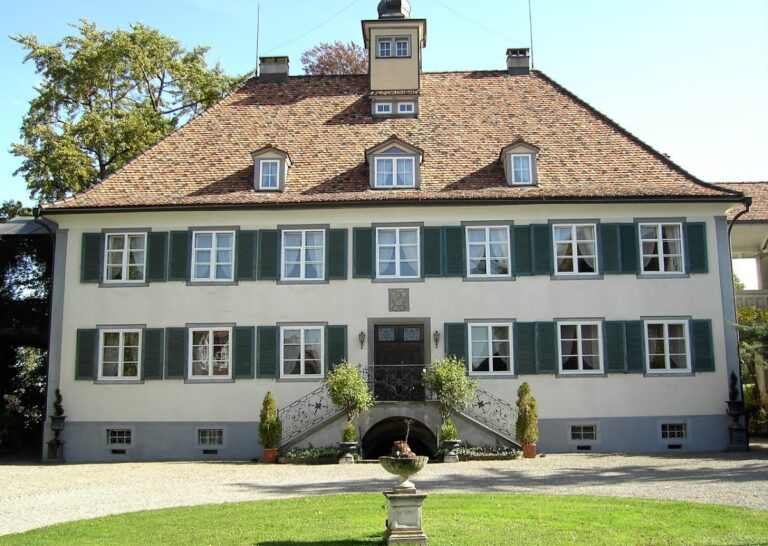
The surviving estate combines the late-Renaissance castle with archaeological remains of two medieval strongholds. Altenburg occupied a spur south of the Chemebach, while Burg Klingen stood on a spur to the north, at approximately the position of the present castle. The current complex consists of the three-storey Great Castle, or north wing, the smaller south wing set at right angles to it, and the chapel dedicated to Saint Wiborada.
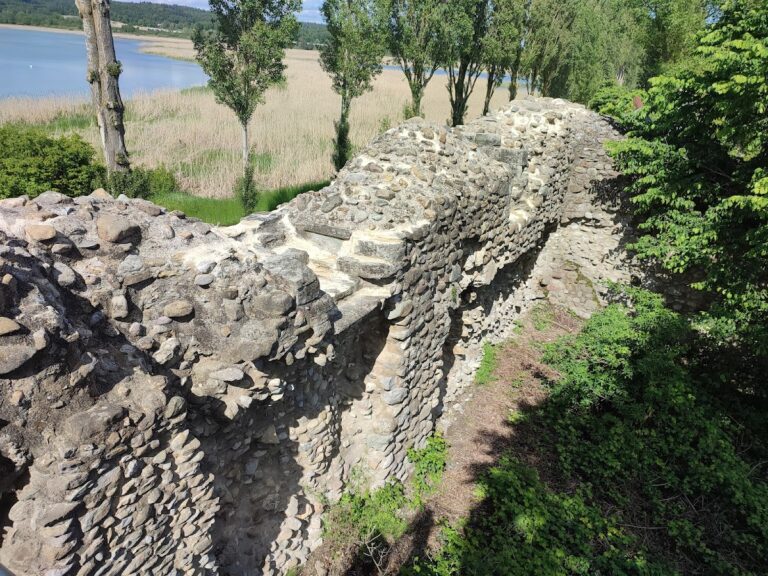
Altenburg archaeological remains
Fortifications and water supply
Altenburg was protected by a ditch, gate complex, ring wall, and wall-walk. The wall-walk construction is considered unusually early, since it had not previously been identified before the year 1000. A stone residential building and tower formed part of the later medieval occupation, with the tower rebuilt in the eleventh century because of structural problems caused by its position above a ravine.
Castle chapel
Excavations revealed a stone sacred building, probably a castle chapel, richly decorated with painted interiors. Its remains belong among the earliest examples of their kind in the region and possibly in the East Frankish Kingdom. Comparable richness in castle paintings from the period between 900 and 1200 is not known. A fifty-metre-deep well was also found at Altenburg.
Remains of Burg Klingen
Medieval castle fabric
The remains of Burg Klingen were located in 2021 at three points beneath or within the present castle. They include the east wall of the remise and the west wall of the cellar. These surviving sections connect the late-Renaissance building with the medieval castle that occupied the site before Zollikofer’s rebuilding.
Late-Renaissance castle
Wings, entrance, and courtyard
The main building is the three-storey Great Castle, or north wing, which contains thirteen rooms. The smaller castle forms the south wing and stands at right angles to it. A bridge leads to the gate building of the Small Castle and continues into the courtyard. The Great Castle portal is framed by a Renaissance fresco and crowned by a Zollikofer and Klingen alliance coat of arms.
Defensive features and water storage
The former enclosing wall and its corner turrets gave the complex a fortified appearance, although both were demolished in the nineteenth century. The surrounding ditch survived. A cistern, a structure for collecting and storing water, was bored largely into the rock and reached roughly twenty metres in depth before being filled in during the nineteenth century.
Interior rooms and furnishings
Much of the historic interior furnishing was lost during a nineteenth-century restoration. The furnishings now present, including stoves, furniture, paintings, and books, were assembled over the preceding four centuries. Rooms representing different periods include the Ancestors’ Hall, the Schaffhausen Room, the Reutter Room, and the Chapel Room. Broad landings on each floor of the stair hall provide access to the various halls and rooms.
Architectural model and chapel
A wooden model made by Mathäus Höbel survives as an illustration of the intended design and as a guide to construction. Architectural models of this kind are otherwise documented in Switzerland only from the eighteenth century onward. The castle chapel contains the statue of Saint Wiborada, continuing the dedication associated with the Altenklingen estate since the sixteenth century.
Nearby sites