Ancón Necropolis: A Pre-Hispanic Cemetery in Peru
Site at a Glance
- Rating
- 5
- Popularity
- Very Low
- Country
- Peru
- Primary era
- Medieval
- Eras represented
- Stone Age, Iron Age, Classical, Medieval
- Civilizations
- Chavín, Inca, Nazca, Paracas, Wari
- Site type
- Burial
- Remains
- Necropolis
On this page8 sections
History
Ancón Necropolis is a pre-Hispanic cemetery and archaeological area in Ancón, Peru, shaped by successive Andean communities from the Lithic and preceramic periods through the Inca era. The oldest human occupation in the wider area dates to approximately 10,000 years ago, while the Lithic-period sequence is also placed around 8000 BC. The necropolis developed within a coastal landscape that supported fishing, shellfish collection, wild plants, hunting, and exchange.
Early coastal occupation
Ancón’s sheltered bay encouraged long-term settlement, while the seasonally green Lomas de Ancón supplied plants and game. The area also lay between the lower Chancay and Chillón valleys, creating opportunities for movement and exchange. Early sedentary communities did not initially depend on agriculture. Their way of life drew instead on marine resources, the lomas, and the products of nearby valleys.
The wider archaeological area includes evidence from the Lithic period, the earliest stage of human occupation in the Andes, before agriculture and pottery became established. Camps on the plains of Ancón and Piedras Gordas yielded bifacial projectile points of Paijan type. Around the Bay of Ancón, large shell middens, accumulations of discarded shells and other food remains, reflect settled fishing and shellfish collection. At Las Colinas, a preceramic occupation layer beneath Chavín remains extended the known antiquity of the area by several thousand years.
Funerary traditions and later periods
The cemetery contains funerary evidence associated with several cultural phases. These include Chavín and sub-Chavín traditions, Paracas, Nazca, Wari, Chancay, and Inca cultural elements. Wari burials developed local variations, while Chancay and Inca traditions represent a later phase in the history of the necropolis. Chavín was an influential early Andean religious and cultural tradition. Wari was a later state and cultural tradition whose influence extended across much of Peru before the rise of the Inca state.
Ancón may have served less as a large urban center than as a seasonal or transit settlement connecting communities in the Chancay, Pachacamac, Lima, Carabayllo, and Collique valleys. Evidence involving llamas, guinea pigs, seals, and dried fish supports an interpretation based on exchange between coastal and inland communities. Another interpretation connects the large population represented by the burials with a river that is now dry, identified by Iriarte Brenner and other researchers.
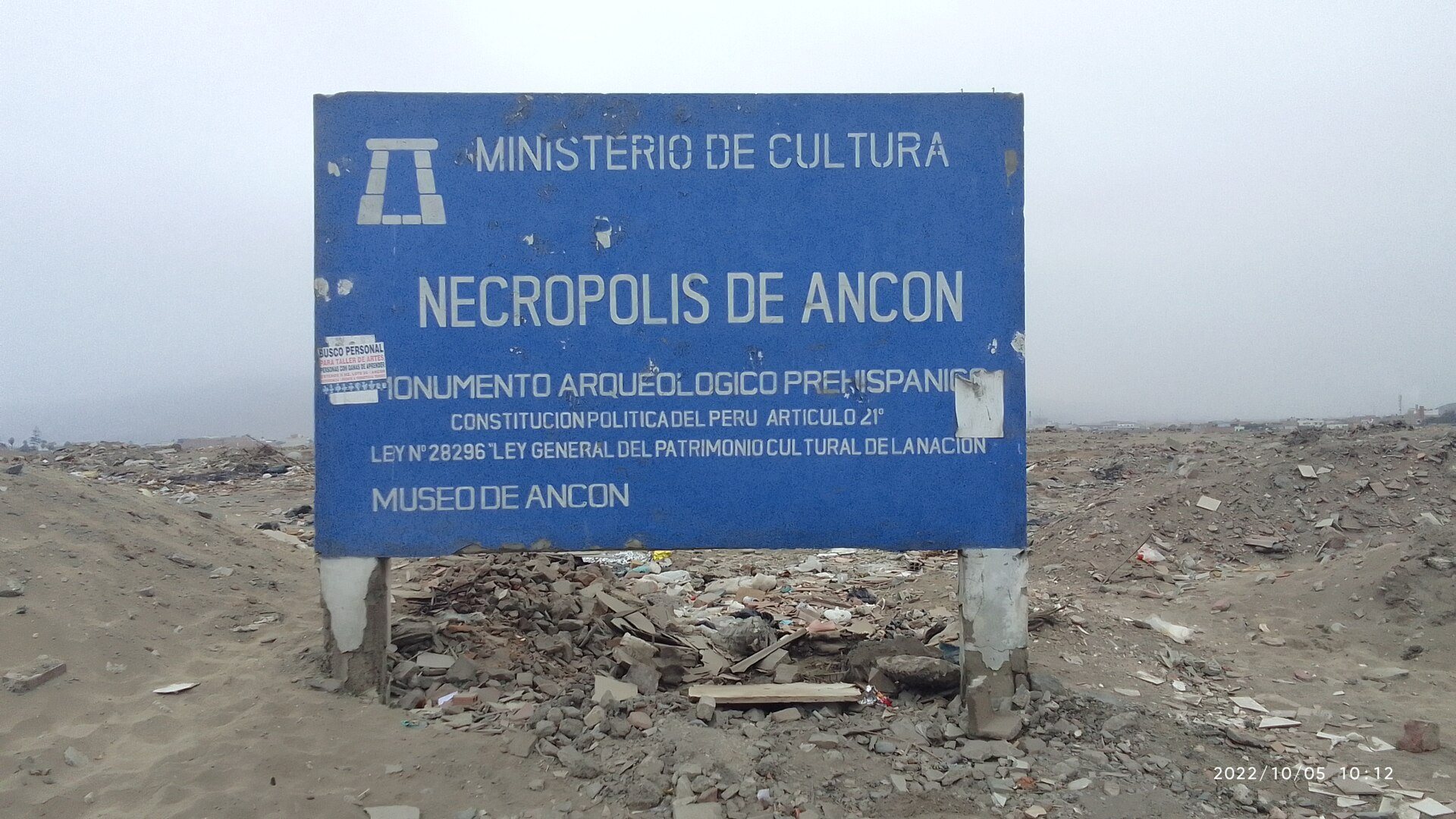
The area remained occupied through the Inca period, the final major pre-Hispanic imperial period in the central Andes, and continued into Peru’s colonial and republican periods. The necropolis, also known as the Miramar necropolis, covers more than 10,000 square metres north of the Bay of Ancón, about 42 to 43 kilometres north of Lima. It forms part of a publicly administered archaeological heritage area owned by the Peruvian state.
Archaeological investigations
Large ancient tombs came to light during construction of the Ancón to Pasamayo railway in 1870. Systematic investigation began in the 1870s, when Wilhelm Reiss and Alphons Stübel excavated in and around Miramar. Their three-volume study, published in Berlin between 1880 and 1887, brought together field records, drawings, lithographs, and a map of the excavated area. Their work is regarded by some as a precursor of scientific archaeology in Peru.
Charles Wiener excavated burials at Miramar in 1876, and the resulting collection became part of the Musée Ethnographique in Paris. In 1891, George Amos Dorsey excavated approximately 127 tombs; that collection is preserved at the Field Museum of Natural History in Chicago. Max Uhle worked at Ancón in 1904, extending the earlier investigations, excavating additional funerary contexts, and identifying the Las Colinas shell midden. Paul Berthon, Aleš Hrdlička, Gordon Willey, and Marshall T. Newman later contributed to twentieth-century investigations.
Urban development at Miramar prompted rescue investigations directed by Julio C. Tello between 1945 and 1950. Excavations across an area of approximately 2,000 by 200 metres exposed 1,570 funerary contexts and 14,055 objects. Tello also excavated 264 contexts at Las Colinas, which Rebeca Carrión Cachot later analyzed and described in 1951. Jorge C. Muelle’s work at Las Colinas in 1959 identified a preceramic layer below Chavín remains, extending the known antiquity of Ancón. Federico Kauffmann Doig continued work at Miramar through the 1992 “Tombs of Ancón” project, and Peter Kaulicke published a study of Ancón funerary contexts in 1997.
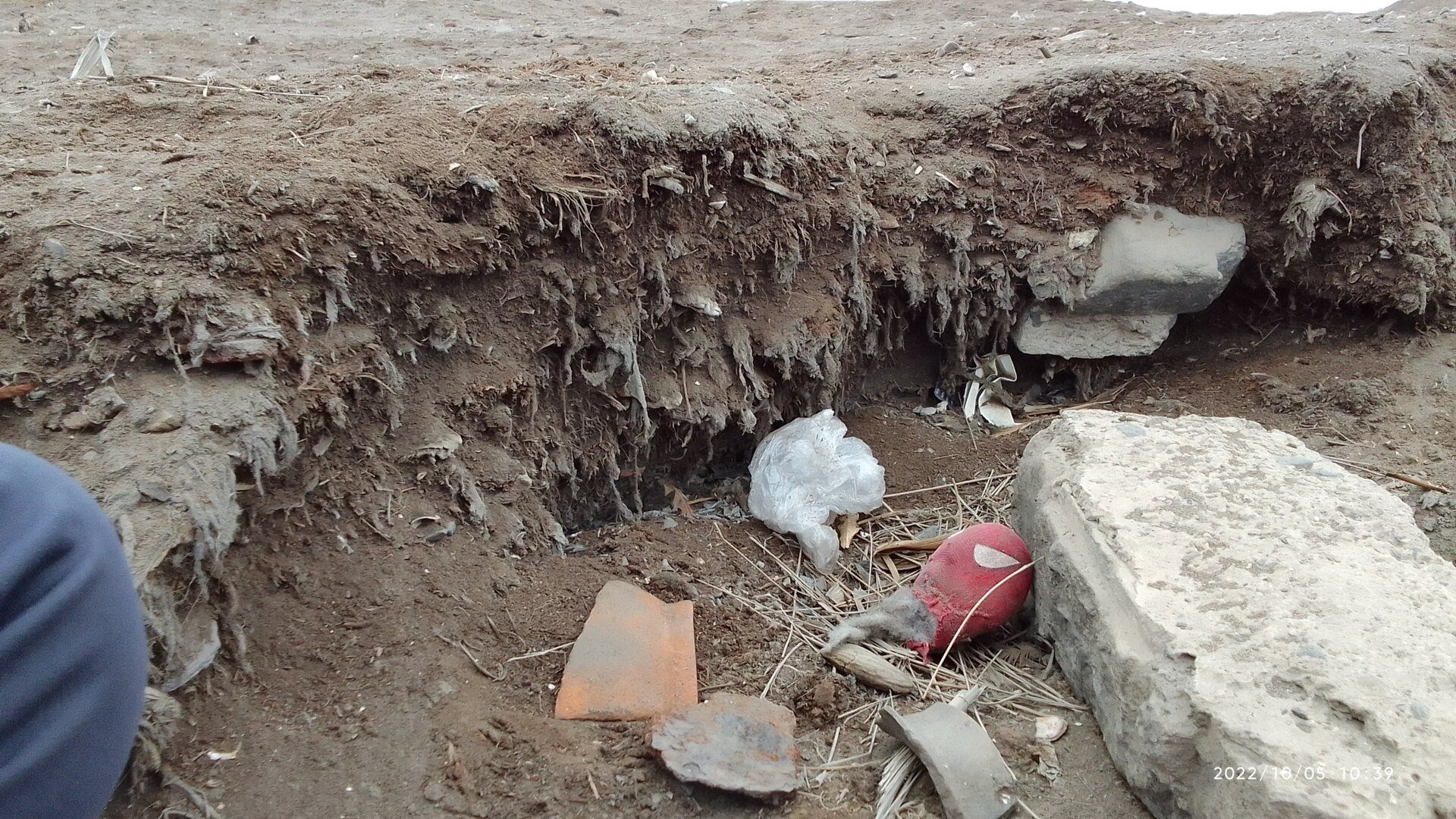
The archaeological area remains important for research because thousands of tombs remain underground and unexplored. Much of the wider area has been affected by rural construction. The Ancón Site Museum, opened in 1993, houses more than 2,500 excavated objects, including pottery, textiles, and mummies, and maintains a complete digital inventory of cultural property.
Remains
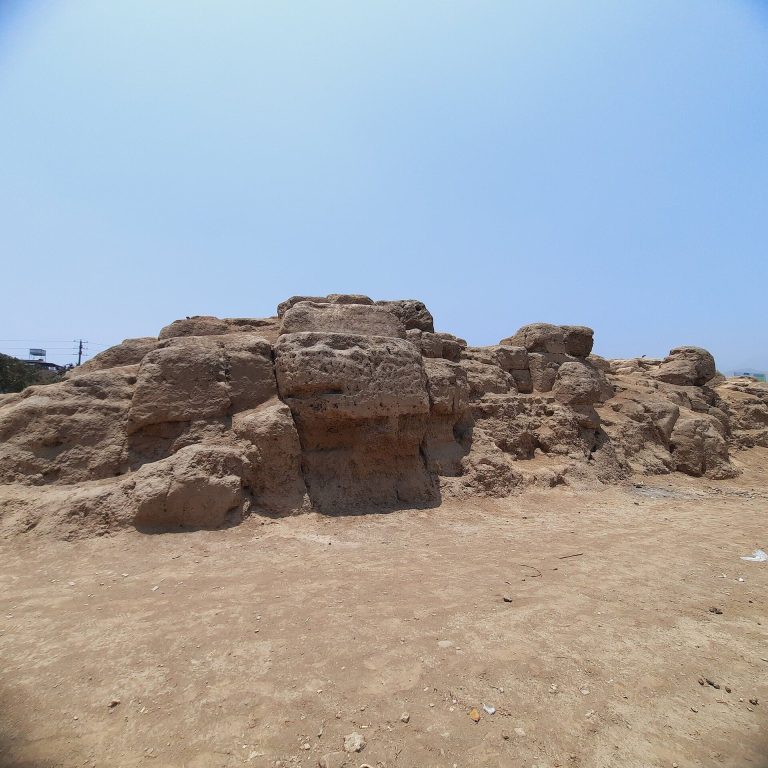
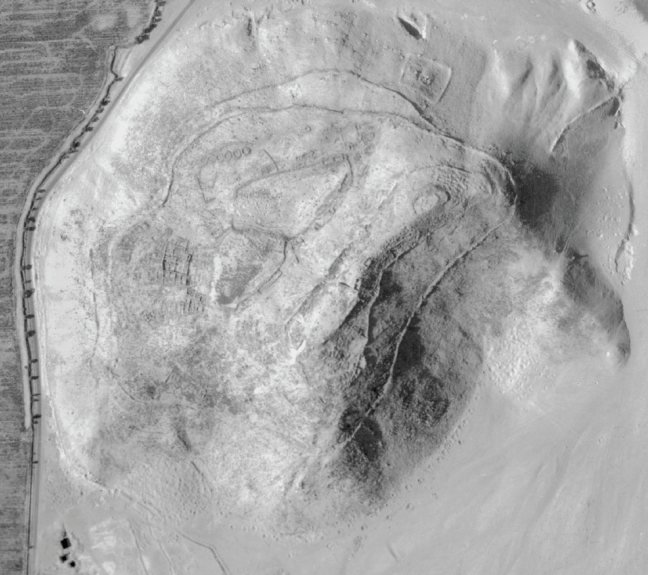
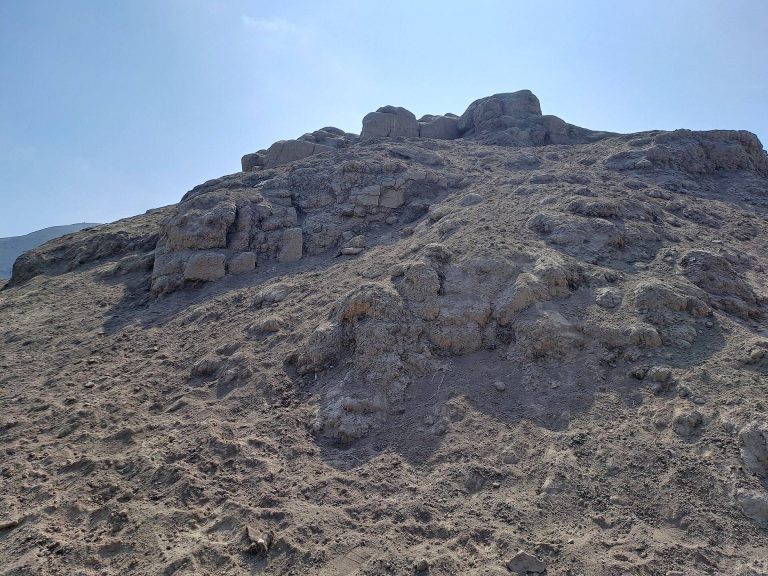
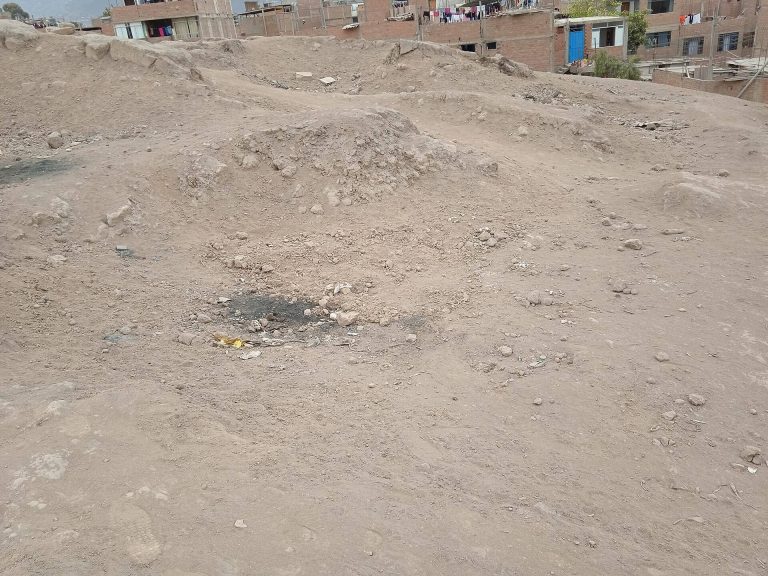
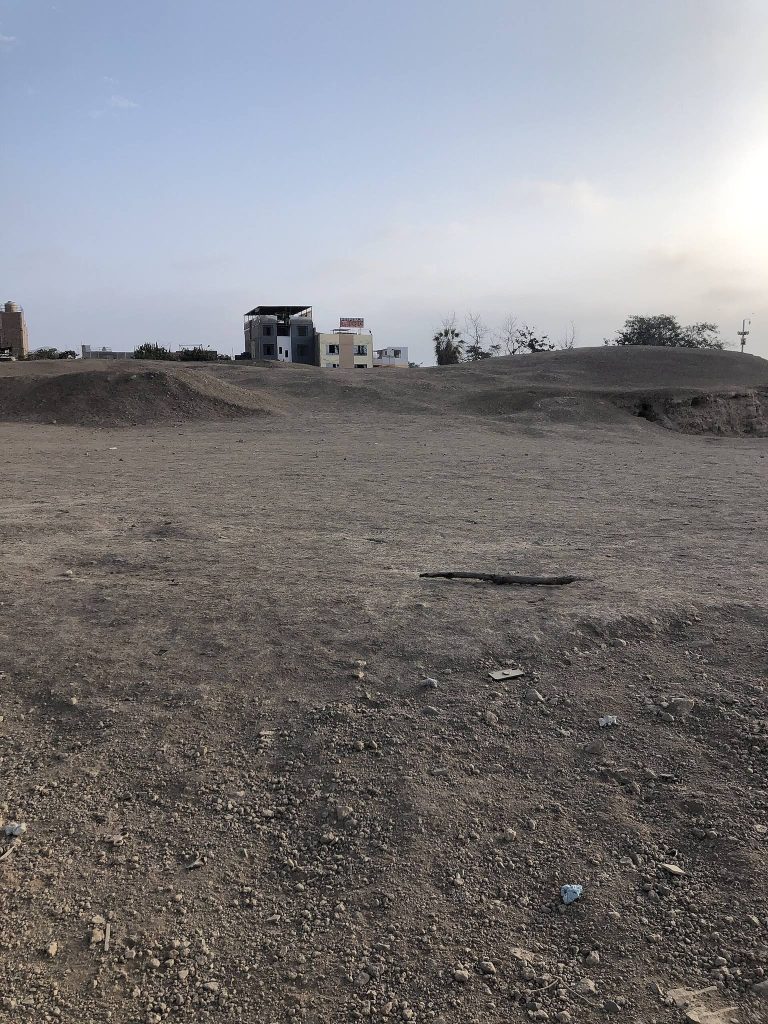
The Ancón archaeological area extends west of the Pan-American Highway and north of the Bay of Ancón. Its physical remains include the Miramar necropolis, the Las Colinas and El Tanque midden and refuse areas, three walls in the western sector, the Air Base area, Cerro Pasamayo, and Lithic-period camps on the plains of Ancón and Piedras Gordas. The funerary complex contains thousands of burial units, many still underground. Arid conditions helped preserve human remains, textiles, ceramics, and other materials placed with the dead.
Miramar funerary complex
Miramar, identified with Ancón II, is a large cemetery containing burial contexts from several Andean cultural phases. Excavated graves yielded mummies, pottery, textiles, decorated textile-wrapped burials, ritual objects, and everyday implements. The surviving material reflects changing funerary practices from Chavín and sub-Chavín traditions through Paracas, Nazca, Wari, Chancay, and Inca phases.
The associated collections include utensils, jars, large storage vessels, and small dishes recovered through excavation and rescue work at Miramar and related areas of Ancón. The dry coastal environment contributed to the survival of organic materials, including human remains and textiles, alongside ceramics and other funerary objects.
Las Colinas and El Tanque
Las Colinas contains a large shell midden, a food refuse deposit built up through prolonged shellfish consumption, together with a preceramic occupation layer beneath Chavín remains. Excavations also exposed funerary contexts and a refuse deposit associated with early ceramic styles. El Tanque forms part of the wider midden and refuse area identified as Ancón I.
Western walls and surrounding archaeological areas
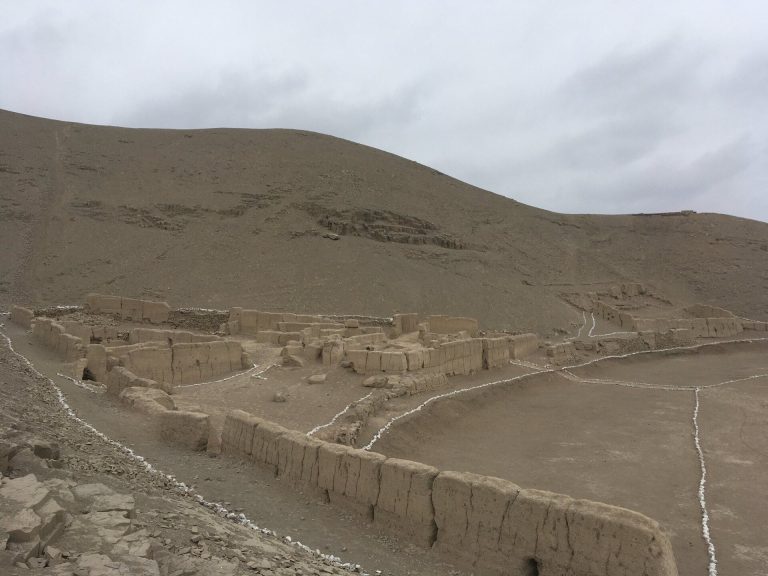
Three walls stand in the western sector of the archaeological area. Max Uhle identified them as a feature he called “Fortaleza.” Their relationship to the other areas of Ancón forms part of the wider archaeological setting, which also includes the Air Base area, Cerro Pasamayo, and the plains of Ancón and Piedras Gordas.
The Lithic-period camps on the plains yielded bifacial Paijan-type projectile points. Around the bay, shell middens preserve evidence of coastal subsistence and sedentary fishing. The settlement houses were made from totora reeds and other canes, materials also used for boats. Excavated funerary remains, refuse deposits, shell accumulations, and early occupation layers together show how the cemetery formed part of a larger coastal landscape rather than an isolated burial ground.