Winterville Site: A Plaquemine Mississippian Ceremonial Center
Site at a Glance
- Rating
- 4.2
- Popularity
- Low
- Country
- United States
- Primary era
- Medieval
- External website
- Open
- Eras represented
- Medieval
- Civilizations
- Unclassified
- Site type
- Religious
- Remains
- Sanctuary
On this page11 sections
History
The Winterville Site is a prehistoric ceremonial center near Greenville, Mississippi, in the United States, built by people of the Plaquemine Mississippian culture between about 1200 and 1250. The site is the type site for the Winterville Phase, an archaeological period in the Lower Yazoo Basin dating approximately from 1200 to 1400. Its earthworks expressed a religious and political system through sacred buildings, ceremonies, and organized labor.
The Winterville Phase
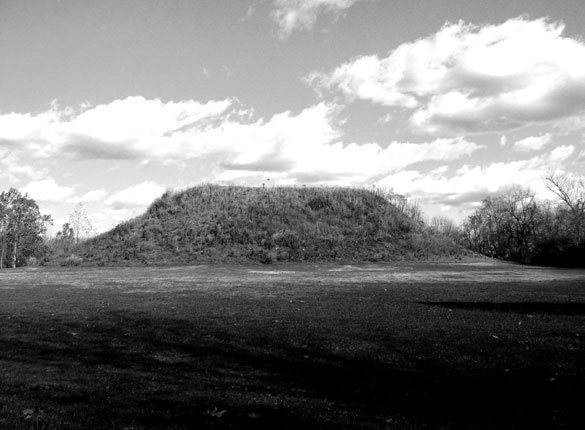
Winterville originally contained at least twenty-three platform mounds arranged around several plazas. These were deliberately constructed earthen monuments with flattened summits, while the plazas were cleared and prepared open spaces used in the ceremonial center. Most people lived on scattered family farms across the Yazoo and Mississippi River Delta. Only some high-ranking officials appear to have lived at the mound complex, which functioned mainly for ceremonies rather than as a large permanent settlement.
The organization of Winterville has been compared with cultural patterns later associated with the Natchez, an Indigenous people of the Lower Mississippi Valley whose society had hereditary ranks passed through the female line. Such a leadership structure could organize the civilian labor required to build the mounds. Archaeological evidence points to cultural continuities between the people of Winterville and the later Natchez, although the Winterville center itself did not support a large residential population.
Fire, decline, and abandonment
A major fire in the late fourteenth century destroyed the original building on the Temple Mound. The cause is unknown. Occupation continued after the fire, but no additional mounds were built or maintained. The population declined as settlements and mound centers farther south in the lower Yazoo Basin grew, and the site appears to have been completely abandoned by about AD 1450.
Excavation and preservation
The first modern excavations took place in the 1940s through work by the National Park Service and Harvard University’s Lower Mississippi Survey. Jeffrey P. Brain directed further excavations in 1967, and his report, Winterville: Late Prehistoric Culture Contact in the Lower Mississippi Valley, was published in 1989.
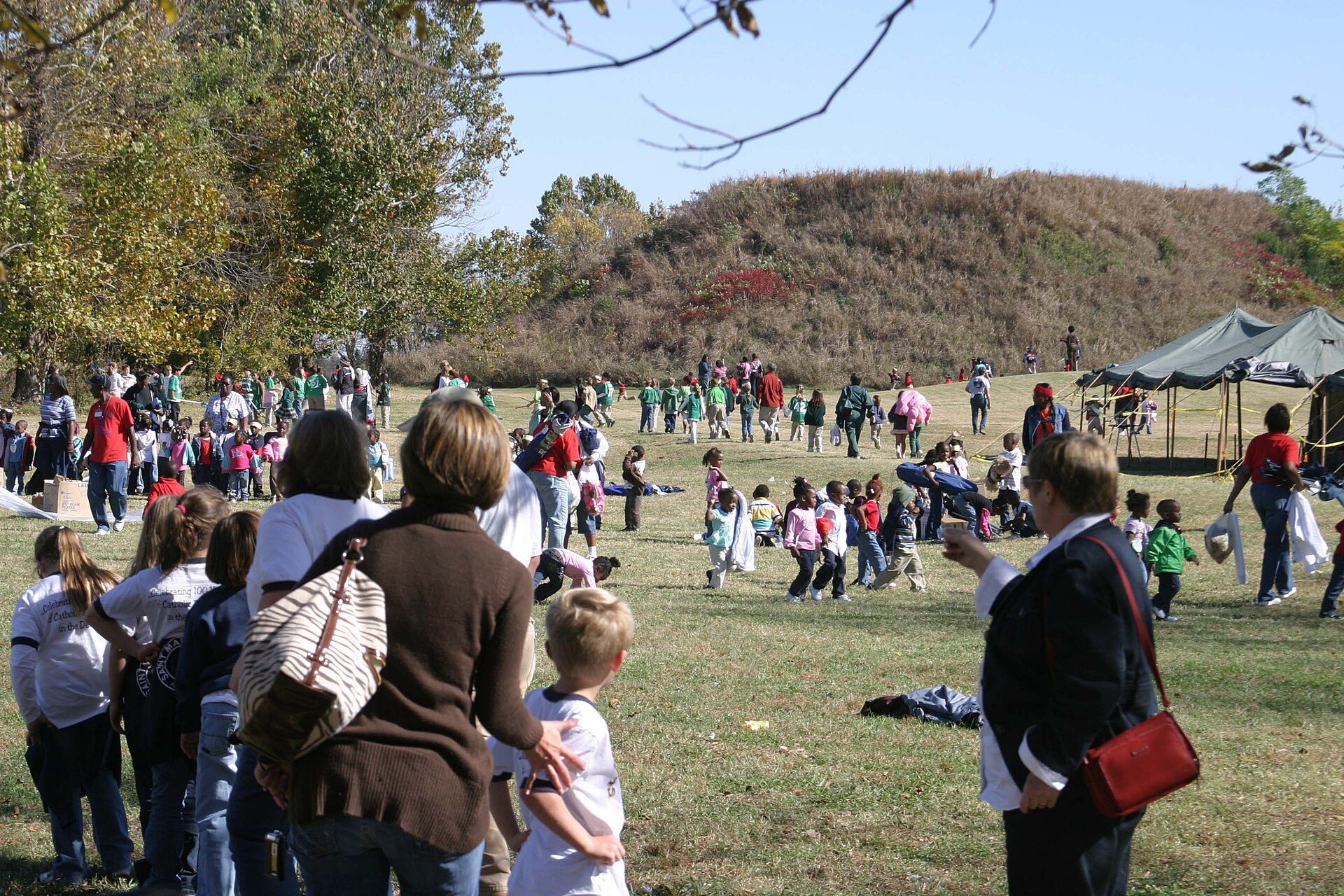
Winterville Mounds became a Mississippi state park in March 1969. The site entered the U.S. National Register of Historic Places in 1973, became a Mississippi Landmark in 1986, and was designated a U.S. National Historic Landmark in 1993. It is also included on the Mississippi Mound Trail. In 2015, Mississippi authorized a preservation project to restore the mounds toward their pre-Columbian condition, remove trees and brush, and create walking trails. Long-term planning concentrated on the twelve largest mounds and involved the Mississippi Department of Archives and History and the University of Mississippi’s Center for Archaeological Research.
Remains
The surviving site consists of truncated, platform-shaped earthwork mounds with built substructures, arranged around large plazas that were filled, smoothed, and cleared. The complex contains remains of sacred structures and ceremonial spaces, along with burials and other structural remains. Farming, highway construction, erosion, and human activity have damaged or removed some earthworks, including mounds outside the present park boundaries.
Earthworks and ceremonial spaces
Temple Mound
The Temple Mound is the largest earthwork at Winterville, rising approximately 55 feet, or 17 meters, high. A building once stood on its summit and was destroyed in the late-fourteenth-century fire. The mound’s surviving form preserves the foundation of a raised ceremonial setting, while the archaeological remains connected with the structure help identify the religious character of the center.
Other mounds and plazas
The other platform mounds were built with underlying earthen foundations and stood around several large plazas. These open spaces were filled, leveled, and cleared for ceremonial use. Together, the mounds and plazas formed a planned center whose principal physical remains relate to sacred activity and political organization rather than to a densely occupied town.
Pottery and archaeological finds
Local pottery
Ceramic and stone artifacts recovered at Winterville include pottery made by building up strips of clay and smoothing them without a potter’s wheel. Makers added temper, material used to improve clay during working and firing, including ground mussel shell, grit, grog, or crushed fired clay, and angular pieces of clay. Vessel surfaces range from roughly finished to finely polished. Forms include shallow bowls, plates, beakers, and jars, some fitted with animal-effigy handles. Decoration ranges from plain surfaces to incised designs associated with the Southeastern Ceremonial Complex, a shared tradition of religious imagery and ritual art among several Mississippian societies.
Imported pottery and excavated materials
The assemblage also includes Addis Plain varieties known as Addis, Greenville, and Holly Bluff. Some examples were probably imported from other Mississippian societies, possibly Cahokia or communities influenced by Cahokia, the large ceremonial center near present-day St. Louis. Other imported vessels include Nodena Red and White and Walls Engraved pottery, characterized by distinctive red and white slips, thinner walls, and more finely finished surfaces. Their workmanship and foreign qualities may have increased their value. Ceramic and stone artifacts from the excavations are displayed in the Winterville Museum within the park.