Ancient Agora of Kos: A Greek Commercial and Civic Center
Site at a Glance
- Rating
- 4.3
- Popularity
- High
- Country
- Greece
- Primary era
- Classical
- Eras represented
- Classical
- Civilizations
- Ancient Greek, Roman
- Site type
- Civic
- Remains
- Forum
On this page8 sections
History
The Ancient Agora of Kos was a public marketplace and civic gathering place in central Kos, Greece. First established in the fourth century BC, it became a commercial and social center of the ancient city and an important part of the island’s economic life.
Early settlement and civic development
The area around the later Agora had a long history of settlement. People lived there during the Mycenaean period, the Late Bronze Age civilization of mainland Greece and the Aegean, and in the Geometric period, an early phase of Greek history in the Iron Age.
Kos became an important administrative center in 366 BC, prompting the construction of many public buildings. The Agora developed as part of this civic growth. Its shops, workshops, roads, and altars served both the city’s public life and its economy. The oldest buildings in the archaeological area date to 300–200 BC. During the third century BC, almond-colored limestone and greenish stone were used in construction and foundations, while marble remained uncommon. Marble became widely used in the second century BC, when large building complexes gave the city a more monumental appearance.
Earthquakes and rebuilding
An earthquake in AD 142, during the reign of Roman emperor Antoninus Pius (AD 138–161), destroyed many buildings, and some were never rebuilt. Reconstruction reshaped the city: the Agora and its surrounding blocks were rebuilt, and builders used cast masonry, made by pouring material into place. Baths, a theater, and a stadium were also constructed.
A Christian basilica, a large rectangular building used for worship, had been built in the Agora around AD 400. The earthquake of AD 469, during the reign of Roman emperor Leo I (AD 457–474), marked the end of the ancient city and the transition to early Christian and Byzantine building.
Excavation and restoration
Archaeological excavations began during the city’s rebuilding after the devastating earthquake of 1933. Italian archaeologists worked at the site from 1935 to 1942. Greek archaeologists continued the work after the Second World War, alongside restoration of the remains.
Remains
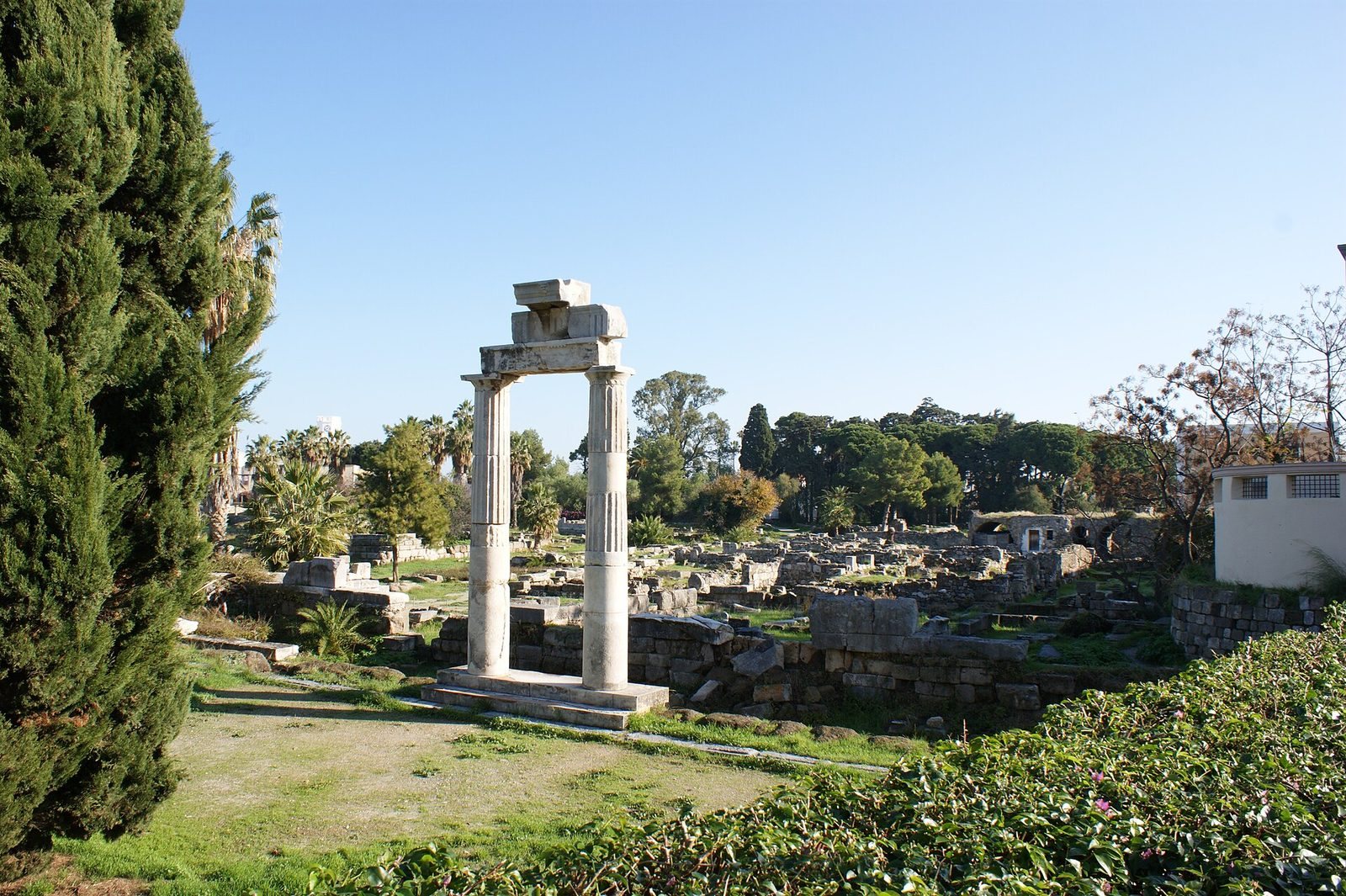
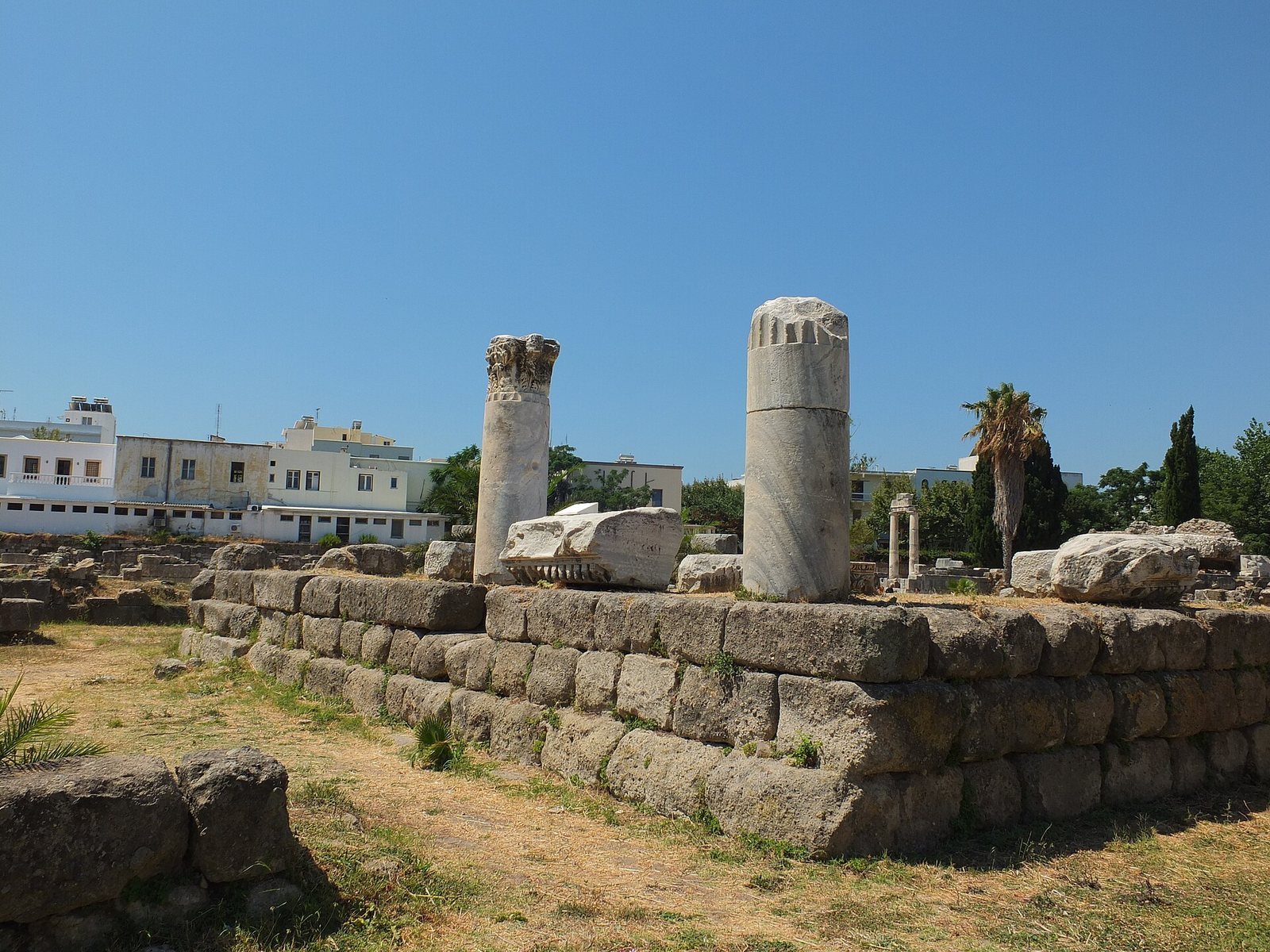
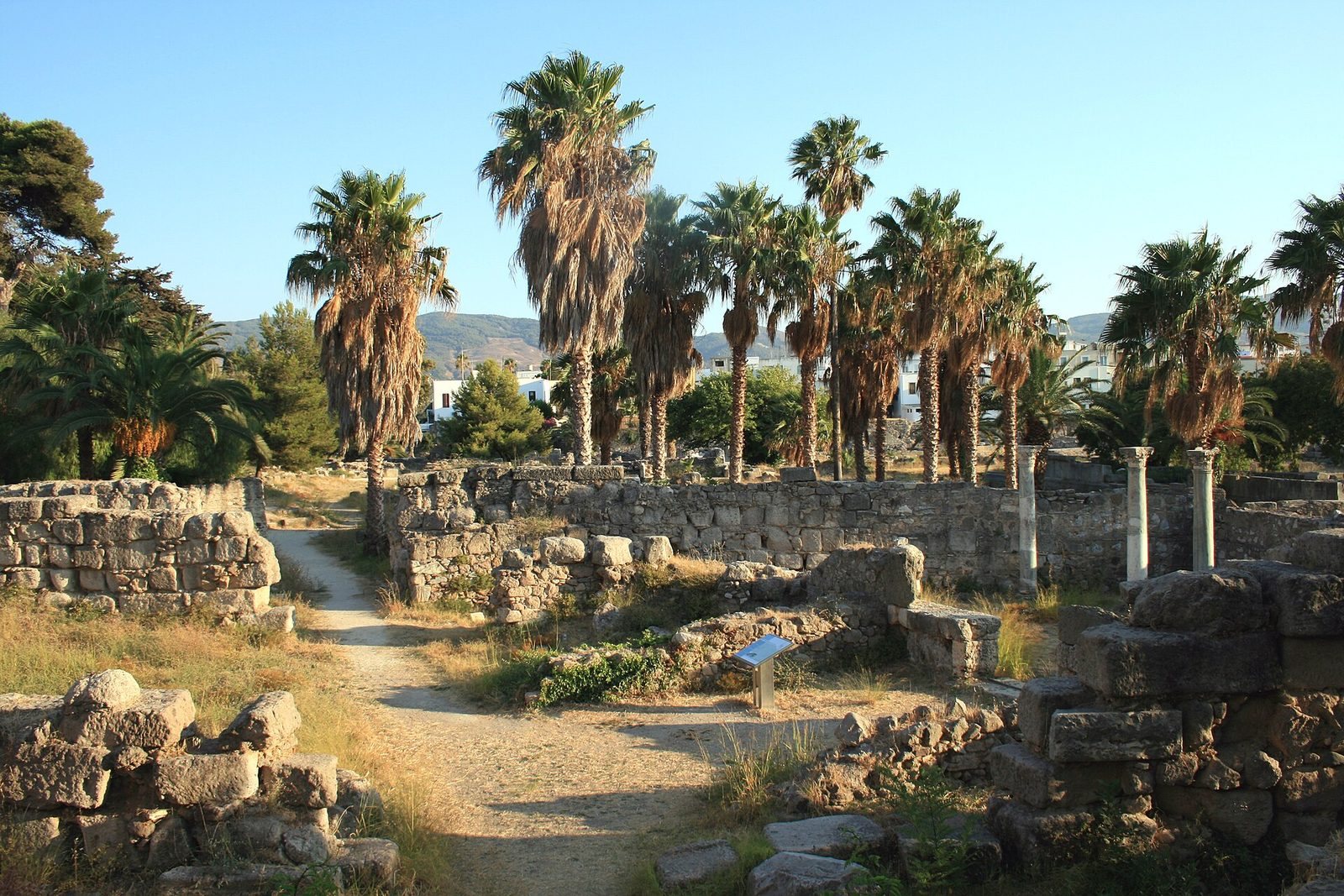
The Agora occupies an approximately triangular archaeological area, with sides about 200–300 meters long, surrounded by the modern city center. Its principal structures were arranged around a large central courtyard. The wider harbor archaeological zone includes a visible area measuring about 152 by 82 meters.
Courtyard, porticoes, and walls
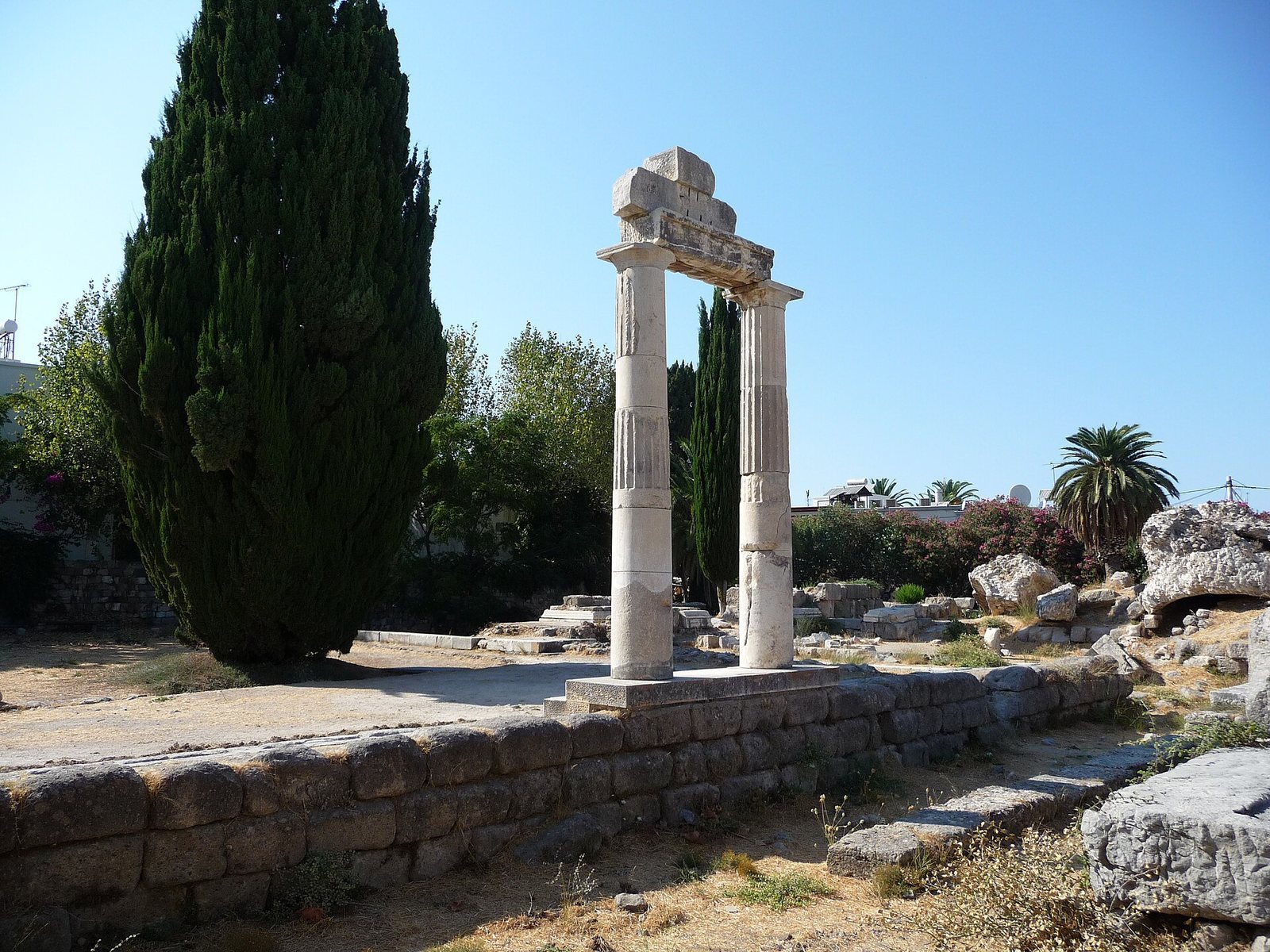
Three covered porticoes, or walkways typically lined with columns, bordered the central courtyard to the east, west, and north. The northern walkway connected the Agora with the city walls, while shops in the eastern and western walkways served residents’ daily needs. The Agora lay along the northern side of a city wall built around 300 BC and had its own walls on the other three sides. The largest building measured about 300 meters in length, a dimension established through excavation on the southern side.
Surrounding city remains
The wider archaeological area includes sections of the city’s fortifications, part of the ancient harbor, baths, public and private buildings, and blocks containing house remains. Temples in the area were dedicated to Aphrodite Pandemos, an aspect of the goddess associated with the community, and to Heracles, the hero of Greek mythology. Excavations east of the Agora revealed part of the city’s street grid, with roads 4–6 meters wide and four blocks containing houses and shops. This organized layout is known as a Hippodamian plan, a street grid traditionally associated with the planner Hippodamus.
Mosaics, statue, and basilica
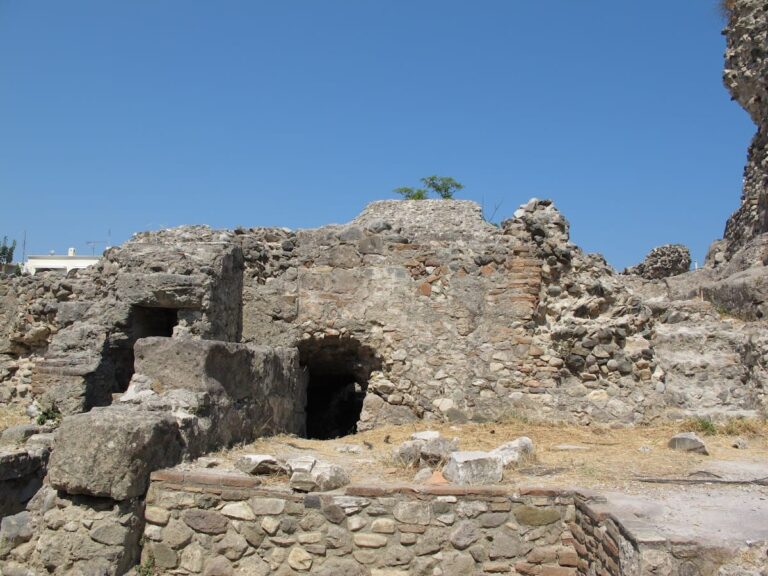
Fragments of mosaic floors survive from the site’s buildings. A statue of Hippocrates, the ancient Greek physician associated with the development of medical practice, was found at the Agora. Ruins of the early Christian basilica stand in the northeastern part of the archaeological area.