Anchin Abbey: A Medieval Benedictine Monastery in France
Site at a Glance
- Popularity
- Medium
- Country
- France
- Primary era
- Early Modern
- Eras represented
- Early Modern
- Civilizations
- French
- Site type
- Religious
- Remains
- Monastery
On this page17 sections
History
Anchin Abbey was a Roman Catholic Benedictine monastery founded in 1079 on an island near Pecquencourt, France. Its land had been donated in 1077 by Anselm II of Bouchain, Count of Ostrevent, and Gerard II, Bishop of Cambrai, granted the abbey the pastoral office and income associated with Cantin. Benedictines follow the Rule of Saint Benedict, a guide to communal monastic life.
Foundation and early community
Traditions connected the island with Gordaine, an eighth-century hermit and confessor said to have built a small church there and been buried before his body was transferred to Douai. He is sometimes treated as the abbey’s founder, and his feast is observed on October 16. Another foundation legend tells how Sohier, lord of Loos and Courcelles, and Gautier, lord of Montigny-en-Ostrevent, reconciled after dreaming of a white stag that led them to the island. The story places their decision to build there around 1076, before the abbey’s foundation in 1079. A further tale, claiming that a tournament of 300 knights marked the monastery’s inauguration in 1096, was invented in the seventeenth century.
Abbot Alard strengthened the community’s observance of the Benedictine rule. In 1085 he came with Prior Titubalde and Rodulphe, who helped establish that practice; Affligem Abbey adopted the rule in the same year. The abbey’s first church, dedicated to the Savior, was consecrated in 1086. In 1109, its fourth abbot, Geduin, raised Cantin to town status. Donations from successive lords gave Anchin and the nearby Abbey of Flines extensive estates there.
Growth, learning, and ecclesiastical standing
Anchin’s network included several priories, monastic houses governed by a prior and subordinate to an abbey. Aymeries was founded in 1088. Saint-Georges at Hesdin was given to Anchin as a chapel in 1092, established as a priory in 1096, and remained dependent on the abbey until 1789. Other dependencies included Saint-Georges in Pas-de-Calais, from 1535 to 1789, and Évin-Malmaison, from 1658 until sometime in the 1680s. Saint-Magulphe, also called Machut, in Wales, dated to around 1000; Saint-Sulpice at Doullens and Saint-Martin at Labourse were also among the abbey’s dependent houses.
From the eleventh through the thirteenth centuries, Anchin was an important center of learning and culture. Under Abbot Gossuin, it developed a workshop for manuscript illumination that produced many manuscripts and charters. In 1161, Gossuin and the monks granted an annual payment to the monks of Notre-Dame de Vaucelles; five scribes joined other monks in signing the charter. Anchin also acquired land and dues through transfers from Cysoing in 1160 and 1170.
A new abbey church was begun in 1182, when Baldwin V, Count of Hainaut, laid its foundation stone. It was consecrated in 1250. Anchin’s abbots also received extensive privileges from the papacy. Earlier grants to Abbot Alvise secured rights associated with bishops as well as substantial ecclesiastical income. In 1219, Pope Honorius III gave Abbot Simon a mitre, ceremonial headwear worn by some abbots, and a ring, and authorized him and his successors to bless the altar and church furnishings.
The college and the abbey’s end
Anchin sponsored the College of Anchin, founded in 1562 and opened in 1568 as part of the University of Douai. Members of the Catholic Society of Jesus, known as Jesuits, directed its teaching until their expulsion in 1764. They claimed the college was independent of the abbey in 1698, but a 1751 judgment by the Parliament of Flanders, a regional court under the French monarchy, ruled that it belonged to Anchin.
Before its suppression, the abbey’s yearly income exceeded 300,000 livres, a French currency used before decimalization. Its final commendatory abbot, Henry Benedict Stuart, Cardinal of York, received 93,000 livres annually. A commendatory abbot held an abbey’s title and revenues without necessarily living as head of its monastic community. During the French Revolution, Anchin was suppressed and declared national property by decree on October 28, 1790. It was sold to François-Joseph Tassart of Douai on March 27, 1792, for 47,700 livres, and demolished that year. The surviving remains received French historic-monument protection in 1990.
Remains
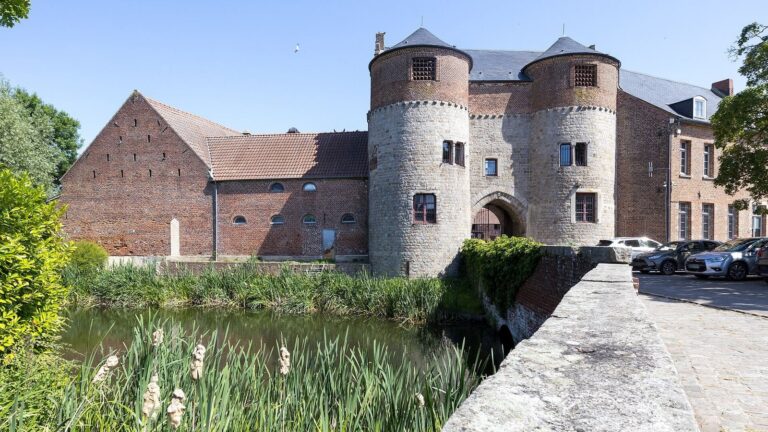
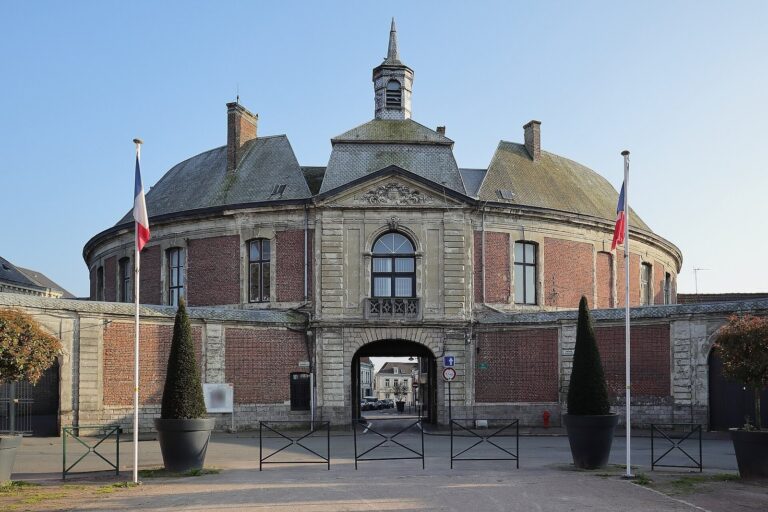
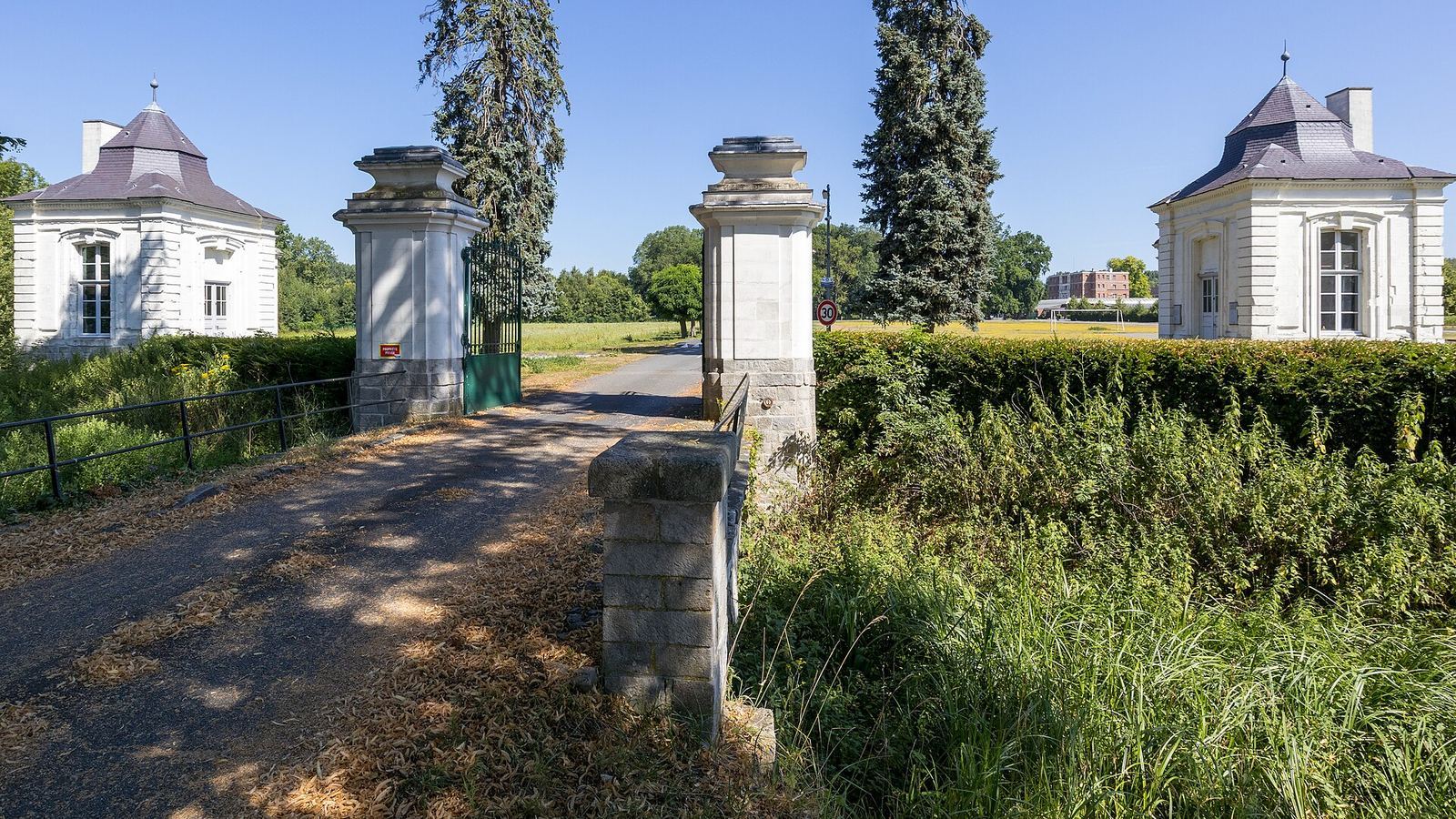
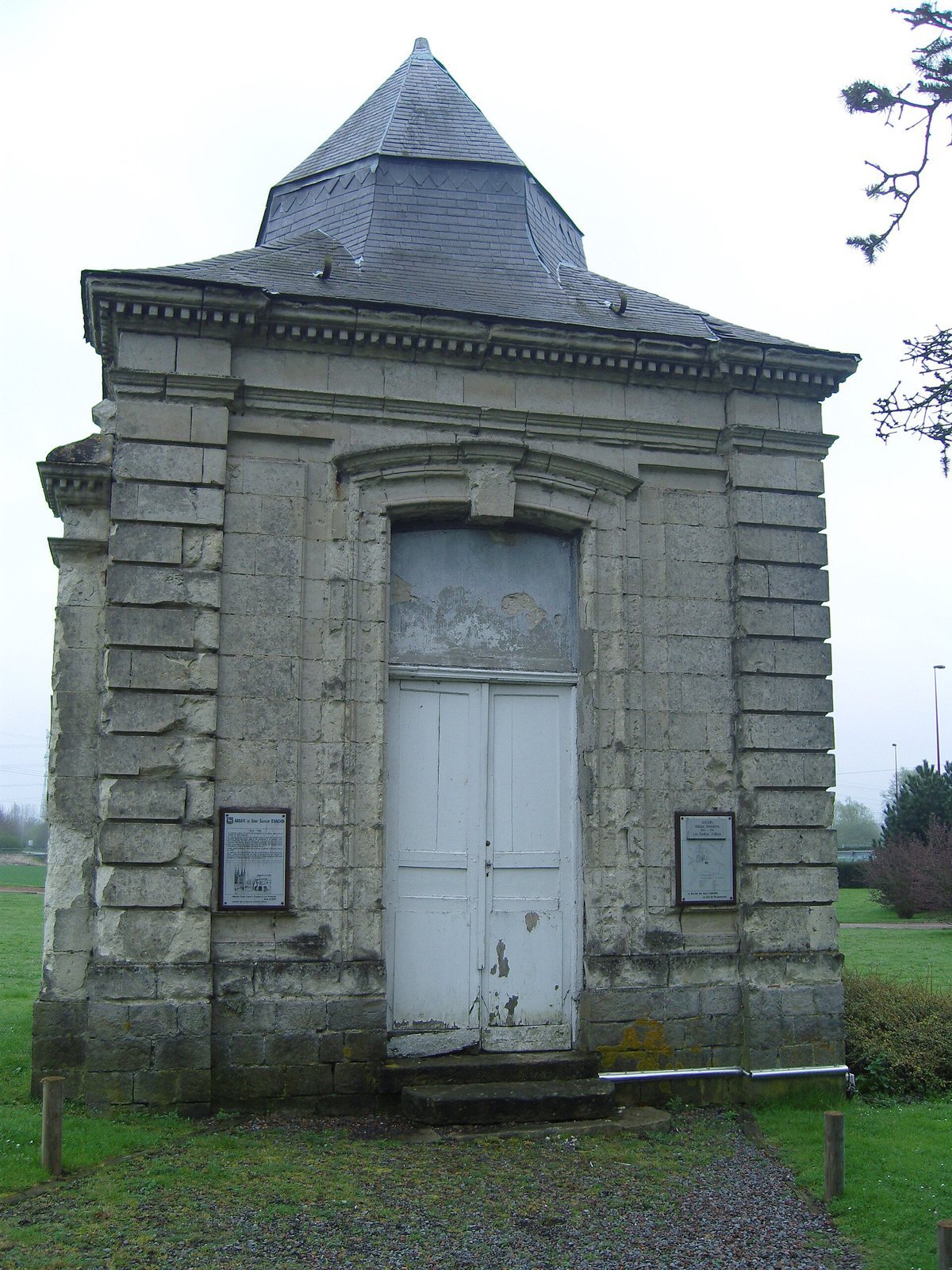
The abbey occupied a 25-hectare island called Anchin, or Enchin, among marshes south of the Scarpe River and north of central Pecquencourt. The Bouchart stream is also described as bordering the island. Two small entrance pavilions, built when Henry Benedict Stuart altered access to the monastery, are the abbey’s only surviving remains from the twenty-first century.
Abbey buildings and furnishings
Abbey church
The later abbey church measured 105 metres long, 26 metres wide, and 26 metres high. Its four towers reached 56 metres.
Grand organ
Cornil Cacheux built the abbey’s grand organ in 1732, and Charles Dallery completed it. It had 60 stops, which select sets of pipes, and four hand-played keyboards, two with a five-octave range. The organ’s case was carved in 1760 by Antoine Gilis to designs by the monks, and bore statues of David and Saint Cecilia. The instrument was transferred to the collegiate church of Saint-Pierre in Douai.
Tabernacle
After the Revolution, the abbey’s tabernacle, a container for the consecrated Eucharist, was kept at the Hôpital général in Douai.
Artworks and other objects
Retable of Anchin
The wooden polyptych, or multi-panel altarpiece, called La Trinité and the Retable of Anchin was made around 1511 by Douai artist Jehan Bellegambe for the abbey. It is held at the Musée de la Chartreuse in Douai, and one of its details depicts the abbey church.
Paintings and views
Joseph Wamps’s painting The Last Supper is held at the collegiate church of Saint-Pierre in Douai, while several of his sketches for works made for Anchin are at the Musée de la Chartreuse. A fire during the First World War destroyed works Wamps had made for the abbey. An anonymous seventeenth-century painting at Pecquencourt’s church of Saint-Gilles depicts Gordaine’s miracles. A sixteenth-century gouache, an opaque water-based painting, by Adrien de Montigny depicts Anchin in the Album de Croÿ, an illustrated collection of views of places in the Low Countries. A plan preserves the church’s layout as it stood in 1792.
Prelate’s crozier
A thirteenth-century crozier, a pastoral staff carried by an abbot or bishop, was found among the funerary furnishings of a grave at Anchin in 1872. Made of gilded copper in the Limoges manner, it is held at the Musée des Beaux-Arts de Valenciennes.
Abbey arms
Anchin’s arms show a silver stag walking across a blue field strewn with gold fleurs-de-lis.
Library and charter seal
Library
The abbey library contained original documents from the eleventh to fourteenth centuries and was believed to have survived almost intact. It was transferred to Douai in 1792. Together with manuscripts from Marchiennes Abbey, its holdings form a large part of Douai’s municipal library.
Seal on the 1161 charter
A parchment charter from 1161 bears Anchin’s seal, suspended by silk attachments. The seal is made of white wax against a red-colored background. It shows Christ seated with a cross-shaped halo, blessing with his right hand and holding a cross in his left. Its inscription identifies it as the seal of the church of Saint-Sauveur at Aquicinctum.