Marchiennes Abbey: A Monastic and Intellectual Center in France
Site at a Glance
- Popularity
- Medium
- Country
- France
- Primary era
- Early Modern
- Eras represented
- Early Modern
- Civilizations
- French
- Site type
- Religious
- Remains
- Monastery
On this page14 sections
History
Foundation and double monastery
Marchiennes Abbey was a monastery on the Scarpe at Marchiennes, France, founded around 630 by Irish monks in the Columbanian tradition, a notably strict form of monastic life associated with the missionary Columbanus. Adalbaud of Douai joined in its foundation on the advice of Saint Amand, a seventh-century missionary and bishop. Adalbaud and his wife Rictrude, later venerated as a saint, and their children Eusebia and Maurant were also counted among the founders.
The community began as a monastery for men. After Adalbaud died in 642, Rictrude made it a double monastery, bringing monks and nuns together in one institution, and became the first abbess of its women’s community. The house may have been overseen by Jonas of Bobbio, a monk of the Columbanian tradition. Rictrude’s life names a superior called Jonatus, who was buried at Marchiennes, but whether he was Jonas is uncertain.
The abbey helped shape the surrounding area through land clearance, drainage, and the use of marshland and peat bogs. Norman attacks devastated it twice during the ninth century. By the late tenth century, only a few canons, or clerics serving the community, remained in its men’s house.
Benedictine revival
In 1024, Marchiennes again became a men’s monastery and adopted the Rule of Saint Benedict, a set of monastic guidelines that became influential in Western Europe. This replaced its earlier, particularly austere Irish practices. The neighboring Abbey of Saint-Sauveur at Anchin helped renew the community, and Marchiennes grew into one of northern France’s leading abbeys. The Benedictine abbot Poppo of Stavelot died there in 1048.
Reform and intellectual life
From the eleventh through the thirteenth century, Marchiennes was an important center of learning. Its scriptorium, the place where monks copied and produced manuscripts, created many illuminated works. Following the troubled abbacy of Fulcard de Landas from 1103 to 1115, Armand de Castello, also known as Armand du Chastel, was abbot by 1120. He began a period of institutional and artistic renewal that continued through the end of the twelfth century. In 1148, Pope Eugene III appointed Engerrand as abbot after the Council of Reims, a church council.
On 16 May 1133, the relics of Saint Eusebia, venerated remains associated with the saint, were brought to Marchiennes. Her bones were displayed intact to the faithful, the nuns, and the schoolchildren. That year, under Abbot Hugues II, the monk and later prior André Silvius produced a manuscript, while Brother Guy copied works by Saint Jerome, the Christian scholar known for translating the Bible into Latin. Around 1200, Amand Duchâtel became abbot after serving at Saint-Martin of Tournai and as prior of Anchin. He may have written manuscripts or added colored headings to them, but his involvement is uncertain.
Sixteenth-century prominence and attack
The abbey reached the height of its power in the sixteenth century, aided by the patronage of Jacques Coene, a monk from Bruges who lived from 1501 to 1542. Marchiennes supported the establishment of a college at the University of Douai between 1564 and 1570. In August 1566, Calvinist attackers devastated the abbey and destroyed most of its artworks.
Siege and closure
Marchiennes continued as a monastery into the eighteenth century. During the 1712 siege of the town, bombardment lasted four days and partly destroyed both Marchiennes and the abbey; restoration followed. The French Revolution brought the monastic community to an end, and the Benedictines left permanently in 1791. Around the turn of the nineteenth century, the buildings were sold as national property. The abbey church tower was demolished in 1817.
The abbey also maintained a refuge in Lille, where some of its buildings survive. The surrounding quarter was extensively redeveloped after the 1960s. Marchiennes’ remains entered France’s inventory of historic monuments on 17 May 1974.
Remains
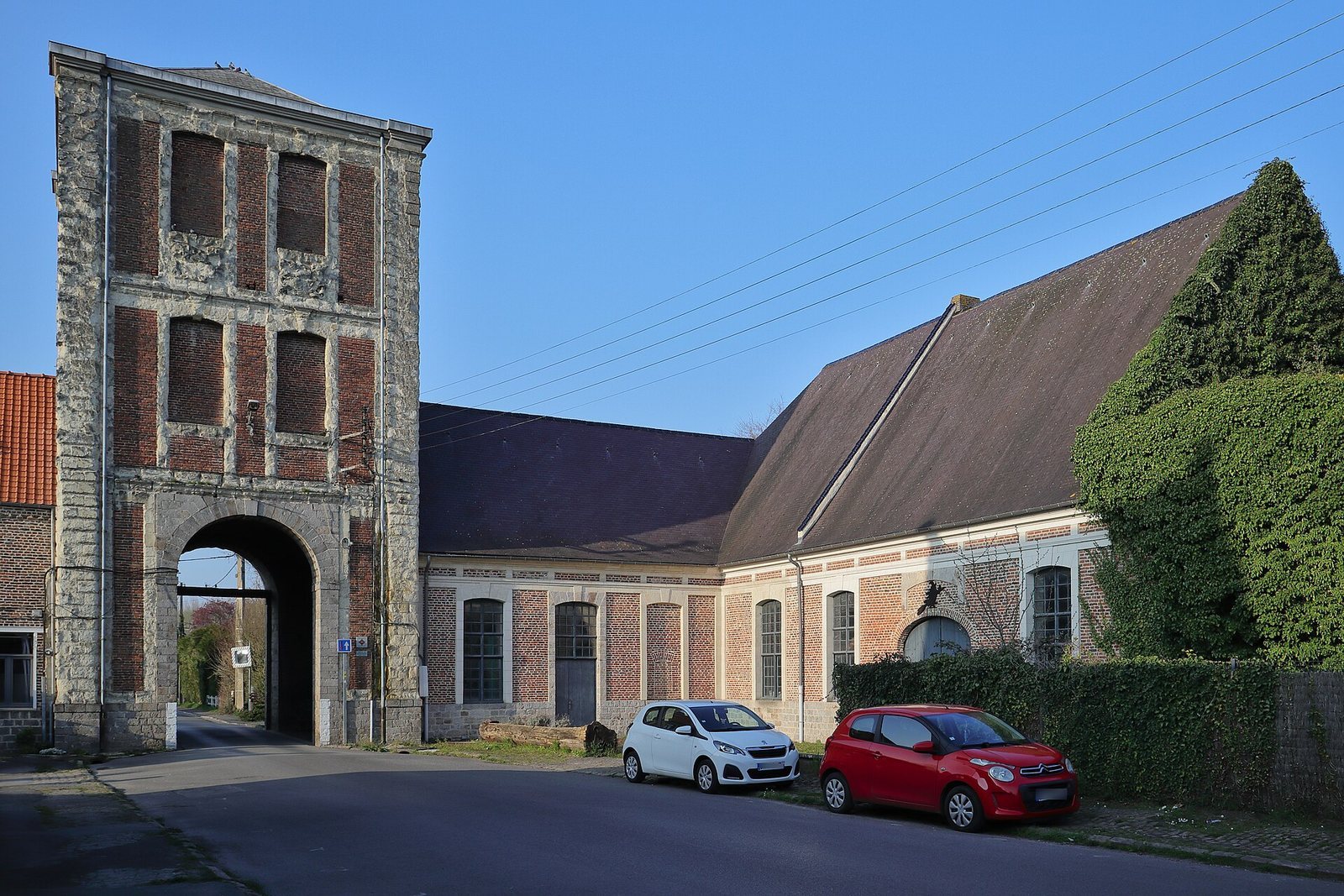
The surviving fabric includes an eighteenth-century entrance gatehouse, monastic service buildings, and other structures associated with the abbey. Two seventeenth-century painted views preserve a broader record of its arrangement, including the entrance, buildings, and central square.
Buildings and associated features
Entrance gatehouse
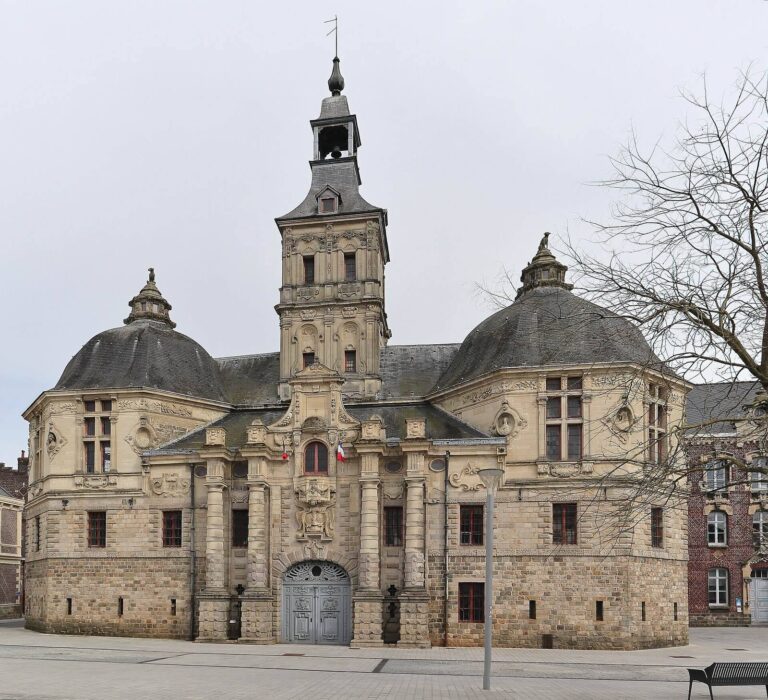
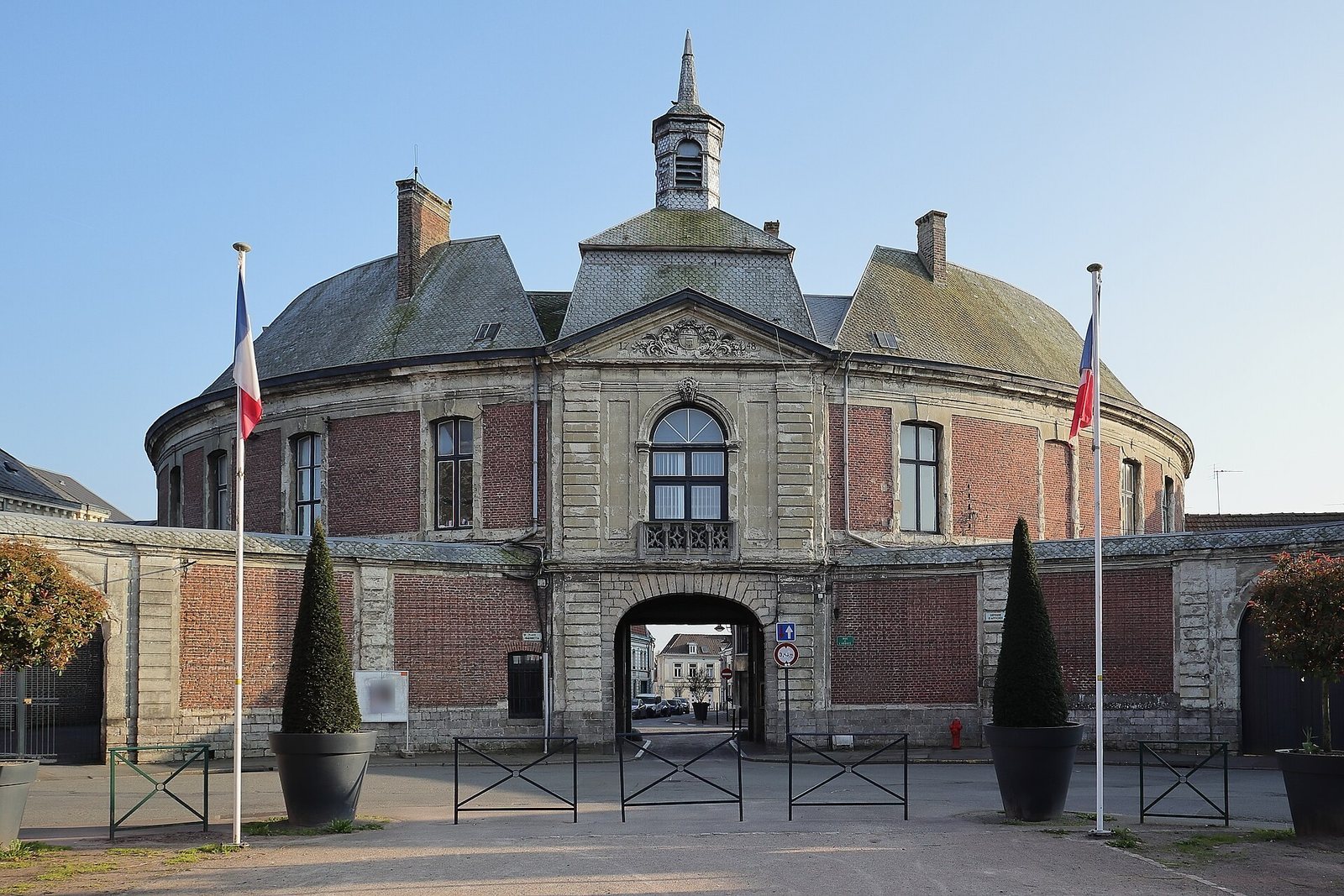
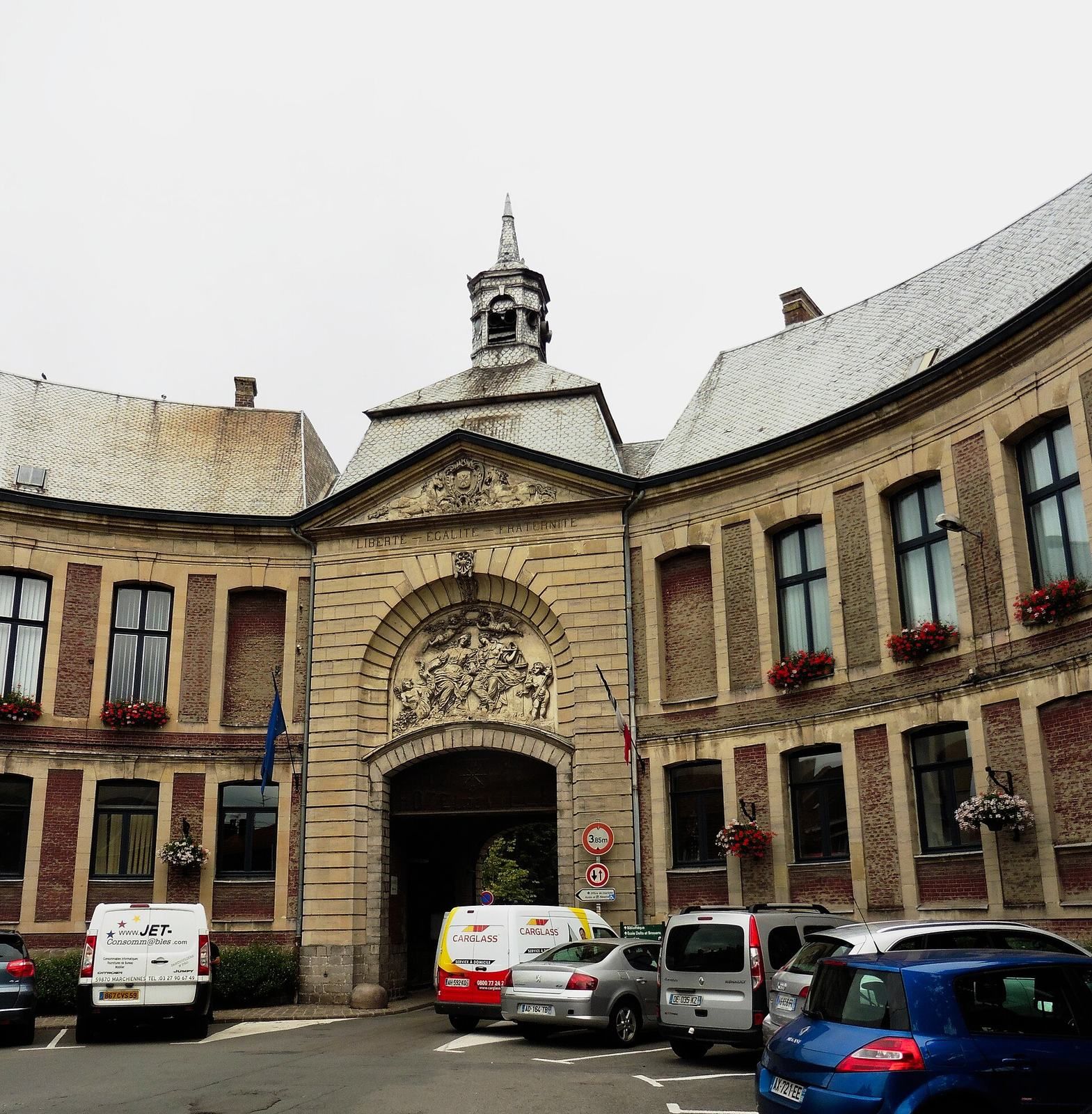
The surviving entrance gatehouse dates to 1748 and now serves as Marchiennes’ town hall. Semicircular buildings are also identified at the abbey’s main entrance.
Service buildings
Some service buildings built by the monks remain, including the abbey brewery.
Dovecote
A dovecote, a building for keeping doves, is among the structures associated with the architectural remains.
Former presbytery
The remains also include the former presbytery, or parish priest’s residence.
Devotional features and furnishings
A recumbent effigy of Saint Rictrude is in the church at Marchiennes. Other features and objects associated with the abbey include the well of Saint Maurant, a reliquary of Saint Rictrude, a statue of Rictrude, and a pulpit.
Seventeenth-century painted views
Two opaque-watercolor paintings commissioned for Duke Charles de Croÿ depict the abbey as it appeared in the seventeenth century. One, probably dated to 1603, shows a summer scene. An island on the right holds eight buildings, while a column topped by a statue stands in the central square. To the left is a row of twelve buildings, including a farm complex. A road runs from the square to the right and reaches the abbey through a gateway. The abbey appears farther back with a square bell tower and two small turrets, with hills beyond.