Anahita Temple at Kangavar: An Ancient Parthian-Era Sanctuary in Iran
Visitor Information
Google Rating: 4.3
Popularity: Low
Country: Iran
Civilization: Greek
Site type: Religious
Remains: Temple
History
The Anahita Temple at Kangavar, in the municipality of Kangavar in Iran, was built by the Parthian-era society that dominated the region around the turn of the first millennium BCE/CE.
Archaeological evidence places the site’s origin in the Parthian period, roughly between the first century BCE and the first century CE. Finds such as tombs, pottery shards, and worked stone point to active construction and use during that era. The site was known to the Greco-Roman world: the geographer Isidore of Charax mentioned a “temple of Artemis” there in the first century CE, a Greek label that historians generally interpret as referring to the Iranian goddess Anahita. Because of its long presence and scale, the complex is often cited as the largest architectural center in Iran connected to Anahita’s cult.
The structure underwent further work under later dynasties. Archaeological traces record restoration activity in the Sasanian era, and occupation layers and repairs show continued use into medieval and early modern periods, including the Seljuk, Safavid, and Qajar times. Nomadic groups also occupied or used parts of the site at various later stages. Modern archaeological investigation began in 1968, expanding the known footprint to roughly 230 by 210 meters, and further fieldwork in 1995 revealed additional elements such as a northern perimeter wall.
Scholars do not all agree on the original purpose or date of the complex. One view sees it primarily as a Parthian sanctuary to Anahita that received Sasanian repairs. A second interpretation considers the main construction to be a late Sasanian palace. A third argument links the foundations to earlier Achaemenid-era platforms and proposes multiple episodes of rebuilding. The association with a water cult, tied to Anahita’s role in Iranian religion, figures in these debates, while alternative identifications, including suggestions of Mithraic or fire-related functions, have been proposed but rest less firmly on the architectural record. The site is also paired in scholarship with another well-preserved Anahita-associated complex at Bishapur, which offers comparative evidence about ritual architecture and hydraulic features.
Remains
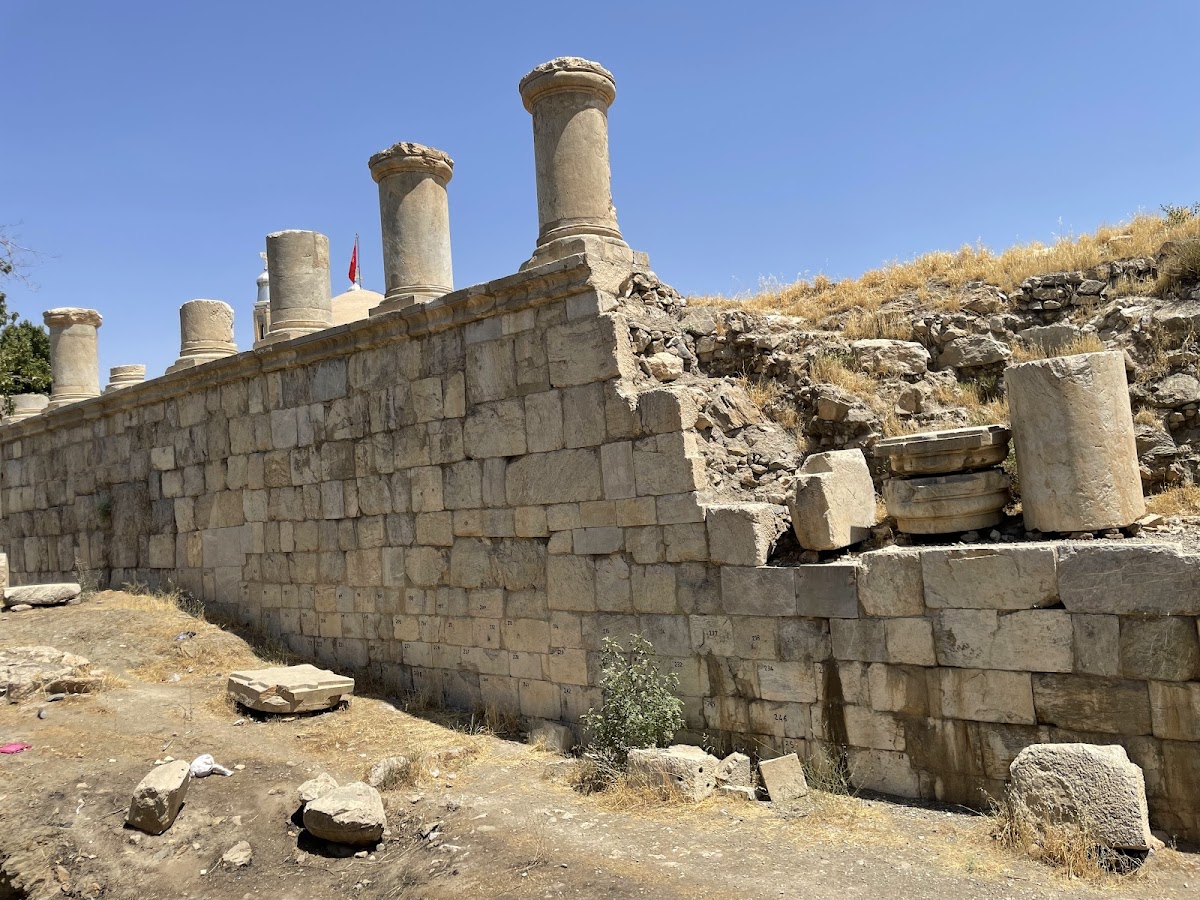
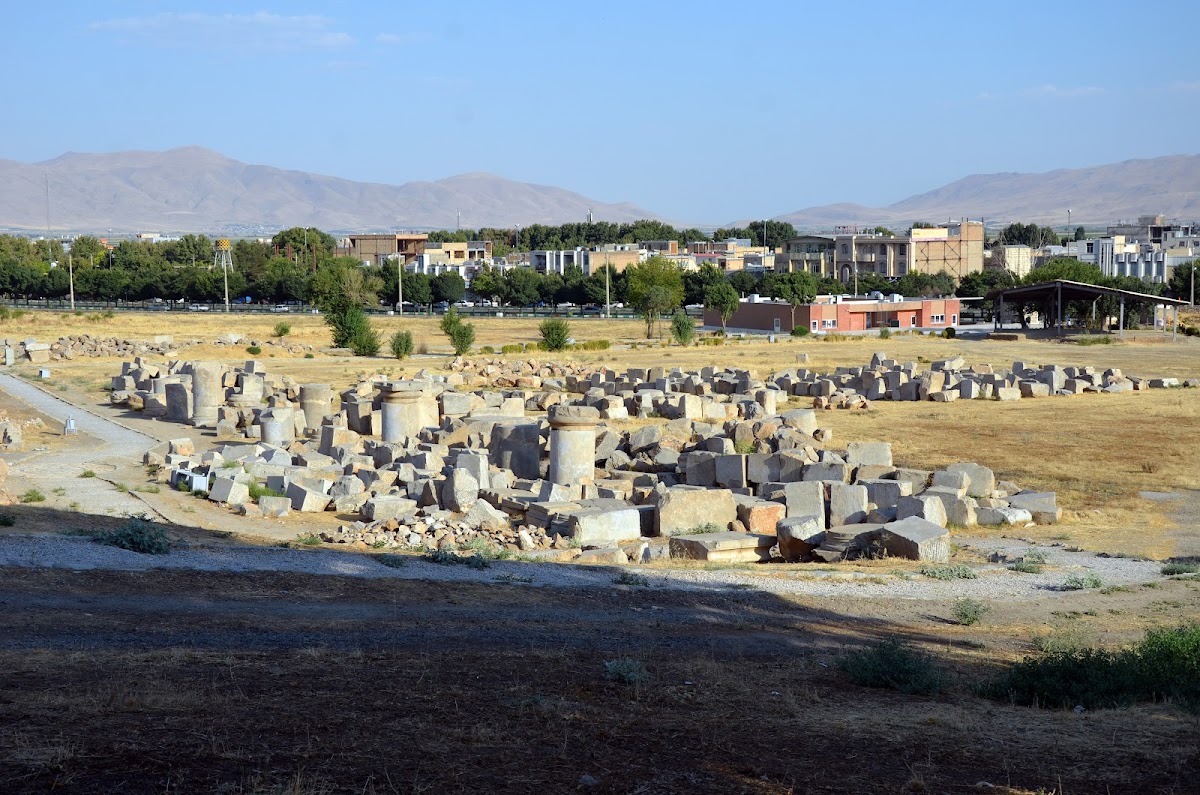
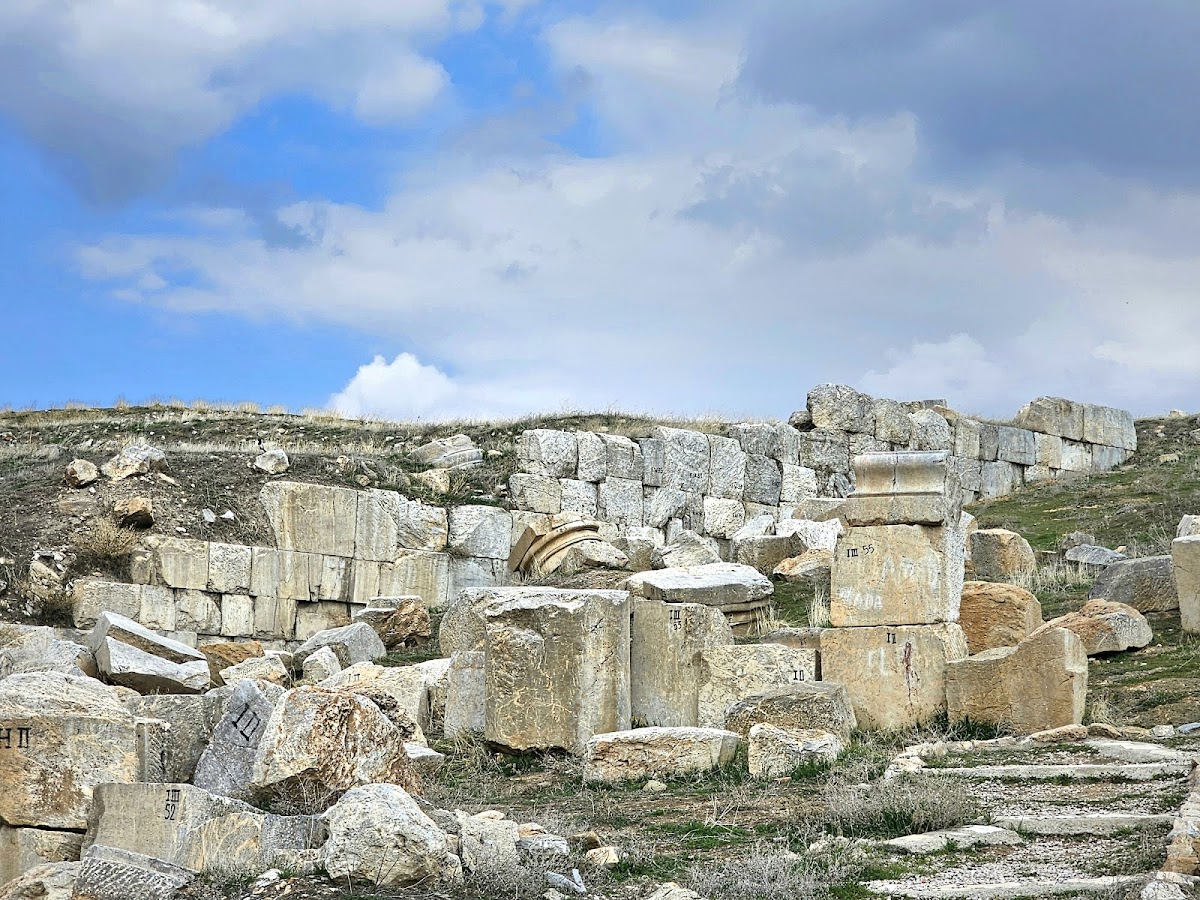
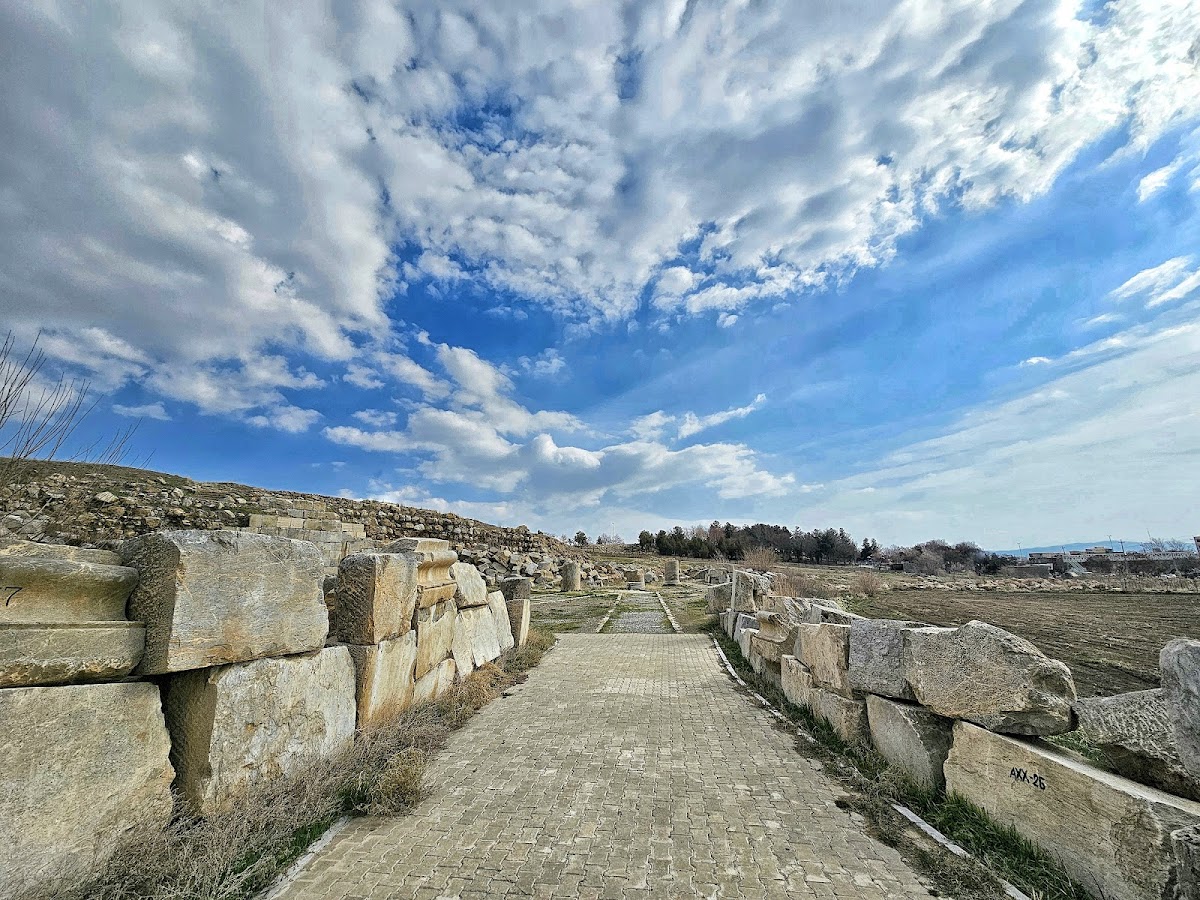
The Kangavar complex occupies a raised schist hill and covers about 4.6 hectares, with a massive elevated platform that measured near 200 by 200 meters in early surveys and was later defined as approximately 230 by 210 meters after excavation. The platform rests on very large stone foundations that recall the style of earlier Achaemenid platforms, and access was provided by stairways set into the platform base. Excavations have revealed multiple entrances and retaining walls that reflect a long sequence of building activity and repair.
A principal southern stairway served as the main approach. It rises about 1.48 meters in total and preserves 26 steps; individual treads measure roughly 41.5 centimeters wide, with risers about 12 centimeters high and 32 centimeters deep. Additional stair flights were identified near the northeast sector of the eastern wall, indicating more than one formal route onto the platform. Running across the site from east to west is a substantial central wall, preserved for some 94 meters in length and standing about 9 meters high at the façades; the terrain itself reaches its greatest height at the northeast corner, around 32 meters above the surrounding plain.
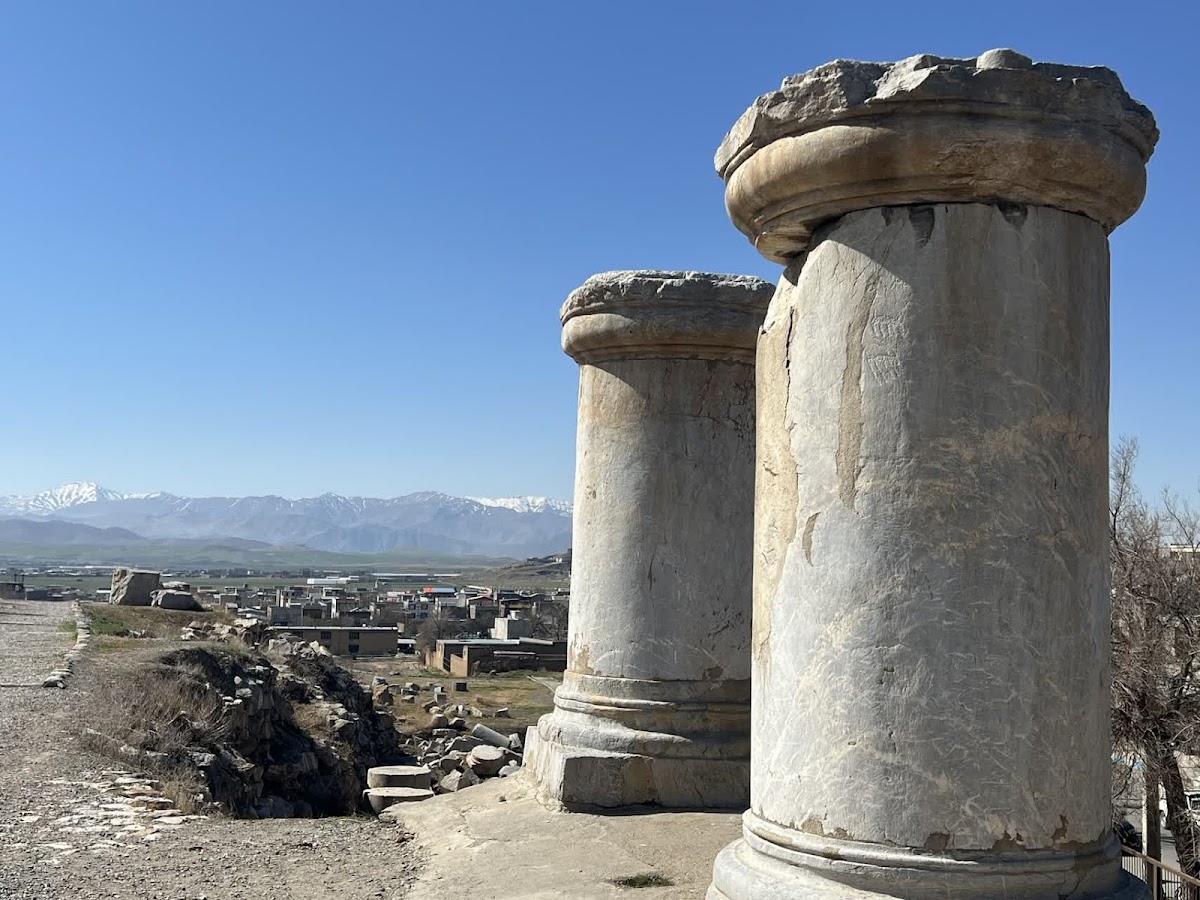
Columns once lined the west, east, and south faces of the complex, and these supporting members are estimated to have reached heights in the order of 35 meters. Quarrying and stonework for the monument used blocks from several locations, including named extraction sites such as Chehel Maran, Soltanababad, and Helal-e Ahmar, as well as more recently identified quarries near Kangavar. Initial rough shaping of blocks took place at those quarry sites, while finer cutting and polishing were completed at the building platform itself.
Archaeologists uncovered a water channel along the northern side of the platform which has been interpreted as a conduit for ritual or supplied water. This hydraulic element aligns with the wider pattern of association with Anahita, the Iranian divinity linked to waters and fertility.
The other major Anahita-associated example, at Bishapur, preserves a different but closely informative plan and state of conservation. That temple is set below the palace level and reached by a vaulted stair, and it follows a characteristic Iranian arrangement: a square central chamber surrounded by corridor spaces, with each wall pierced by doorways. In the heart of the chamber sits a basin that is now dry, once fed by an elaborate system of canals. Water movement there was controlled by sliding shutters that ran in grooves at each doorway. Supply came from the Shapur river by means of an aqueduct, and the temple’s lower location allowed water to circulate through the complex.
Structural features at Bishapur include a flat roof held up by beams that rested on sculpted bull protomes, which are projecting representations of a bull’s head set into the architecture; two of these protomes remain in their original positions, and a third survives nearby. The masonry at Bishapur combines rubble fill with large, well-dressed facing stones joined by metal clamps; some wall faces rise to about 15 meters. An altar of fire was documented in a later Islamic-period structure near the site and may derive from the earlier sanctuary complex. Taken together, the basin and the waterworks in the Bishapur example make a strong case for a water-centered cult there, a pattern that informs interpretations of the Kangavar complex as well.