Altomünster Abbey: Bridgettine Double Monastery in Germany


Site at a Glance
- Rating
- 4.7
- Popularity
- Very Low
- Country
- Germany
- Primary era
- Early Modern
- External website
- Open
- Eras represented
- Early Modern
- Civilizations
- Electorate of Bavaria, Holy Roman Empire
- Site type
- Religious
- Remains
- Monastery
On this page17 sections
History
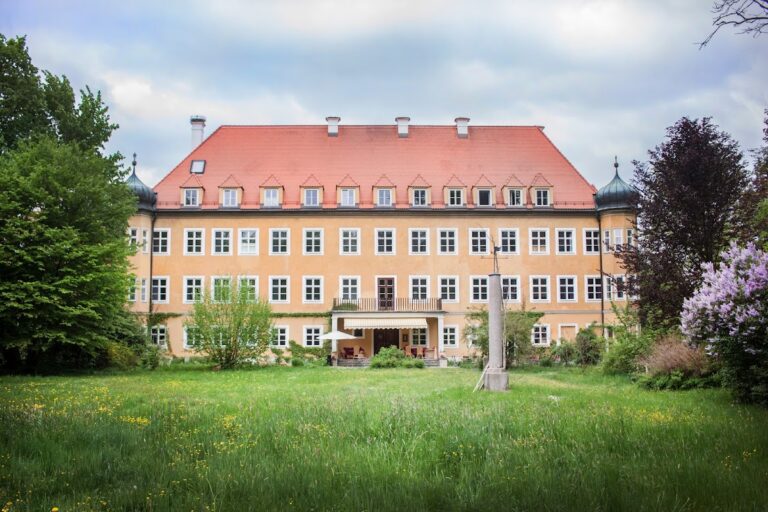
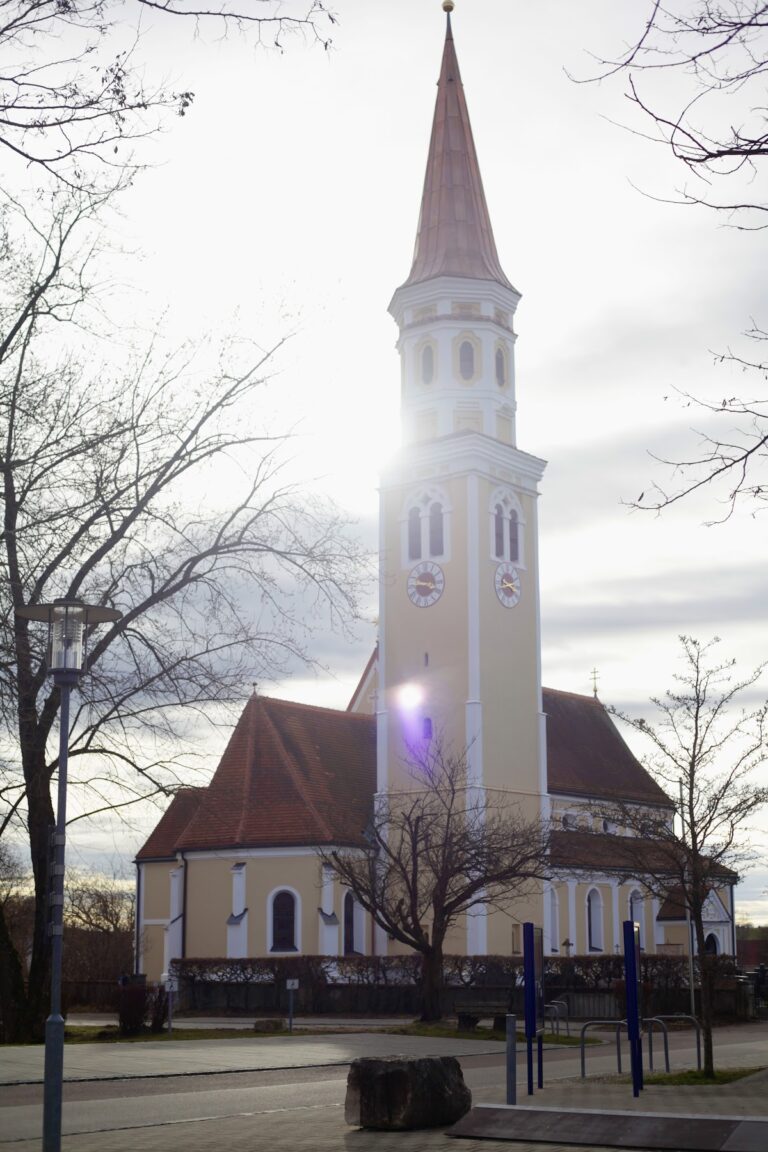
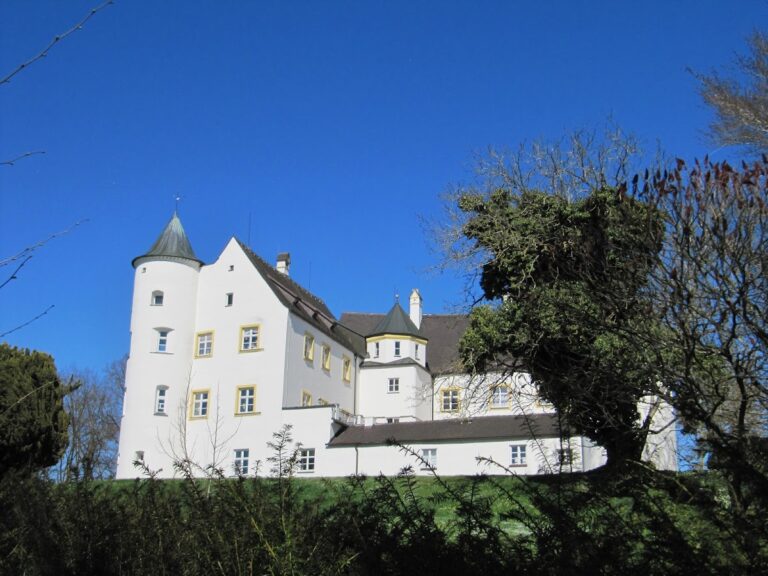
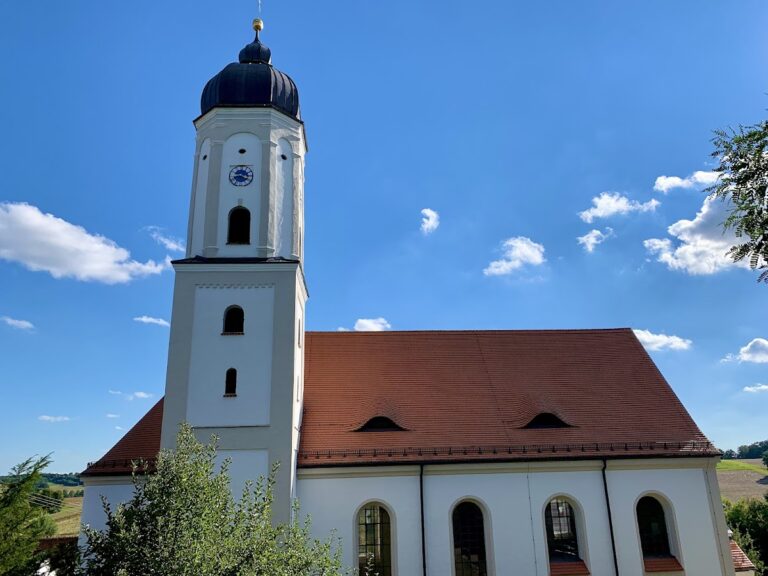
Altomünster Abbey is a former Bridgettine monastery in Germany, in the town of Altomünster. Its present church was built between 1763 and 1766 in the late Rococo style, while the abbey itself developed from a hermitage established before 760 or around 750.
From hermitage to Benedictine monastery
The foundation tradition begins with Saint Alto, an Irish monk and hermit who settled at the site. A later medieval life of Alto states that Saint Boniface visited the hermitage and dedicated its church. At an uncertain date before 1000, the community developed into a Benedictine monastery dedicated to Saints Peter and Paul. Benedictines followed the Rule of Saint Benedict, the foundational monastic rule of Western Christianity.
Around 970, the Welf dynasty enlarged or renewed the monastery, reportedly after it had been destroyed by the Magyars. The Welfs were a powerful medieval noble family with major possessions in Bavaria and, later, northern Germany. In 1056, Welf IV founded Weingarten Abbey and populated it with monks from Altomünster. During the same exchange, Benedictine nuns from Altdorf near Weingarten moved to Altomünster after their monastery had burned in 1053.
The arrival of the Bridgettines
Pope Innocent VIII dissolved the Benedictine nunnery in 1488. The monastery was enlarged between 1488 and 1496, and the Bridgettine Order entered Altomünster in 1496 and 1497. Founded by Saint Bridget of Sweden, the Order of the Most Holy Savior traditionally joined a women’s community with an associated community of priests. This arrangement created a double monastery, containing both nuns and priests.
Fifteen nuns and several priests came from Maihingen in 1497, and Altomünster became independent in 1500. Its early recruitment was mainly urban. The first four abbesses between 1500 and 1530 came from Nuremberg, Nördlingen, and Augsburg. From 1496 until 1803, Altomünster remained a Bridgettine double monastery. Its church was dedicated to Saint Alto and Saint Bridget, and the community became the only monastery of the original branch of the order in Germany.
Reformation and Catholic renewal
Johannes Hausschein, later known by his Latin name Oekolampadius, entered Altomünster after serving as cathedral preacher in Augsburg. He left after about two years, in 1522, and became a Protestant reformer in Basel. In 1519, Bishop Philipp of the Palatinate brought the former Augustinian prior Johannes Palgmacher to Altomünster and arranged for his election as prior.
Under Palgmacher and Abbess Ottilia Öffler, the community consolidated its opposition to the Reformation. The Reformation was the sixteenth-century religious movement that challenged the authority and practices of the Roman Catholic Church and led to the creation of Protestant churches. Altomünster later implemented the decrees of the Council of Trent, the Roman Catholic council that defined doctrine and promoted institutional reform in response to the Reformation.
War, Baroque piety, and artistic life
The Thirty Years’ War brought severe hardship during the tenure of Abbess Apollonia Wager. In the later seventeenth century, Prior Simon Hörmann, who served from 1669 to 1701, directed an intensive pastoral and religious program shaped by Baroque piety. Bridget’s revelations were printed anew in 1680, and a monastic union with Bridgettine communities in the Rhineland was established at the General Chapter of Cologne in 1675. Prior Jakob Scheckh continued this development between 1724 and 1755.
Altomünster also supported a distinctive artistic culture. Katharina Kreitmayr had worked as a court painter at the Munich court of Elector Ferdinand Maria before entering the monastery. She later became known for miniature paintings that were highly esteemed even in Rome. From 1693 to 1798, two priests from Altomünster provided pastoral care for the Bridgettine house in Rome.
The late Rococo rebuilding
Johann Michael Fischer replaced the earlier Romanesque abbey church with a new building between 1763 and 1766. The project continued after Fischer’s death in 1766 under Balthasar Trischberger. The late Rococo design responded to the spatial requirements of the Bridgettine double monastery by bringing together a centralized church space for the parish and a long, narrow, high choir divided into areas for nuns, monks, diocesan priests, and priests from other religious communities.
Secularization and revival
Bavarian secularization dissolved the monastery in 1803. Secularization transferred ecclesiastical property and institutions into non-religious control, and in Bavaria it brought the closure of many monasteries. Altomünster lost its property and library, while the nuns remained in the buildings without their monastic vows.
King Ludwig I allowed the reduced community, then numbering four nuns, to accept novices again in 1841. The revived convent continued into the early twenty-first century. Across the centuries, Altomünster housed an average of about 30 nuns and 15 priests and brothers, although the priests and brothers remained there only until 1803. Later recruitment drew mainly from rural communities.
The final community and its collections
Nazi religious policies after 1933 halted new entries into the monastery. The community nevertheless numbered 59 nuns during the Second World War and 62 in 1947, after which its numbers fell sharply. In its final period, the small convent operated a guesthouse for the Archdiocese of Munich and Freising. A museum beside the monastery opened in 1997 with a permanent exhibition on the history of the Bridgettine Order and Altomünster Abbey.
In December 2015, the Vatican announced that the community would be dissolved. Only the former prioress, Sister Apollonia Buchinger, then lived at the monastery. Gabriele Konrad, a Franciscan from Schönbrunn Abbey, was appointed apostolic commissioner, an official of the Holy See responsible for overseeing a religious institution on its behalf. After an inventory, the dissolution was completed in January 2017, and the Archdiocese of Munich and Freising became the legal successor of the Bridgettine Order. Sister Apollonia left in February 2017.
The closure led to a legal dispute involving a postulant who sought to remain in the monastery. On 15 February 2018, the Administrative Court of Munich rejected a district authority’s claim that insufficient fire protection required her departure and temporarily suspended the proceedings. After the Apostolic Signatura in the Vatican confirmed the dissolution and required her to leave, she departed at the end of April 2018.
The abbey’s former library contained about 3,400 volumes at secularization. More than 60 manuscripts and nearly 1,200 incunabula, books printed before 1501, passed to the Electoral Court Library, now the Bavarian State Library in Munich. Other works went to the present University Library of the Ludwig Maximilian University of Munich, while 200 volumes were distributed among Bavarian Latin schools.
The re-established convent’s archive retained liturgical manuscripts, including about 30 fifteenth-century processionals, books containing chants or texts for religious processions. It also held illuminated manuscripts from other dissolved Bridgettine monasteries whose bequests had been sent to Altomünster. In 2016, the archive and library holdings were being separated and reviewed, and works published through 1803 were scheduled for digitization and online access.
Remains
Church layout and entrance spaces
Gate and vestibule
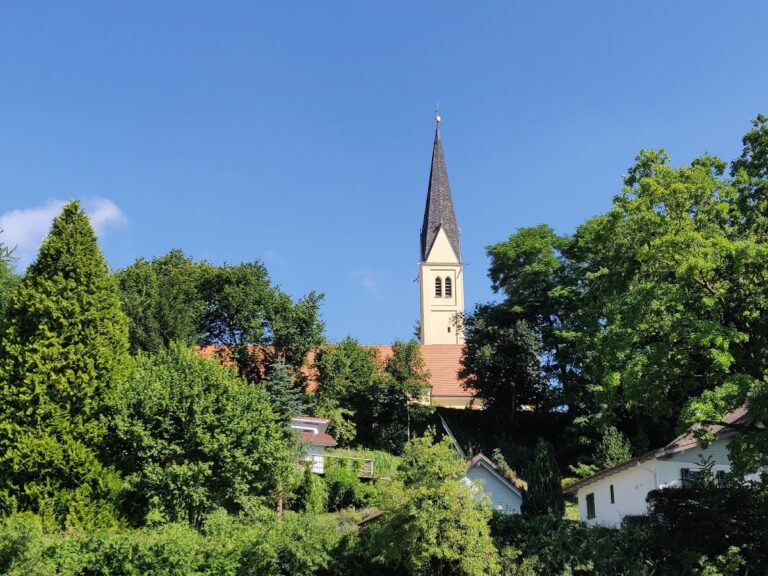
The abbey church stands on a hill and is entered through a gate beneath the tower. A vestibule leads toward the main church and opens to side chapels on both sides. On the left are a Mount of Olives scene, a war memorial, remains of a charnel house, and epitaphs. A charnel house is a chamber used to store human bones after burial remains have been removed or reorganized.
Right side chapel and spring fountain
The right side chapel contains a Lourdes grotto and a fountain supplied by the Alto spring. A Lourdes grotto is a devotional shrine modeled on the grotto associated with the Marian apparitions at Lourdes in France. The authentic spring rises beneath the church’s right side altar, and its water also feeds the fountain in the Altohof and the market fountain on the market square, including during winter.
Rococo church interior
Central room and altars
Steps lead from the vestibule into the octagonal main room. Its Rococo stucco creates an ornate eighteenth-century interior, while a ceiling fresco by Joseph Mages places the Trinity at the center. Johann Baptist Straub made the two side altars, one dedicated to Saint Augustine and the other to Saint Alto. Straub also produced the church’s sculptures.
Choir and confession room
Between the main room and the choir is a confession room containing confessionals. The monks could reach these confessionals from outside without leaving the enclosure. On the first floor, an ambulatory runs beside an inaccessible nuns’ choir. The elevated main altar has a second, still higher high altar above it, while the former monks’ choir lies behind the high altar and is not generally accessible.
Organ and painted decoration
The organ is positioned above the entrance. It was rebuilt in 1986 with registers surviving from the earlier instrument. The church retains the late Rococo interior associated with Johann Michael Fischer and Balthasar Trischberger, with frescoes by Joseph Mages and altars and sculptures by Johann Baptist Straub.
Manuscripts and surviving liturgical material
Two twelfth-century Gospel lectionaries made for Altomünster Abbey are held by the Bavarian State Library. The former convent archive also preserved about 30 fifteenth-century processionals and illuminated manuscripts inherited from other Bridgettine monasteries. These books form part of the material record of the abbey’s liturgical and Bridgettine traditions.