Alte Thurbrücke: A Medieval Stone Arch Bridge in Switzerland
Site at a Glance
- Popularity
- Low
- Country
- Switzerland
- Primary era
- Medieval
- Eras represented
- Medieval, Early Modern, Modern
- Civilizations
- Holy Roman Empire, Swiss
- Site type
- Infrastructure
- Remains
- Bridge
On this page8 sections
History
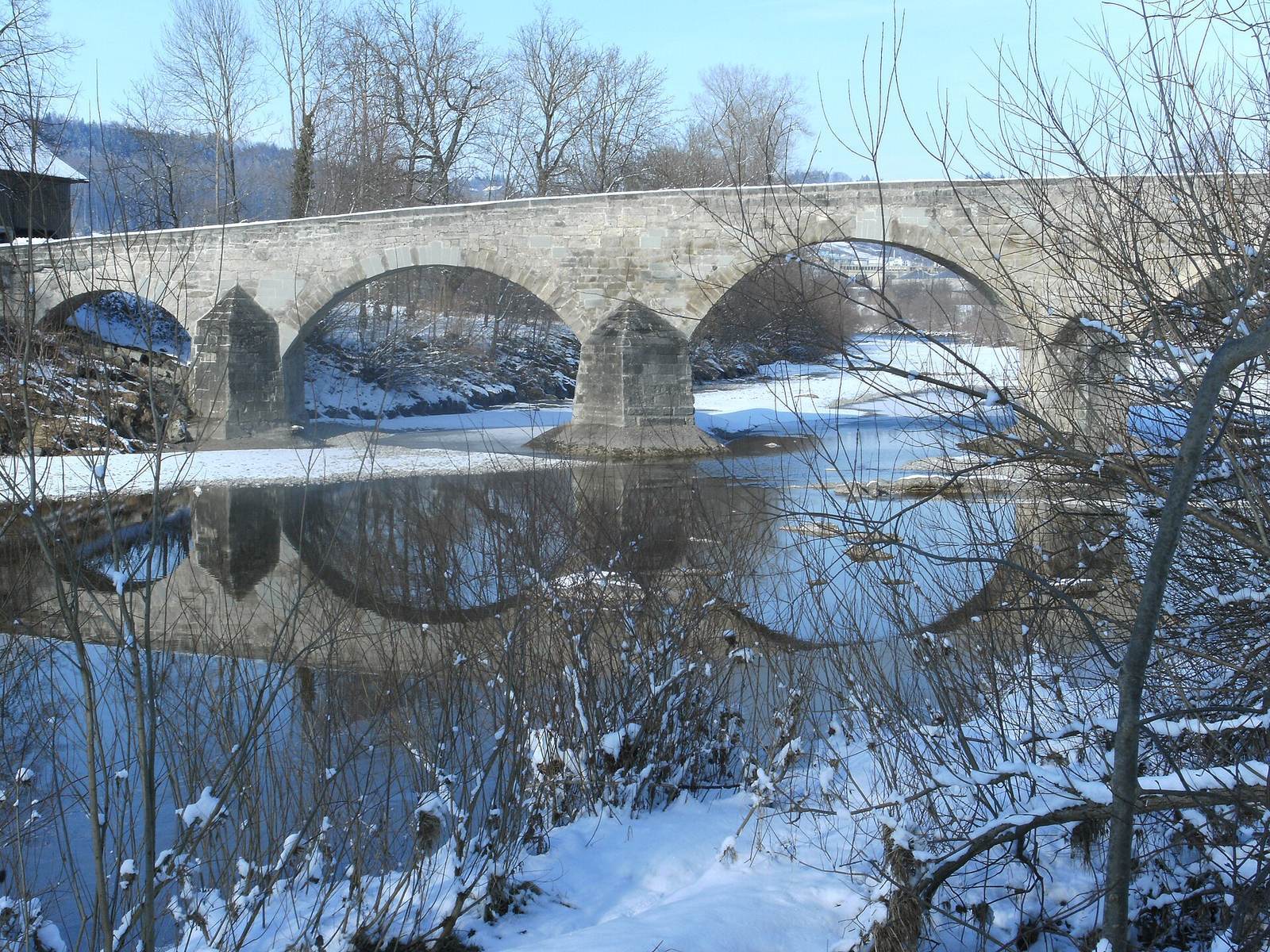
The Alte Thurbrücke is a medieval stone arch bridge over the Thur southwest of Bischofszell’s town center in Switzerland. Bischofszell and Otto IV, bishop of Constance, a senior Christian cleric responsible for a church district, agreed to build it in 1479; construction was completed in 1487.
Construction in the fifteenth century
A timber bridge had stood farther upstream at Stegwiese during the High Middle Ages, and a written reference to it dates to 1325. A local legend links the stone bridge project to the drowning of two young noblemen in a swollen river. The story says the bishop was then expected to build bridges over both the Thur and the Sitter. Unable to pay for the work, he transferred the obligation to Bischofszell in exchange for 300 gold gulden, a type of gold coin used in parts of Europe, and additional revenues.
Trade and tolls
The bridge remained toll-free until sometime in the late eighteenth century. This helped Bischofszell serve as a transfer point for linen and long-distance trade.
Changing traffic and restoration
By the mid-nineteenth century, the bridge had become too narrow for increasing traffic. The Locher company of Zurich widened it in 1860–1862 to better accommodate vehicles. Motorized traffic was barred in 1969. A new bridge farther upstream was built in 1972–1973, and the old bridge was restored between 1971 and 1975. Extensive repairs followed from 1999 to 2006.
Remains
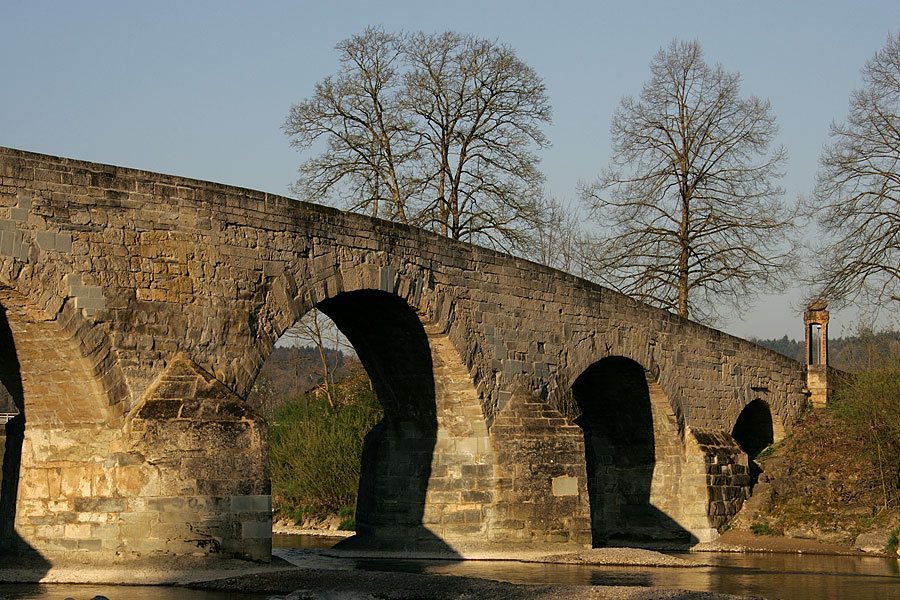
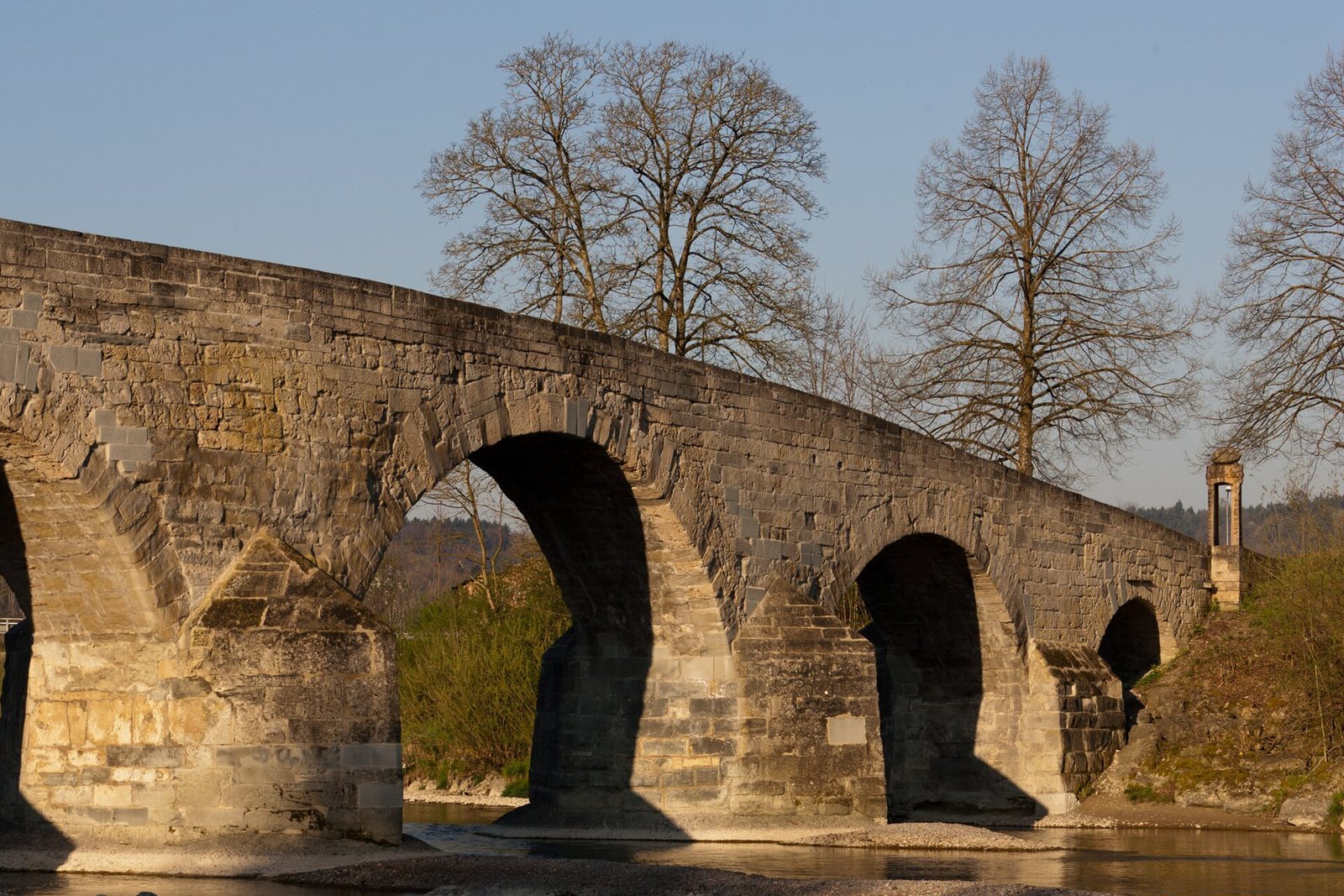
The Alte Thurbrücke is an eight-span stone arch bridge, 116 metres long and 3 metres wide, built from tuff and sandstone. Its course bends across the river because its piers rest on natural formations of Nagelfluh, a conglomerate rock made of rounded stones cemented together. Also known as the Crooked Bridge, it is the longest surviving medieval natural-stone bridge in Switzerland. Today it carries pedestrians and cyclists.
River defenses
Flow splitters, structures that divide the current, were built on both sides of the bridge during the sixteenth or seventeenth century. They protect the piers from the Thur’s frequent high water.
Alterations and repairs
The nineteenth-century widening slightly increased the bridge’s width, lowered its crown and raised its approaches. A bathhouse at the north end was demolished to make more room. A later restoration removed balcony-like projections for pedestrians and returned the bridge to an earlier form. During subsequent repairs, some tuff and sandstone blocks were replaced, and the roadway was sealed against moisture.
Bathhouse remains
A bathhouse stood at the bridge’s north end and was mentioned as early as the seventeenth century. Its remains were examined in 1974, revealing a large oak tub, wooden water pipes and furnaces used to heat the baths.