Almașu Citadel: A Medieval Fortress in Romania
Site at a Glance
- Country
- Romania
- Primary era
- Medieval
- Eras represented
- Medieval
- Civilizations
- Hungarian
- Site type
- Military
- Remains
- Castle
On this page8 sections
History
Almașu Citadel is a medieval stone fortress on a naturally defensible hill about 1.5 km from the village of Almașu in Romania. Built for Paul, a royal judge in the Hungarian kingdom, between 1247 and 1278, it was among Transylvania’s oldest and most powerful medieval fortresses.
The monastery and the citadel’s foundation
Before the fortress, a Benedictine monastery stood on Csepán Hill in the Almás Valley. Benedictines were members of a Western Christian monastic order that followed the Rule of Saint Benedict. Before 1235, Ladislaus of Kán expelled the monks, intending first to replace them with Premonstratensians, members of another religious order, and then with his own chaplains. A letter issued by Pope Gregory IX in 1238 ordered an inquiry and the restoration of the monks’ possessions. Mongol forces destroyed the monastery in 1241, and it may have provided the basis for the later Almás estate.
Béla IV granted the estate to Paul in recognition of his military service against the Mongols. Paul belonged to the Geregye kindred, an extended noble family, and had fought alongside Béla in Dalmatia and Galicia from 1229. Around 1238, he recovered Hungarian border castles from the Germans; during the Mongol invasion, he defended the Danube and fought east of the Tisza. At his command, the stone citadel was built between 1247 and 1278.
Medieval ownership
In 1278, the estate was taken from Paul’s son Nicholas on a charge of disloyalty and transferred to the Borsa family. The fortress was also called Dezsővár, after Dezső of that family. A separate identification names Dezső Elefánti, castle governor at Sebesvár, as an administrative official of the estate.
The citadel first appears in the records as a castle in 1370, when Louis I granted it and its dependent villages to royal treasurer George Bebek and his family. The grant also named George’s sons Imre and Detre, and his grandsons György, László, and Ferenc. The Bebeks held the estate for about a century. Around 1469, Pál, son of Imre Bebek, a Transylvanian voivode, or regional governor with military responsibilities, lost it for disloyalty. Matthias Corvinus granted the castle and estate in 1470 to his cousin John Pongrácz of Dengeleg, also a voivode. John’s son Matthias inherited the property, but died without an heir in 1501. His widow, Orsolya Perényi, retained a small part, while the rest returned to the Crown.
Vladislaus II later transferred the Almás and Léta estates to Duke John Corvinus in an exchange of properties. After John died in 1504 and his daughter Elizabeth in 1508, the castle estate passed, during Vladislaus’s reign, to John’s widow, Beatrice Frankopan. Later exchanges and dowries brought it to Imre Balassa, a Transylvanian voivode. Balassa’s father had also married Orsolya Perényi, bringing the extensive Tövis, Léta, and Almás estates into the same family.
Sixteenth-century conflict
After the Battle of Mohács, a struggle for the Hungarian succession set Ferdinand I against John Zápolya. Imre Balassa and Transylvanian voivode István Majláth supported Ferdinand. In April 1540, an army led by Bálint Török on Zápolya’s behalf besieged and captured the citadel. During the civil war of 1541–1551, Petru Rareș of Moldavia held the estate and fortress in 1545–1546 in return for foreign assistance.
In 1551, imperial general Castaldo failed to take the fortress during his journey toward Cluj. After Isabella Jagiellon, regent for her son John Sigismund, abdicated, the defenders surrendered to imperial forces. The successive sieges left the citadel in ruins. In 1594, Prince Sigismund Báthory granted the estate to István Csáky, captain general of the Transylvanian army, who rebuilt the fortress.
Seventeenth-century destruction and later reuse
In 1602, while Csáky led Transylvanian forces against Michael the Brave, an imperial army under General Giorgio Basta blockaded the citadel. The garrison surrendered after a short siege. Basta ordered the disarmed defenders massacred and the fortress burned and demolished. The Csáky family rebuilt it in 1627. Along with Sebesvár, the citadel then formed part of a system guarding Transylvania’s western frontier.
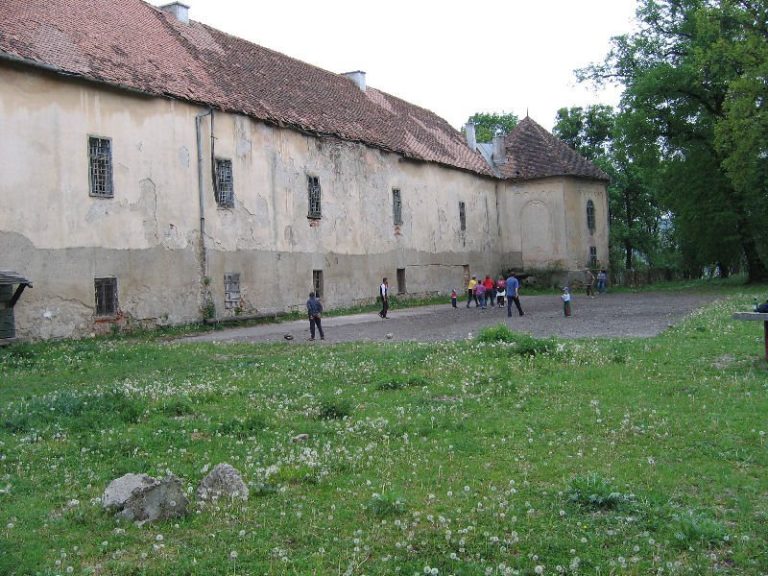
In 1658, amid the devastation following Prince George II Rákóczi’s unsuccessful campaign in Poland, Tatars advancing from the direction of Cluj toward the Meseș Gate, a mountain passage through the Meseș range, captured and burned the citadel and enslaved local people. The castle remained in ruins and was not rebuilt. The estate later passed to other families through the dowries of Csáky’s great-granddaughters. Treasury councillor Miklós Bethlen owned it in 1778. In 1808, Count Sámuel Wass had stones taken from the deteriorating castle for a manor house and stables being built at Váralmás.
Remains
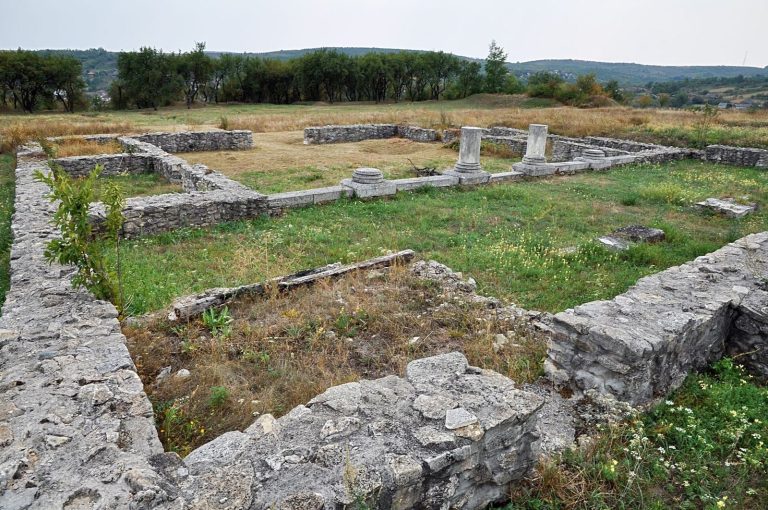
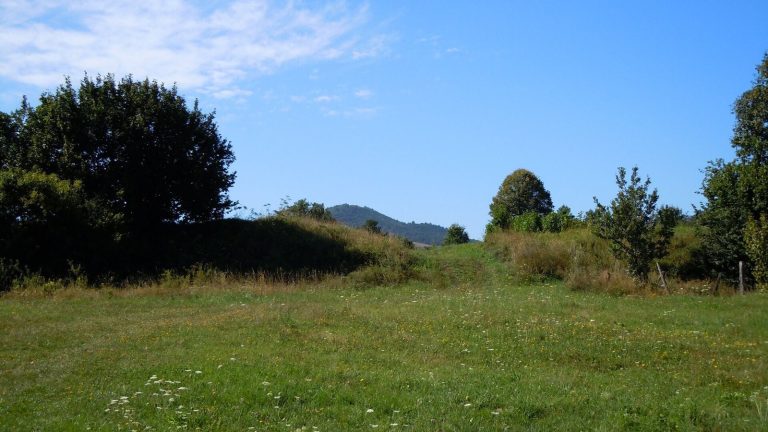
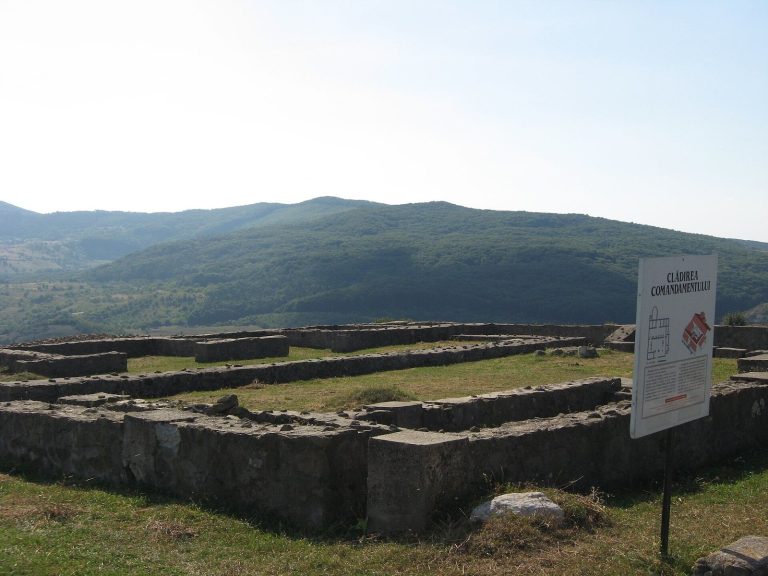
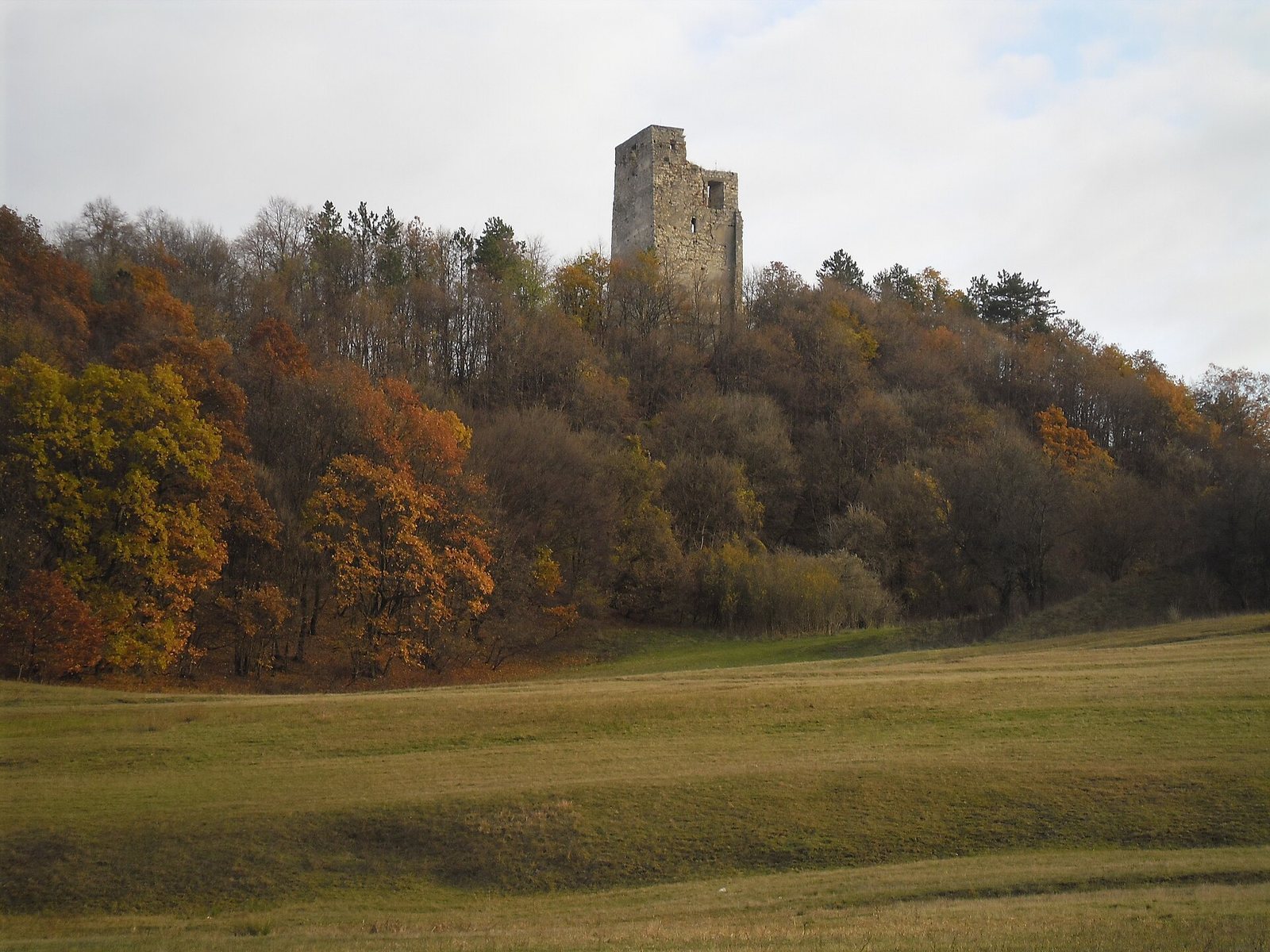
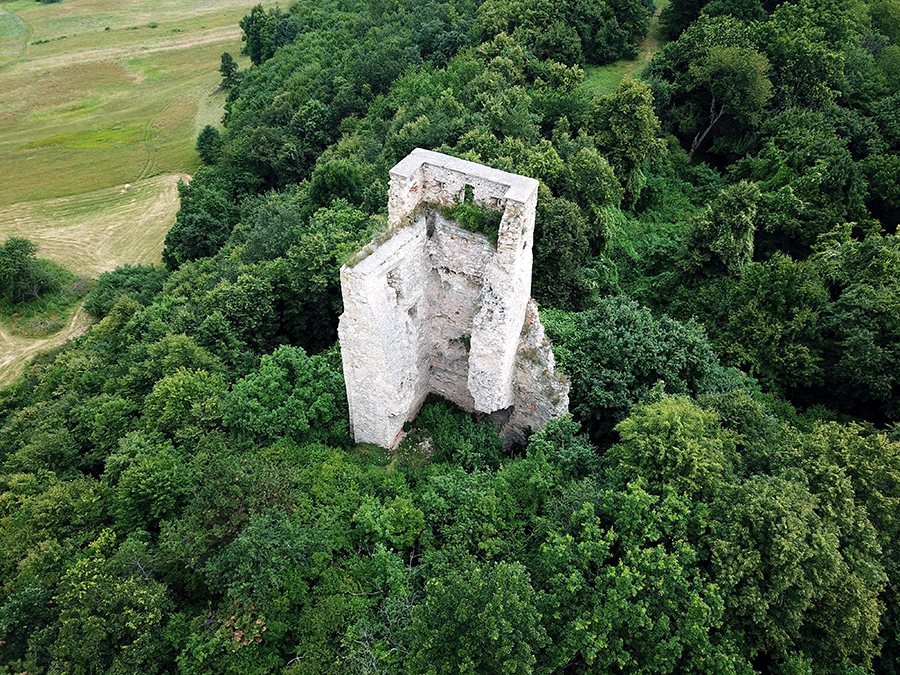
The citadel’s remains occupy a naturally defensible hilltop about 1.5 km from Almașu. The stone construction established a form that endured over the following four centuries, with the main surviving features belonging to the former inner castle and the traces of its walls.
The inner citadel
A tower about 20 m high survives within the former inner castle. Traces of the castle walls can still be discerned around it.
The monastery stone
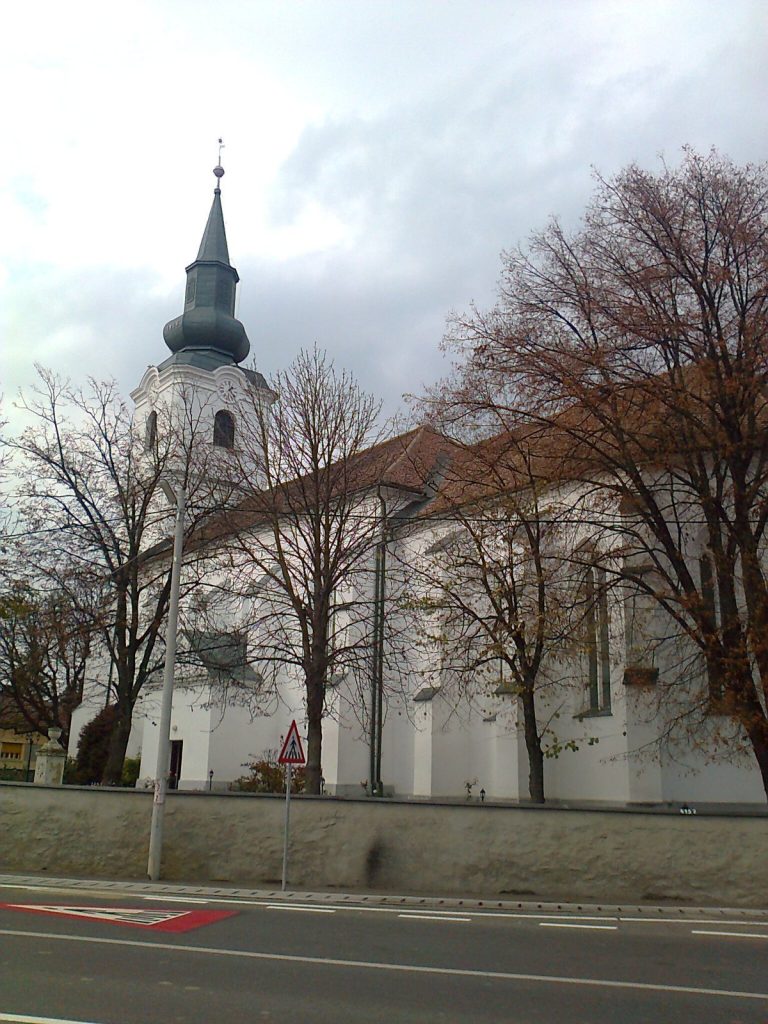
A carved Romanesque stone from the former monastery survives at the Reformed church in Váralmás. Romanesque was a medieval European architectural style characterized by rounded arches and substantial masonry. The stone originally formed part of a door or window frame and was later reused as a tombstone.