Albarregas Roman Bridge: A Roman Crossing at Mérida



Site at a Glance
- Rating
- 4.6
- Popularity
- Very Low
- Country
- Spain
- Primary era
- Classical
- External website
- Open
- Eras represented
- Classical
- Civilizations
- Roman
- Site type
- Infrastructure
- Remains
- Bridge
On this page7 sections
History
The Albarregas Roman bridge is a Roman bridge in Mérida, Spain, built by the Roman Empire toward the end of the 1st century BC during the reign of Augustus, the first Roman emperor. It carried the northern exit of Augusta Emerita, the Roman city at modern Mérida, across the Albarregas River and extended the cardo maximus, one of the town’s principal streets.
Augustan roads and urban connections
The bridge marked the beginning of the road from Emerita to Asturicam, the Roman route later known as the Vía de la Plata, which continued to Astorga. A second road also started at the crossing and ran west toward Olissipo, modern Lisbon. Its construction took place at approximately the same time as Mérida’s Roman bridge over the Guadiana.
Later adaptation and protection
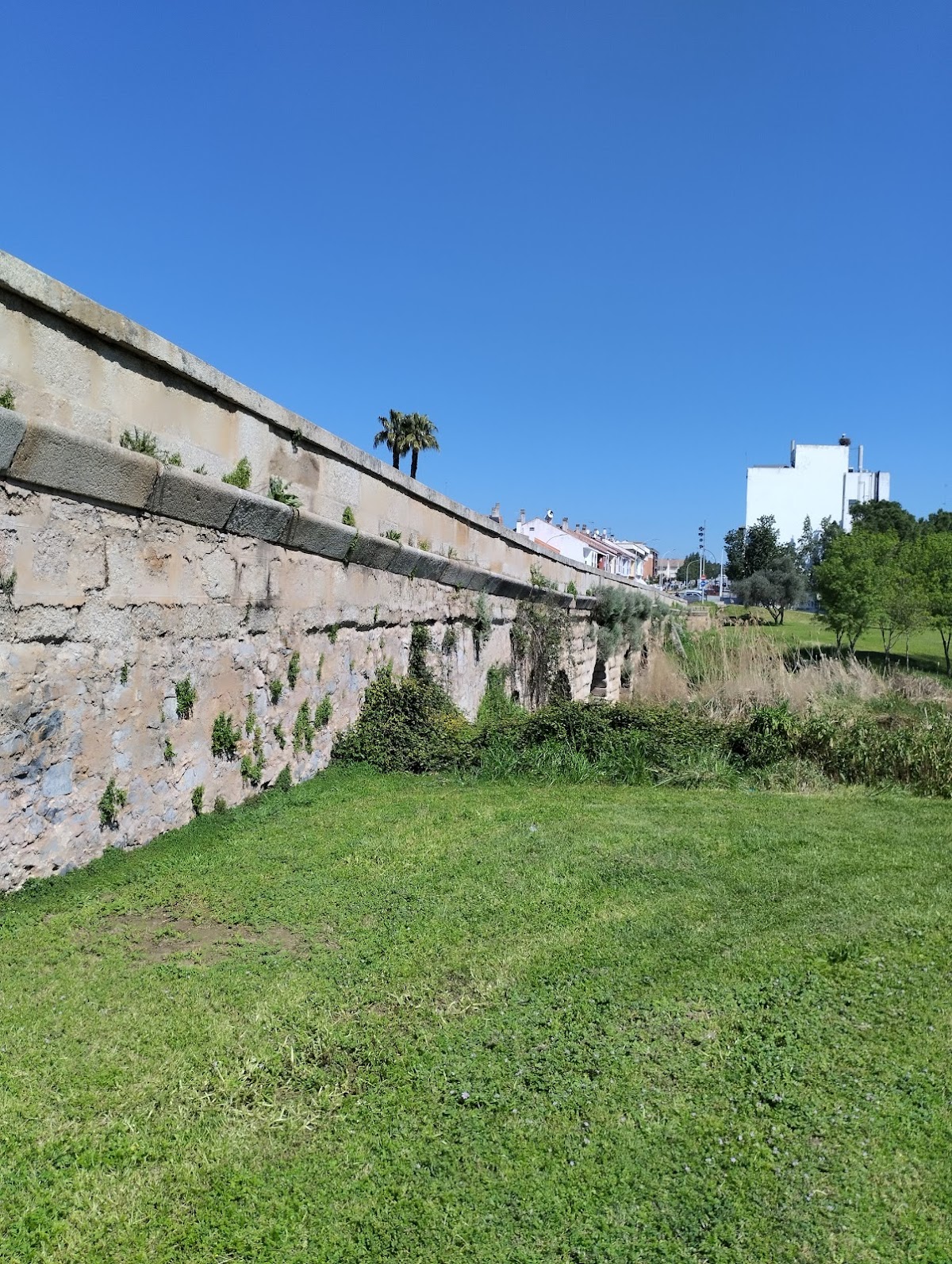
During the 19th century, the former Roman route was adapted for use as a national road. A parapet, a projecting cornice, and the uppermost course of masonry were added, but these changes did not substantially alter the Roman structure. The bridge was declared a National Monument on 13 December 1912 and is now a Spanish Cultural Heritage Site of Monument status.
Since 1993, the bridge has formed part of the UNESCO World Heritage Archaeological Ensemble of Mérida, listed under criteria (iii) and (iv) as component 664-019. It has also been used exclusively by pedestrians since that year.
Remains
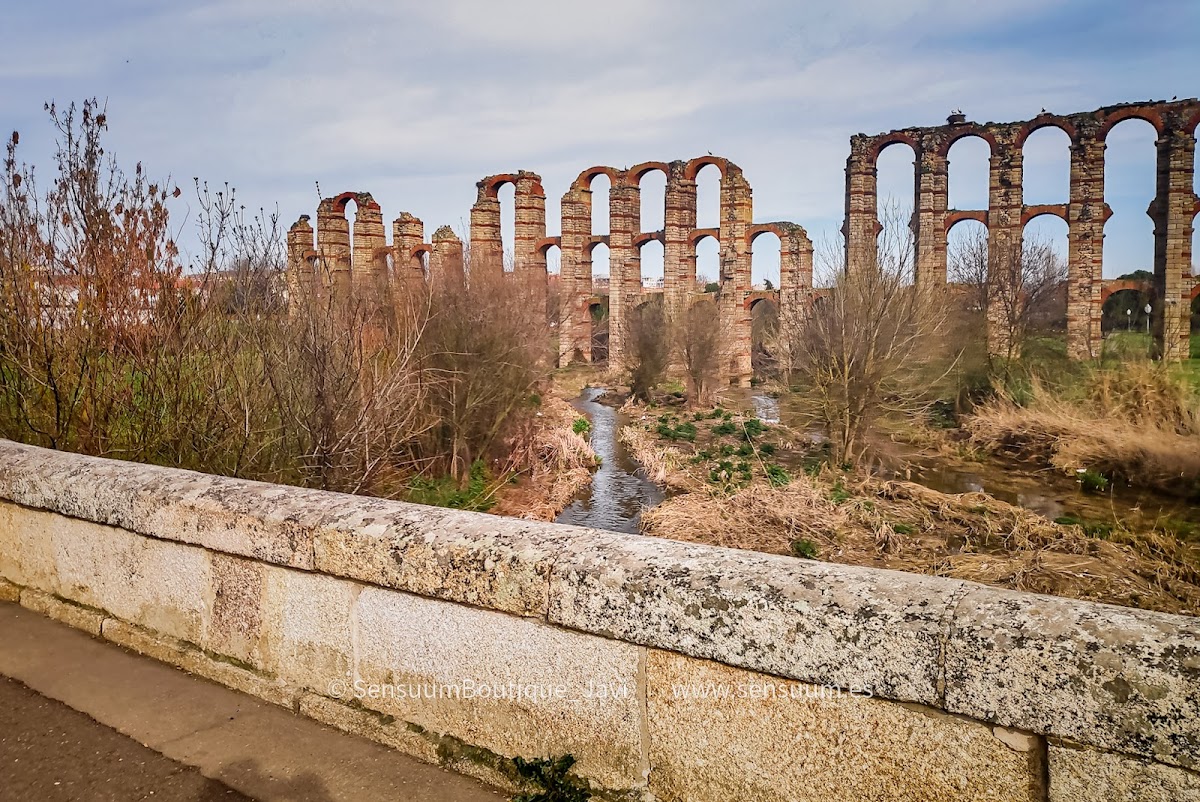
The bridge crosses the Albarregas, a tributary of the Guadiana, on a route parallel to the nearby Acueducto de los Milagros. Approximately 145 metres long, 7.9 metres wide, and 6.5 metres high on average, it retains almost the whole of its Roman work and is in an excellent state of preservation.
Arches and supporting structure
Semicircular arches
Four semicircular arches of differing proportions carry the crossing. They rest on solid piers, while the granite facing courses follow the arrangement of the wedge-shaped stones forming the arches. The solid sections above the piers are tympana, the wall areas between the arches and the roadway, and they do not contain the flood-relief openings seen on Mérida’s other Roman bridge over the Guadiana.
Granite and Roman concrete
Roman concrete forms the core of the structure, which is faced with regularly laid granite ashlar, or carefully shaped stone blocks. Their outer faces project deliberately, creating a rusticated surface. Two small openings at the southern end, beside the city, were made to relieve exceptional floods because the main bridge structure was sufficient for the river’s normally low flow.
The structure and surface treatment closely resemble those of the Guadiana bridge at Mérida. This similarity supports an Augustan attribution for the Albarregas crossing.