Al-Ula Old Town: A Historic Settlement in Saudi Arabia
Site at a Glance
- Popularity
- High
- Country
- Saudi Arabia
- Primary era
- Medieval
- Eras represented
- Medieval
- Civilizations
- Unclassified
- Site type
- City
On this page13 sections
History
Origins and medieval growth
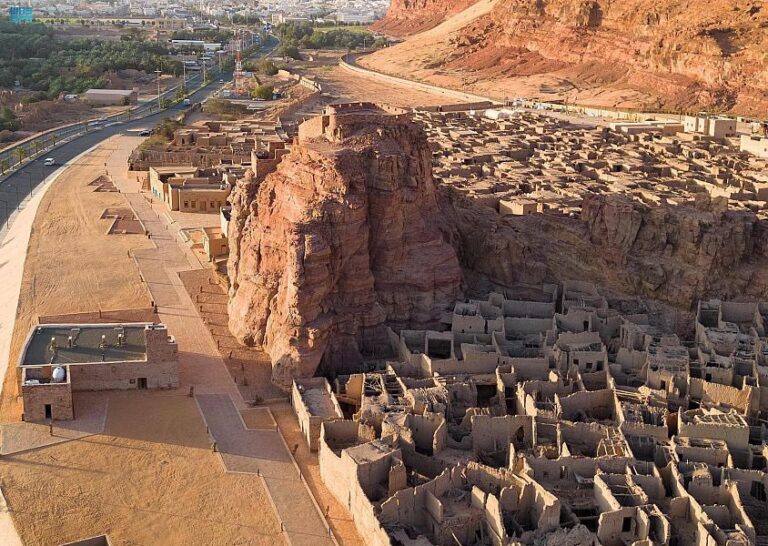
Al-Ula Old Town is a historic settlement beside an oasis in Al Ula, Saudi Arabia. Arab Muslims founded it about seven centuries ago near the remains of Dadan, an ancient city that had served as the capital of the Dadan Kingdom.
The town prospered between the 12th and 15th centuries, after Qarah, now called al-Mabiyat, declined about 18 km to the south. Routes connecting the northern and southern parts of the Arabian Peninsula passed through Al-Ula, making it an important place for trade.
An early 13th-century description portrays a small town under an emir, a ruler or governor, where travelers could leave their belongings for safekeeping. The medieval Arab geographer Yakut al-Hamawi explained Al-Ula as a plural form of al-Ulya, meaning “the higher.” He also wrote that Muhammad, the founder of Islam, stopped there on his way to Tabuk and built a mosque where he had prayed.
Pilgrimage routes and later change
From the early Islamic period, Al-Ula served pilgrims traveling between Damascus and Mecca, a role that became especially important from the 12th century onward. The Ottoman Empire built the Hejaz Railway, a line serving the Hejaz region, in the early 20th century. Its construction altered regional transport patterns and ended Al-Ula’s long-standing importance as a transport and religious center.
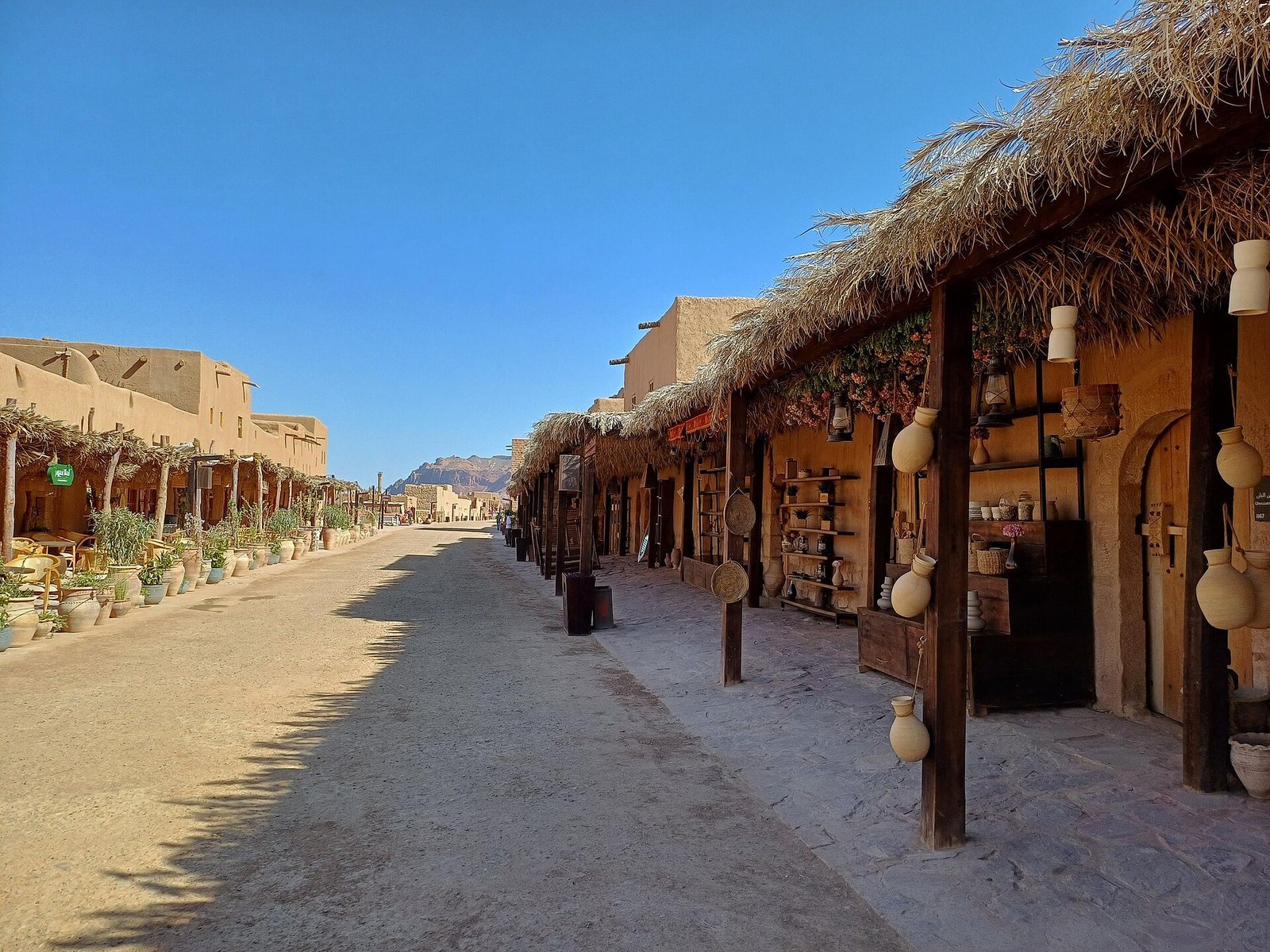
Residents left during the 20th century, and the town is now uninhabited. Conservation and reconstruction work is under way. Al-Ula is regarded as an important cultural heritage site and as one of three surviving Islamic towns worldwide.
Remains
Setting and settlement plan
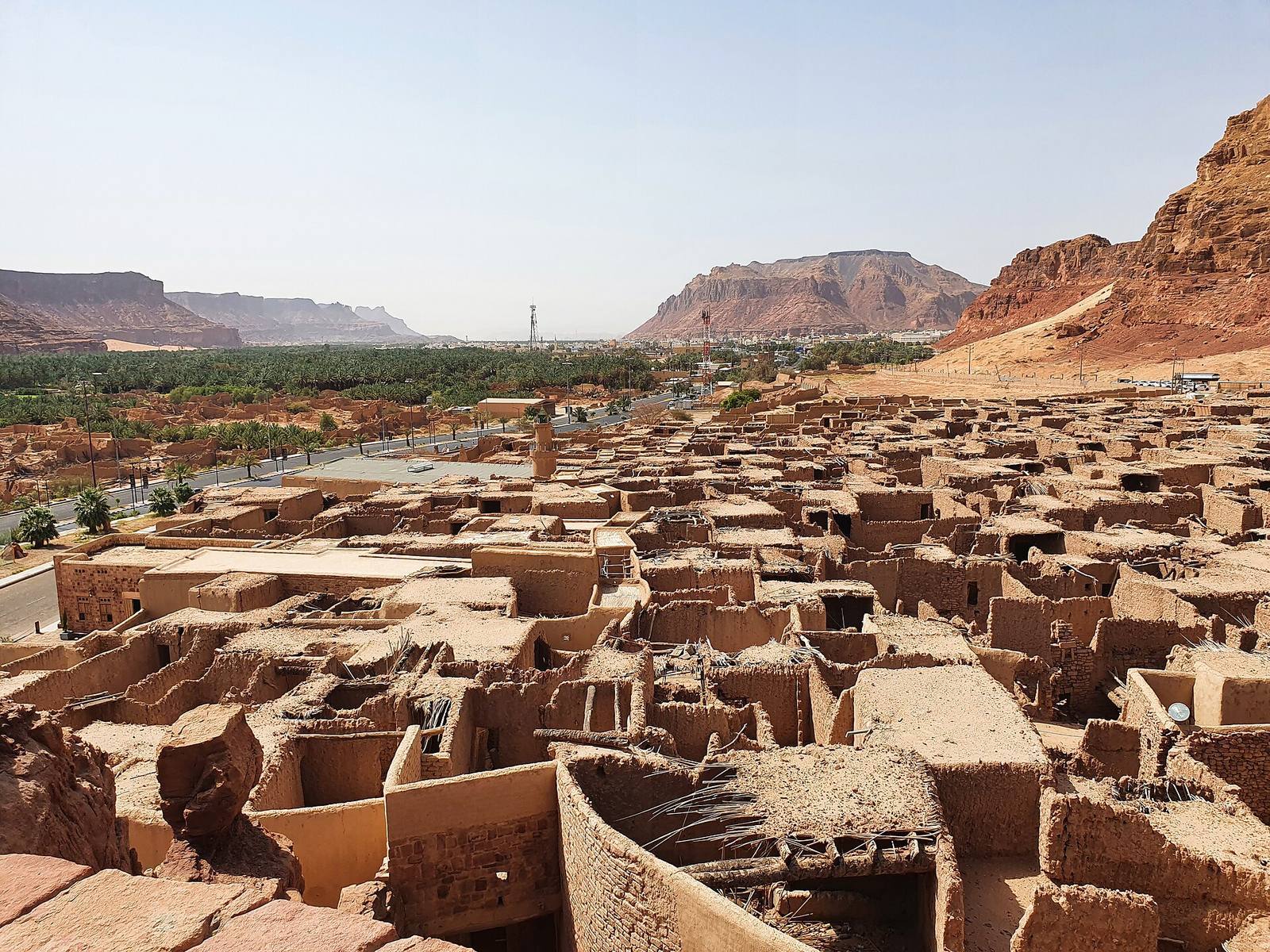
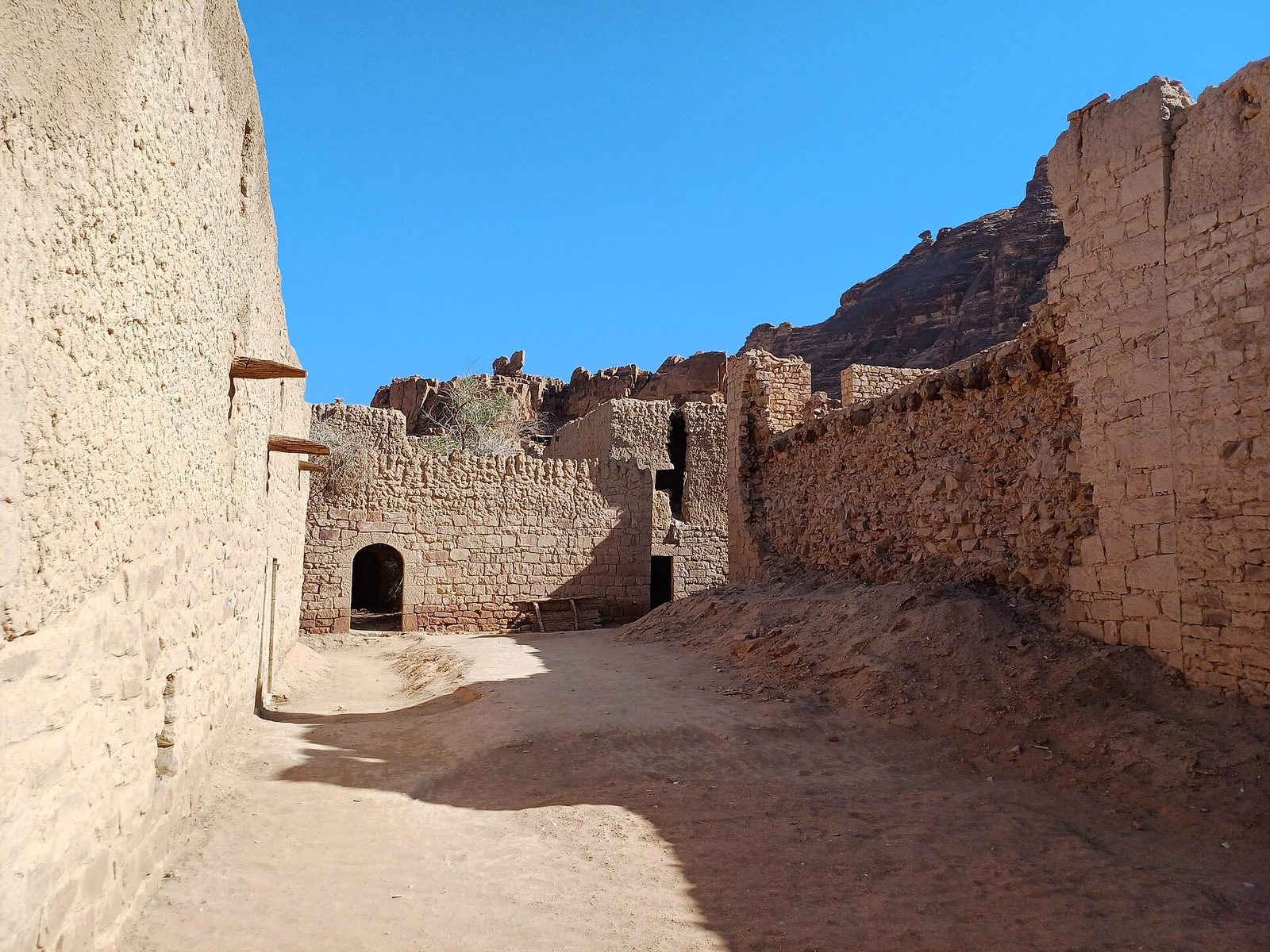
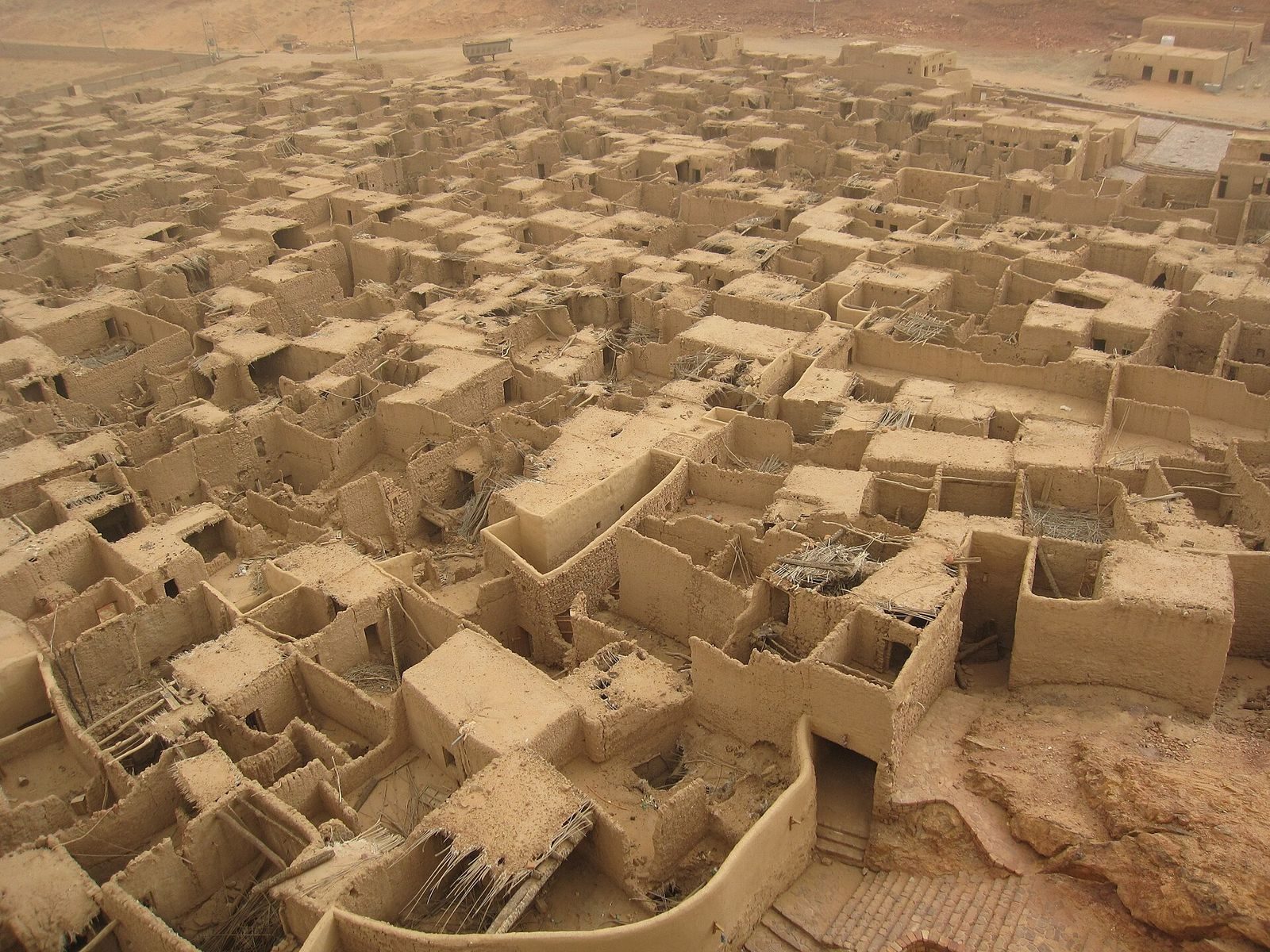
The town occupies raised ground in the valley, a position chosen to reduce the risk of flooding in the rainy season. It lies about 22 km from Hegra, also known as Mada’in Salih. An early 13th-century description places it in sandy country between two high mountains, beyond a narrow pass and a vegetated valley, with springs nearby. Palms and fruit trees grew in the valley, where spring water supported farming. Al-Ula’s stone and mud-brick buildings incorporate blocks reused from the nearby ruins of Dadan. About 870 homes stand among more than 400 shops and five squares, within two districts: al-Shqīq in the north and al-Ḥilf in the south. Packed closely together, the buildings give the town the appearance of a single large structure or fortress. Its narrow, winding lanes also served defensive and cooling purposes.
Homes
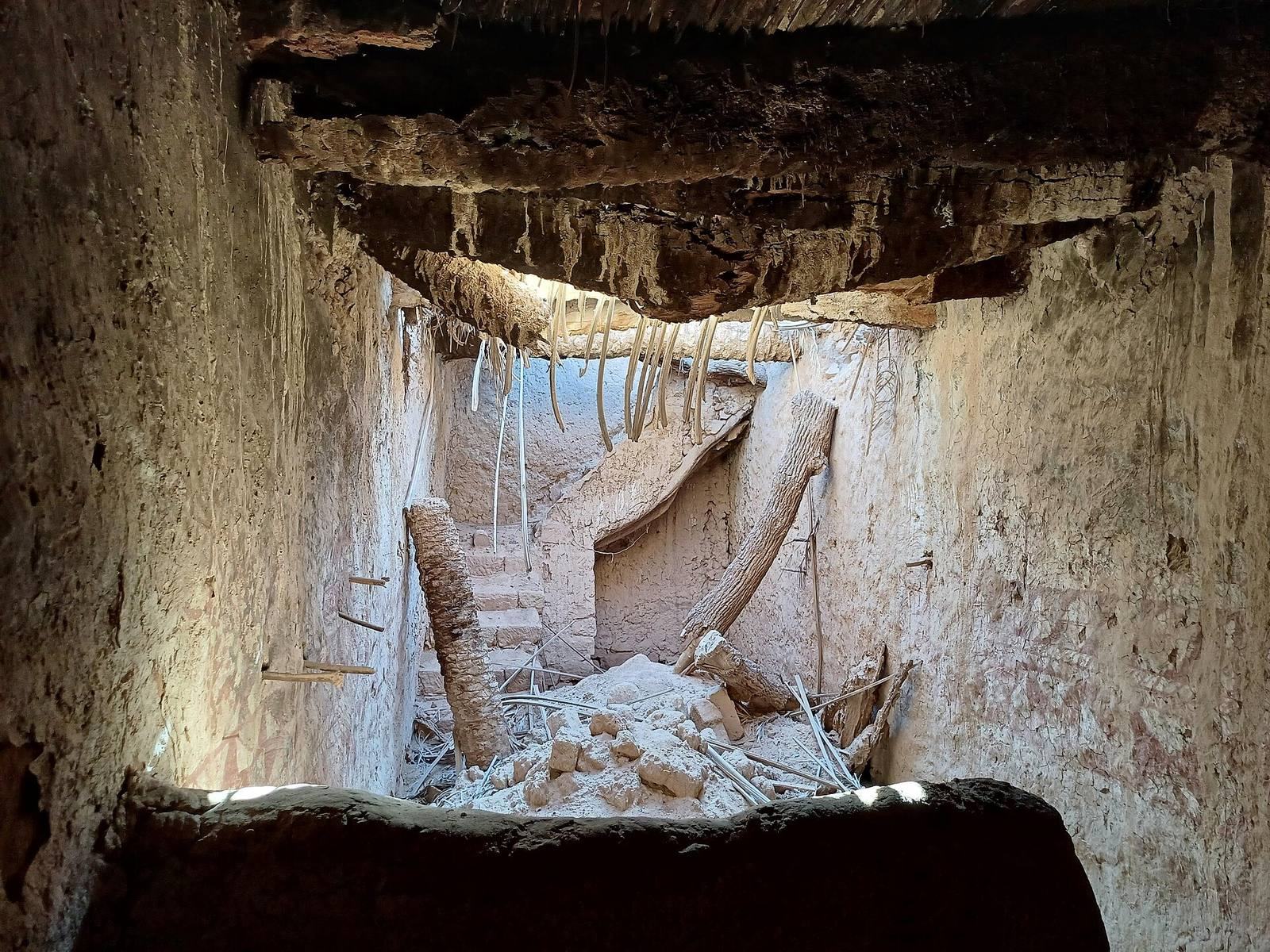
Most houses have two storeys. On the lower floor, a vestibule provided space to receive guests, alongside storage for household provisions. Living and sleeping rooms, a kitchen, a toilet, and an open courtyard occupied the upper floor. In some places, rooms extend over pedestrian lanes to form covered passages. Much of the town’s building fabric remained intact after its residents departed.
Mosques
Al-Ula had five mosques, three small and two large enough for Friday prayers. The Rock Mosque and the principal mosque, known as the Mosque of the Judges, were among the larger buildings.
Rock Mosque
A local patron had houses removed to make room for the Rock Mosque. During the medieval period, the mosque was established as a permanent religious endowment.
Mosque of the Judges
The town’s principal mosque took its name from an influential family of legal scholars. Family members managed its call to prayer and sermons, and led the prayers.
Fortress and solar timekeeping
Mousa Bin Nusayr Castle
The town’s historic fortress is also known as Mousa Bin Nusayr Castle. Mousa Bin Nusayr was an Arab commander and governor of the early Islamic era.
Tantora
Tantora is a historic solar timekeeping device used to mark the start of the agricultural season. It helped guide seasonal farming and the timing of water distribution.
Southern sundial
A separate sundial is located in the southern part of the town.