Skarkos: An Early Cycladic Settlement on Ios
Site at a Glance
- Popularity
- Medium
- Country
- Greece
- Primary era
- Bronze Age
- Eras represented
- Bronze Age
- Civilizations
- Unclassified
- Site type
- City
On this page5 sections
History
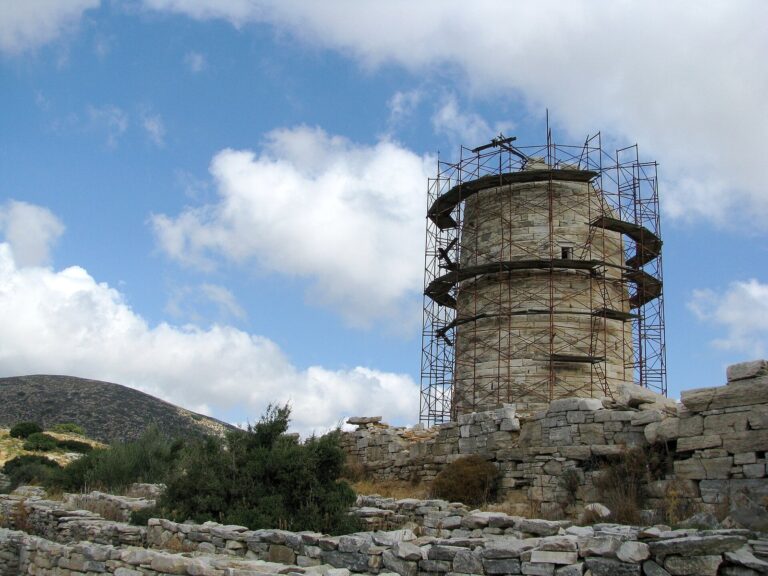
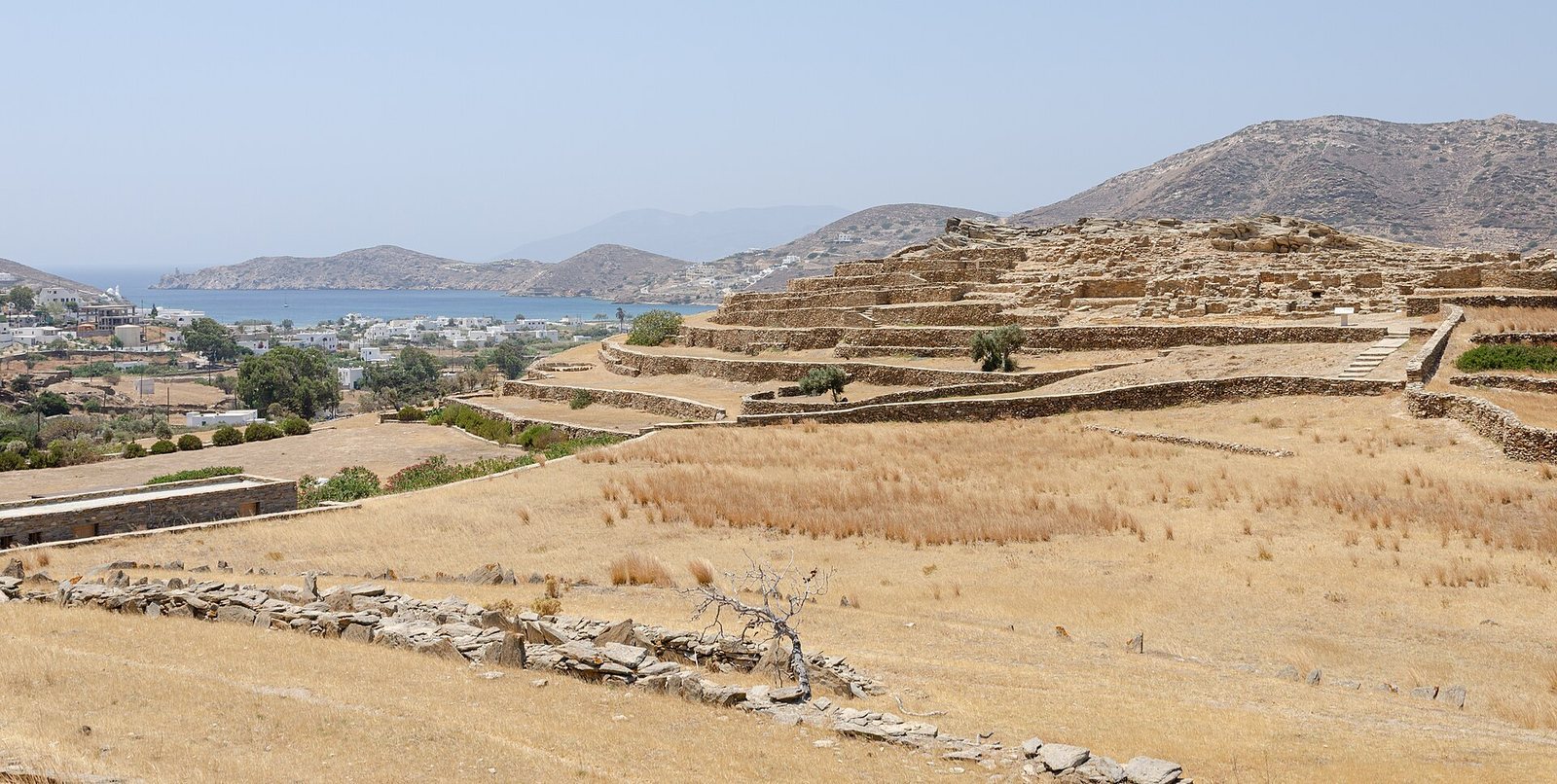
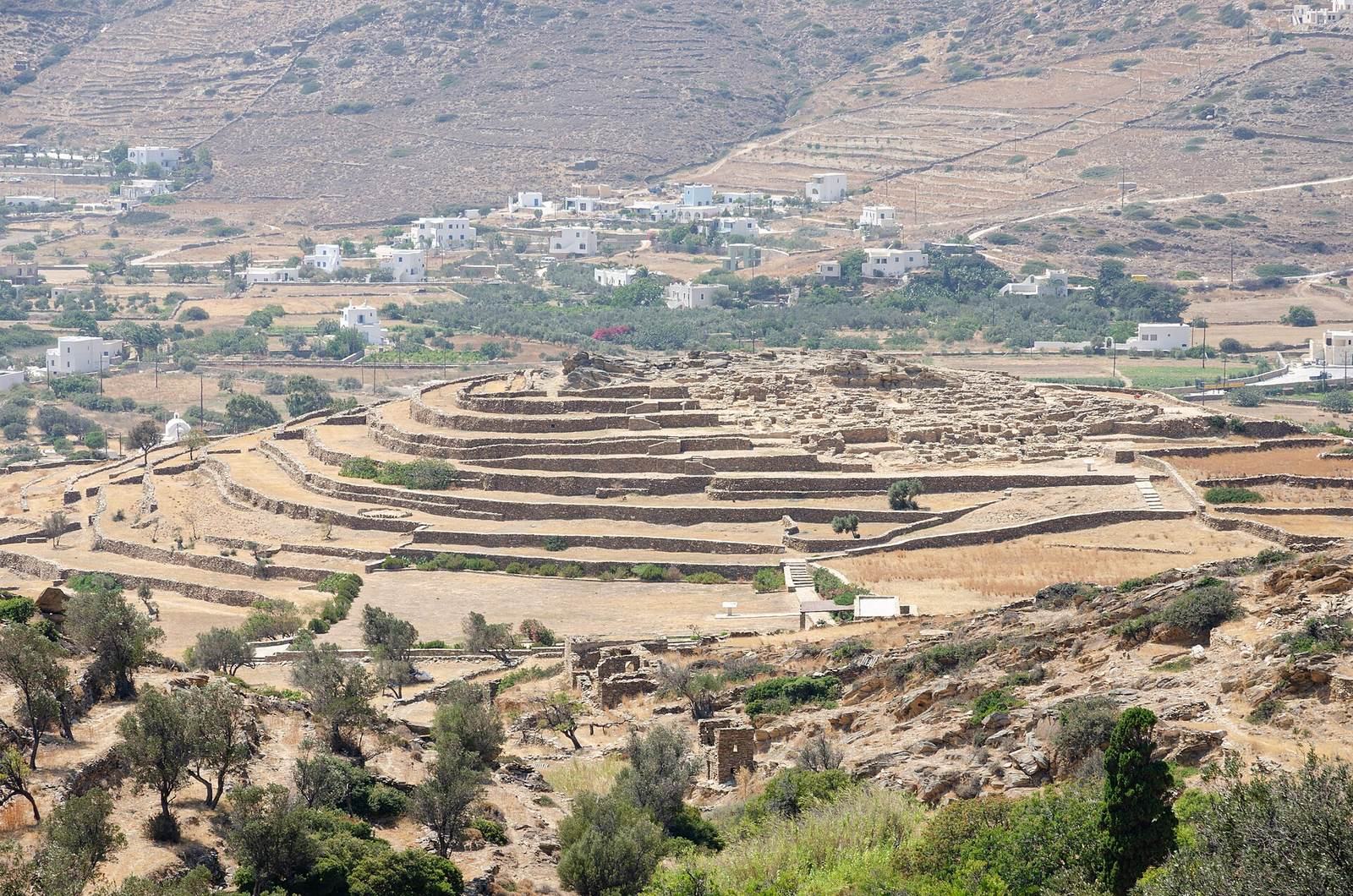
Skarkos is an Early Cycladic settlement on a hill in western Ios, Greece, about one kilometre north of Chora. Occupied from about 3200 to 2300 BCE, it reached its peak during Early Cycladic II, around 2800–2300 BCE, when it was associated with the Keros-Syros culture, an archaeological culture of the Cyclades. Covering 1.1 hectares, Skarkos is the largest and best-preserved site of this culture, and its preservation makes it one of the Aegean’s most important prehistoric sites. Its population has been estimated at 200 to 300 people. The ancient name of the settlement is unknown; Skarkos is a modern name.
After the settlement’s occupation, a cemetery was established over it and used during the middle-to-late Bronze Age, around the middle of the second millennium BCE. Burials included graves cut as vertical shafts and burials in large jars.
Excavations began in 1896 and continue. Systematic work on the hill’s northern and eastern sides took place from 1984 to 1997. Conservation carried out from 2002 to 2007 used minimal, sensitive interventions and preserved the landscape. The work received the 2008 European Union Prize for Cultural Heritage / Europa Nostra Top Prize for Conservation.
Remains
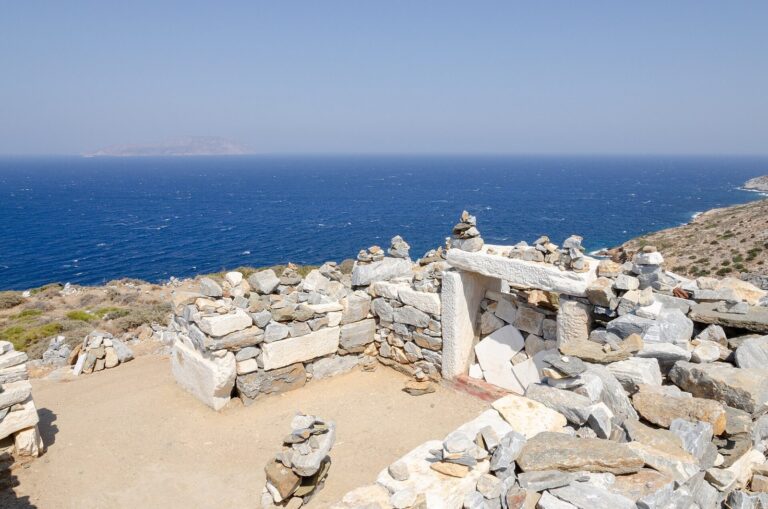
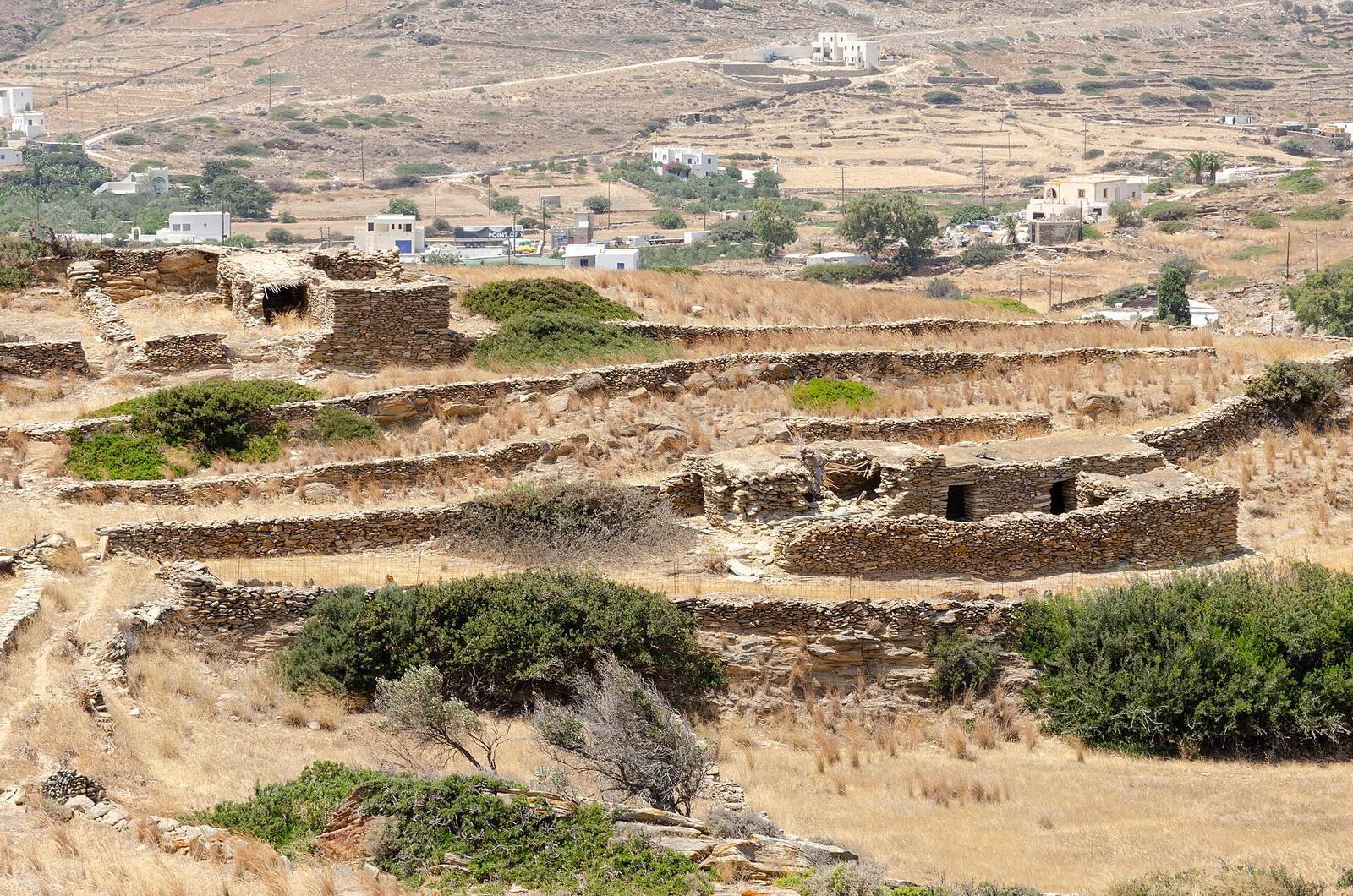
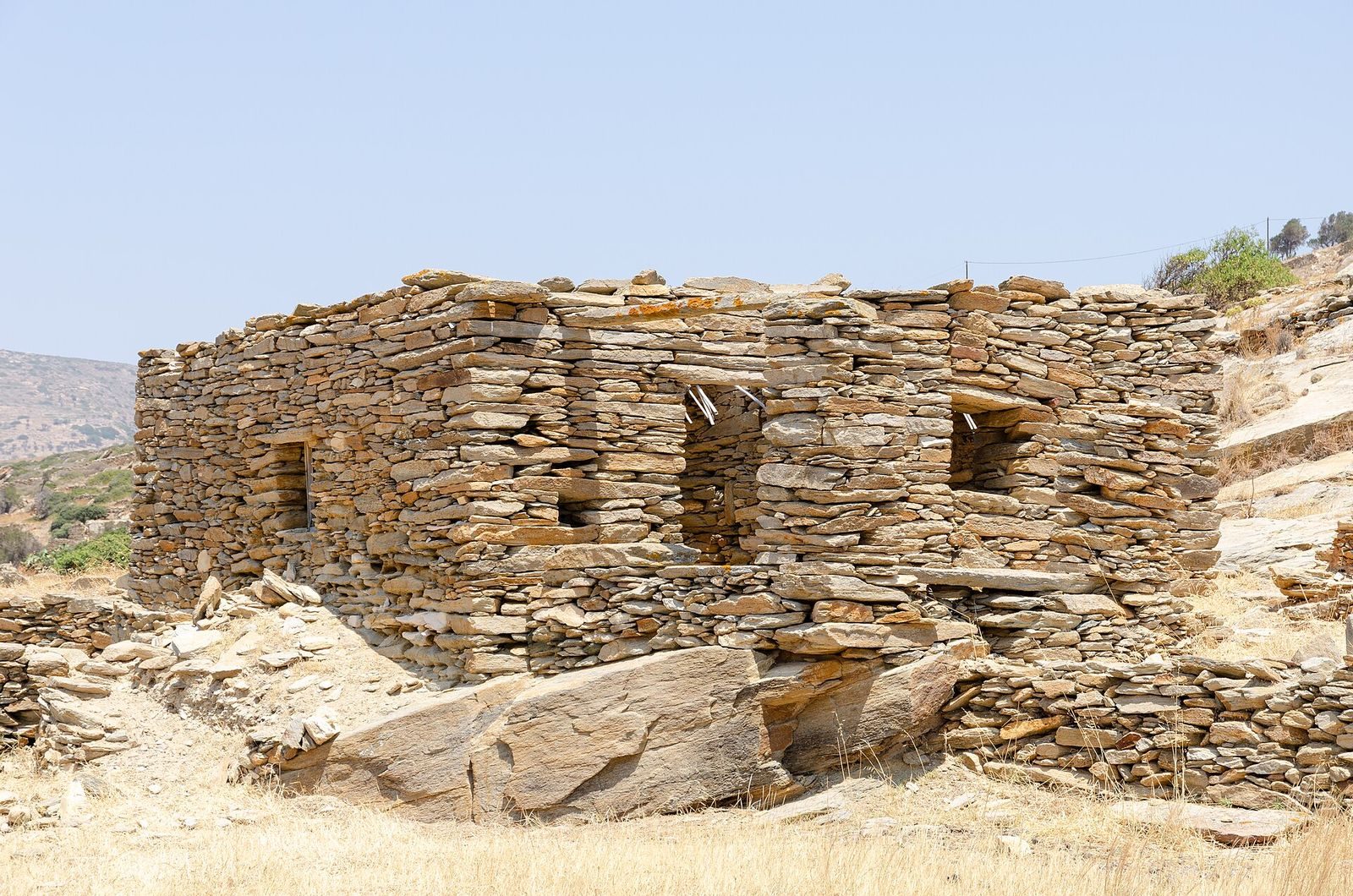
The settlement follows the natural contours of its hill in terraces, with a roughly circular plan. It lies near Ios’s fertile plains and harbor. Excavations have exposed about one-third of the settlement, including approximately 35 houses, while substantial stone walls survive to heights of three to four metres.
Streets and settlement plan
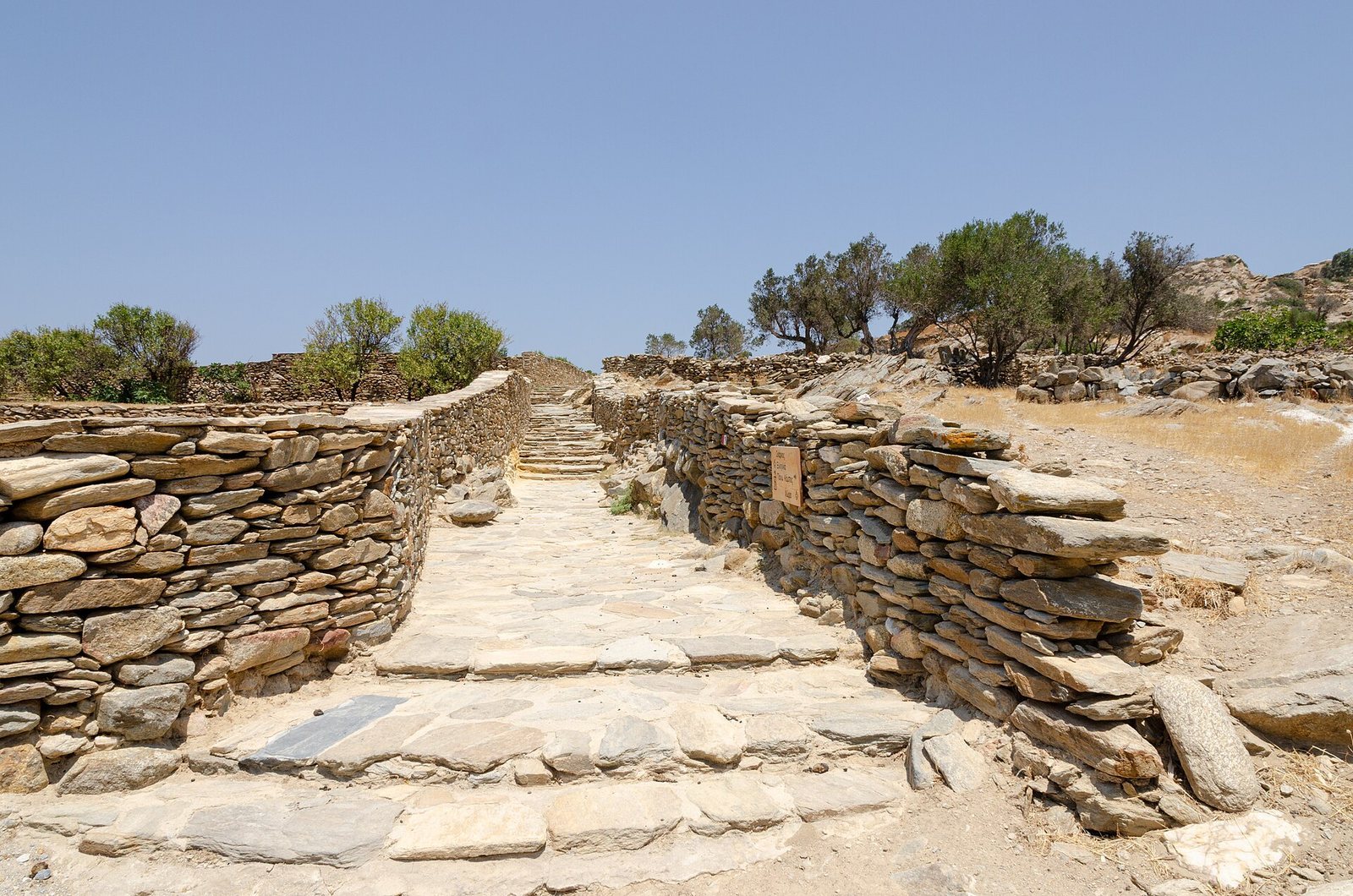
Two main streets, each about two metres wide, formed part of a network that also included streets between one and two metres wide. The excavated areas include paved streets, public spaces and a drainage system. The settlement’s plan has been compared with that of Poliochni, a prehistoric settlement on the northern Aegean island of Lemnos dating to the beginning of the third millennium BCE.
Houses and domestic activity
The rectangular dwellings were built of stone and had ground and upper floors, with enclosed courtyards; some rose to two storeys. Differences in their sizes have been interpreted as evidence of social distinctions. Ground floors were used for preparing food, while upper floors served as living spaces and for storing pottery and other goods. Some upper floors also functioned as workshops.
Storage and excavated finds
Large storage jars, called pithoi, stood about one to 1.3 metres high and held agricultural produce. Smaller amphorae were used to carry liquids. Clay seals found on pottery point to controls on agricultural production and the organization of goods distribution. Other finds include marble figurines and Cycladic idols, figurines associated with prehistoric Cycladic art; obsidian, a volcanic glass used for sharp-edged tools; seals; pottery; marble and stone vessels; metal, stone and bone tools; animal bones; and seashells. Some of these objects are displayed at the archaeological museum in Chora.