Musa ibn Nusayr Castle: A Fortified Defensive Position in Saudi Arabia


Site at a Glance
- Rating
- 4.4
- Popularity
- Low
- Country
- Saudi Arabia
- Primary era
- Iron Age
- External website
- Open
- Eras represented
- Iron Age
- Civilizations
- Dadanite–Lihyanite
- Site type
- Military
- Remains
- Fort
On this page5 sections
History
Musa ibn Nusayr Castle, also called AlUla Castle, is a sixth-century BCE fortified structure in Saudi Arabia, overlooking Old AlUla in a fertile valley of the country’s western region. Described as the oldest building in Old AlUla, it served as a defensive position for the settlement and occupied a commanding place above the route used by Hajj caravans, organized groups of pilgrims travelling to Mecca.
Foundation and Defensive Role
The castle was established as a fortified position for the settlement and was renovated in several phases over the centuries. Its elevated location allowed it to watch the main caravan route and helped connect the settlement’s defenses with the movement of pilgrims through the valley.
The Name of Musa ibn Nusayr
Local tradition associates the castle with Musa ibn Nusayr, an Arab Muslim military commander linked to the early Islamic expansion in North Africa and Iberia. This tradition gave the castle its present name. The alternative name, AlUla Castle, reflects its place in the city and its construction from sandstone.
Recent Restoration
The castle has recently undergone restoration, preserving a structure whose successive renovations reflect its long defensive use and continuing importance within Old AlUla.
Remains
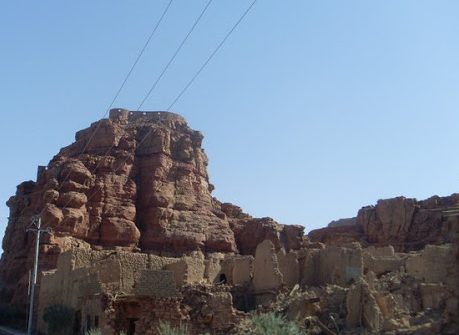
The castle is a dressed-stone structure built on the summit of a small plateau atop a high mountain in AlUla Governorate. It stands 45 metres above the level of the old town and covers approximately 180 square metres. An exterior wall encloses the summit, with several openings used for observation and firing. Exterior walls form the surviving fabric of the castle.
Access to the summit is provided by a carefully paved stone staircase containing more than 300 steps. Water could be obtained from a well cut into the rock below the mountain, an important resource for a fortified position above the settlement. Together, the elevated walls, viewing and firing openings, staircase, and rock-cut well define the castle’s defensive layout.