Al-Rashid Mausoleum: A Seljuk Mosque and Shi’ite Shrine
Site at a Glance
- Popularity
- Medium
- Country
- Iran
- Primary era
- Medieval
- Eras represented
- Medieval
- Civilizations
- Seljuk
- Site type
- Religious
- Remains
- Tomb
On this page9 sections
History
The Al-Rashid Mausoleum is a former mosque and active shrine beside Shahrestan Bridge in Esfahan, Iran. Completed in 1138 under the Seljuk dynasty, which ruled parts of Iran and the Middle East, it later became the burial place of Abbasid caliph al-Rashid Billah.
Before and during the Seljuk period
The mosque was built over the remains of a Zoroastrian fire temple, belonging to an Iranian religion, which had been destroyed during the seventh-century Rashidun conquest, the early Muslim campaigns led by the first four caliphs. Another tradition places a temple of Mithraism, a religious tradition centered on Mithra, at the site. The mosque was completed under Seljuk rule in 1138.
Al-Rashid’s flight and burial
After Seljuk forces besieged Baghdad, al-Rashid fled first to Mosul and then traveled through other cities before reaching Esfahan. His dispute with Seljuk sultan Mas’ud ibn Muhammad ibn Malikshah followed al-Rashid’s failure to meet tribute obligations his father and predecessor, al-Mustarshid, had undertaken. About two years after his flight, al-Rashid was killed in Esfahan in 1138 during Ramadan by Ismaili fida’is, members of a Shi’ite branch whose operatives carried out targeted attacks.
Al-Rashid was buried at the mosque’s north corner, and the building was subsequently converted into his mausoleum. Later burials included Husayn ibn Zayd al-Hasani, whose association with the shrine gave it the name Imamzadeh Husayn, a shrine connected with a descendant of an Imam. Another burial is associated with a figure called Shah Ibrahim.
Later use and heritage status
Several centuries later, the mosque and its minaret were demolished. The mausoleum remains an active Twelver Shi’ite shrine, belonging to a branch of Shi’ism that recognizes a line of twelve Imams. It was added to Iran’s National Heritage List in 2003.
Remains
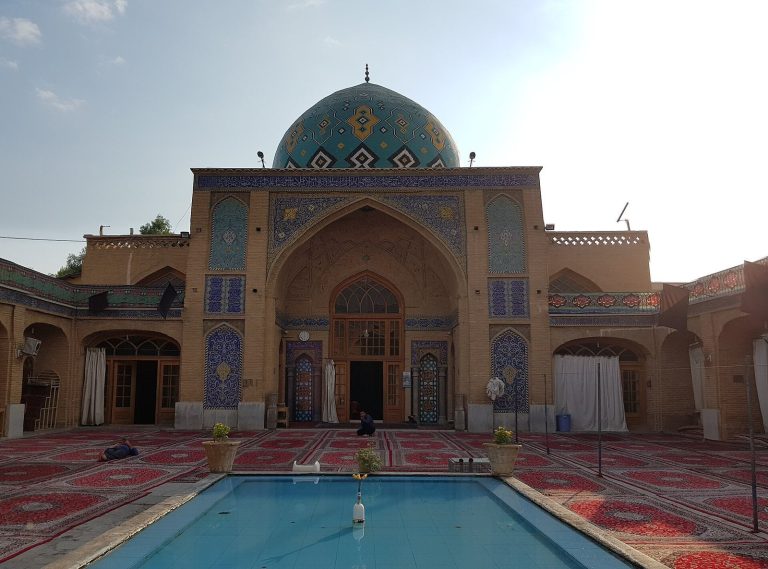
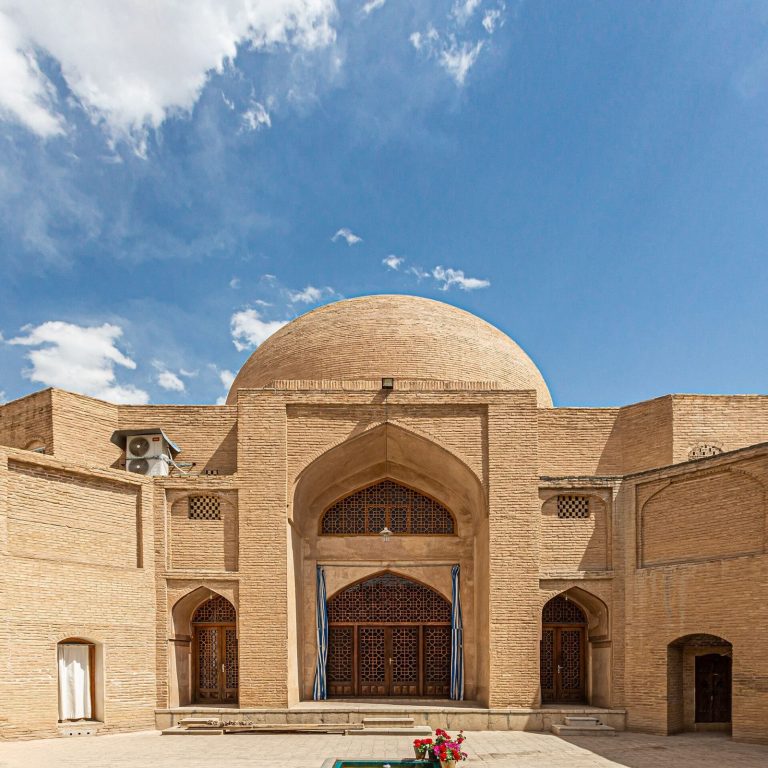
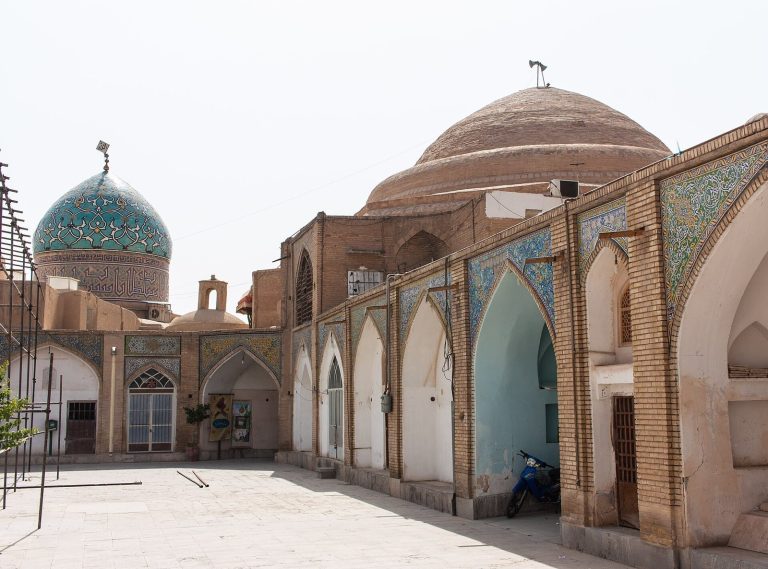
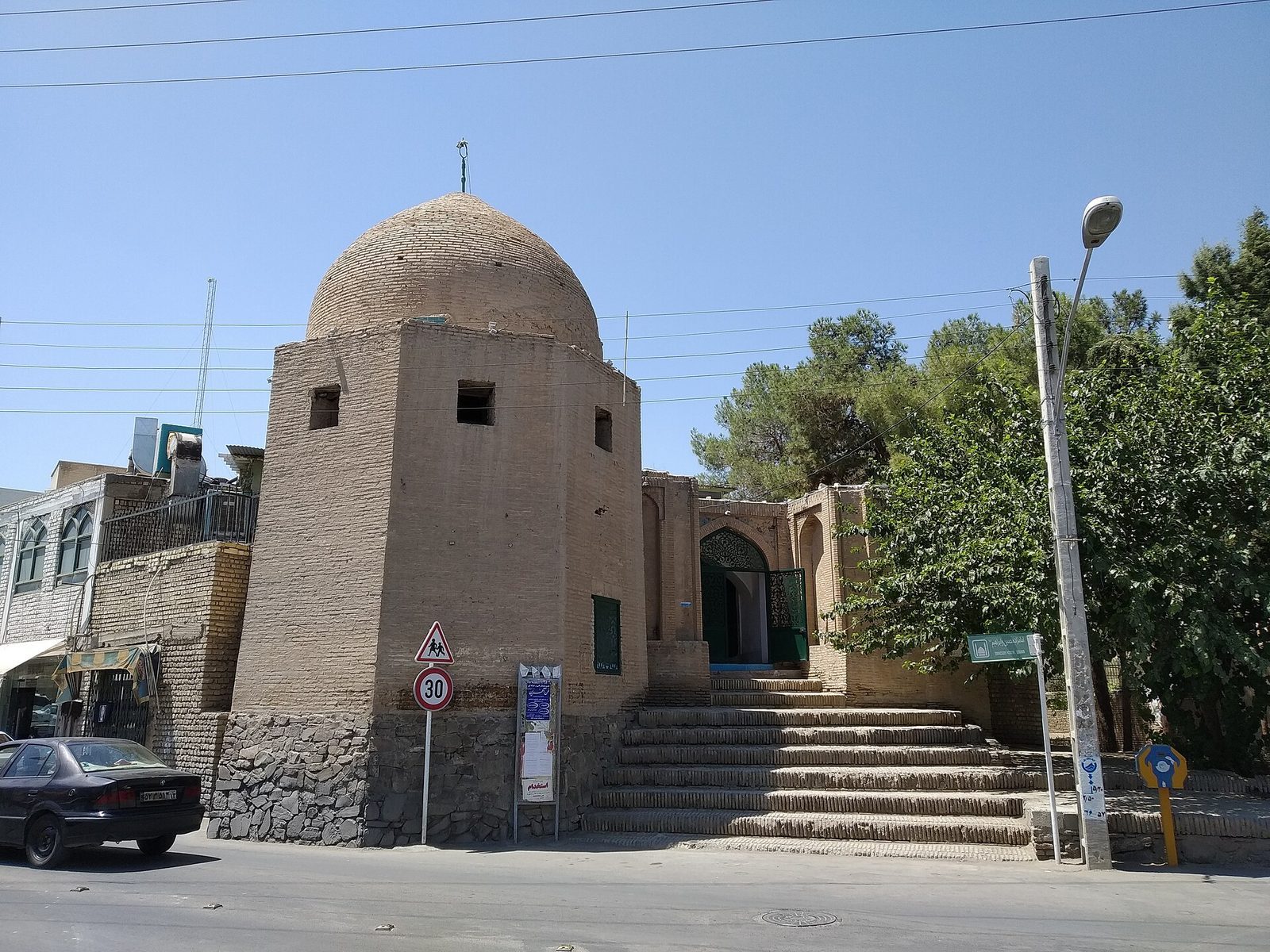
The surviving complex centers on a single-domed tomb. Its architecture is associated with the Razi style, a medieval Iranian tradition, and its construction uses brick alongside stone and plaster.
Surviving features
Domed tomb
The tomb is the principal surviving structure. Its brick construction incorporates stone and plaster, and its single dome defines the building’s form.
Shrines and grave screen
The complex includes at least two shrines. A wooden screen encloses the grave of Husayn ibn Zayd al-Hasani.
Stucco inscription
A stucco inscription in Kufic, a style of Arabic calligraphy, decorates the mausoleum.