Rewley Abbey: A Cistercian Study House in Oxford
Site at a Glance
- Rating
- 3
- Popularity
- Very Low
- Country
- United Kingdom
- Primary era
- Medieval
- Eras represented
- Medieval
- Civilizations
- English
- Site type
- Religious
- Remains
- Monastery
On this page11 sections
History
Rewley Abbey was a Cistercian monastery in Oxford, United Kingdom, formally raised to abbey status on 11 December 1281. The Cistercians were a Catholic monastic order that began at Cîteaux in France. Rewley became a center for training monks, although its educational role later declined.
Foundation and Cistercian rule
An earlier Cistercian study house in Oxford was founded around 1272 by Richard, 1st Earl of Cornwall, a high-ranking English noble. Richard had planned a college or chantry, an endowed foundation for prayers and Masses for the dead, staffed by three secular priests, clergy who did not belong to a monastic order. He wanted prayers offered for him.
In 1280, Richard’s son Edmund proposed a Cistercian college in Oxford, and the order’s governing assembly accepted. It granted the house the privileges of the College of St Bernard in Paris, a Cistercian college, and placed it under the Abbot of Thame. The following year, the assembly authorized the Abbot of Thame to appoint Rewley’s abbot, the head of the abbey, and directed that a daily Mass be said for Richard. On 11 December 1281, Edmund formally raised the house to abbey status, choosing six Cistercian monks instead of the three priests his father had intended. Rewley was a daughter house of Thame Abbey and part of the Cistercian network linked to Cîteaux. It was dedicated to Saint Mary and fell within the bishop of Oxford’s jurisdiction.
A center for Cistercian study
In 1292, the Abbot of Cîteaux directed monasteries in the Canterbury province with more than twenty monks to send one to study at Rewley. The community grew from fifteen members at first to sixteen by 1294. The monks were described as students in 1300 and scholars in 1315.
Rewley’s educational role weakened as Cistercian theological training became increasingly concentrated in Paris around 1320. A requirement for monasteries with more than forty religious members to send someone to study there reinforced the shift. Rewley remained an abbey, but its role as a place of study probably ended when Bernard College was founded in Oxford in 1437. Henry VIII, the abbey’s patron, apparently required Rewley to maintain a grammar master and to support one or two monks at Bernard College.
Land and church rights
Rewley received the manor of Yarnton, mills at Cassington, and the hamlet of Wyllanston in the parish of Mixbury. Its other holdings included two parks at Nettlebed, Great and Little Hymer, now called Highmore, and tenements in London. Before 1291, the abbey also held property at Chesterton in Oxfordshire.
The abbey acquired the right to nominate a clergyman to St Wendron’s church in Cornwall and, by 1324, received its revenues subject to the church’s obligations. Edward the Black Prince later gave Rewley the right to nominate a clergyman at St Stithians, and the bishop granted the abbey that church’s revenues in 1354. In 1396, Rewley’s abbot accused men of taking goods from the abbey’s lands at Arwothell in Cornwall. By 1535, the abbey had rents in Coventry but had added little beyond its earlier endowments; its annual income was assessed at £174.
Dissolution
Rewley was dissolved in 1536 during Henry VIII’s suppression of the monasteries, which followed his break with the Catholic Church. Early that year, Abbot Nicholas Austen offered Thomas Cromwell, the king’s leading minister, £100 to save the house, possibly by turning it into a college. The effort failed. Austen received a pension and retired to Trinity Hall, a University of Cambridge college, to study. The abbey passed to Dr George Owen.
Remains
Rewley stood on historic Osney Island, about 500 metres northwest of Oxford city centre and near Osney Abbey. Its surviving fabric lies beside Castle Mill Stream, close to the terminus of the Oxford Canal.
Surviving fabric and later use
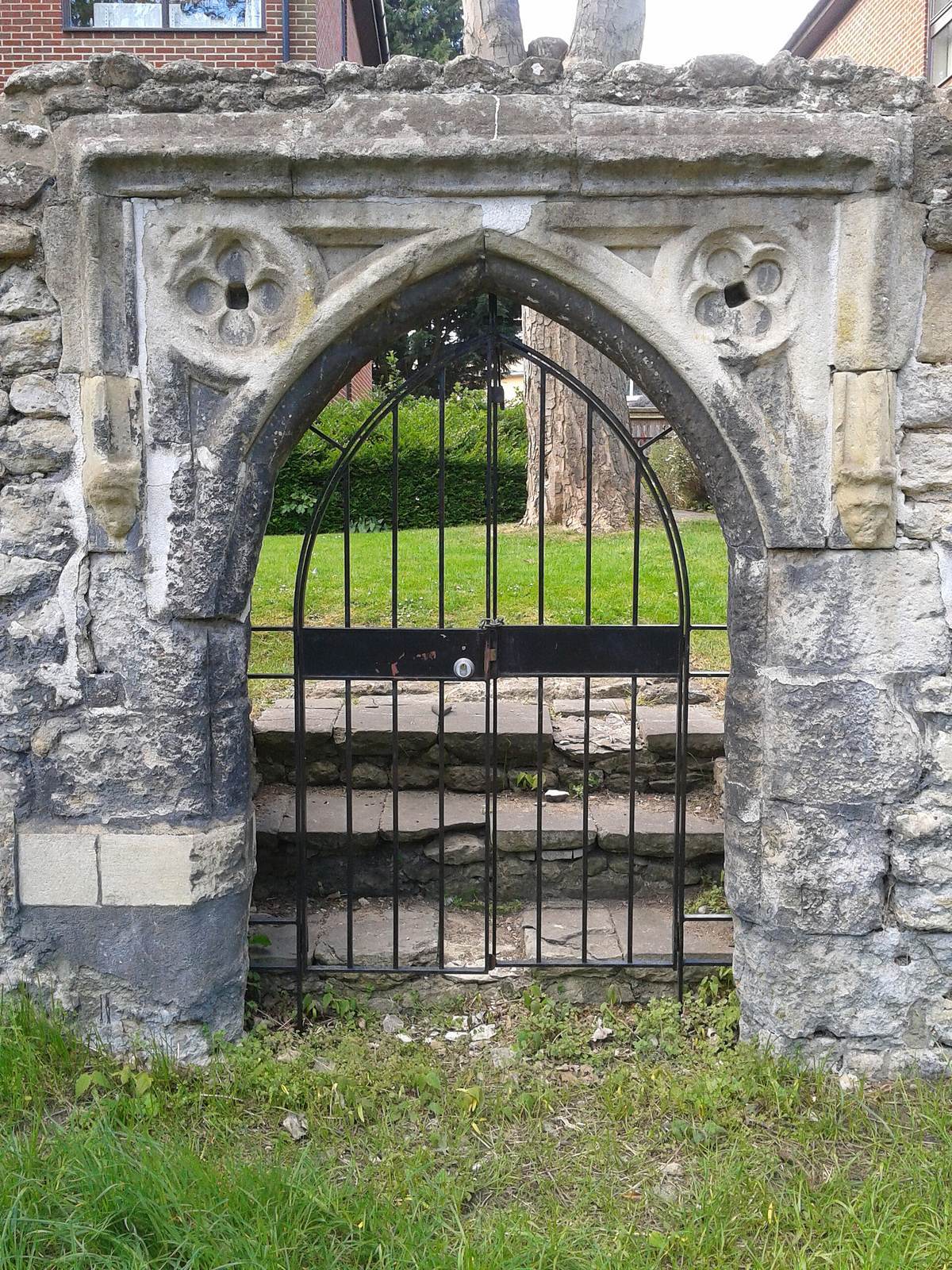
Wall and gate
A section of wall and a gate remain beside Castle Mill Stream. The gate is visible from the canal path north of Hythe Bridge.
Refectory
The refectory, the monastery’s communal dining hall, was used as a malt house, where grain was processed into malt. It survived in that role into the eighteenth century.
Railway and later use
Most of the remaining abbey fabric was cleared around 1850 for railway use. Rewley Road railway station was built on the site in 1851. Railway use there ended in 1984, and housing now occupies the land.
Reused stone
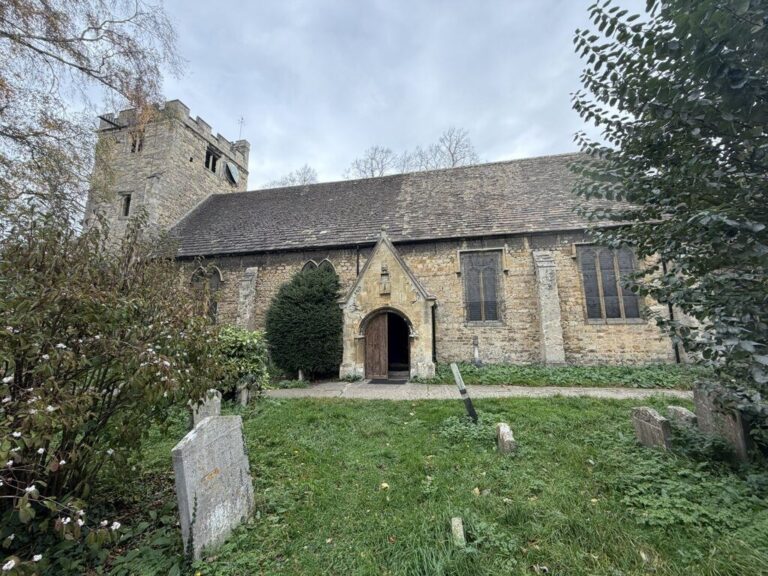
Stones from the abbey were reused to strengthen the base of the tower at St Mary Magdalen’s Church in Oxford.