Al-Adiliyah Mosque: An Ottoman Külliye in Aleppo
Site at a Glance
- Rating
- 4.6
- Popularity
- Very Low
- Country
- Syria
- Primary era
- Early Modern
- Eras represented
- Early Modern
- Civilizations
- Ottoman
- Site type
- Religious
- Remains
- Mosque
On this page6 sections
History
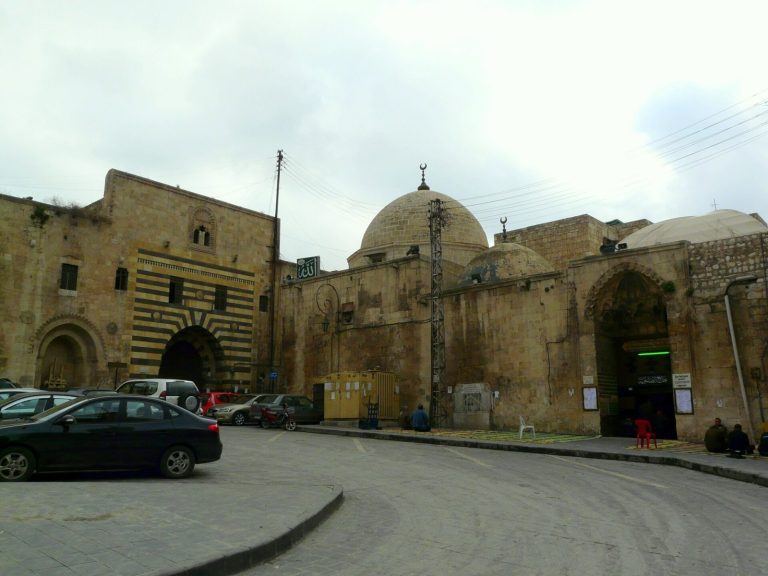
Al-Adiliyah Mosque is an Ottoman mosque complex in Aleppo, Syria, built during the reign of Suleiman I in the 16th century. Also known as the Dukaginzade Mehmed Pasha Mosque, it formed part of a külliye, a religious and charitable complex centred on a mosque. Its construction and completion dates remain uncertain: construction is dated to either 1555 or 1557, while completion is placed in 1565/66 or 1567.
Ottoman Foundation
The complex was endowed in 1556 by Dukakinzade Mehmed Pasha, an Albanian-Ottoman governor-general of Aleppo from 1551 to 1553. He was later appointed governor-general of Egypt and died in 1557. The endowment was a waqf, a charitable foundation whose revenues supported a religious or public institution. The name Al-Adiliyah was associated with the nearby governor’s palace, Dar al-Adl, also called Dar al-Saada. Another tradition connects it with the Aleppine al-Adiliyah family.
The külliye included the mosque, an imaret, a charitable institution providing food and related services, a guesthouse, five inns, and five bazaars. Further structures were added over time, extending the complex’s religious, charitable, and commercial functions within the Al-Jalloum district.
Restoration and War Damage
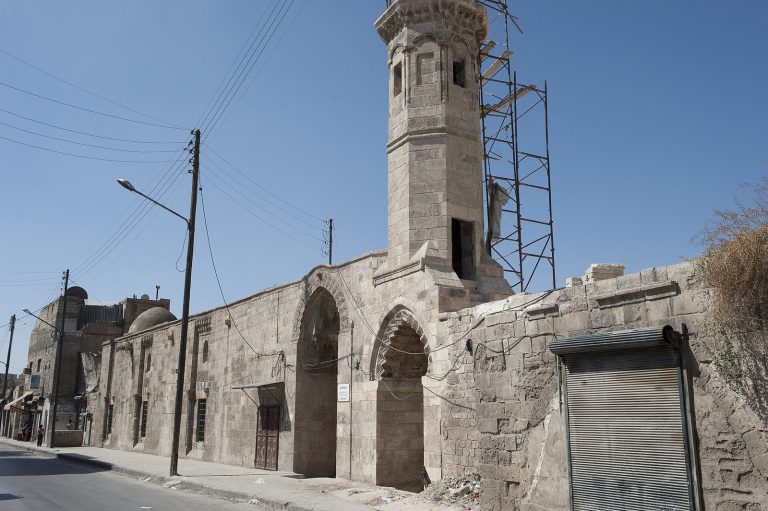
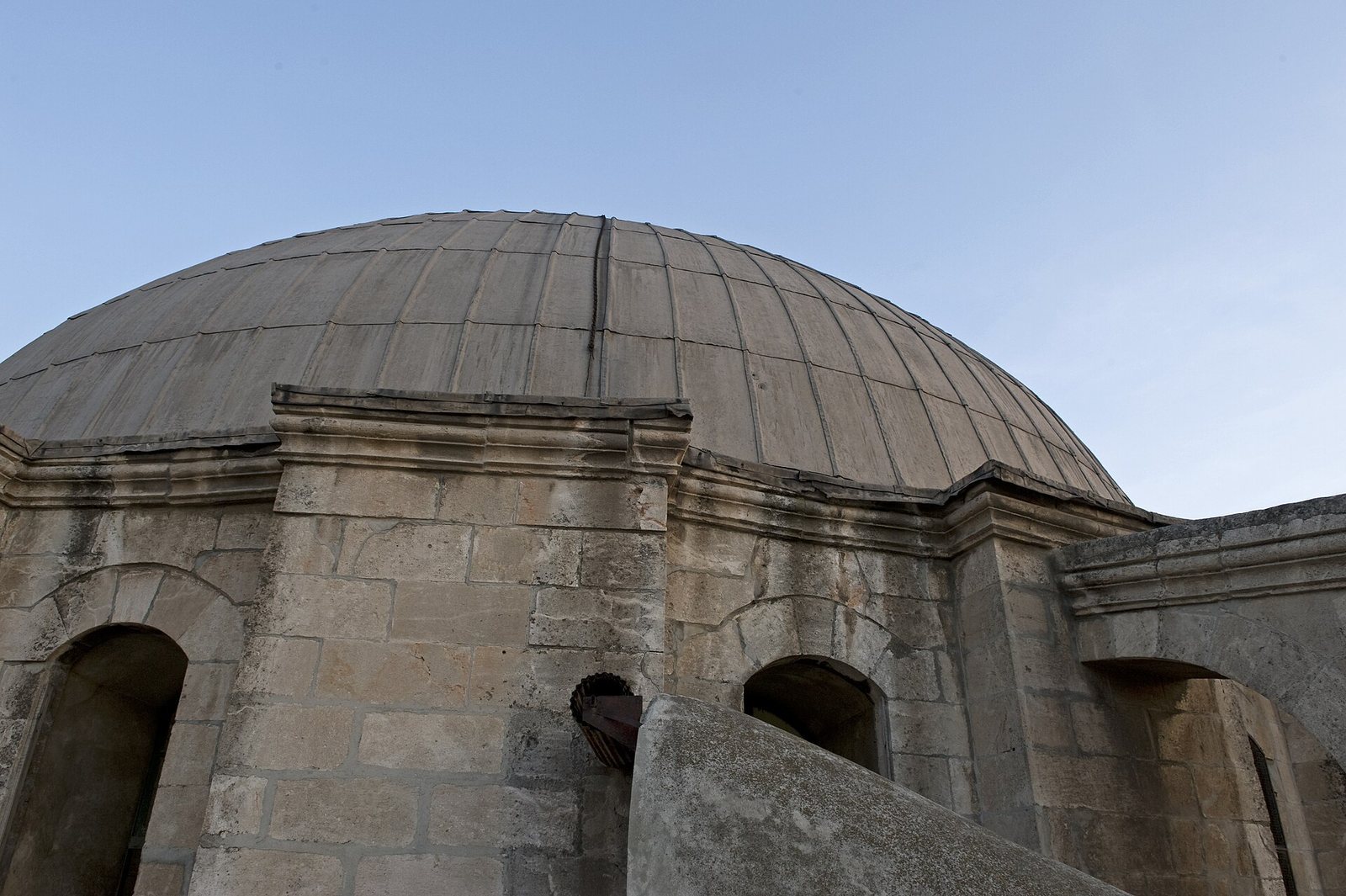
In 1923, the waqf administrator Fuad Bey al-Adili restored the mosque. The complex later suffered severe damage during the Battle of Aleppo in 2014 or 2015, part of the Syrian Civil War. Its dome and minaret were destroyed, leaving the former mosque in partial ruins. The complex belongs to the Ancient City of Aleppo, which has been a UNESCO World Heritage Site since 1986 and was listed as endangered from 2013 to 2020.
Remains
Prayer Hall and Courtyard
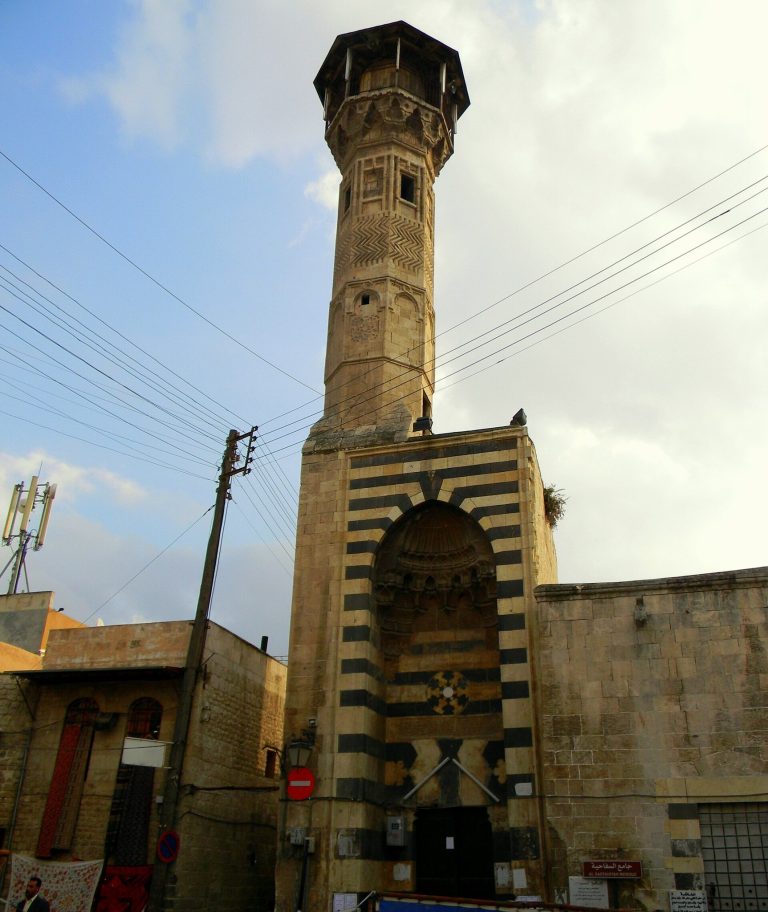
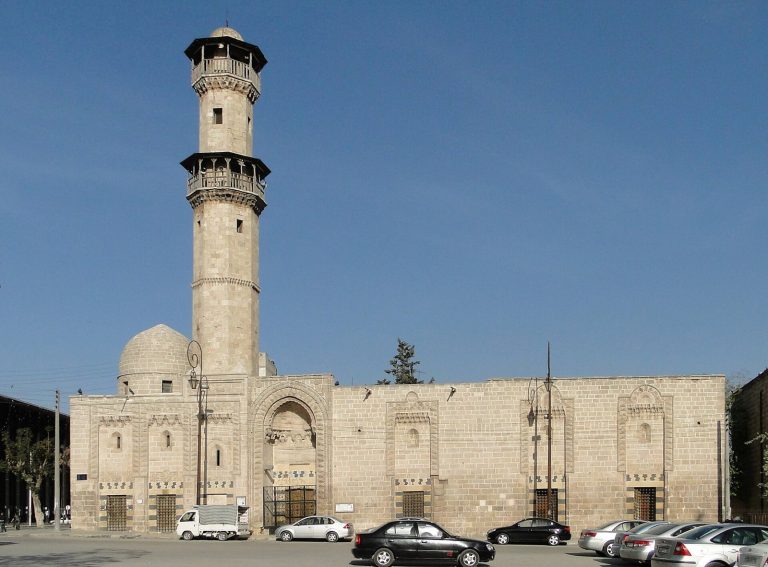
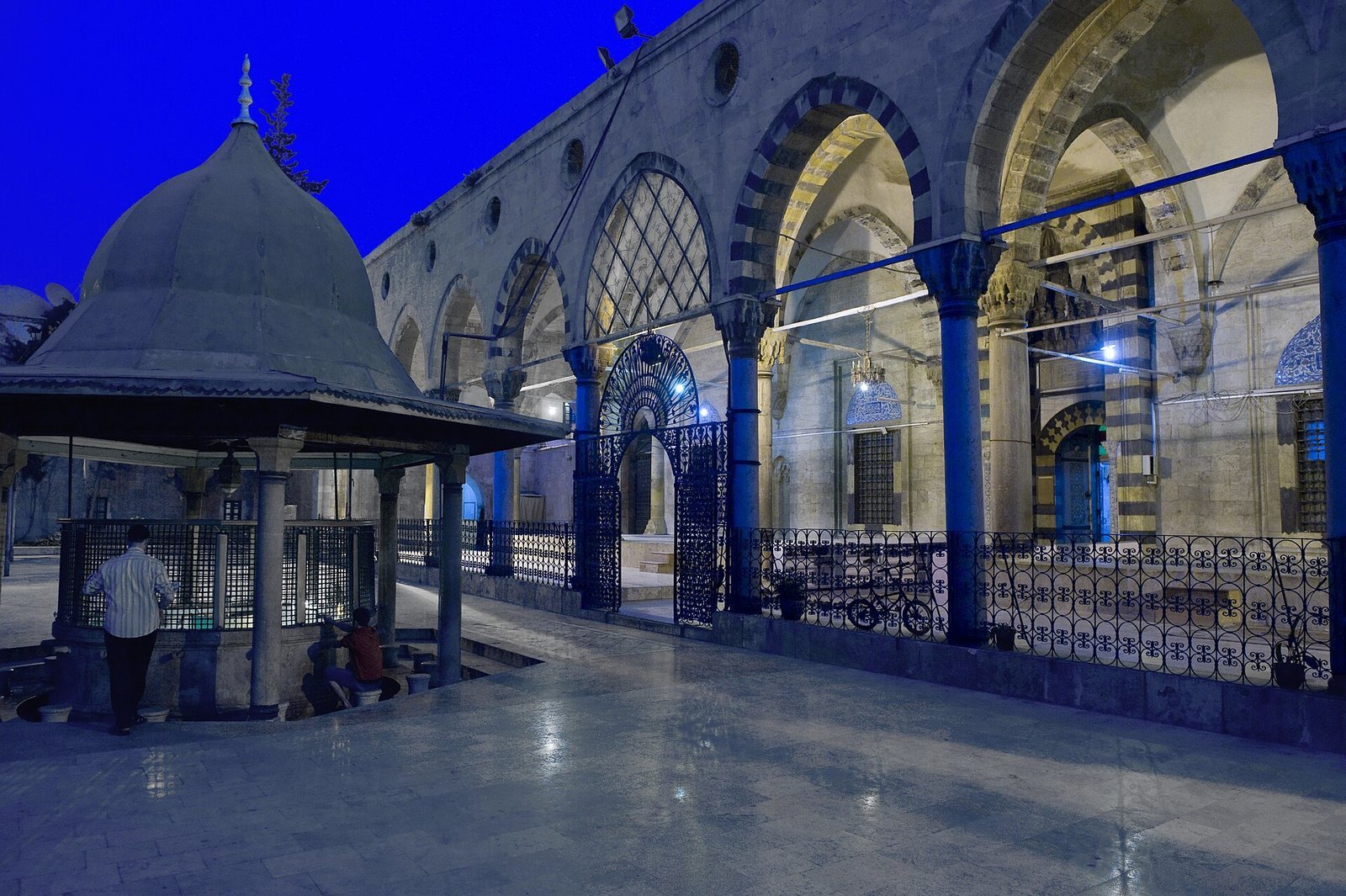
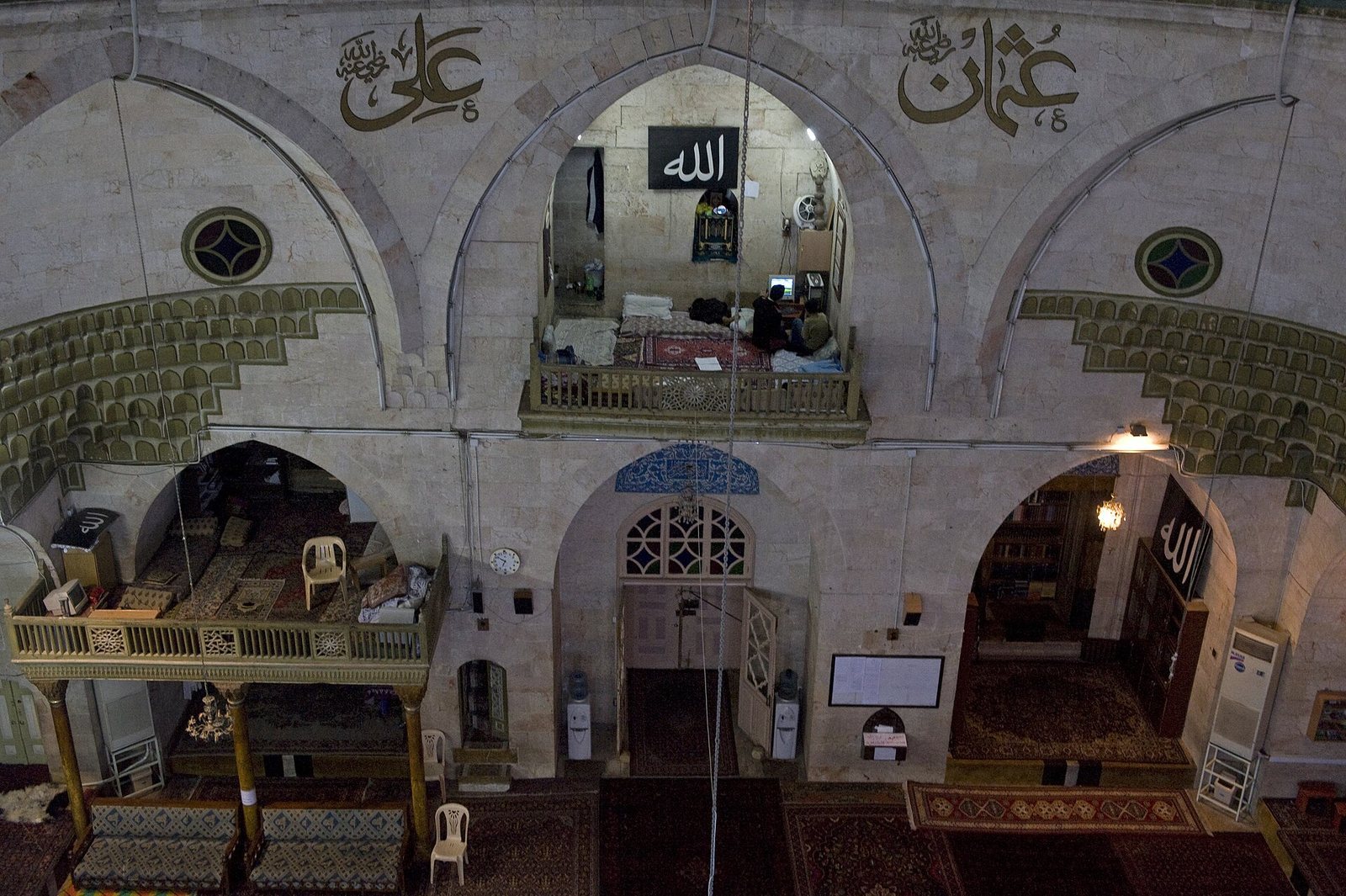
The mosque was constructed in stone in the Ottoman architectural style. Its square plan measured 15.6 metres on each side and centred on a large domed prayer hall preceded by a double portico. A rectangular courtyard had entrances on its eastern and western sides, with a water basin for ablution at the centre. Brightly coloured tiled panels in the curved spaces above the northern windows and within the prayer hall were probably imported from Iznik, in present-day Turkey.
Wider Complex
The former külliye stood southwest of the Citadel of Aleppo, near Al-Saffahiyah Mosque and the southern entrance of Aleppo’s covered souq. Its buildings included the mosque, imaret, guesthouse, five inns, and five bazaars, together with later additions. The mosque originally had one large main dome and a cylindrical minaret. Both were destroyed during the wartime damage, and the surviving complex remains partially ruined.