Ajiyoshi Futagoyama Kofun: A Sixth-Century Keyhole Burial Mound in Japan
Site at a Glance
- Rating
- 3.8
- Popularity
- Low
- Country
- Japan
- Primary era
- Classical
- Eras represented
- Classical
- Civilizations
- Yamato
- Site type
- Burial
- Remains
- Burial Mound
On this page13 sections
History
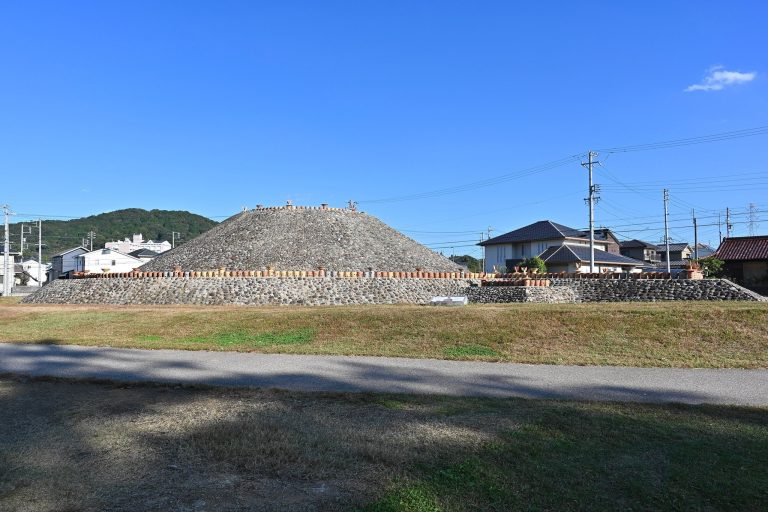
Ajiyoshi Futagoyama Kofun is a sixth-century keyhole-shaped burial mound in Japan, located at Futago in Kasugai, Aichi. Built as part of the ancient Japanese kofun tradition, it is the largest mound in the Ajiyoshi Kofun Cluster, which also includes Ajiyoshi Hakusan Jinja Kofun, Gotosho Kofun, and Ajiyoshi Kasugayama Kofun about 500 meters to the northwest. The exact construction date and the identity of the person buried there remain unknown.
Burial mound and early investigations
Large-scale looting took place near the end of the Meiji period, the era of imperial rule from 1868 to 1912. An investigation in 1935 found a hollow measuring about 4 to 5 meters across in the rear circular section. Its purpose and contents were unclear, and neither a sarcophagus nor grave goods were recovered.
Ajiyoshi Futagoyama Kofun became a National Historic Site of Japan on December 16, 1936. This designation recognized the mound as part of the country’s protected archaeological heritage while its burial facility remained unidentified.
Damage, restoration, and archaeological research
In 1967, a training aircraft of the Japan Air Self-Defense Force crashed in the surrounding moat. Aircraft fragments were scattered from the rear circular section toward the junction with the front section, leading to restoration work. During that work, part of a projecting structure, possibly a ceremonial platform, was mistakenly demolished.
The restoration also brought haniwa to light. These clay cylinders and figures were placed on or around ancient Japanese burial mounds. The discoveries included horse-, human-, and waterfowl-shaped examples, together with fragments of cylindrical haniwa. Some are held by the Kasugai City Board of Education. Before the accident, water collected in the moat, but dredging during restoration caused it to stop retaining water. Whether the original moat was intended to hold water remains uncertain.
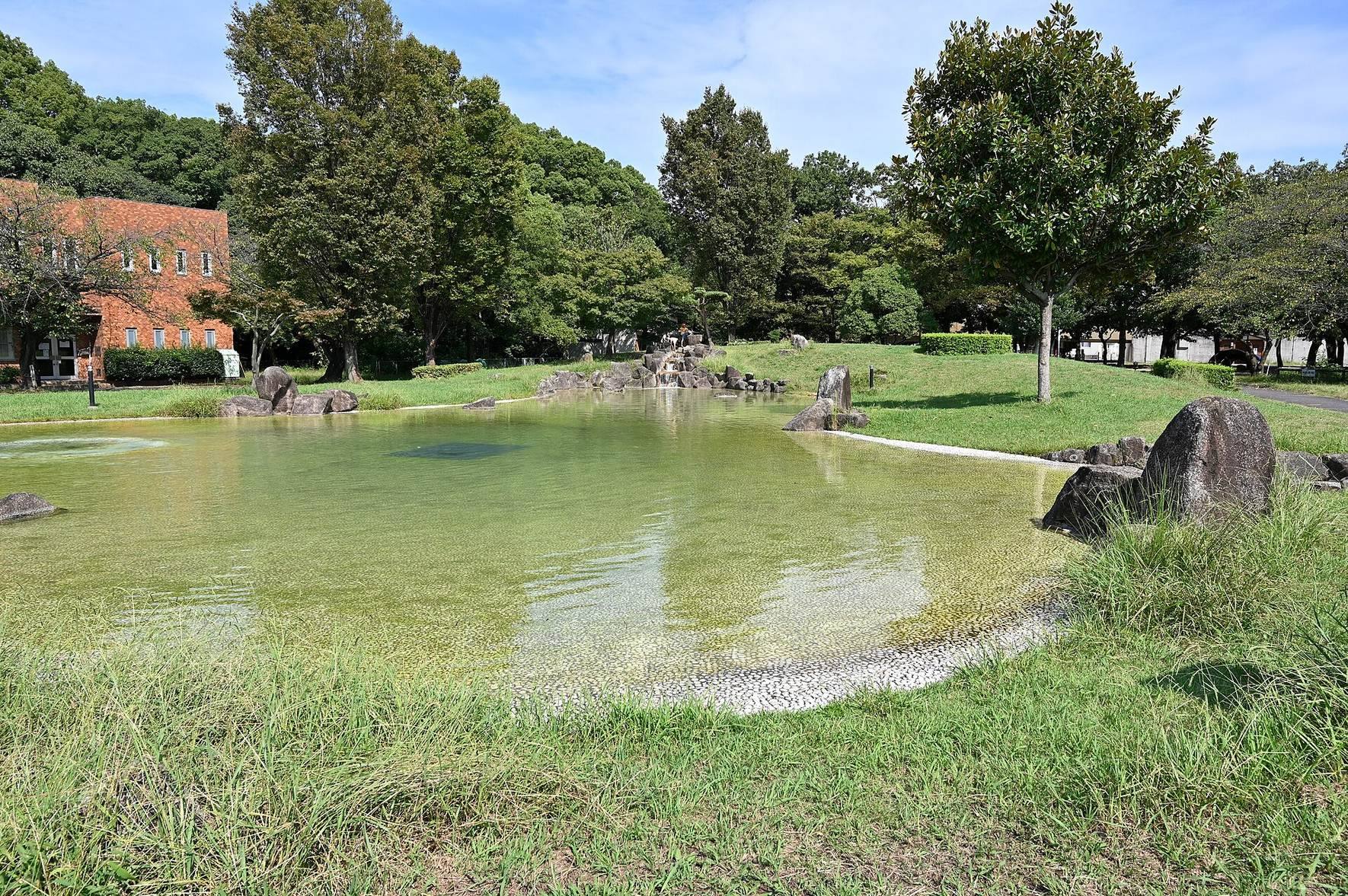
Archaeological investigations connected with the development of Futagoyama Park began in 1991 and continued thereafter. They revealed an external ditch and produced additional haniwa and pottery, including Sue ware, a high-fired ancient Japanese pottery, and Mino ware associated with the Mino region of central Japan. Analysis linked some of these materials to production at an ancient kiln complex approximately eight kilometers from the mound. Finds from the site are displayed at the Haniwa no Yakata museum, while others are held in the folklore and archaeology exhibition room of Kasugai Central Public Hall.
Remains
Ajiyoshi Futagoyama Kofun is a two-tier earthwork with a circular rear section joined to a roughly rectangular front section, creating the keyhole plan characteristic of a zenpo-koen-fun. The mound is approximately 96 meters long, and its principal axis runs about 30 degrees northwest. A shield-shaped moat surrounds it, with an additional ditch outside the moat.
Mound structure
Rear circular section
The rear circular section is approximately 48 meters in diameter and about 8 meters high. A hollow measuring 4 to 5 meters across was found within it in 1935, but the burial facility has not been identified. No sarcophagus or grave goods were recovered from the hollow.
Front section and projecting structure
The front section is approximately 54 meters long and 65 meters wide. At the junction with the rear section, the constricted area is about 38 meters wide. A projecting structure, possibly a ceremonial platform, was identified on the northeast side of the mound. Part of this feature was removed accidentally during the restoration following the 1967 aircraft crash.
Moat and outer ditch
Shield-shaped moat
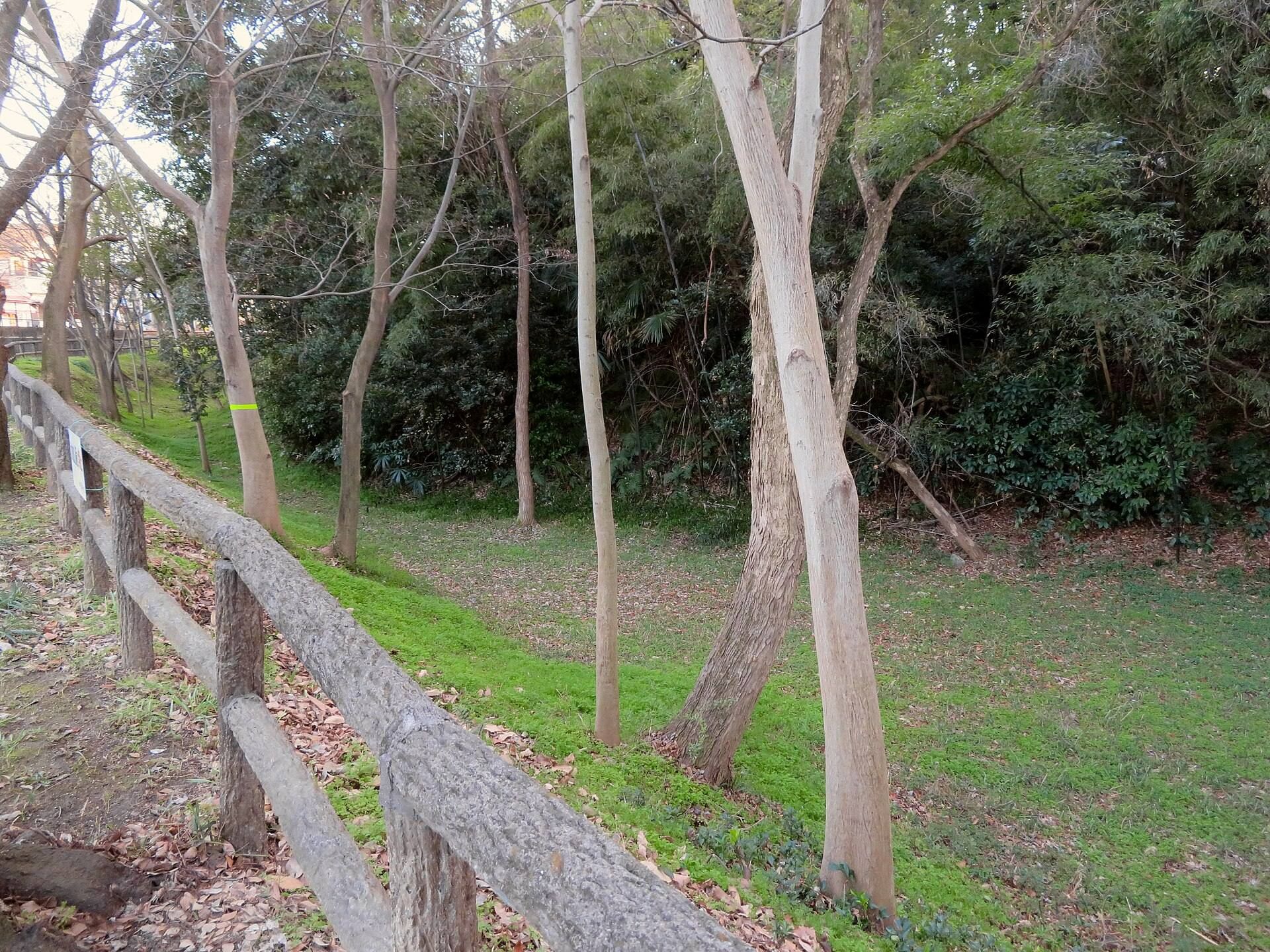
The mound was enclosed by a shield-shaped moat. Water had collected in it before the 1967 restoration, although its original function as a water-filled feature remains uncertain. Dredging during the restoration altered its ability to retain water.
External ditch
Park-related excavations revealed an additional ditch outside the moat. It is approximately 3.5 meters wide and 0.6 meters deep, adding another element to the earthworks surrounding the mound.
Haniwa and pottery
Figurative and cylindrical haniwa
Excavated materials include cylindrical haniwa and figurative examples shaped as horses, people, and waterfowl. The cylinders formed part of the mound’s arrangements, while the figures represented people and animals. Some of the finds are displayed at Haniwa no Yakata, and others are held at Kasugai Central Public Hall.
Sue ware and Mino ware
Excavations also recovered Sue ware and Mino ware pottery. Some of these materials were linked through analysis to production at an ancient kiln complex approximately eight kilometers from Ajiyoshi Futagoyama Kofun, providing evidence about the sources of objects associated with the mound.