Shiroyama Hachimangū: A Shinto Shrine on the Site of Suemori Castle


Site at a Glance
- Rating
- 4.1
- Popularity
- Low
- Country
- Japan
- Primary era
- Early Modern
- External website
- Open
- Eras represented
- Early Modern
- Civilizations
- Oda regime
- Site type
- Religious
- Remains
- Sanctuary
On this page7 sections
History
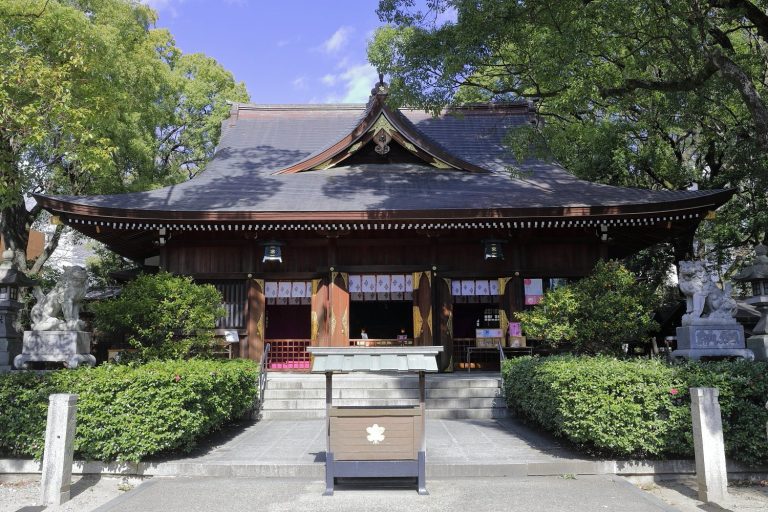
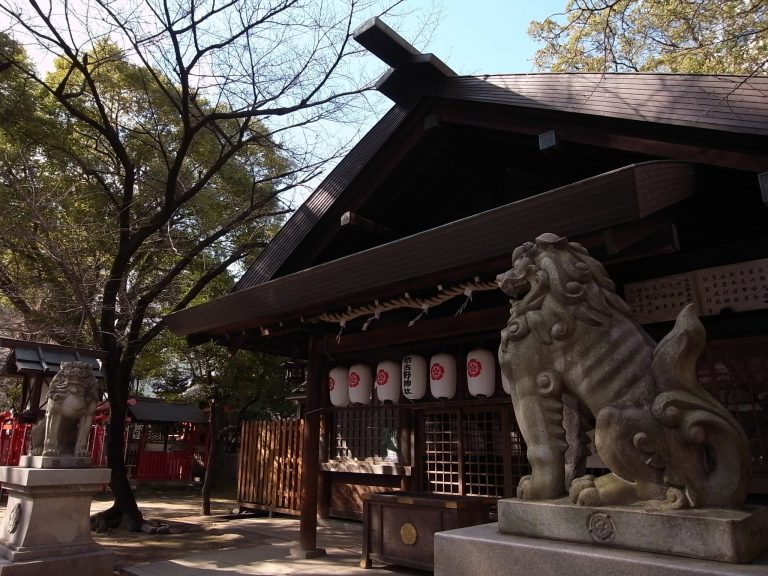
Shiroyama Hachimangū is a Shinto shrine in Nagoya, Japan, whose grounds occupy the former site of Suemori Castle. Shinto is Japan’s indigenous religious tradition, centered on reverence for kami associated with nature, ancestors, places, and historical traditions. The shrine’s precise foundation date is unknown, although tradition places its origins at Kusunoki, northeast of present-day Shiroyama, near the southern edge of what is now Harusatochō.
Castle Origins and Early Shrines
Oda Nobuhide built Suemori Castle in 1548. In 1553, his son Oda Nobuyuki established a Hakusan shrine within the castle grounds. The shrine buildings were repaired during the Eiroku era, a Japanese period corresponding here to 1558–1570. Shiroyama Hakusan, as the shrine was also known, therefore developed within a landscape shaped by a sixteenth-century fortification and its associated religious institutions.
Mergers and Relocation
In 1908, the Hakusan shrine on Shiroyama was merged with Shiroyama Hachimangū. The Asama Shrine, a mountain shrine, and another shrine formerly located in Suemori Village were merged with it at the same time. In 1912, donations from parishioners and other worshippers made the Shiroyama area, including the former Hakusan shrine site, land owned by Hachimangū. The shrine was relocated to Shiroyama in 1936, and it adopted the name Shiroyama Hachimangū in 1956.
Deities and Religious Traditions
The principal deities are Hondawake no Mikoto, Okinaga Tarashihime no Mikoto, and Tarashinakatsuhiko no Mikoto. Hachiman is a major Japanese kami traditionally associated with Emperor Ōjin and the protection of warriors. Deities brought through the shrine mergers include Konohanasakuya-hime no Mikoto, Oyamatsumi no Kami, Kukurihime no Mikoto, Izanagi no Mikoto, and Izanami no Mikoto.
The annual festival takes place on October 15. Nighttime festivals are also held in July and October, featuring traditional Japanese music and dance. The sacred tree has a special association with marital harmony, successful matchmaking, and the restoration of relationships.
Remains
Castle Landscape
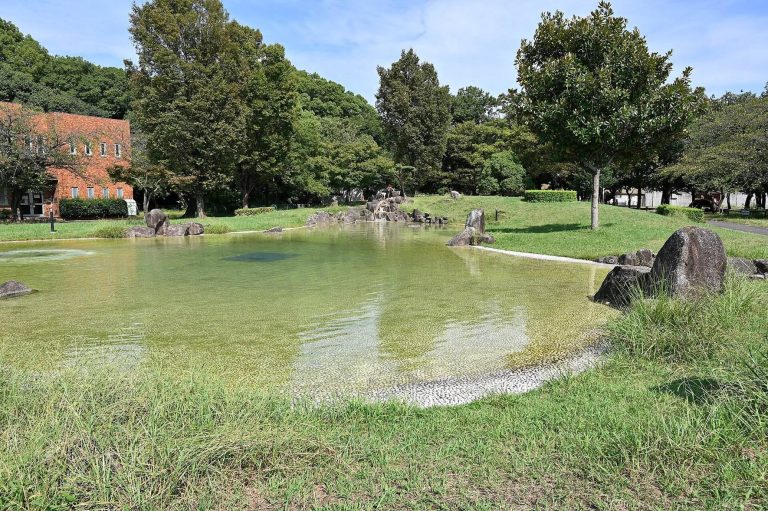
The shrine stands on the former grounds of ruined Suemori Castle, a sixteenth-century fortification. A dry moat survives within the site. This type of defensive ditch, built without permanent water, was used around Japanese castles to hinder approach. The surviving moat preserves a physical element of the castle landscape within the present shrine grounds.
The Renri Tree
The grounds contain the sacred Intertwined Tree, also called the Renri Tree. It is an abemaki, a deciduous broadleaf tree of the beech family, measuring 3.53 metres around the trunk, 4.30 metres around the roots, and 15 metres in height. Its trunk divided into two sections and later joined again before continuing to grow, creating the form known as renri, in which trunks or branches separate and then grow together. Trees with this joined shape have traditionally been regarded as auspicious, and the Renri Tree is regarded as the largest abemaki in Nagoya.