Aiello Calabro Castle: A Hilltop Fortress in Calabria


Site at a Glance
- Rating
- 4.2
- Popularity
- Very Low
- Country
- Italy
- Primary era
- Medieval
- Eras represented
- Medieval
- Civilizations
- Byzantine
- Site type
- Military
- Remains
- Castle
On this page7 sections
History
Byzantine and Norman Origins
Aiello Calabro Castle is an eleventh-century hilltop fortress ruin in Aiello Calabro, Italy, whose construction and development extended from the eleventh to the sixteenth centuries. Its position had already been fortified during the Byzantine period, when the medieval Roman Empire maintained important territories and defenses in southern Italy, probably to resist Arab raids. Nearby Amantea was an Arab emirate from 846 to 885 or 886, and Sicilian Arabs reconquered it in 976 and again in 1031 or 1032.
In 1065, the castle resisted the attacks of Robert Guiscard, a Norman duke and military leader who conquered extensive territories in southern Italy. The siege lasted four months, and two of Robert’s nephews died during it. They were buried near Sant’Eufemia Abbey.
The Swabian and Angevin Periods
During the Swabian period, the rule of the Hohenstaufen dynasty in the Kingdom of Sicily and southern Italy, Aiello was a fief of Riccardo di Salerno. His father, Matteo di Salerno, held senior chancery and notarial offices under Emperor Frederick II, while his brother Nicola di Salerno was Archbishop of Salerno. Under Riccardo’s lordship, Aiello gained economic and social importance alongside its strategic value.
In 1269, Aiello, Amantea, and other Calabrian settlements rebelled against Charles I of Anjou. Charles, founder of the Angevin dynasty in the Kingdom of Naples, had been imposed as sovereign by the papacy and the Kingdom of France in opposition to Conradin, the last major Hohenstaufen claimant to the kingdom. Aiello was besieged by troops led by Giovanni Brayda, the justiciar of Val di Crati, a royal judicial and administrative official, and Tommaso Agni of Lentini, Archbishop of Cosenza.
After the castle was captured, it served as a base for the reconquest of Amantea. Captured rebels were imprisoned there and subjected to severe mutilation, including blinding and other bloody punishments. In 1270, its garrison was among the largest in Calabria, together with that of Stilo. It comprised one castellan, the officer responsible for administering and defending a castle, and twenty servientes, or military personnel. The village had about 1,000 inhabitants and was required to pay heavy taxes to maintain the garrison.
Aragonese Defense and Noble Ownership
The castle remained a valuable military post in the late medieval and early modern periods. Castellans received exceptionally high salaries, and in 1421 Giovanni di Sorrento, who served as captain and castellan, received an annual payment of 30 ounces, a historical monetary unit rather than a measure of weight.
In 1463, Ferdinand I of Aragon granted the fief of Aiello to Ferdinando de Siscar, who had defended Cosenza during the Angevin revolt. The Siscar family retained Aiello and its dependencies, including Serra d’Aiello, Lago, and Cleto, until 1563. That year, they sold the territories to the Cybo-Malaspina family, an Italian noble house that held possessions during the early modern period, for 38,000 ducats.
During the French occupation of the Kingdom of Naples under Charles VIII from 1496 to 1498, Aiello was a stronghold of Aragonese forces loyal to Ferdinand of Aragon, who was then exiled on Ischia. French forces besieged the castle, but Gonzalo Fernández de Córdoba y Aguilar, a Spanish commander serving the Aragonese monarchy, relieved it after heavy losses. In the sixteenth century, Aiello Castle was considered one of the largest and most notable castles in southern Italy.
Earthquakes and Abandonment
The castle was progressively abandoned after earthquakes damaged it in 1638 and, more seriously, in 1783. The later earthquake killed the castellan Giuseppe Parise. In 1789, Carlo di Tocco, Duke of Popoli and tenant of the fief, ordered an inventory with the intention of restoring the castle. The damage was judged so severe that the restoration plans were abandoned.
Another earthquake in 1905 detached blocks of rock from the castle’s rocky support. The falling blocks struck the settlement and destroyed several houses. Clearing of the overgrown castle area began in the 1990s. Aiello Calabro Municipality is the current owner.
Remains
Hilltop Fortifications
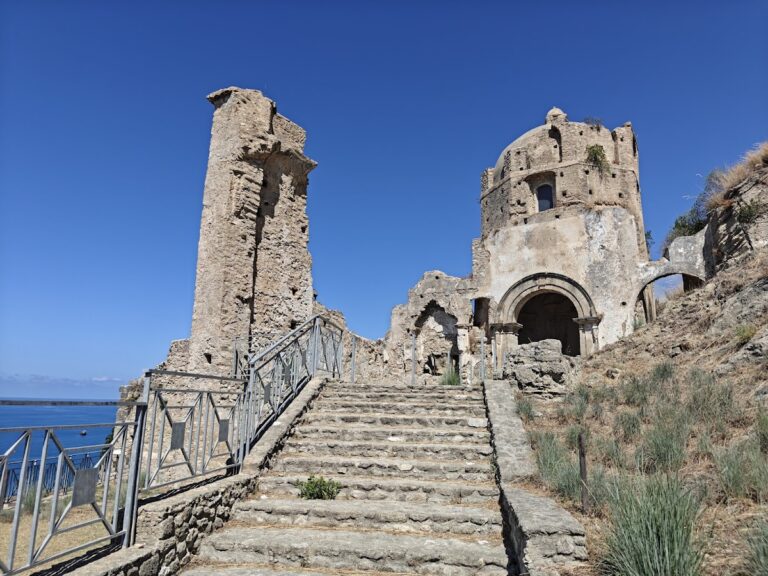
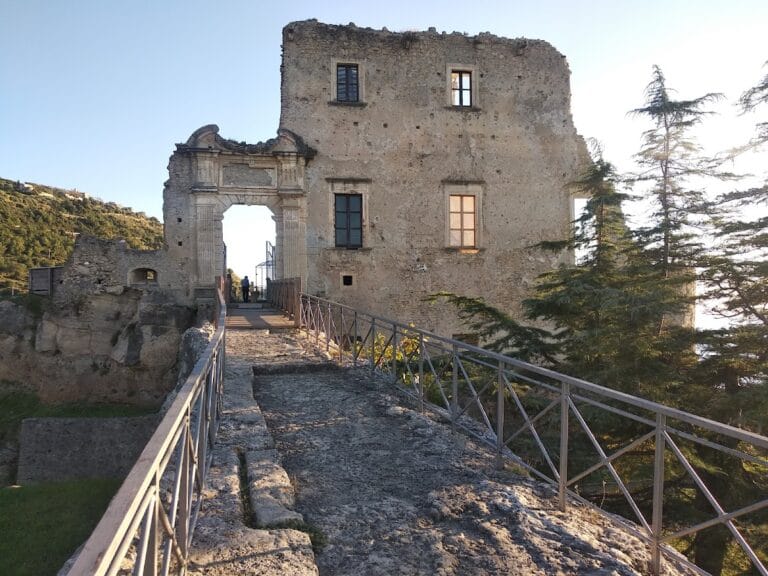
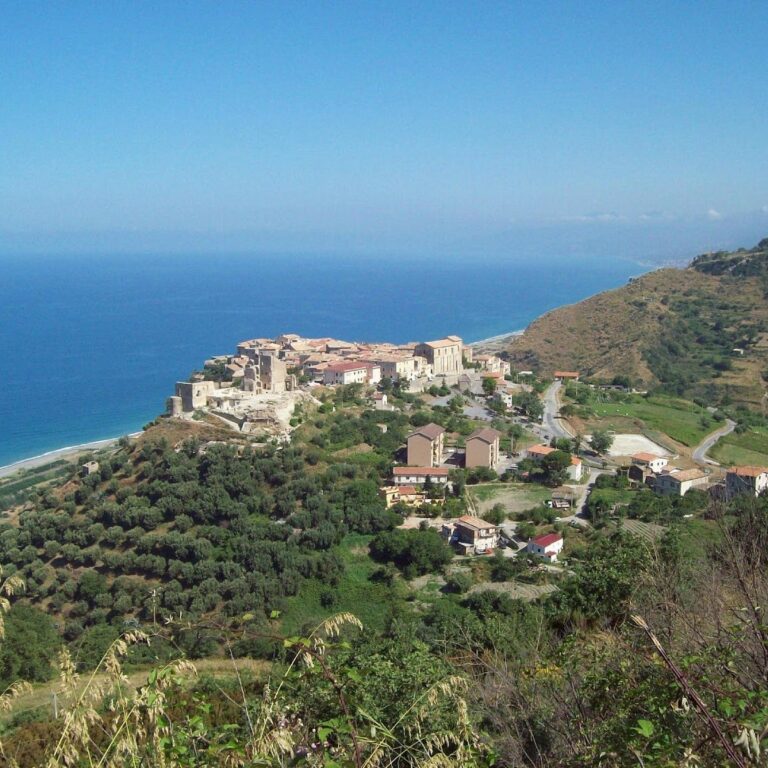
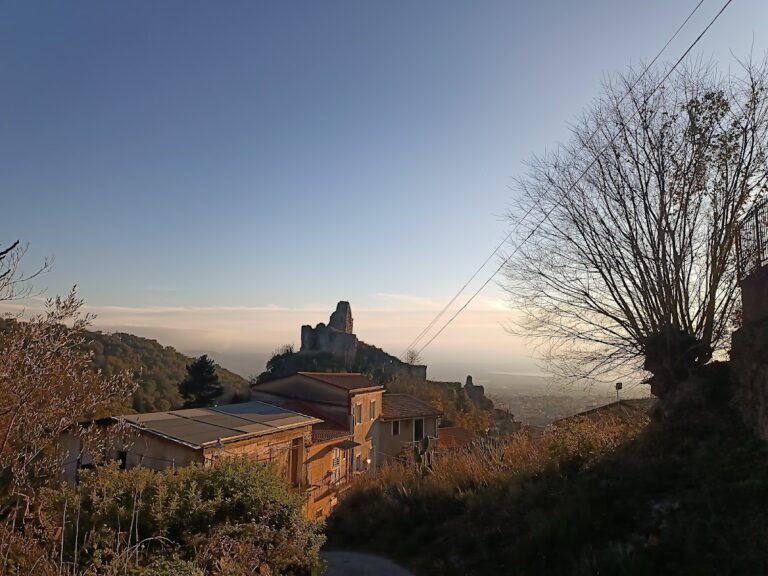
Aiello Calabro Castle stands above the town at an elevation of approximately 518 metres. From this hilltop position, it controlled the route toward Cosenza and the Sabbutum River. The surviving structure is formed by sections of perimeter walls and projecting, spur-shaped towers built in rubble stone. The castle probably had a trapezoidal plan, with two towers placed on its eastern and northern sides. Its other two sides were naturally inaccessible, contributing to the defensive arrangement. The surviving masonry is fragmentary, and the castle remains in ruins.
Nearby sites