Seibersdorf Castle: A Former Hofmark Residence in Bavaria
Site at a Glance
- Rating
- 5
- Popularity
- Very Low
- Country
- Germany
- Primary era
- Early Modern
- Eras represented
- Medieval, Early Modern
- Civilizations
- Duchy of Bavaria, Holy Roman Empire
- Site type
- Domestic
- Remains
- Castle
On this page8 sections
History
Seibersdorf Castle is a former Hofmark castle in Seibersdorf, part of Kirchdorf am Inn in Bavaria, Germany. A Hofmark was a landed estate whose lord held a degree of local jurisdiction and related privileges. The castle probably had a predecessor in the 12th century, and it served as the seat of manorial rights held by the Lords of Seibersdorf, whose family is associated with the area from the 12th through the 16th century.
The Seibersdorf lords and the Offenheimer transfer
The family was initially styled Seifriedsdorf and held substantial property around the village. About 1140, Diemarus and Rouperth de Sifridestorf appear as seal witnesses. Heinrich Seibersdorfer is recorded as owner of the Seibersdorf seat in 1488 and as its holder in 1507. He also served as a fiscal official at Landshut.
In 1539, Anton von Seibersdorf, an administrative official at Trostberg, formally acknowledged his obligations to Duke Wilhelm IV. The seat was then granted to Anton’s sisters. A fief was an estate held under a feudal grant, and its formally invested holder could act for the person entitled to it. Katharina’s husband, Cyriacus von Preysing, held her interest; Amalie’s husband, Joachim von Weichs, held hers and also took the fief for their sister Anna.
In 1544, Joachim surrendered Amalie’s share to Dukes Wilhelm and Ludwig after selling it to his brother-in-law Veit Lung zu Planegg, Anna’s husband. That same year, Cyriacus and Katharina, together with Veit and Anna, sold the seat to Kaspar Offenheimer, a ducal councillor and revenue official at Burghausen. In recognition of his service, Duke Wilhelm granted Offenheimer Hofmark privileges over the seat and its associated properties.
The Offenheimers and the Berchem succession
In 1580, the fief passed from Hanns Offenheimer to his children Kaspar, Eustachius, Hans, Georg, Sabina, Martha, and Rosina. Heinrich Flitzinger zu Haag and Penzing held it on their behalf. The inheritance was not divided among all the siblings: in 1590, it was granted to Eustachius and Hans zu Guteneck and Seibersdorf. In 1599, their brother Georg received it because Hans could not take possession and Eustachius was serving abroad.
In 1630–31, Hans Kaspar von Offenheim received the whole Seibersdorf fief, drawing on shares held by his father Johannes and his cousins Ferdinand and Hans Karl, sons of Eustachius. After Hans Kaspar’s death, the fief passed to his three minor sons, Hans Adam, Hans Ignaz, and Hans Sigmund, with Johann Christoph Mändl von und zu Deutenkofen acting as its formal holder. In 1664, Hans Ignaz received the undivided estate because Hans Adam had fled after murdering Hans Sigmund and could not be invested. Hans Ignaz later fled following an adultery offence; Adam Caspar Freiherr von Freyberg and Johann Ludwig Schleich von Harbach were appointed as guardians for Seibersdorf.
The Barons of Offenheim remained lords of Seibersdorf through 1746. In 1762, Maximilian Josef, Elector of Bavaria, promised Maximilian Franz Josef Freiherr von Berchem and his male descendants a future right of succession, and granted Berchem a conditional feudal investiture. Ferdinand Marquard Joseph von Offenheim still held the estate, while the elector considered transferring it to other hands. In 1779, Seibersdorf came into the possession of Karl Count von Berchem under Elector Karl Theodor.
Alteration and restoration
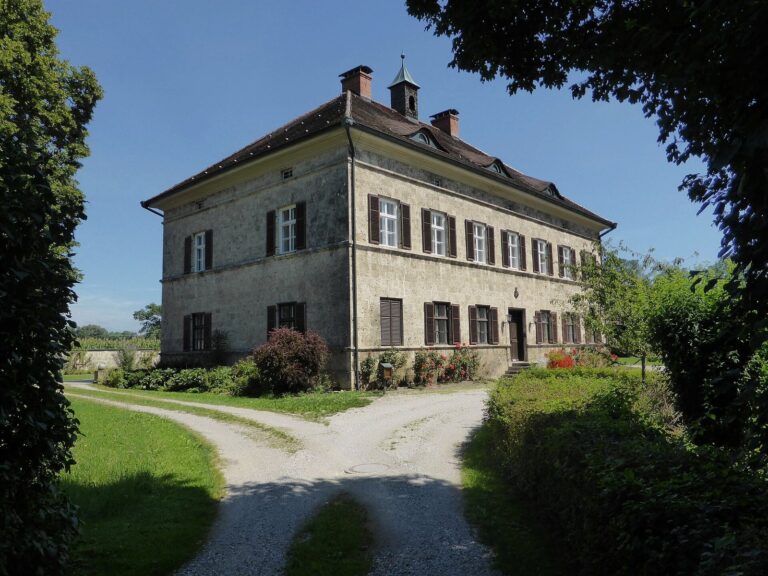
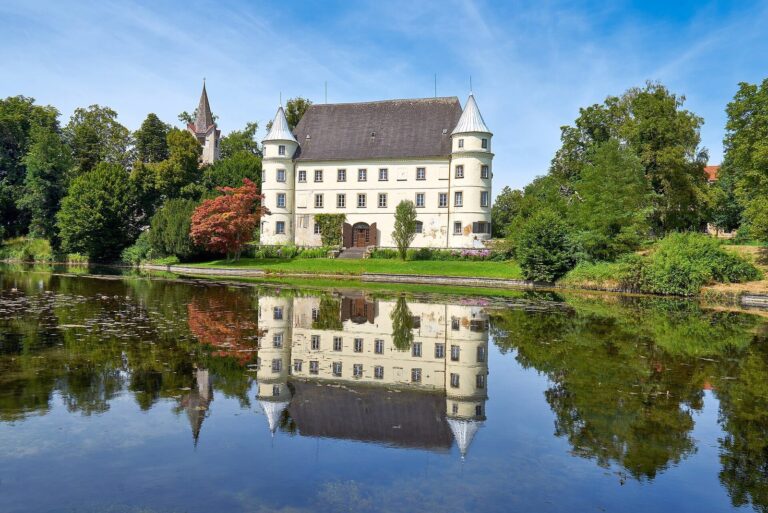
A larger, newer castle was probably added in the first half of the 16th century, around the time the estate passed from the Seibersdorf family to the Offenheimers. After standing empty and deteriorating for about a century, it was adapted in the second half of the 19th century as a residence with smaller rooms. A thorough restoration at the end of the 20th century reversed those changes and largely recovered the earlier room arrangement and exterior. The castle is listed as a protected architectural monument, and the area is also designated as an archaeological monument.
Remains
The present building
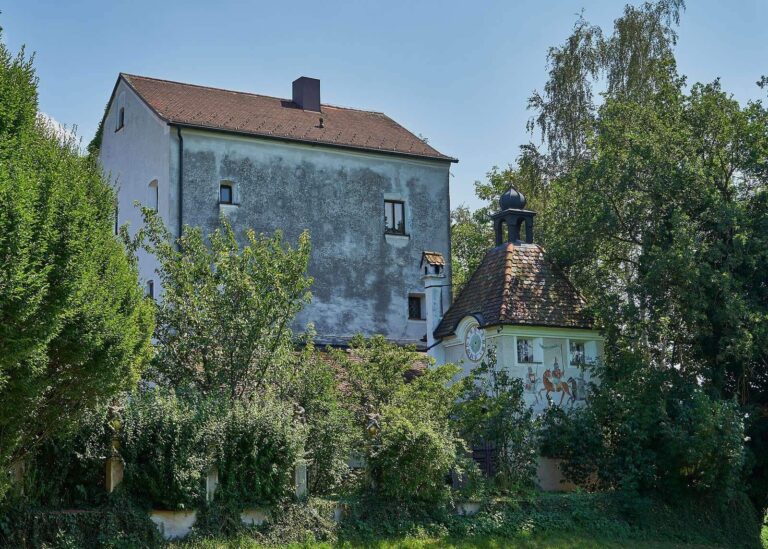
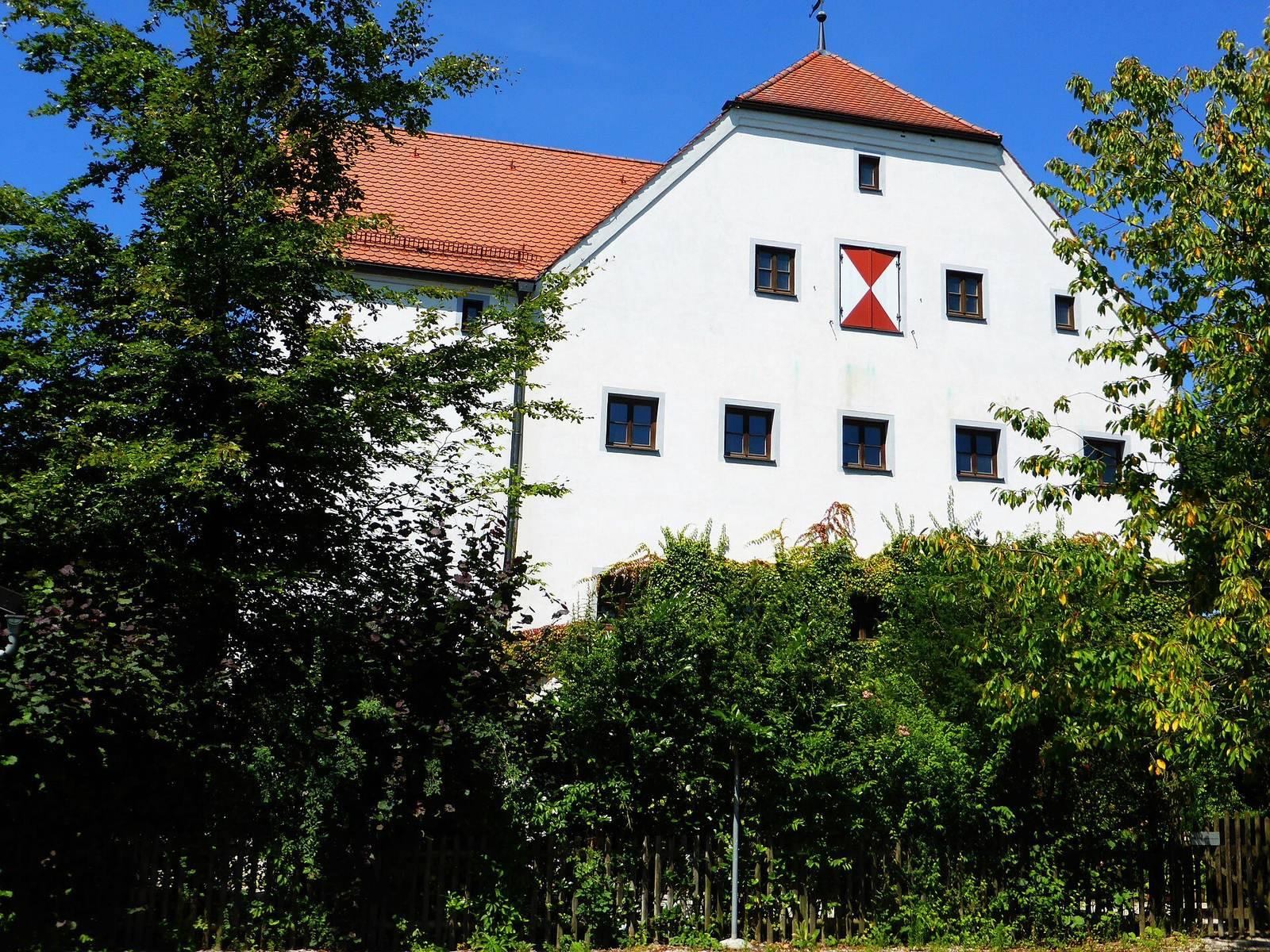
The surviving three-storey building chiefly represents the newer castle and incorporates remains of the earlier medieval structure. On its south side, a spiral staircase has been reconstructed where such a staircase originally stood.
Historical depictions
Mid-16th-century maps by the Bavarian cartographer Philipp Apian depict two castles side by side. Michael Wening’s 1721 engraving portrays a single three-storey building, with a tower projecting from one side and topped by a pointed roof.
Buried remains
Buried medieval and early-modern remains and finds in the castle area relate to the Hofmark castle and a former farmyard.