Abu Gorab: Solar Temples of Egypt’s Fifth Dynasty
Site at a Glance
- Popularity
- High
- Country
- Egypt
- Primary era
- Bronze Age
- Eras represented
- Bronze Age
- Civilizations
- Egyptian
- Site type
- Religious
- Remains
- Temple
On this page14 sections
History
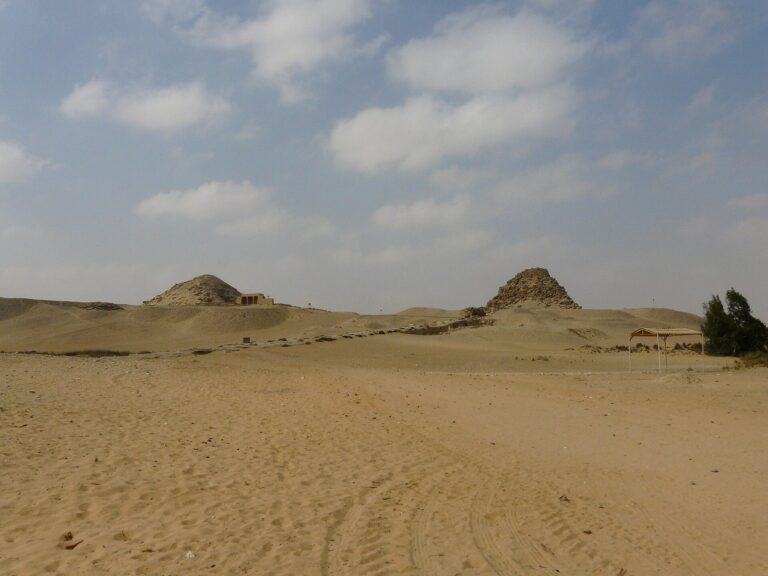
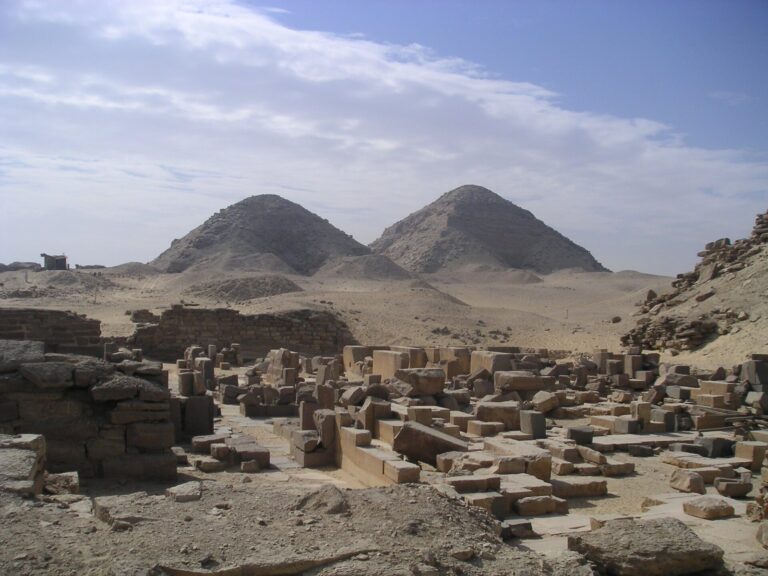
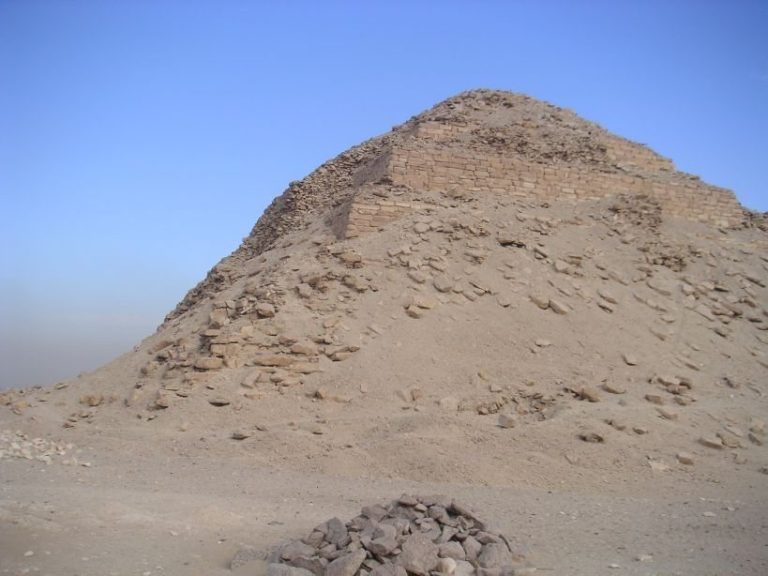
Abu Gorab, about 15 km south of Cairo in Egypt, is an archaeological site containing solar temples built during the 25th century BCE. The temples of Nyuserre Ini and Userkaf were dedicated to Ra, the ancient Egyptian sun god, during the Fifth Dynasty, part of the Old Kingdom, an early period of pharaonic rule. Evidence from the site has prompted the proposal that as many as six solar temples may have stood here. Abu Gorab also preserves a cemetery with a much earlier history and lies close to the royal burial ground at Abusir.
The early cemetery
A cemetery at Abu Gorab dates to the First Dynasty, approximately 3100–2900 BCE. It saw particular use during the Fifth Dynasty, then gradually fell out of use as a burial ground. Donkeys were buried close to human graves, a practice also noted in later cemeteries of the Hyksos period in northern Egypt. The Hyksos were foreign-origin rulers who controlled parts of Egypt during a later era.
Fifth-Dynasty solar temples
Userkaf and Nyuserre Ini, both Fifth-Dynasty pharaohs, had solar temples built at Abu Gorab in the 25th century BCE. Nyuserre, the dynasty’s sixth king, probably commissioned his temple late in his reign. His exact regnal dates are unknown, although he is estimated to have taken the throne early in the second half of the 25th century BCE. About 1 km south, at Abusir, he also built a pyramid complex in the royal burial ground of the time. His solar temple was closely connected in location and function with the Abusir necropolis.
Excavations and new discoveries
Ludwig Borchardt and Friedrich Wilhelm von Bissing excavated Nyuserre’s temple for the Berlin Museum between 1898 and 1901. A German expedition led by von Bissing also uncovered substantial mud-brick building remains beneath it. In August 2022, archaeologists announced the discovery at Abu Gorab of another temple dedicated to Ra. The excavation was co-directed by archaeologist Massimiliano Nuzzolo.
Remains
Nyuserre’s solar temple
Enclosure and entrance
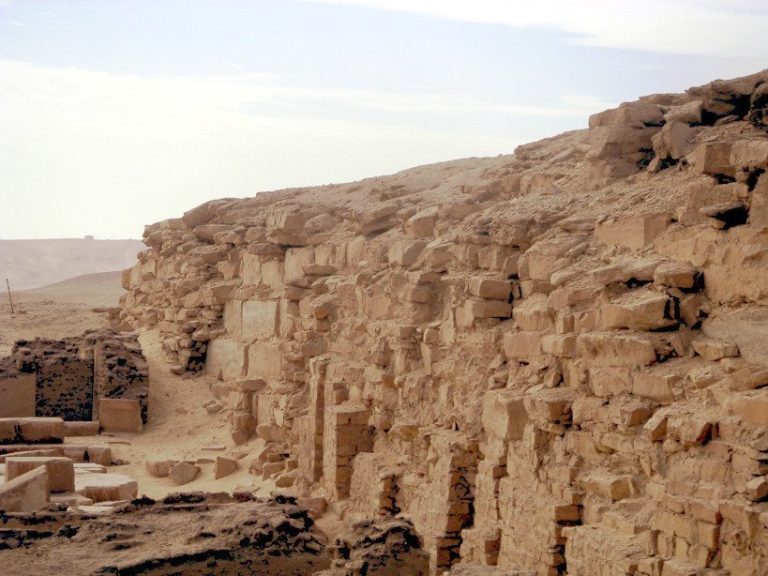
Abu Gorab lies on the desert plateau along the Nile’s western bank, between Saqqara and Giza and about 1 km north of Abusir. Nyuserre’s temple stood beside the bed of the ancient Abusir lake, within a rectangular enclosure measuring about 100 by 76 m. The complex was built mainly of mudbrick faced with limestone. Its main temple occupied a natural hill that had been raised into artificial terraces of mudbrick covered with limestone.
The enclosure’s entrance was on its eastern side. Visitors entered through a small Valley Temple, an entrance building associated with a larger temple complex. It is partly submerged and severely damaged. A corridor passed from its entrance porch through the building toward a causeway, a raised route leading toward the temple, on the opposite side.
Courtyard, obelisk and altar
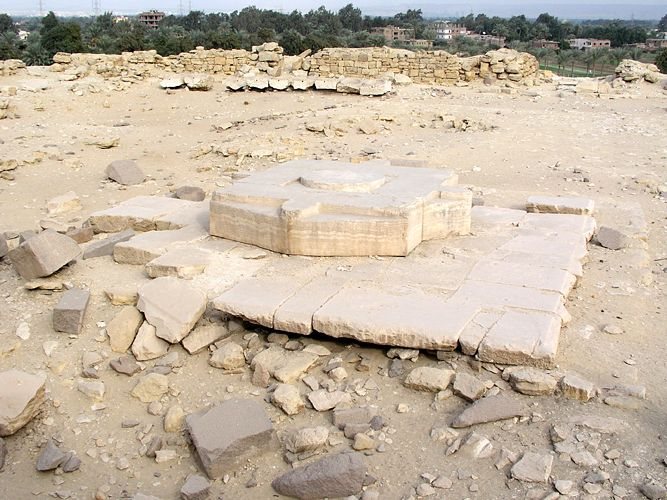
A large open courtyard filled the temple interior. At its western end stood a monumental obelisk on a pedestal with a red-granite base, sloping sides and a square top. The obelisk itself was assembled from irregular limestone blocks. Estimates place its height at about 35–50 m, and the combined height of obelisk and pedestal at about 50–70 m.
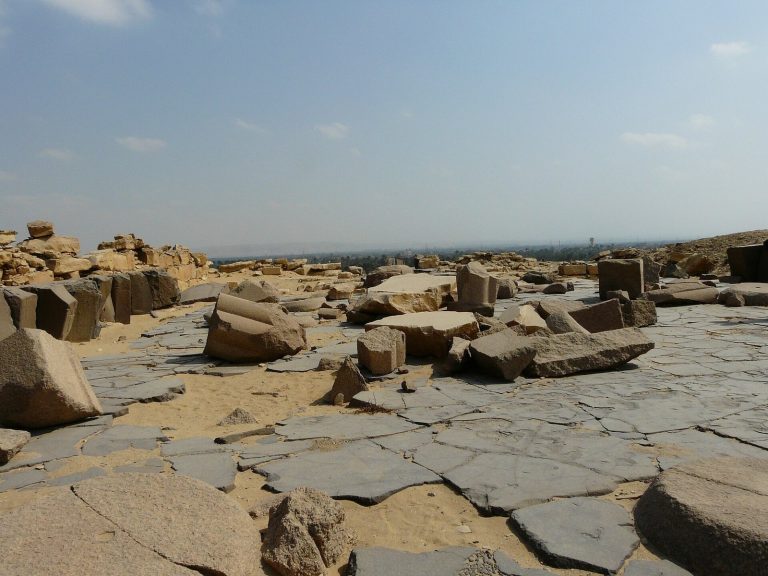
Near the obelisk’s eastern face was an altar made from five large alabaster blocks. Their arrangement forms a sign translated as “May Ra be satisfied.”
Alabaster basins
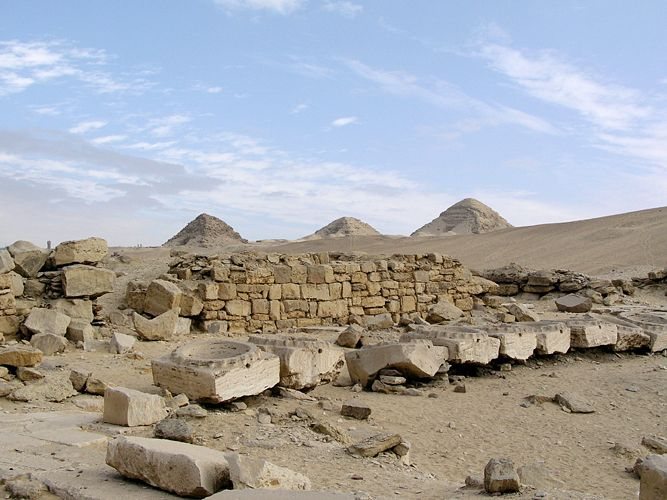
Nine circular alabaster basins stand along the courtyard’s eastern wall; the original arrangement may have included ten. Their purpose remains uncertain. One interpretation is that they collected blood from sacrifices, with grooves in the stone courtyard floor possibly carrying liquid away. Records from Userkaf’s solar temple describe the daily sacrifice of two oxen and two geese, evidence considered in discussions of this possible function. Other interpretations regard the basins as symbolic or decorative, or propose that connected vessels filled with water were used to establish a level.
Reliefs and painted scenes
Covered corridors along the temple’s eastern and southern edges carried carved scenes of the sed-festival, a royal renewal ceremony associated with the king’s continued rule. Similar scenes appeared in a chapel near the southern edge. A short passage to the obelisk platform, called the Room of the Seasons, contained painted limestone reliefs showing the inundation and harvest seasons. They present the sun as sustaining the natural world and human activities including fishing, trapping birds, making papyrus boats and farming.
The scenes may be among the earliest extensive depictions of plants and animals alongside human interactions with nature. Nyuserre probably commissioned the work. Its subjects differ from those typical of Old Kingdom royal funerary decoration; although skillfully designed, the carving was less carefully executed than comparable work of the Fourth and early Fifth Dynasties. A surviving fragment shows men preparing to close a bird-trapping net, figures placing captured birds in cages, and traces of a cow-and-calf scene. Nearly all the temple’s reliefs were removed, mostly to German collections, and many were lost during the Second World War. The surviving material is severely fragmented.
The First-Dynasty cemetery
The cemetery lies north of Nyuserre’s temple. Its graves belonged to people of middle social rank, and numerous donkeys were buried close to them.
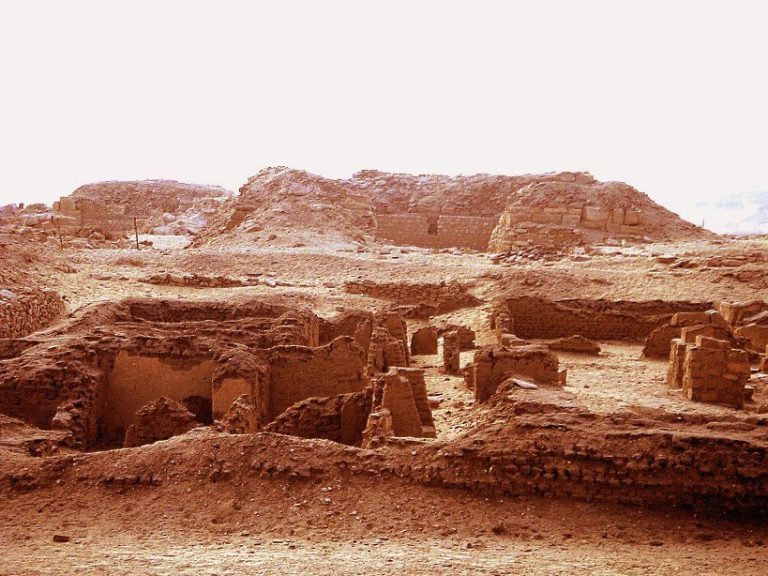
Mud-brick building beneath the temple
Substantial mud-brick building remains lie below Nyuserre’s temple. They have been tentatively identified as the solar temple of Neferefre, perhaps bearing the name Ra Hotep, translated as “Ra’s offering table.”
Further temple dedicated to Ra
The temple announced in 2022 measures about 60 by 20 m and is built of mudbrick. Its walls were plastered in black and white. An L-shaped entrance porch had two limestone columns and was partly constructed of white limestone; storage rooms and other chambers may have served religious purposes. Finds include dozens of well-preserved beer jars, several finely made vessels with red interiors, and seal impressions associated with Fifth- and Sixth-Dynasty pharaohs. The earliest impression may belong to Shepseskare, a ruler who preceded Nyuserre. The temple is estimated to be about 4,500 years old.
Sun barque
South of Nyuserre’s temple, a mud-brick chamber held a brick-built sun barque, a ritual boat associated with the sun’s journey. The boat measured about 30 by 10 m.